

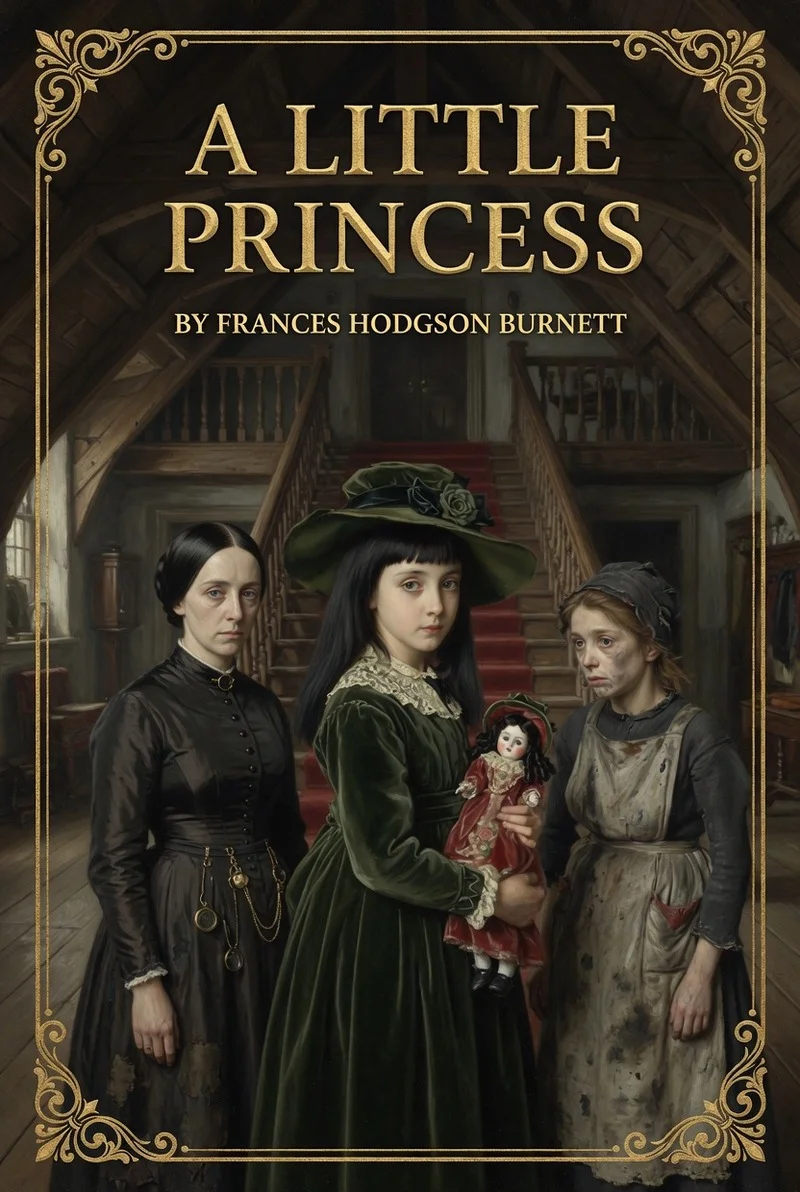
About This Book
On a foggy winter afternoon in London, seven-year-old Sara Crewe arrives from India with her father, Captain Crewe, to be left at Miss Minchin's Select Seminary for Young Ladies. Sara is watchful, fond of stories, and used to being treated as if she were a princess; the school is a tall brick house on a square, and Miss Minchin is very interested in a pupil whose father is rich.
A Little Princess gives fifth graders a heroine who is clever, kind, and not perfect — Sara has a temper she has to fight, and she says so. Burnett writes in rich, image-filled language that stretches vocabulary, and the school-story setting lets readers think hard about fairness, friendship, and what it means to behave well when nobody is watching. The plot moves quickly enough for reluctant readers while still rewarding close attention to how people talk and how rooms look.
Meet the Characters

More about Sara Crewe
Sara Crewe is the only child of a rich young captain, brought from India to a London seminary for young ladies. She is imaginative, polite, and fond of pretending that ordinary things are stories. She arrives looking like a little princess and speaking as if books were her friends.

More about Miss Minchin
Miss Minchin keeps a Select Seminary for Young Ladies in London and is extremely interested in pupils whose fathers are rich. She is imposing, smiling in public, and not especially fond of children. She meets Sara at the front door as a very important new boarder.

More about Miss Amelia
Miss Amelia helps her sister run the seminary and is much softer, much less clever, and much more easily bullied. She is kindly in a helpless way. The pupils know which sister to be afraid of.

More about Becky
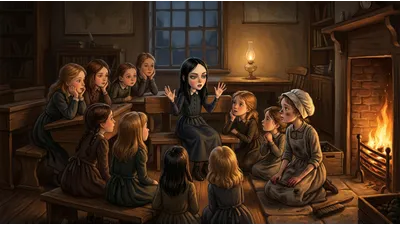
Becky is the little drudge of the kitchen, expected to stay invisible. She is shy, hungry for stories, and not used to being spoken to as a person. When she first appears she is a servant child of about fourteen, overworked and easily startled.

More about Ermengarde St. John
Ermengarde is a pupil whose father is a learned man and who is always being told she ought to be clever. She is not clever, but she is loyal and kind. She is one of the first girls Sara meets at the seminary.

More about Lottie Legh
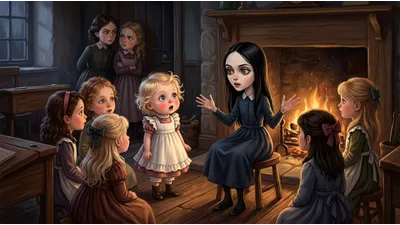
Lottie is the baby of the seminary, spoilt, tearful, and always wanting a mother. She attaches herself to anyone who will pet her. Sara, being used to stories, knows how to manage her.

More about Lavinia Herbert
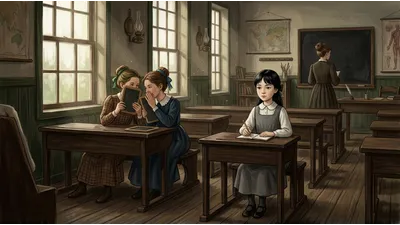
Lavinia is the oldest pupil and used to being the show girl of the seminary. She is sharp-tongued, jealous of anyone who gets more attention than she does, and a leader of whispers.

More about Jessie
Jessie is one of the older girls at the seminary and Lavinia's usual partner in whispers. She is less sharp than Lavinia, more easily led, and curious about anyone new. She is often found leaning her head toward Lavinia's in the schoolroom.

More about Captain Crewe
Captain Crewe is Sara's devoted father, rich, affectionate, and not very practical. He treats his daughter as a companion and a princess. He leaves her at Miss Minchin's because he believes it is the finest school in London.

More about Emily
Emily is the doll Sara chooses in a London shop because she looks as if she might listen. Sara talks to her as if she were a real person. She is carried, sat in chairs, and treated as a friend rather than a toy.

More about Ram Dass
Ram Dass serves the mysterious Indian gentleman who lives next door to the seminary. He is observant, quiet, and used to watching the world from windows and roofs. He often has a small monkey with him.

More about Mr. Carrisford
Mr. Carrisford is a wealthy, invalid Englishman who has come from India and taken the house next to the seminary. The girls of the school call him the Indian Gentleman because of his servant and his Eastern things. He is restless and often sits wrapped in shawls.

More about Mr. Carmichael
Mr. Carmichael is a cheerful London solicitor, father of the noisy family Sara nicknames the Large Family. He is stout, kind, and always in a hurry between home and chambers. Sara first knows him as the father of the children who pass the seminary windows.

More about Janet
Janet is the oldest of the Carmichael children, a capable, motherly girl who helps manage her younger brothers and sisters. Sara watches her from the seminary window among the crowd of children. She is practical, kind, and used to being in charge.

More about Melchisedec
Melchisedec is a large rat who lives in the wall of the attic rooms. Sara talks to him as if he were a person and leaves crumbs for him. He is cautious, whiskered, and much braver than a mouse.
Pre-Reading Discussion Questions
- What do you think it means to 'act like a princess'? Does the phrase describe wealth, behavior, or something else entirely?
- Sara is sent to live at a school far from her only parent. How do you think being separated from family might change the way a person acts around strangers?
- Think of a time you had to be polite to someone who was not being fair to you. What made that hard, and what helped?
- The story is set in London more than a hundred years ago, when children of the same age could live completely different lives depending on their families' money. What differences would you expect to see between a rich pupil and a servant in the same house?
- Sara comforts herself by imagining and pretending. Do you think imagination is a real kind of strength, or just an escape? Be ready to defend your answer.
- What can a school reveal about the adults who run it, even before any lessons begin?
Themes & Big Ideas to Track
- Dignity: watch how Sara decides who she is going to be, rather than letting other people decide it for her.
- Imagination: notice each time Sara 'supposes' something and ask what that pretending actually does for her.
- Kindness that costs something: pay attention to characters who give away what they can barely spare.
- Wealth and class: track how adults' manners shift when money is mentioned.
- Friendship across differences: notice who becomes Sara's friend and what those friends have in common.
- Storytelling itself: Sara is a teller of tales inside a tale, so consider what Burnett is saying about the power of stories.
Chapter-by-Chapter Study Guide
Chapter 1: Sara

Before you read — think about:
- Fog, gray streets, and unfamiliar buildings — what mood do you expect a story to set when it opens on a winter day in London?
- Sara has spent her whole life in India and is seeing England for the first time. What ordinary things might feel strange to someone arriving in a completely new climate?
- What does the word 'select' promise in a name like 'Select Seminary for Young Ladies,' and who is that promise aimed at?
- A boarding school is both a home for children and a business for the people who run it. What tensions might that create?
- People often form an opinion of a house before they meet anyone who lives in it. What would you look at first, and why?
Watch for these while reading:
- Burnett's descriptions of rooms, furniture, and streets — she uses them to tell you about the people who own them.
- Sara's habit of thinking one thing privately and saying something polite out loud.
- Every mention of money in adult conversation, and the tone that comes with it.
- The doll Emily, and exactly what Sara says she wants a doll to be.
- The word 'princess,' which turns up in more than one mouth and in more than one tone.
Vocabulary to know:
thoroughfares (noun) — wide, busy main streets that traffic passes through; queer (adjective) — strange or odd in an interesting way (an older use of the word); voyage (noun) — a long journey made by ship across the sea; principally (adverb) — mainly; more than anything else; bungalow (noun) — a low house with a wide veranda, common in India at the time; salaams (noun) — respectful greetings made by bowing with a hand touched to the forehead; ayah (noun) — an Indian nursemaid hired to care for a child; obliged (verb) — forced or required to do something; attain (verb) — to reach or achieve something you have worked toward; console (verb) — to comfort someone who is sad or disappointed; resigned (adjective) — willing to accept something unpleasant that cannot be changed; quaint (adjective) — charmingly odd or old-fashioned; seminary (noun) — an old-fashioned word for a private school, especially for girls; engraved (verb) — cut or carved letters into a hard surface such as metal; ushered (verb) — led or shown into a room by someone; mantel (noun) — the shelf above a fireplace; mahogany (noun) — a hard, dark reddish-brown wood used for fine furniture; solemn (adjective) — very serious and grave in manner; inquired (verb) — asked a question; privilege (noun) — a special honor or advantage given to some people and not others; establishment (noun) — a business or institution, such as a school or shop; regiment (noun) — a large group of soldiers who serve together under one commander; supple (adjective) — bending and moving easily; graceful and slim; elated (adjective) — thrilled and lifted up with happiness; flattery (noun) — praise that is not sincere, usually said to get something; intimate (adjective) — very close and personal, the way true friends are; rash (adjective) — acting quickly without thinking about what may happen later; wardrobe (noun) — all the clothes a person owns; embroidered (adjective) — decorated with designs stitched in colored thread; ermine (noun) — a costly white winter fur, traditionally worn by royalty; muffs (noun) — soft fur tubes that a person slips both hands inside to keep warm; abundant (adjective) — existing in very large amounts; more than enough; rajah (noun) — an Indian prince or ruler; reflected (verb) — thought carefully about something; frocks (noun) — dresses, especially for girls or women; clutched (verb) — grabbed and held on to something tightly and suddenly; mantle (noun) — a loose cloak; here, hair falling around the shoulders like a cloak; muslin (noun) — a light, thin cotton cloth; comrade (noun) — a close companion who shares your life or work; solicitors (noun) — British lawyers who handle a person's legal and money matters; lapels (noun) — the folded flaps of cloth at the front collar of a coat; dumpy (adjective) — short and round in shape; awe (noun) — a feeling of fear mixed with deep respect; particle (noun) — a tiny bit or trace of something; uproar (noun) — a loud outburst of noise and confusion; sable (noun) — a rich, dark, very expensive fur; varnished (adjective) — coated with a hard, shiny finish; timepiece (noun) — a clock or watch; destination (noun) — the place a journey is meant to end; dimples (noun) — small hollows that appear in the cheeks when a person smiles.
Chapter 2: A French Lesson
Before you read — think about:
- Why might a school make a small ceremony of introducing a new pupil?
- What is the difference between being shown off and being welcomed?
- Why do people who run a place care so much about how it looks to outsiders?
- Have you ever been given credit — or blame — for something you had not actually done yet? How did that feel?
- Why do older pupils sometimes feel they 'own' a school more than a newcomer does?
Watch for these while reading:
- Lavinia and Jessie's whispering — which of the two is curious and which is hunting for something to criticize.
- Sara's manners in the schoolroom — what she says, and what she keeps back.
- Miss Minchin's tone when she talks to Sara in front of the other girls.
- Monsieur Dufarge's manner in the classroom, and how it differs from Miss Minchin's.
- The way Sara talks to Emily when nobody she needs to impress is listening.
Vocabulary to know:
petticoats (noun) — underskirts worn beneath a dress; frills (noun) — gathered strips of cloth sewn on as decoration; spitefully (adverb) — in a way meant to hurt someone's feelings; abashed (adjective) — embarrassed or made to feel uncomfortable in front of others; whimsical (adjective) — playfully odd and imaginative; fancies (noun) — imagined ideas that a person enjoys believing; appreciative (adjective) — showing that you notice and are grateful for what someone does; mistress (noun) — a woman or girl who employs servants; the person a servant works for; ceremoniously (adverb) — in a formal way that follows polite rules; courtesy (noun) — a small bow made by bending the knees, done by girls as a greeting; conclude (verb) — to decide something is true after thinking it over; punctilious (adjective) — extremely careful about correct behavior and small details; imposing (adjective) — large and impressive in a way that makes people feel small; desirous (adjective) — wanting something very much; concealing (verb) — hiding something so others will not find out; tartness (noun) — a sharp, sour edge in the way someone speaks; grave (adjective) — serious and unsmiling; scrutinizingly (adverb) — in a way that examines someone closely and suspiciously; prejudice (noun) — an opinion formed against something before you know anything about it; absorbed (adjective) — completely taken up by something; deep in attention; fluent (adjective) — able to speak a language smoothly and easily; exquisite (adjective) — extremely fine and beautifully done; mortified (adjective) — deeply embarrassed and ashamed; infuriated (adjective) — extremely angry; indignantly (adverb) — in a way that shows anger at something felt to be unfair; grudge (noun) — a lasting bad feeling toward someone for something they did; glimpse (noun) — a very quick look at something; rapping (verb) — knocking sharply and quickly on something; agreeable (adjective) — pleasant and easy to get along with; acquaintance (noun) — a person you know a little, but not well; tremendously (adverb) — extremely; very greatly; severe (adjective) — strict and harsh, without warmth.
Chapter 3: Ermengarde

Before you read — think about:
- What does it tell you about a chapter when an author gives it a character's name for a title?
- How do you decide whether a new classmate is someone you want as a friend?
- Is being good at schoolwork the same as being a good friend? Why or why not?
- When a book names a chapter after one person, what would you expect to learn about that person besides what they look like?
- Sara has books, a sitting room, and a father who writes to her. What do those things actually give a person, besides comfort?
Watch for these while reading:
- Sara's temper — she has one, and Burnett is careful to show what stirs it.
- Ermengarde's father, and the way he speaks about his own daughter.
- How Sara describes her own father, and the words she chooses for him.
- Books: who owns them, who is expected to read them, and who actually wants to.
- Burnett's picture of pretending — escape, game, or something more useful than either.
Vocabulary to know:
flaxen (adjective) — very pale yellow, like the color of dried flax; used of hair; pigtail (noun) — a braid of hair hanging down from the head; awed (adjective) — filled with wonder and a little fear; trifles (noun) — things of little importance; small, easy matters; pounced (verb) — jumped on suddenly, the way a cat lands on something; conduct (noun) — the way a person behaves; tittered (verb) — laughed quietly in a mean, nervous little way; fray (noun) — a fight or quarrel; distress (noun) — great trouble, pain, or unhappiness; disdain (noun) — a feeling that someone is beneath your respect; savage (adjective) — fierce and angry; disconsolately (adverb) — in a way that shows misery that will not be comforted; calamity (noun) — a disaster; a terrible misfortune; volumes (noun) — books, especially large or serious ones; improbable (adjective) — not likely to be true or to happen; notably (adverb) — in a way that is easy to notice; strikingly; unmistakably (adverb) — so clearly that there can be no doubt; dunce (noun) — an unkind old word for a pupil who learns slowly; monumental (adjective) — enormous; impossible to overlook; disgrace (noun) — the state of being in trouble and looked down on; profound (adjective) — very deep and strongly felt; admiration (noun) — a feeling of great respect and approval for someone; respectfully (adverb) — in a way that shows honor or high regard; dingy (adjective) — dull, dirty, and dim-looking; twittering (verb) — making short, light chirping sounds, as birds do; sooty (adjective) — covered with black powder from coal smoke; mournful (adjective) — very sad; full of sorrow; chubby (adjective) — pleasantly plump and round; remotest (adjective) — the very slightest or faintest; fascinated (verb) — held someone's complete interest; expectation (noun) — the feeling of waiting for something exciting to happen; bewitched (adjective) — charmed as though by magic; notwithstanding (conjunction) — in spite of the fact that; hearth-rug (noun) — a rug laid on the floor in front of a fireplace; huddled (adjective) — curled up tightly, as if for warmth or comfort; ventured (verb) — dared to say or do something risky; stammered (verb) — spoke with nervous pauses and repeated sounds; scarcely (adverb) — hardly; almost not at all; adore (verb) — to love and admire someone deeply; huskily (adverb) — in a rough, low voice, often from strong feeling; pathetic (adjective) — so sad and helpless that it makes you feel pity; pronunciation (noun) — the way a word is said out loud.
Chapter 4: Lottie

Before you read — think about:
- What is the difference between being petted and being truly known?
- What is the difference between being liked and being obeyed?
- How should a person who has more than others think about that fact?
- Little children often want a grown-up's job — a mother, a teacher, a captain. Why might that be?
- In a school that mixes very young children with almost-grown ones, who actually has the power, and where does it come from?
Watch for these while reading:
- Sara's honesty when she talks about her own character.
- Lavinia's stated reasons for disliking Sara, which Burnett spells out plainly here.
- How Sara treats the smallest children compared with how the older girls treat them.
- How Miss Minchin and Miss Amelia each handle the youngest pupils.
- Anything Sara says about her own mother.
Vocabulary to know:
distinguished (adjective) — important and worthy of great respect; domineering (adjective) — bossy; always trying to control other people; indolent (adjective) — lazy; unwilling to work; indulged (verb) — given whatever one wants, without limits; worldly (adjective) — shrewd about money and social advantage; accordingly (adverb) — for that reason; in a way that fits the situation; amiability (noun) — friendliness and good nature toward others; sixpence (noun) — a small British silver coin worth six old pennies; virtue (noun) — a good quality in a person's character; disposition (noun) — a person's usual mood and nature; circumstances (noun) — the conditions and facts of a person's situation; stolidly (adverb) — in a calm, dull way that shows no emotion; charitable (adjective) — generous in judging other people kindly; recollection (noun) — something remembered; inordinately (adverb) — far more than is reasonable; procession (noun) — a line of people walking together in order; drooping (adjective) — hanging or bending downward; apparent (adjective) — clear and easy to see; enraged (verb) — made someone extremely angry; mimicked (verb) — copied someone's voice or manner to make fun of them; imitation (noun) — a copy of the way someone speaks or behaves; eccentric (adjective) — strange and different from ordinary people; mature (adjective) — grown-up; older and more developed; envied (adjective) — wanted by others because of what one has; motherly (adjective) — caring for others the way a mother would; bonbon (noun) — a small sweet or piece of candy; soothing (adjective) — calming; making pain or upset feelings easier; alluded (verb) — mentioned something indirectly; humiliation (noun) — the feeling of being shamed in front of others; despised (adjective) — looked down on; treated as worthless; goddess (noun) — a female god; here, someone treated with worshipful admiration; worshipped (verb) — adored someone with total devotion; tiresome (adjective) — annoying because it goes on too long; flighty (adjective) — not serious or steady; changing one's mind constantly; appalling (adjective) — shocking and dreadful; shrill (adjective) — high, sharp, and piercing in sound; wails (noun) — long, loud cries of grief or complaint; suppress (verb) — to stop or hold something down by force; strenuously (adverb) — with great force and effort; stately (adjective) — grand and dignified in manner; impotent (adjective) — powerless; unable to do anything about it; flounced (verb) — moved away suddenly with sharp, angry movements; endeavoring (verb) — trying hard to do something; asperity (noun) — harshness or sharpness in someone's tone; consternation (noun) — alarm and confusion about what to do; detestable (adjective) — deserving to be hated; conviction (noun) — a strong belief that something is true; whimpered (verb) — made small, weak crying sounds; implore (verb) — to beg desperately; shriek (verb) — to scream in a high, piercing voice; grievance (noun) — a complaint about being treated unfairly; sulky (adjective) — silently bad-tempered and resentful; astounding (adjective) — so surprising it is hard to believe; wafts (verb) — carries something gently through the air; ominously (adverb) — in a way that warns something bad is coming; coaxing (adjective) — gently persuading someone in a warm, patient way; majestic (adjective) — grand and impressive, like a king or queen.
Chapter 5: Becky
Before you read — think about:
- Sara's real power in this school is not her money. Based on what you have seen her do, what would you say it is?
- A servant in a house like this was expected to be invisible. What does being invisible all day cost a person?
- Sara has an audience of admirers wherever she goes. What is the difference between telling a story to show off and telling one because you love the story?
- A house like Miss Minchin's ran on servants as well as on pupils. What would you expect the two groups to know about each other?
- How was the working life of a fourteen-year-old servant in 1900 different from a fourteen-year-old's life now?
Watch for these while reading:
- Anyone in the house who is expected to work without being noticed.
- Who is in the room when Sara tells a story, including people at the edges.
- Lavinia's rules about who belongs in a conversation.
- What Sara offers, and what Becky seems to need.
- How different people in the house use the word 'princess.'
Vocabulary to know:
possessed (verb) — had as one's own; luxuries (noun) — expensive comforts that are not necessary; envious (adjective) — wanting what someone else has; besought (verb) — begged (an old past-tense form of beseech); romances (noun) — adventure tales full of wonder and marvels; outskirts (noun) — the outer edges of a group or place; narrating (verb) — telling a story aloud; timidity (noun) — shyness caused by fear; smudgy (adjective) — marked with smears of dirt or soot; forlorn (adjective) — lonely, unhappy, and uncared for; scurried (verb) — moved quickly with short, hurried steps; replenish (verb) — to fill something up again; cautiously (adverb) — carefully, so as not to cause trouble; drudge (noun) — someone who does hard, dull work for very little; lured (verb) — attracted or drew someone in; grottos (noun) — caves, especially beautiful or magical ones; culprit (noun) — the person who has done something wrong; scuttled (verb) — ran away quickly with small, scrambling steps; elegance (noun) — graceful, refined style; retorted (verb) — replied quickly and sharply; stern (adjective) — firm and serious in a way that warns others; recital (noun) — a detailed account of something told aloud; scullery-maid (noun) — the lowest kitchen servant, who scrubbed pots, floors, and grates; stunted (adjective) — prevented from growing to full size; endurance (noun) — the ability to keep going through hardship; necessaries (noun) — the plain basic things a person needs, and nothing more; bower (noun) — a shady, pleasant retreat; a place of comfort; presiding (adjective) — in charge; watching over everything; sensation (noun) — a physical feeling; slumbering (verb) — sleeping deeply; diaphanous (adjective) — light and delicate enough to be almost see-through; attired (verb) — dressed, especially in fine clothes; wreath (noun) — a ring of flowers or leaves worn or hung as decoration; skimming (verb) — moving lightly and quickly over a surface; perplexity (noun) — the state of not knowing what to do; fender (noun) — a low metal guard around a fireplace to catch falling coals; dangling (verb) — hanging loosely and swinging; impudently (adverb) — in a rude, disrespectful way; vengeance (noun) — punishment in return for a wrong; here, 'with a vengeance' means very badly indeed; wages (noun) — money paid to a worker for the work they do; stuttered (verb) — spoke in a broken, repeating way from fear or nerves; splendor (noun) — magnificent beauty and richness; grasp (verb) — to understand something fully; delirium (noun) — a wild, dreamlike state in which nothing feels real; devoured (verb) — ate up quickly and hungrily; boldness (noun) — courage to do something daring; longingly (adverb) — with a strong wish for something; speechless (adjective) — unable to speak because of strong feeling; devoutly (adverb) — with deep, sincere feeling; staggered (verb) — walked unsteadily under a heavy load; perch (noun) — a high place to sit; largess (noun) — generous gifts scattered by a ruler to ordinary people; populace (noun) — the ordinary people of a place.
Chapter 6: The Diamond Mines
Before you read — think about:
- Why might a business venture thousands of miles away become the main topic of talk in a London schoolroom?
- Can imagining yourself as a particular kind of person actually change the way you behave, or is that only a game?
- Why do people mock things they do not understand?
- What does it mean to be valued for something that is not really yours — your family's money, your name, your luck?
- How much of a parent's work should a child be expected to understand?
Watch for these while reading:
- How the diamond-mine news travels through the school, and how much of it anyone actually understands.
- What Sara says about her own temper, and when she says it.
- What Lavinia chooses to repeat, and to whom.
- Captain Crewe's letters — what he chooses to tell his daughter, and what he assumes she can follow.
- How the house prepares for a celebration, and whose importance the preparations seem meant to display.
Vocabulary to know:
tract (noun) — a large stretch of land; confidently (adverb) — with certainty that things will turn out well; opportunity (noun) — a chance to gain something; scheme (noun) — a plan for making money; magnificent (adjective) — grand and impressive; indifferent (adjective) — not interested; not caring one way or the other; enchanting (adjective) — delightful in a magical way; labyrinthine (adjective) — like a maze; full of winding, confusing passages; bowels (noun) — the deep inside parts of something, especially the earth; studded (verb) — covered with small decorations set into a surface; everlasting (adjective) — going on forever; here used impatiently to mean endless; squabble (verb) — to argue noisily about small things; festivities (noun) — celebrations and fun activities; harrowing (adjective) — deeply disturbing and painful to read or see; dungeons (noun) — dark underground prison cells; irritation (noun) — a feeling of annoyance; temptation (noun) — a strong urge to do something you know you should not; unreasonable (adjective) — not fair or sensible; snappish (adjective) — quick to speak sharply and crossly; alternately (adverb) — first one way and then the other, over and over; restraining (verb) — holding oneself back from doing something; gutter (noun) — the drain at the edge of a street; used to describe the poorest street children; deriding (verb) — making fun of something to show contempt for it; tingle (verb) — to prickle with a sharp, stinging feeling; sensitive (adjective) — easily hurt about something that matters deeply; satisfactory (adjective) — good enough to serve its purpose; vaguely (adverb) — in an unclear way that is hard to define; sympathy (noun) — shared feeling or support for someone; opponent (noun) — the person you are arguing or competing against; ascend (verb) — to climb or rise up to something; throne (noun) — the seat a king or queen sits on; the power of ruling; picturesqueness (noun) — the quality of being charming, like a picture; grandeur (noun) — impressive greatness and splendor; appropriate (adjective) — exactly right or suitable; ripened (verb) — grew and developed over time; perilously (adverb) — in a way full of danger or risk; rapidity (noun) — great speed; instalments (noun) — parts of a story given out a little at a time; cockroaches (noun) — large brown insects that live in dirty or neglected buildings; compass (noun) — the amount of space something takes up; exhibited (verb) — showed something to someone; benefactor (noun) — someone who gives help or money to another person; unconsciously (adverb) — without being aware of it; overweighted (adjective) — loaded down with more than one can carry; feverish (adjective) — hot and restless, as if ill with a fever; troublesome (adjective) — causing worry or difficulty; marvel (noun) — something wonderful and amazing; acceptable (adjective) — welcome; good enough to be gladly received; dread (noun) — a heavy feeling of fear about what is coming; glittering (adjective) — sparkling with light; garlands (noun) — ropes of flowers or leaves hung as decoration; arrayed (verb) — arranged in order; pincushion (noun) — a small stuffed cushion for holding sewing pins; flannel (noun) — a soft woven cloth, usually of wool; mystified (adjective) — puzzled and unable to explain something; hysteric (adjective) — wildly emotional, from excitement or nerves; sorrowful (adjective) — full of sadness.
Chapter 7: The Diamond Mines Again
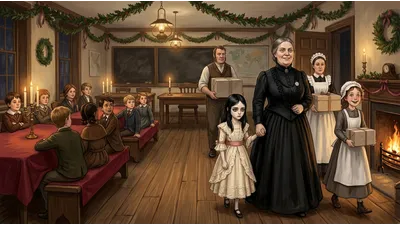
Before you read — think about:
- A birthday can be about the child, the gifts, or the people watching. Which of those would matter most to you, and why?
- If you were being celebrated, whose presence would matter more to you than the presents?
- What can you tell about a giver from the present they choose?
- Why might an author give two different chapters nearly the same title?
- Sara keeps her hardest feelings private. What are the advantages of that habit, and what are the costs?
Watch for these while reading:
- Every mention of money in Miss Minchin's speech, and what she assumes a fortune is for.
- Where Becky is standing during the party, and where she is told to stay.
- Questions Lavinia asks Sara in front of the other girls, and how Sara answers them.
- The Last Doll and its wardrobe — notice how much space Burnett gives to describing an object.
- Miss Minchin's manner toward Miss Amelia when no pupils are watching.
Vocabulary to know:
rapturous (adjective) — full of overwhelming delight; disapproving (adjective) — showing that you think something is wrong; superior (adjective) — higher in rank or position; satin (noun) — a smooth, glossy cloth; betrayed (verb) — accidentally revealed a feeling one meant to hide; scandalized (adjective) — shocked by something thought improper; dignity (noun) — calm, serious behavior that commands respect; liberty (noun) — an action that goes beyond what one is allowed; suspense (noun) — the anxious excitement of waiting to find out; gleam (noun) — a brief flash of light or feeling; scullery (noun) — the back kitchen where pots and dirty work are done; heiress (noun) — a girl or woman who will inherit money or property; meritorious (adjective) — deserving praise; worthy; disrespectful (adjective) — rude toward someone who should be honored; jesting (adjective) — joking; not serious; adorn (verb) — to add beauty or distinction to something; accomplished (adjective) — highly skilled in many things; scathingly (adverb) — in a way that is bitingly critical; ladylike (adjective) — behaving in the polite way expected of a lady; deserting (verb) — abandoning a place or person; rueful (adjective) — showing quiet disappointment; aghast (adjective) — filled with shock and horror; coverlet (noun) — a decorative top cover for a bed; clamoring (adjective) — crowding around noisily and eagerly; revealed (verb) — showed something that had been hidden; tiara (noun) — a small jeweled crown worn on the head; sealskin (noun) — fur made from a seal, used for expensive coats; impassively (adverb) — without showing any feeling; exclamations (noun) — sudden cries of surprise or delight; undisturbedly (adverb) — calmly, without being upset; garret (noun) — a small, bare room just under the roof of a house; plumes (noun) — large decorative feathers; refreshments (noun) — food and drinks served at a party; decorum (noun) — proper, orderly behavior; partake (verb) — to share in something, especially food; indiscretion (noun) — an unwise act that could get one into trouble; linger (verb) — to stay longer than one should; reverently (adverb) — with deep respect, as if handling something sacred; threshold (noun) — the doorway or entrance of a room; smitten (verb) — struck suddenly by a strong feeling; elderly (adjective) — old; here used jokingly of girls who think themselves too grown up; succinctly (adverb) — in very few words; lavishly (adverb) — in a very generous, extravagant way; disparagement (noun) — criticism that makes something seem less worthy; patron (noun) — someone who supports a business with their money; rigidly (adverb) — stiffly and without bending; extravagance (noun) — spending far more money than is sensible; ejaculated (verb) — said something suddenly and sharply (an older use); brusqueness (noun) — blunt, abrupt manner; stricken (adjective) — struck down by illness or grief; ruin (noun) — the complete loss of one's money and position; shrewd (adjective) — clever at judging situations to one's own advantage; pauper (noun) — a person with no money at all; monstrous (adjective) — shockingly wrong or outrageous; gauze (noun) — a very thin, light, see-through fabric; irate (adjective) — very angry; farthing (noun) — a coin of tiny value; used to mean almost nothing at all; desolate (adjective) — bleak, empty, and utterly alone; grotesque (adjective) — strangely and unpleasantly odd in appearance; steadfast (adjective) — firm and unwavering.
Chapter 8: In the Attic

Before you read — think about:
- Which is hardest when a person loses everything: the missing comforts, the sudden work, or the change in how people speak to them?
- Sara once said she could not tell whether she was really a nice child, because nothing hard had ever happened to her. Can you know your own character before it is tested?
- Sara has always said a princess behaves like one whatever happens. What would that idea look like when nobody is treating you like one?
- Sara has told herself that soldiers do not complain. What are the advantages of a rule like that, and what are its dangers?
- What can a person still keep when everything they own has been taken away?
Watch for these while reading:
- How fast the change is made, and the reason Miss Minchin gives for making it all at once.
- Miss Amelia's small hesitations, and what she never quite says.
- The other pupils' behavior toward Sara now, sorted by who each of them is.
- The attic itself — Burnett's facts about the room, and Sara's comments on them.
- What Sara does at night once her working day is over.
Vocabulary to know:
woe (noun) — very deep sorrow; forcibly (adverb) — strongly and unavoidably; anguish (noun) — severe mental pain; scufflings (noun) — the sounds of small scrambling movements; gradually (adverb) — slowly, over a period of time; ornaments (noun) — decorative objects kept for their beauty; transform (verb) — to change something completely; neglected (verb) — failed to do something that should have been done; reproof (noun) — a scolding for doing something wrong; exacting (adjective) — demanding a great deal from others; instructress (noun) — a woman employed to teach; commissions (noun) — tasks or errands someone is trusted to carry out; grudgingly (adverb) — unwillingly; with resentment; personage (noun) — an important or distinguished person; intimacies (noun) — close friendships; ill-used (adjective) — badly or unfairly treated; impression (noun) — the idea or opinion people form about something; matter-of-fact (adjective) — plain and unimaginative; established (adjective) — accepted as a settled fact; mischief (noun) — trouble deliberately stirred up; interfered (verb) — got involved in other people's business; tramped (verb) — walked heavily over a long distance; parcels (noun) — wrapped packages; inattention (noun) — failure to pay attention; loiter (verb) — to linger idly instead of working; handmaid (noun) — a female servant who attends someone personally; stupefied (adjective) — too dazed by shock to think or speak; comforters (noun) — people who bring comfort to someone in trouble; contested (verb) — argued against; disputed; clung (verb) — held on tightly; besieged (verb) — surrounded someone with constant requests; loathed (verb) — hated intensely; corridor (noun) — a long passage inside a building; garments (noun) — pieces of clothing; hysterical (adjective) — out of control from nerves or emotion; aimlessly (adverb) — without purpose or direction; spasmodically (adverb) — in a sudden, jerky burst; injustice (noun) — an unfair act toward someone; wretchedness (noun) — a state of deep misery; over-sensitive (adjective) — too easily hurt by what others do; barrier (noun) — something that keeps people apart; listless (adjective) — without energy or interest in anything; muffled (adjective) — made quieter or less clear; glimmer (noun) — a faint, unsteady light; shawl (noun) — a large piece of cloth worn wrapped around the shoulders; reproachful (adjective) — showing hurt disappointment in someone; dismay (noun) — a feeling of upset discouragement; stoutly (adverb) — firmly and stubbornly; fearsome (adjective) — causing fear; stunned (adjective) — knocked senseless; unable to work; jailer (noun) — the person who guards prisoners; adversity (noun) — hardship and misfortune.
Chapter 9: Melchisedec
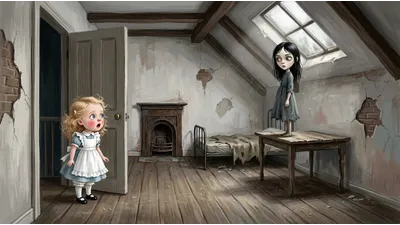
Before you read — think about:
- Where do people find the strength to keep going in circumstances they cannot change — from other people, from ideas, or from habit?
- Some people name the creatures they live with. What does giving something a name change?
- What is the difference between a pet and a pest?
- Most people have been taught to be afraid of some animals. Where does that fear usually come from?
- Sara has always treated stories as useful, not just entertaining. What can a story do that a lecture cannot?
Watch for these while reading:
- What Sara shows Lottie through the skylight.
- How the attic feels to Sara at different hours of the day.
- How Sara talks to something that cannot answer her back.
- The wall between Sara's attic and Becky's.
- Prisoners, the Bastille, and history generally — where Sara's comparisons come from.
Vocabulary to know:
alteration (noun) — a change in something; rumored (verb) — talked about without anyone being sure it is true; confidentially (adverb) — in a private, secret-sharing way; thrust (verb) — pushed something firmly and suddenly; persisted (verb) — kept on asking or trying despite discouragement; accountable (adjective) — held responsible for something; reproved (verb) — scolded or corrected; gossiping (verb) — chatting about other people's private business; implored (verb) — begged urgently; existence (noun) — the fact of being real or being there; slates (noun) — flat gray stones used to cover a roof; slanted (verb) — sloped at an angle; quarrelled (verb) — argued angrily; pecked (verb) — struck quickly with a beak; unreal (adjective) — seeming imaginary rather than actual; adjacent (adjective) — next to or nearby; hospitality (noun) — generous welcome given to a guest; twinkling (adjective) — bright and quickly flickering; seized (verb) — grabbed suddenly and firmly; hearty (adjective) — large and satisfying; chattered (verb) — made quick, continuous noises; suspected (verb) — guessed at the existence of something; gestures (noun) — movements of the hands that express meaning; whitewash (noun) — a cheap white coating painted onto walls; quilt (noun) — a padded bed covering; tilted (adjective) — leaning to one side; hind (adjective) — at the back; rear; sniffing (verb) — smelling in short, quick breaths; scent (noun) — a smell; dwarf (noun) — a tiny imaginary person from old stories; gnome (noun) — a small underground creature in fairy tales; mused (verb) — thought something over quietly; frightfully (adverb) — extremely; dreadfully; bitterly (adverb) — with sharp, painful feeling; apologetic (adjective) — looking sorry for causing trouble; stir (verb) — to move even slightly; delicately (adverb) — in a careful, dainty way; possession (noun) — the state of having hold of something; crack (noun) — a narrow gap or split; inclined (adjective) — feeling a strong urge to do something; quaked (verb) — trembled with fear; tame (adjective) — no longer wild or afraid of people; scraps (noun) — small leftover pieces of food; composed (adjective) — calm and in control of oneself; countenance (noun) — a person's face or expression; rouse (verb) — to stir up or awaken a feeling; stillness (noun) — complete quiet and lack of movement; businesslike (adjective) — practical and efficient; attitude (noun) — the position in which a body is held; fellow-sufferer (noun) — someone going through the same hardship as you; beamed (verb) — smiled widely with delight; noiselessly (adverb) — without making any sound.
Chapter 10: The Indian Gentleman
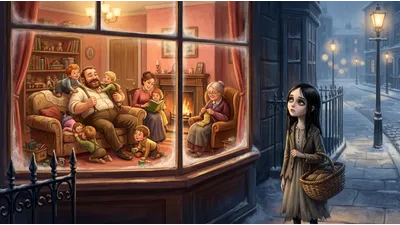
Before you read — think about:
- The title of this chapter is 'The Indian Gentleman.' What would you expect a nickname like that to be based on?
- The house next door has been empty. What kinds of clues would tell you who was moving in?
- Winter streets in a big city put rich and poor side by side. What would you notice first?
- What can a doll still mean after the person who gave it is gone?
- Why might a very sick stranger still be interesting to a child who has plenty of her own troubles?
Watch for these while reading:
- The names Sara invents for the family across the square, and what her naming habit tells you about her.
- Guy Clarence, the smallest boy of the Large Family, and how he behaves toward a girl he does not know.
- Every detail of the furniture carried into the empty house — Sara reads it like evidence.
- The gap between the way Sara is dressed and the way she speaks.
- Burnett's contrast between the crowded, noisy Large Family and the silent house next door.
Vocabulary to know:
perilous (adjective) — full of danger; pilgrimages (noun) — long journeys made to an important place; inspection (noun) — an official check to see that all is in order; brougham (noun) — a small closed carriage pulled by one horse; remnants (noun) — the small leftover pieces of something; disposed (verb) — got rid of; sold off; perambulators (noun) — baby carriages; romantic (adjective) — grand and story-like; sashes (noun) — wide decorative bands worn around the waist; pantomime (noun) — a musical Christmas play for children; clad (adjective) — dressed; invariably (adverb) — always; without exception; affluence (noun) — wealth; having plenty of money; benignly (adverb) — in a kindly, gentle way; thwarted (verb) — prevented from doing what one intends; benevolence (noun) — kindness and the wish to do good; heartbrokenly (adverb) — in a way full of crushing disappointment; mist (noun) — a blur of tears, like fine fog; orphan (noun) — a child whose parents have died; strove (verb) — struggled or competed hard; insinuating (verb) — slipping something gently into place; nestling (verb) — snuggling close for comfort; flutter (noun) — a quick, light beating of wings; alighted (verb) — landed after flying; flock (noun) — a group of birds together; wrought (verb) — worked into shape by hand; also, worked up into a state; insulting (adjective) — deliberately rude and hurtful; passion (noun) — a burst of violent feeling; slighting (adjective) — showing that someone is thought unimportant; vulgar (adjective) — coarse and lacking good manners; insolent (adjective) — rude and disrespectful on purpose; sneering (verb) — showing scorn with a twisted smile; shabbiness (noun) — the state of being worn out and poor-looking; tempest (noun) — a violent storm; vacant (adjective) — blank and empty of expression; inexpressive (adjective) — showing no feeling at all; complacent (adjective) — calmly pleased with oneself; ignominiously (adverb) — in a humiliating, undignified way; chastising (verb) — punishing or scolding; remorse (noun) — deep regret for something one has done; aperture (noun) — an opening or gap; prolonged (adjective) — lasting longer than usual; loiterers (noun) — people standing about with nothing to do; elaborately (adverb) — with a great deal of detailed decoration; teak-wood (noun) — a hard, valuable tropical wood used for fine furniture; Oriental (adjective) — an older word for things from Asia, especially India and the Far East; weird (adjective) — strange in an unsettling way; homesick (adjective) — sad from missing a home far away; superb (adjective) — magnificent; of the finest quality; shrine (noun) — a decorated case or place for something holy; solitary (adjective) — alone, without company; shattered (adjective) — badly broken down; haggard (adjective) — looking exhausted and worn from illness or worry; skeleton (noun) — the bones of a body; here, a body worn down to almost nothing; footman (noun) — a male servant who attends a carriage and door; occupant (noun) — the person living in a place.
Chapter 11: Ram Dass

Before you read — think about:
- If you could have only one window, what would you want it to look out on, and why?
- Sara spent her early childhood in India. What might she miss that has nothing to do with money?
- Is it possible to be treated as a servant all day and still think of yourself as something else? What would that take?
- The title of this chapter is a person's name. What would you watch for in a first meeting between strangers who have something in common?
- Does staying polite to someone who is cruel to you make you strong or weak? Be ready to defend your answer.
Watch for these while reading:
- Burnett's sunset — count the different things the clouds get compared to.
- The first conversation across the roof — tone, language, and manners on both sides.
- Ram Dass's bearing and courtesy, and how they compare with anything Sara meets downstairs.
- The historical figures Sara calls on when she needs courage.
- Miss Minchin's tone in the schoolroom, and whether Sara answers or stays quiet.
Vocabulary to know:
fleecy (adjective) — soft and fluffy, like wool; tinged (verb) — slightly colored; vaulted (adjective) — arched like the curved ceiling of a great hall; crimson (adjective) — deep rich red; turquoise (noun) — a greenish-blue color; amber (noun) — a warm golden-yellow color; headlands (noun) — high points of land jutting out into the sea; jutted (verb) — stuck out sharply; subdued (adjective) — quieter and softer than usual; propped (verb) — held open by resting something against it; molten (adjective) — melted into liquid by great heat; glorious (adjective) — splendid and magnificent; emerging (verb) — coming out into view; swathed (adjective) — wrapped in layers of cloth; turbaned (adjective) — wearing a turban, a long cloth wound around the head; Lascar (noun) — an old British term for a sailor or servant from South Asia; snuggling (verb) — pressing close for warmth or comfort; illuminated (verb) — lit up; dusky (adjective) — dark in shade; salute (noun) — a gesture of greeting and respect; impish (adjective) — mischievous, like a little imp; Hindustani (noun) — a language widely spoken in northern India; intervened (verb) — stepped in to change what was happening; disobedient (adjective) — refusing to do as told; unworthy (adjective) — not deserving of respect; regain (verb) — to get something back; precaution (noun) — an action taken in advance to prevent trouble; clinging (verb) — holding on tightly; skinny (adjective) — very thin; obeisance (noun) — a deep bow showing great respect; indulgence (noun) — kindness in allowing someone something; agility (noun) — the ability to move quickly and lightly; costume (noun) — the style of dress belonging to a country or people; reverence (noun) — deep respect; admonished (verb) — warned or scolded firmly; tatters (noun) — torn, ragged pieces of clothing; triumph (noun) — a great personal victory; acid (adjective) — sharp and sour; bitingly unkind; malice (noun) — the wish to hurt someone; erect (adjective) — held straight and upright; civility (noun) — courteous, well-mannered behavior; chuckling (verb) — laughing quietly to oneself; neatherd (noun) — an old word for a person who herds cattle; disguise (noun) — a changed appearance that hides who someone is; scarlet (adjective) — bright red; smarting (adjective) — stinging with pain; unison (noun) — acting together at exactly the same moment; candid (adjective) — completely open and honest; unimaginative (adjective) — unable to picture things that are not directly in front of you; execution (noun) — the act of putting someone to death by order of a ruler.
Chapter 12: The Other Side of the Wall

Before you read — think about:
- The title is 'The Other Side of the Wall.' What can a wall do besides keep people apart?
- Kitchen talk in a house like this is often the only news a servant or a drudge gets. How reliable would you expect it to be?
- Why might two people who live a few feet apart still fail to understand each other?
- What might an author gain by showing us two rooms that share a single wall?
- When an author lets the reader know something the characters do not, what is the author asking you to feel?
Watch for these while reading:
- Cook, the housemaid, and the errand boy — what the kitchen believes about the house next door.
- How Mr. Carrisford behaves, compared with what his servants say about his health.
- The Carmichael household across the square, and Burnett's reason for putting a big, happy family into this chapter.
- Names and pet names — pay attention to every one that gets spoken aloud.
- The wall itself, and what Burnett makes of a distance of a few feet.
Vocabulary to know:
surfeit (noun) — far too much of something, especially food; lampreys (noun) — long eel-like fish once eaten at royal tables; disgraced (adjective) — shamed publicly; stripped of honor; brain-fever (noun) — an old term for a serious illness thought to be brought on by mental strain; restored (verb) — given back; savings (noun) — money a person has put aside; dressing-gown (noun) — a long robe worn indoors over nightclothes; hopelessly (adverb) — without any hope; decorous (adjective) — polite and properly behaved; invalid (noun) — a person weakened by long illness; discreet (adjective) — careful about what one says and when; encounter (noun) — a brief meeting; plaster (noun) — the hard coating on interior walls; harassed (adjective) — worn down by constant worry; tormenting (verb) — causing oneself lasting mental pain; refurnish (verb) — to supply a room with new furniture; reduced (verb) — brought down to a lower, worse state; uneasily (adverb) — in a worried, uncomfortable way; cheerily (adverb) — in a bright, encouraging way; well-to-do (adjective) — having plenty of money; unprovided (adjective) — left without money or support; burdens (noun) — heavy responsibilities; trace (noun) — a sign showing where someone has gone; similar (adjective) — alike in important ways; villain (noun) — a wicked person; catastrophes (noun) — terrible disasters; probable (adjective) — likely to be true; wasted (adjective) — thin and weakened by illness; penniless (adjective) — having no money whatsoever; fantastic (adjective) — so strange it seems imaginary; petulant (adjective) — irritable and childishly sulky; speculation (noun) — a risky investment made in hope of large profit; swindler (noun) — a person who cheats others out of money; strain (noun) — severe pressure on the mind or body; torture (noun) — extreme suffering; hideous (adjective) — horrifying and ugly; mocking (verb) — jeering at someone cruelly; verge (noun) — the very edge of something; sanely (adverb) — with a sound, reasonable mind; consciousness (noun) — the state of being awake and aware; haze (noun) — a blur that makes things hard to see or recall; clue (noun) — a piece of information that helps solve a mystery; shrugged (verb) — raised the shoulders to show one does not know or care; sloppy (adjective) — wet, muddy, and messy.
Chapter 13: One of the Populace
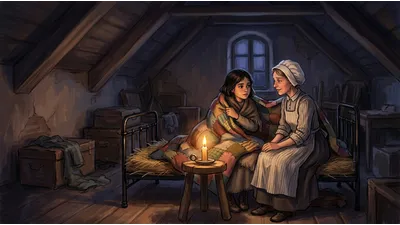
Before you read — think about:
- The title is 'One of the Populace.' Who usually gets counted as 'the populace,' and who does not?
- What does the word 'populace' suggest to you, and what does it feel like to be counted as one of a crowd?
- Sara has a rule about how a princess behaves toward people with even less than she has. Where did that rule come from, and is it a good one?
- A city street in winter is full of people who will never know one another's names. What, if anything, do they owe each other?
- Is a rule you follow when nobody is watching worth more than one you follow in public? Why?
Watch for these while reading:
- Sara's thoughts as she walks, set against the weather and the shops.
- The stories Sara tells herself to keep walking.
- Numbers in this chapter — Burnett counts things carefully, and the counting is the point.
- The baker-woman at her window — her face, her shop, her manner.
- The child in the doorway, whom Burnett describes at length without giving her a name.
Vocabulary to know:
slush (noun) — half-melted snow mixed with mud; cosey (adjective) — warm and comfortable (an older spelling of cozy); alluring (adjective) — strongly attractive and tempting; dismal (adjective) — gloomy and depressing; hoarsely (adverb) — in a rough, croaking voice; subterranean (adjective) — underground; tropical (adjective) — belonging to the hot regions near the equator; cocoanut (noun) — the large hard fruit of a palm tree (an older spelling of coconut); faltered (verb) — spoke hesitantly and uncertainly; brows (noun) — the ridges above the eyes; the forehead; continuously (adverb) — without stopping; dreary (adjective) — dull, bleak, and joyless; pall (noun) — a dark covering that hangs over everything; drizzle (noun) — fine, light rain; absurd (adjective) — ridiculous; draggled (adjective) — wet, muddy, and hanging limp; downtrodden (adjective) — worn down by being walked on; deprived (verb) — kept from having something one needs; pinched (adjective) — thin and drawn from cold or hunger; persevered (verb) — kept going despite difficulty; obstinately (adverb) — stubbornly refusing to give up; squelched (verb) — made a wet sucking sound; merino (noun) — a soft fine wool from merino sheep; wade (verb) — to walk through water or deep mud; trodden (verb) — stepped on repeatedly; currants (noun) — small dried berries baked into cakes and buns; odors (noun) — smells; cellar (noun) — an underground room below a building; jostled (verb) — pushed roughly against one another in a crowd; rags (noun) — torn, worn-out clothes; tangled (adjective) — twisted into knots; hollow (adjective) — sunken; deeply set from hunger or illness; shuffled (verb) — moved awkwardly without lifting the feet; thrones (noun) — the seats of royal power; makeweight (noun) — something extra added to bring a purchase up to full measure; ravenous (adjective) — extremely hungry; wolfish (adjective) — greedy and fierce, like a hungry wolf; cram (verb) — to stuff something in quickly and forcefully; lingering (adjective) — staying longer than expected; shaggy (adjective) — rough and untidy, with long matted hair; pondered (verb) — thought about something seriously; incredible (adjective) — too good or too strange to be believed; blinds (noun) — window coverings pulled down for privacy; swarm (noun) — a busy crowd; portmanteau (noun) — a large travelling case that opens into two halves; drosky (noun) — a low open Russian carriage; Czar (noun) — the emperor of Russia; muzhiks (noun) — Russian peasants; hovering (verb) — staying close by without settling; lugging (verb) — carrying something heavy with effort.
Chapter 14: What Melchisedec Heard and Saw

Before you read — think about:
- What can an animal watching from a corner notice that a person in the room might miss?
- Servants often know a house better than its owner does. Why?
- The title tells you Melchisedec heard and saw something. What is unusual about telling a scene through an animal?
- Two visitors and a rat share a scene. What can each of them notice that the others cannot?
- Why might an author keep a child offstage for an entire chapter?
Watch for these while reading:
- How much Ram Dass has pieced together about a stranger's daily life, and how he did it.
- The words Ram Dass chooses for Sara's bearing.
- Everything the secretary writes down in his notebook.
- The two visitors' different jobs in the room.
- The roof between the houses, treated as a route rather than a boundary.
Vocabulary to know:
reconnoitre (verb) — to go out and scout a place carefully; rambling (verb) — wandering about without a fixed route; palpitating (adjective) — beating fast with fear or excitement; ceased (verb) — stopped; preparations (noun) — things done in advance to get ready; dexterity (noun) — skill and neatness in using the hands and body; precipitately (adverb) — very suddenly and hastily; exponent (noun) — someone who explains or represents another person; pariah (noun) — a person shut out and looked down on by everyone; bearing (noun) — the way a person carries and conducts themselves; tablet (noun) — a small pad of paper for writing notes; mattress (noun) — the padded part of a bed one lies on; patched (adjective) — mended with pieces of extra cloth; ragged (adjective) — torn and worn into rough edges; modestly (adverb) — without boasting; naught (noun) — nothing; visions (noun) — vivid pictures imagined in the mind; entertainment (noun) — something that amuses and distracts; unexplained (adjective) — having no known reason for being there; comprehend (verb) — to understand; ominous (adjective) — seeming to warn of something bad; pities (noun) — causes for regret; emerge (verb) — to come out into the open; scuffle (verb) — to move about with quick scraping steps; furtively (adverb) — secretly, trying not to be seen; caution (noun) — careful attention to avoid danger; secretary (noun) — a person employed to handle another's letters and business; invading (verb) — entering somewhere without permission; privacy (noun) — the state of being undisturbed by others.
Chapter 15: The Magic
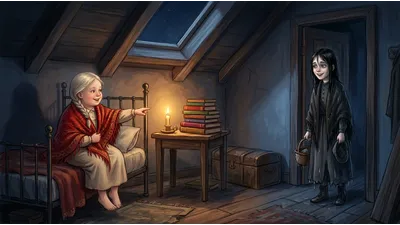
Before you read — think about:
- Ermengarde has been Sara's friend since the first week of school. What keeps a friendship going when two people's lives no longer look anything alike?
- Sara has always refused to say things that are not true. Why might that rule get harder, not easier, when you are in trouble?
- Is there a difference between a harmless story and a lie? Where would you draw the line?
- The chapter is called 'The Magic.' In a story that has been realistic so far, what might that word be doing?
- What does Miss Minchin believe a school is for? What do you think one should be for?
Watch for these while reading:
- What Sara and Ermengarde each bring to the attic tonight.
- What Ermengarde notices, and what she has managed not to notice until now.
- Everyday objects in the attic, and what Sara's stories turn them into.
- Becky's place in the room whenever trouble starts.
- Cold, hunger, and firelight: track how often Burnett returns to the same three things.
Vocabulary to know:
falsehoods (noun) — lies; vent (verb) — to let out strong feelings on someone; convenience (noun) — something useful that saves trouble; grumbling (verb) — complaining in a low voice; vicious (adjective) — cruel and spiteful; humor (noun) — a person's mood; pantry (noun) — a small room where food is stored; landing (noun) — the flat area at the top of a flight of stairs; lop-sided (adjective) — leaning to one side; uneven; contentedly (adverb) — in a satisfied, untroubled way; dejected (adjective) — sad and discouraged; conjugations (noun) — the different forms a verb takes in a language; gory (adjective) — full of blood and violence; pike (noun) — a long weapon with a pointed metal head; howling (adjective) — crying out loudly and wildly; vivid (adjective) — producing clear, strong mental pictures; depict (verb) — to picture or describe something; confessed (verb) — admitted something one has been hiding; appetite (noun) — the desire for food; nourishing (adjective) — providing what the body needs to grow strong; unappetizing (adjective) — not at all tempting to eat; inferior (adjective) — of poorer quality than others; gnawing (adjective) — producing a steady, biting ache; weary (adjective) — very tired; hostess (noun) — a woman who receives and entertains guests; knights (noun) — armored warriors who served a lord; squires (noun) — young attendants who served knights; vassals (noun) — people who owed service to a lord; pennons (noun) — long narrow flags carried on lances; clarions (noun) — high, clear-sounding trumpets; drawbridge (noun) — a castle bridge that can be raised or lowered; banquet-hall (noun) — a great room where feasts are held; minstrels (noun) — musicians who sang and played at feasts; chatelaine (noun) — the lady in charge of a castle; famine (noun) — a period when there is almost no food; pillaged (adjective) — robbed and stripped bare by force; dispensed (verb) — handed out generously; panic-stricken (adjective) — overcome with sudden terror; repeatedly (adverb) — over and over again; slip-shod (adjective) — wearing shoes worn down at the heel; clenching (verb) — closing tightly with anger or strain; outstretched (adjective) — reached out and extended; unconquerable (adjective) — impossible to defeat; denote (verb) — to be a sign of something; awe-stricken (adjective) — silenced by wonder or fear; wofully (adverb) — in a sorrowful way (an older spelling of woefully); charity (noun) — money or help given to those in need; hampers (noun) — large baskets packed with food; inspiration (noun) — a sudden bright idea; reeled (verb) — swayed as if about to fall; befallen (verb) — happened to someone; specious (adjective) — looking impressive but not genuine; damsels (noun) — young ladies (an old storybook word); viols (noun) — old stringed instruments played with a bow; bassoons (noun) — long, deep-toned woodwind instruments; audacity (noun) — shocking boldness; witheringly (adverb) — in a scornful way meant to shame someone; pertness (noun) — cheeky, disrespectful boldness; intemperate (adjective) — lacking all self-control; tinder (noun) — burnt or dry material left after a small fire.
Chapter 16: The Visitor
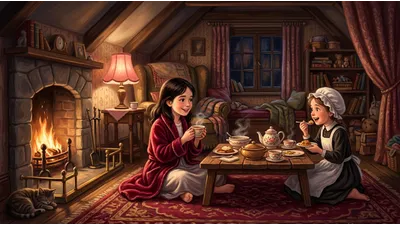
Before you read — think about:
- Miss Minchin punished Sara last night. What would you expect her to look for in the morning?
- Sara has a friend she has never met. What would you want that friend to know?
- If someone helped you anonymously, would you try to find out who it was? Make the case for both choices.
- What difference could one warm, comfortable night make to somebody who has been cold for years?
- The title is 'The Visitor.' Who would you expect, and who would actually be the most surprising visitor?
Watch for these while reading:
- How Becky tests whether the night was real.
- The explanations Miss Minchin invents for Sara's manner, and how far they are from the truth.
- What is different about the attic from one night to the next.
- The wording on the paper pinned to the parcel, and what Miss Minchin makes of it.
- The house next door — any sign of life from its roof.
Vocabulary to know:
savory (adjective) — tasty and full of flavor, especially not sweet; muffins (noun) — soft round breads eaten hot with butter; utmost (noun) — the greatest degree possible; bewildering (adjective) — confusing and hard to take in; luxuriated (verb) — took great comfort and pleasure in something; drowsiness (noun) — sleepiness; couch (noun) — a bed or place to lie down; commit (verb) — to fix something firmly in the memory; agency (noun) — the means by which something is done; bounden (adjective) — bound by duty; obliged to serve; shillings (noun) — old British coins; a servant's weekly wage was counted in them; priggishly (adverb) — in a smugly self-righteous way; deceitful (adjective) — dishonest; hiding the truth; ill-natured (adjective) — unkind by disposition; askance (adverb) — with a sideways look of suspicion or disapproval; gurgling (verb) — making a low bubbling sound in the throat; superintend (verb) — to oversee and manage; hardened (adjective) — made unfeeling by experience; impertinence (noun) — rude boldness toward someone in authority; audacious (adjective) — boldly daring; august (adjective) — grand and commanding respect; displeasure (noun) — disapproval; singular (adjective) — strange and unusual; rebellion (noun) — open resistance against someone in charge; resolved (verb) — firmly decided; strictness (noun) — severe supervision; secrecy (noun) — the keeping of something hidden; suspicion (noun) — a feeling that something is being hidden; tacks (noun) — short sharp nails with broad heads; substantial (adjective) — solid and firm enough to be used; cushions (noun) — soft padded bags used for sitting or leaning on; scant (adjective) — barely enough; draperies (noun) — cloth hangings used as decoration; ingenious (adjective) — cleverly designed; conveniences (noun) — things that make life easier; magician (noun) — someone who works magic; peevish (adjective) — cross and complaining; hither (adverb) — to this place (an old word, usually paired with 'thither'); thither (adverb) — to that place; despair (noun) — the complete loss of hope; blissfully (adverb) — in a state of perfect happiness; prospect (noun) — something expected to happen soon; fattening (verb) — growing plumper; haughty (adjective) — proud and looking down on others; puzzled (adjective) — unable to work something out; defiance (noun) — open refusal to obey; humbled (adjective) — brought low; stripped of pride; respective (adjective) — belonging separately to each one; intruder (noun) — someone who enters where they were not invited; piteously (adverb) — in a way that arouses pity; caressing (adjective) — gently stroking and affectionate; crooned (verb) — sang or spoke in a soft, soothing voice; mingled (adjective) — mixed together; quarters (noun) — a place to stay or sleep; sordid (adjective) — concerned only with money and low motives; crotchety (adjective) — irritable and full of odd fixed opinions; bachelor (noun) — a man who has never married; whereabouts (noun) — the place where someone is; agitated (adjective) — upset and unsettled; envying (verb) — wanting what someone else has.
Chapter 17: "It Is the Child"
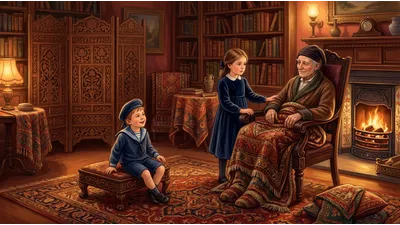
Before you read — think about:
- What are the odds that a search across Europe for one child, with almost nothing to go on, succeeds?
- The chapter title is a sentence: 'It Is the Child.' What kind of chapter do you expect from a title that sounds like someone crying out?
- Neighbors can live next door for years and still be strangers. What would it take to stop being strangers?
- The Large Family has watched the girl across the square for two years without speaking to her. What do neighbors actually owe one another?
- Burnett has put a wall between two people who need each other. After so many chapters, what would it take to bring them into the same room?
Watch for these while reading:
- Mr. Carmichael's account of what he did in Moscow.
- Janet's opinion of a friend who ran away, and Mr. Carrisford's face while she gives it.
- What Mr. Carrisford has assumed about the shabby girl next door.
- The way the people in the house next door talk about the child they are looking for.
- Burnett's use of the word 'child' all through the chapter.
Vocabulary to know:
unavailing (adjective) — producing no result; satisfactorily (adverb) — well enough to settle a matter; reclining (adjective) — made for leaning back and resting; astride (adverb) — sitting with one leg on each side; encouraging (adjective) — giving someone confidence to speak or go on; bridle (noun) — the straps used to guide a horse; bounced (verb) — moved up and down with quick springs; chirrup (verb) — to make short cheerful chirping noises; office (noun) — a duty or task one is asked to perform; incontinently (adverb) — immediately and without restraint; wreck (noun) — someone ruined in health or spirits; atmosphere (noun) — the feeling or mood a person brings with them; freshness (noun) — healthy, lively energy; pitifully (adverb) — in a way that stirs deep pity; compelled (verb) — forced; wonderingly (adverb) — with puzzled amazement; fretted (verb) — worried aloud in a restless way; restless (adjective) — unable to stay still or calm; pace (verb) — to walk back and forth; whatsoever (adverb) — at all; of any kind; roused (verb) — stirred into awareness; breathlessly (adverb) — so eagerly that one can hardly breathe; agile (adjective) — quick and nimble in movement; soft-footed (adjective) — moving without making a sound; reluctant (adjective) — unwilling; unrelenting (adjective) — refusing to soften or give way; contracted (verb) — tightened or drew together; detail (noun) — a small individual fact.
Chapter 18: "I Tried Not to Be"
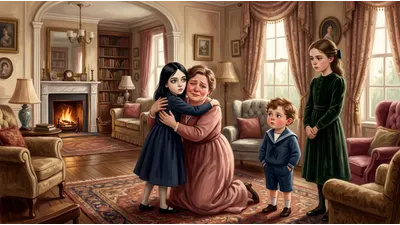
Before you read — think about:
- Sara now knows who the Indian gentleman is. What would you want to ask him first?
- Sara has kept up a careful politeness toward Miss Minchin for two years. What does that kind of politeness protect, and who does it protect?
- When a person's luck suddenly changes, who else is affected?
- What does the word 'home' mean to someone who has never really had one?
- What sort of sentence begins with the words 'I tried not to be'?
Watch for these while reading:
- Donald's memory of the sixpence he once gave away.
- The first thing Sara wants to know, before anything about money.
- Every argument Miss Minchin brings, and what each one is really about.
- Miss Amelia, and how she conducts herself alongside her sister.
- Becky, and where she is while all of this is going on.
Vocabulary to know:
temporarily (adverb) — for a short time only; overpowering (adjective) — too strong to withstand; self-reproachful (adjective) — full of blame toward oneself; misled (verb) — led to believe something untrue; involuntarily (adverb) — without meaning to; automatically; astonishing (adjective) — extremely surprising; proprietress (noun) — a woman who owns a business; scrutiny (noun) — long, searching examination; forwardness (noun) — boldness that goes beyond one's place; desperate (adjective) — driven to reckless action by having no hope left; presumption (noun) — behavior that takes a liberty one has no right to take; amazed (adjective) — filled with astonishment; level-toned (adjective) — spoken in a steady, even voice; significance (noun) — importance or meaning; investments (noun) — money put into a business in hope of profit; recovered (verb) — got back something lost; retrieved (verb) — recovered or made good again; enormously (adverb) — to a very great degree; sly (adjective) — quietly mischievous; guardian (noun) — an adult legally responsible for a child; assured (adjective) — made certain and safe; tenfold (adverb) — ten times over; folly (noun) — foolishness; protested (verb) — objected strongly; interposed (verb) — interrupted to say something; appeal (verb) — to make an urgent request for a decision in one's favor; awkwardly (adverb) — in an uncomfortable, clumsy way; reddened (verb) — turned red in the face; firmness (noun) — steady, unyielding resolve; invitations (noun) — requests asking someone to visit; flinched (verb) — drew back from something painful; peppery (adjective) — quick-tempered; niece (noun) — the daughter of one's brother or sister; behalf (noun) — the interest or side of a particular person; undertaken (verb) — taken on as a responsibility; argued (verb) — stated a case in order to win a point; closeted (verb) — shut away privately with someone for a talk; mopped (verb) — wiped away moisture; reckless (adjective) — acting without caring about the consequences; grovel (verb) — to behave with humiliating submission; flush (noun) — a sudden redness in the face; salts (noun) — sharp-smelling crystals held under the nose to revive someone; custom (noun) — a usual habit or practice; babel (noun) — a confused noise of many voices at once; plaintively (adverb) — in a sad, complaining way; penetrated (verb) — passed through something; mystic (adjective) — mysterious and full of hidden meaning; blurring (verb) — making sight unclear; silentness (noun) — complete quietness of movement; attendant (noun) — a servant who waits on a particular person.
Chapter 19: Anne
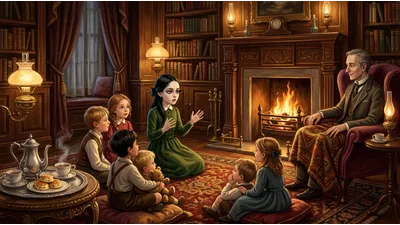
Before you read — think about:
- The last chapter of a book often feels quieter than the climax. What would you still want answered?
- Sara has said all along that a princess is something you are on the inside. Now that nothing is forcing her to prove it, does the idea still matter?
- The book is called A Little Princess. With one chapter to go, who in the story do you think earns that name?
- The last chapter is named 'Anne.' What would you guess an author is doing by giving the last word to a new name?
- What would a story about a rich girl who becomes poor have to do to be about more than money?
Watch for these while reading:
- Mr. Carrisford's version of the attic nights — the same events told from the other side.
- The joke the two of them keep going.
- What Sara is thinking when she goes quiet by the fire.
- What Sara asks for when she is told she may have whatever she likes.
- Who Burnett puts on stage in the last pages, and what they are doing.
Vocabulary to know:
reigned (verb) — ruled; here, filled a place completely; priceless (adjective) — so valuable it cannot be measured in money; astonished (adjective) — greatly surprised; prophesied (verb) — predicted what would happen; boarhound (noun) — a large hunting dog once used to hunt wild boar; inscription (noun) — words carved or engraved onto something; collar (noun) — a band worn round an animal's neck; rejoice (verb) — to be glad together; companion (noun) — someone whose company one shares; distract (verb) — to draw someone's attention away from their troubles; cheerless (adjective) — bleak and joyless; enlarged (verb) — expanded on an idea by adding more to it; childlike (adjective) — showing the simple delight of a child; invention (noun) — the making up of new ideas; frustrated (adjective) — prevented from succeeding; readiness (noun) — the state of being prepared; disastrous (adjective) — ending in ruin or disaster; lantern (noun) — a lamp with a case around the flame; tucked (verb) — pushed neatly into a hidden place; shade (verb) — to cover something to hide it from view; hesitated (verb) — paused before speaking or acting; proposal (noun) — a plan put forward for someone to agree to; waifs (noun) — homeless, neglected children; bills (noun) — written statements of money owed; counter (noun) — the long table in a shop where customers are served; good-natured (adjective) — kind and pleasant by disposition; accomplish (verb) — to carry something out successfully; wraps (noun) — outer coverings such as shawls and cloaks; belongings (noun) — the things a person owns and carries; conclusion (noun) — the end of something; rosier (adjective) — pinker and healthier-looking; afford (verb) — to have enough money for something; parlor (noun) — a small sitting room; decent (adjective) — honest and respectable; neatly (adjective) — tidily; clothed (verb) — dressed; willing (adjective) — ready and glad to work; instant (noun) — a moment.
About the Author
Frances Hodgson Burnett (1849-1924) was born in Manchester, England, into a family that lost its money after her father died. When she was fifteen the family moved to Tennessee, where she began selling stories to magazines to help pay the household bills. She went on to become one of the most popular writers of her time on both sides of the Atlantic, best known today for three children's novels: Little Lord Fauntleroy, A Little Princess, and The Secret Garden. A Little Princess grew out of a shorter story she published in 1888 called Sara Crewe; years later she expanded it into the full-length novel readers know now, published in 1905.
The novel is set in London in the late 1800s, when Britain ruled a vast empire that included India, and it was common for British families working overseas to send their children home to English boarding schools. It was also a time of enormous distance between rich and poor: in the same city, a wealthy child might have a personal maid while a servant girl of fourteen worked from before dawn until after dark for meals and a bed in an attic. Burnett wrote during a wave of Victorian and Edwardian children's literature that took poverty and social class seriously, and A Little Princess belongs beside books like Oliver Twist and The Secret Garden in the way it asks readers to look closely at people the world overlooks.