


About This Book
It is 1775, and a careful old banker named Jarvis Lorry is riding the night mail coach out of London on an errand his firm has trusted to nobody else. Waiting at the end of that journey is Lucie Manette, a young Englishwoman who has been told only that the business concerns her, and who has no idea what she is about to be asked to face. Dickens opens not with either of them, though, but with the year itself — an age he describes entirely in matched opposites, in a country whose roads are lawless and across a channel from a France that is spending what it does not have.
This is the book to read when you want to see a great storyteller handle history as something that happens to real people rather than something that happens in a textbook. Dickens wrote it as a weekly serial, so it is built to keep you turning pages: short chapters, hard cliffhangers, and a plot that quietly plants details hundreds of pages before it needs them. For high school readers it rewards exactly the skills that matter most — tracking motifs, reading imagery as argument, hearing when a narrator is being ironic, and holding several storylines in mind at once. It also asks a question that has not aged at all: when a system is genuinely unjust, what is the difference between justice and revenge, and how would you tell which one you were pursuing?
Meet the Characters

More about Lucie Manette
Lucie Manette has been raised in England, cared for since she was very small by the London bank that looks after her small affairs. She is gentle, patient, and unusually steady with people who are frightened or unwell, and she has a way of making a room feel calmer than it did before she entered it. As the story opens she is asked to travel on business she has had no part in arranging.

More about Doctor Alexandre Manette
Doctor Manette is a French physician who was once well known in Paris and who has been missing from his family for a very long time. When he is first seen he is living in a garret room above a wine-shop, working at a cobbler's bench, and he does not always seem certain who he is. Lucie has been told nothing about him except that he was a doctor and that he was lost.

More about Charles Darnay
Charles Darnay is a young Frenchman who has made his home in England and earns his own living by teaching French. He is honourable, reserved, and noticeably unwilling to talk about the family he left behind in France. He is first seen standing in the dock of an English court.

More about Sydney Carton
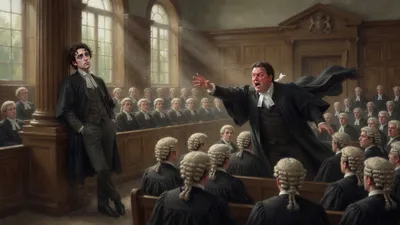
Sydney Carton is a barrister with a first-rate mind and no visible ambition, who does the hard work on cases that another man argues in court. He drinks more than he should, speaks about himself with a flat contempt that startles people, and is quietly kind in ways he takes no credit for. He is first seen in court, apparently half asleep and staring at the ceiling.

More about Madame Defarge
Madame Defarge keeps a wine-shop with her husband in Saint Antoine, one of the poorest quarters of Paris. She is calm, tireless, and rarely without her knitting, and she says very little while missing nothing that happens in her street. Customers notice that she seems to be watching them and pretending not to.

More about Jarvis Lorry
Jarvis Lorry is a confidential clerk at Tellson's Bank, which has houses in both London and Paris and has employed him for most of his life. He is methodical, discreet, and fond of insisting that he is nothing but a man of business with no feelings to speak of - which nobody who watches him quite believes. As the story opens he is travelling on an errand his firm has entrusted to him alone.

More about Miss Pross
Miss Pross has looked after Lucie since Lucie was a child and treats her as the one treasure of an otherwise lonely life. She is loud, blunt, ferociously loyal, and openly contemptuous of anything French. She is less a servant than a fortress with opinions.

More about Ernest Defarge
Ernest Defarge keeps a wine-shop in Saint Antoine and is plainly a person of standing among his neighbours, who come to him with things they cannot take anywhere else. He is grave, careful, and slower to act than his wife. He was in service in a respectable house before he became a shopkeeper.

More about Jerry Cruncher
Jerry Cruncher sits outside Tellson's Bank on a stool, waiting to be sent running with messages, and thinks of himself as an honest tradesman. At home he bullies his wife about her praying, and he is short-tempered in the mornings for reasons he never explains. He is rough, comic, and considerably less respectable than the bank he works for.

More about The Marquis St. Evrémonde
The Marquis is a French nobleman of the old court: polished, unhurried, and cruel in a bored, almost absent-minded way. He is used to the road clearing for his horses and to being obeyed without having to raise his voice. The villagers on his land know his carriage by the dust it throws up.

More about Mr. Stryver
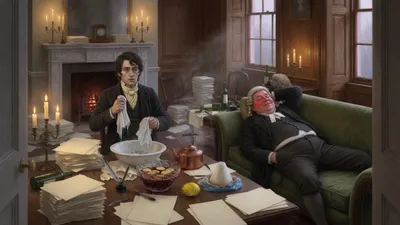
Mr. Stryver is a barrister of the King's Bench Bar who is climbing fast and wants everyone to know it. He is confident, self-satisfied, and entirely without embarrassment, and he talks about his own prospects more readily than about anything else. He shares his chambers, and his working nights, with a colleague who says much less.

More about John Barsad
John Barsad calls himself a gentleman and a patriot, and he first appears in the witness-box of an English court, giving evidence for the Crown. He tells a story about his own pure motives that is a little too neat, and he does not enjoy being questioned about it. He is the sort of man who turns up wherever there is something to overhear.

More about Gaspard
Gaspard is one of the crowd of Saint Antoine, a joker among his neighbours, tall enough to be picked out of any group. He is quick, restless, and given to gestures that other people do not always find funny. He lives in the same hungry street as the wine-shop and its keeper knows him by name.

More about Monsieur Gabelle
Monsieur Gabelle is the postmaster of the village below the chateau and holds a taxing office there as well, which makes him the man the villagers see when money is owed. He is obliging to his betters and officious with everyone else, and he takes his small authority very seriously. He is the local official who assists whenever the lord of the district requires something done.

More about The Vengeance
She is the wife of a half-starved grocer and the mother of two children, and she lives in the same quarter as the wine-shop. She is excitable, shrill and quick to take up whatever the women around her are doing, and she has attached herself firmly to the wine-shop keeper's wife. Her neighbours have given her a nickname instead of using her name.

More about Jacques Three
He is one of three men from the wine-shop who go up separately to a garret room to hear things that are not said downstairs. Like the others there he answers to the name Jacques rather than his own. He listens harder than he speaks, and what he hears seems to feed something in him.

More about Young Jerry Cruncher
Young Jerry sits on a stool beside his father outside Tellson's Bank and runs errands when the bank needs two messengers instead of one. He copies his father's manner exactly, admires him without reservation, and asks the questions his mother would not dare to. He is a keen observer of everything that goes on in Fleet Street.

More about Mrs. Cruncher
Mrs. Cruncher keeps house for her husband and son in a single room off Fleet Street and bears a great deal without complaint. She is devout, quiet, and in the habit of praying, which her husband takes personally. She has learned to do most things without being noticed.
Pre-Reading Discussion Questions
- What do you already know about the French Revolution, and where did that knowledge actually come from - a class, a film, a musical, a meme? How reliable do you think it is?
- Dickens opens by describing his era entirely through pairs of opposites. Try it for your own time: write three pairs that capture the present decade, and explain why a single description would not do.
- In a society divided sharply by class, what do people with power owe to people without it? Does the answer change if the powerful person inherited the power rather than earning it?
- How much of a person's identity comes from where they were born, and how much from where they later choose to live?
- Why do we trust some strangers instantly and distrust others on sight? What are we actually reading in them, and how often is it wrong?
- The title puts two cities side by side rather than naming a hero. What might a novelist gain by building a story around two places instead of one person?
Themes & Big Ideas to Track
- Doubles and pairings: the book is built out of matched halves, and it constantly invites you to compare things it has deliberately placed side by side.
- Confinement in all its forms: notice the literal locked doors, and also the debts, silences, habits, and duties that hold people in place just as firmly.
- The imagery of red: wine, blood, and firelight recur so insistently that they work as an argument rather than as decoration, so ask each time what the colour is doing.
- Crowds versus individuals: watch how Dickens's language changes when he moves from describing one person to describing many.
- Patient handwork and record-keeping: the novel keeps returning to hands busy at repetitive tasks and to people who keep count of things, so pay attention to who is counting and what they are counting.
- Irony as the narrator's default setting: he often means the opposite of what he says, and deciding when he is sincere is part of the reading.
Chapter-by-Chapter Study Guide
Chapter 1: The Period

Before you read — think about:
- When people describe the time they are living through, why do they so often reach for extremes - the greatest ever, the worst ever? What does that habit tell you about how we judge our own moment?
- How much do you think an ordinary person understands about the direction their country is heading while it is still heading there? What would they have to be paying attention to?
- What is the difference between a narrator who starts telling you a story and a narrator who first tells you what kind of world the story happens in? Which opening pulls you in harder, and why?
- Think of two places you know well - two schools, two neighbourhoods, two countries. What do you gain by describing them side by side that you would lose by describing them one at a time?
- Where do you meet irony in ordinary life - headlines, comedy, advertising, group chats? How do you know when a speaker means the opposite of what they are saying?
Watch for these while reading:
- The architecture of the opening paragraph: how far Dickens lets one sentence run, and what he uses instead of full stops to keep it moving.
- How often the narrator sets England beside France, and how much space he gives to each country's troubles.
- The narrator's tone whenever he mentions kings, queens, and people in authority - listen for admiration and for mockery, and decide which one you are actually hearing.
- Dickens's habit of capitalising abstractions and giving them occupations, so that ideas start behaving like people.
- The dates and numbers he chooses to state precisely, in a chapter that is otherwise built out of sweeping generalisations.
Vocabulary to know:
epoch (noun) — A long stretch of history with its own distinct character.; incredulity (noun) — An unwillingness or refusal to believe something.; superlative (adjective) — Of the very highest degree - the most extreme form of something.; concede (verb) — To grant or allow something, often reluctantly.; prophetic (adjective) — Claiming or appearing to foretell what is going to happen.; herald (verb) — To announce publicly that something or someone is coming.; sublime (adjective) — So grand or lofty that it inspires awe.; deficient (adjective) — Lacking something that is needed or expected.; tumbril (noun) — A rough farm cart that tips to unload; in this book it becomes the cart that carries condemned prisoners.; potentate (noun) — A person who holds great power, especially a ruler.; despoil (verb) — To rob someone or strip them of their possessions by force.; illustrious (adjective) — Famous and greatly admired for past achievements.; retinue (noun) — The group of attendants and servants who travel with an important person.; turnkey (noun) — A jailer - the officer who holds the keys to a prison.; contraband (noun) — Goods that it is illegal to own, sell, or bring into a country.; requisition (noun) — The state of being formally called upon and put to use.; atrocious (adjective) — Shockingly cruel or wicked.; pilferer (noun) — Someone who steals small things of little value.; myriad (noun) — An extremely large, uncountable number of people or things.; chronicle (noun) — A written record of events set down in the order they happened.; mire (noun) — Deep, soft, sticky mud.; rude (adjective) — Roughly made or plain, without any finish or decoration.; waylay (verb) — To lie in wait for travellers and stop them, usually to rob them.; gaol (noun) — The older British spelling of jail - a prison..
Chapter 2: The Mail

Before you read — think about:
- Before telegraphs, telephones, or trains, how did urgent news actually travel between cities, and what could go wrong along the way?
- What does a novelist gain by opening a scene with weather and landscape instead of with a person? What does it cost?
- What kind of work in the 1700s would have required someone to cross between England and France regularly? What sort of person do you imagine taking that job, and what would it do to them?
- Writers often introduce someone as 'the passenger' or 'the man in the brown coat' before giving a name. What does withholding a name do to you as a reader?
- Dickens published this novel in weekly instalments, so every chapter had to make readers come back seven days later. If that were your job, what techniques would you use, and which of them still work on modern audiences?
Watch for these while reading:
- The mist: how much room Dickens gives it, and the kinds of things he compares it to.
- The way the narrator refers to the man this book is following before supplying him with a name.
- The guard's equipment, listed like an inventory - notice how much of it there is and what that implies about English roads.
- How the coachman and the guard speak to each other, and how their manner sits against the tone of the writing around them.
- The horses, whom Dickens describes almost as though they held opinions - watch what he attributes to them.
Vocabulary to know:
mutinous (adjective) — Refusing to obey and openly rebelling against whoever is in charge.; capitulate (verb) — To stop resisting and give in.; tremulous (adjective) — Trembling or quivering slightly.; clammy (adjective) — Unpleasantly damp, sticky, and cold.; unwholesome (adjective) — Unhealthy or harmful to look at or be near.; reek (noun) — Steam or vapour rising off something, carrying a strong smell.; plod (verb) — To walk slowly and heavily, with effort.; flounder (verb) — To struggle clumsily, especially through mud or water.; substratum (noun) — A layer lying underneath everything above it.; blunderbuss (noun) — A short gun with a wide, flaring muzzle that scattered its shot.; cutlass (noun) — A short sword with a broad, slightly curved blade.; genial (adjective) — Friendly and good-natured - used here as a joke, since the situation is the opposite.; vexed (adjective) — Annoyed and worn out with frustration.; hardihood (noun) — Boldness or nerve, especially the reckless kind.; adjuration (noun) — A solemn, urgent command or appeal.; cessation (noun) — A stopping or ending of something that was going on.; agitation (noun) — A state of shaking, or of nervous disturbance.; quavering (adjective) — Shaking and unsteady, especially of a voice.; soliloquy (noun) — Speech made aloud to oneself rather than to anyone else.; gruff (adjective) — Rough and low in voice or abrupt in manner.; curtly (adverb) — In a short, abrupt way that gives nothing extra away.; apprehend (verb) — To fear that something bad is about to happen.; expeditiously (adverb) — Quickly and efficiently.; despatch (noun) — An official message sent in a hurry.; wary (adjective) — Cautious and watchful, expecting trouble.; nimbly (adverb) — Quickly and lightly, with easy movement.; eddying (adjective) — Swirling around in small circles.; jack-boot (noun) — A tall, heavy leather riding boot reaching above the knee.; tinder-box (noun) — A small box holding flint, steel, and dry material for starting a fire..
Chapter 3: The Night Shadows

Before you read — think about:
- Some novelists occasionally step out of the story and speak to the reader directly, using the word 'I'. What does that do to your sense of the book, and when does it feel earned rather than intrusive?
- Tellson's is a private banking house with branches in two countries in the 1770s. Beyond holding money, what services would such a firm have provided to families with property in both England and France?
- This chapter is called 'The Night Shadows'. Before you read a line of it, what does that phrase already suggest to you - from other books, from ordinary speech, from your own experience of being awake at night?
- In 1775 a message took days to cross between London and Paris, and the sender had no way of knowing whether it had arrived. How does slowness change the way people feel about news they are waiting for?
- Writers sometimes repeat one phrase across a long book until it starts to carry more weight than its plain meaning. What repeated line or image has stuck with you from something you have read or watched, and why do you think it stuck?
Watch for these while reading:
- The narrator's use of 'I' in this chapter, and how far he is willing to travel away from the coach and the road to say what he wants to say.
- The comparisons Dickens reaches for when he describes Jerry the messenger - his hair, his hat, his eyes - and how flattering they are.
- The images of digging and of things shut, locked, frozen, or buried, and how many different objects Dickens attaches them to.
- How Dickens moves between what is happening on the road and what is happening inside a character's head, and how clearly he marks the boundary between the two.
- Banking language - accounts, strong-rooms, keys, drafts - and where it turns up when no bank is anywhere in sight.
Vocabulary to know:
constitute (verb) — To make something up or form it in a particular way.; profound (adjective) — Very deep, and reaching far below the surface.; solemn (adjective) — Serious and grave, without any lightness.; unfathomable (adjective) — So deep that it cannot be measured or understood.; submerge (verb) — To sink or be covered completely beneath water.; appoint (verb) — To settle or decide something in advance, as though by fate.; inexorable (adjective) — Impossible to stop, change, or persuade.; perpetuation (noun) — The act of making something continue for ever.; inscrutable (adjective) — Impossible to read, interpret, or see into.; compass (noun) — The narrow space or range within which something is contained.; evince (verb) — To show a feeling or quality plainly, without saying it outright.; sinister (adjective) — Suggesting that something evil or threatening is present.; muffler (noun) — A thick scarf wound round the neck and chin for warmth or concealment.; perplex (verb) — To confuse someone completely.; fain (adverb) — Gladly or willingly - an old-fashioned word.; tedious (adjective) — Long, slow, and tiring.; opiate (noun) — A drug that dulls pain and makes a person drowsy.; multitude (noun) — A very large number of people or things.; cadaverous (adjective) — Pale and gaunt, like a corpse.; emaciated (adjective) — Abnormally thin and wasted, usually from hunger or illness.; lamentation (noun) — Loud grief, mourning, or complaint.; spectre (noun) — A ghost or haunting apparition.; discourse (noun) — Conversation, or a formal exchange of speech.; admonish (verb) — To warn or gently scold someone into behaving differently.; coppice (noun) — A small wood of young trees that are cut back regularly.; placid (adjective) — Calm, still, and untroubled..
Chapter 4: The Preparation

Before you read — think about:
- Dickens rarely tells you outright what a character is like. Instead he describes their clothes, their posture, and one or two small habits. Try it: describe someone you know well in exactly three physical details and nothing else.
- Dover in the 1700s was a Channel port with a very large smuggling trade. What would daily life in a town like that be like, and how would ordinary people there feel about the law?
- Getting from London to Paris in 1775 meant a coach to the coast, a sailing packet across the Channel, and more coaching on the other side. Sketch out how many days that might take and what could go wrong on each leg.
- Doctors, lawyers, and bankers often keep a deliberately formal manner with the people they serve. What is that formality actually for, and who does it protect - the client, or the professional?
- What is the difference between a narrator who tells you what a character is feeling and one who only shows you what the character does with their hands, their hat, or their wine glass? Which do you trust more?
Watch for these while reading:
- Mr. Lorry's small physical habits - what he does with his wig, his hands, and the back of a chair - and how often Dickens brings them back.
- Dover itself: the cliffs, the sea, the smell of the air, and the odd remarks the narrator makes about the town's tradesmen and its lamplighter.
- The word 'business', and how many different jobs Mr. Lorry manages to make it do.
- The furnishing of the room in which Miss Manette waits - the black horsehair, the oiled tables, the candles, the mirror frame - and the mood Dickens builds with it before anyone has spoken.
- Miss Manette's forehead: Dickens singles out one feature and describes it at unusual length, and then keeps checking back on it.
Vocabulary to know:
drawer (noun) — A servant at an inn who draws and serves drinks - roughly, a waiter.; flourish (noun) — A showy, unnecessary gesture made for effect.; obscurity (noun) — Darkness, or the condition of being hard to see.; valise (noun) — A small case for carrying clothes on a journey.; methodical (adjective) — Doing things in a careful, orderly, step-by-step way.; sonorous (adjective) — Deep, full, and loud in sound.; gravity (noun) — Seriousness and weight of manner.; longevity (noun) — Long life, or the quality of lasting a long time.; levity (noun) — Lightness or lack of seriousness.; evanescence (noun) — The quality of fading quickly away.; flaxen (adjective) — Pale yellow, like the fibre of the flax plant.; filament (noun) — A very fine thread or fibre.; quaint (adjective) — Oddly old-fashioned, in a way that is rather charming.; composed (adjective) — Calm, controlled, and giving nothing away.; confidential (adjective) — Trusted with other people's private affairs.; betwixt (preposition) — Between - an old-fashioned form of the word.; treble (verb) — To multiply something by three.; immemorial (adjective) — Reaching back further than anyone can remember.; piscatory (adjective) — Having to do with fish or fishing.; claret (noun) — A dry red wine from the Bordeaux region of France.; stolid (adjective) — Showing no emotion at all, however strong the feeling underneath.; funereal (adjective) — Gloomy and solemn, suited to a funeral.; adjacent (adjective) — Lying next to or adjoining something.; singular (adjective) — Remarkable and unlike anything else of its kind.; curtsey (noun) — A respectful greeting made by bending the knees and lowering the body.; esteem (verb) — To value or regard something highly.; acquit (verb) — To carry out or discharge a duty that has been given to you.; repute (noun) — The reputation in which a person is generally held.; acquirement (noun) — A skill or accomplishment gained through study.; trustee (noun) — Someone given legal responsibility for managing another person's property.; sentiment (noun) — Tender feeling or emotion, as opposed to cold fact.; ward (noun) — A young person placed under the legal care of a guardian or institution.; pecuniary (adjective) — Having to do with money.; mangle (noun) — A machine with heavy rollers used for pressing water out of washing.; supplicatory (adjective) — Pleading or begging.; discompose (verb) — To upset someone's calm and throw them off balance.; compatriot (noun) — A fellow countryman or countrywoman.; consignment (noun) — The act of handing a person or thing over into someone else's keeping.; oblivion (noun) — Total forgetting; a state of being lost from everyone's memory.; implore (verb) — To beg desperately for something.; tidings (noun) — News or information about someone or something.; entreat (verb) — To ask someone earnestly and urgently.; unavailing (adjective) — Achieving nothing; useless despite the effort.; slacken (verb) — To loosen, or to let up on an effort.; designedly (adverb) — On purpose; deliberately.; credentials (noun) — Documents that prove who a person is and what they are authorised to do.; memoranda (noun) — Written notes and records kept for reference.; insensible (adjective) — Unconscious, or unable to feel or respond.; brawny (adjective) — Physically strong and muscular.; restorative (noun) — Something given to revive a person who has fainted or fallen ill.; gradation (noun) — One step in a gradual, stage-by-stage process.; Providence (noun) — God's care and guidance over the world and everyone in it.; material (adjective) — Important enough to make a difference to the matter in hand.; intelligence (noun) — News or information that has been received.; hitherto (adverb) — Up until this moment.; involuntary (adjective) — Done without meaning to or deciding to.; indignantly (adverb) — With anger at something felt to be unfair..
Chapter 5: The Wine-shop

Before you read — think about:
- In pre-revolutionary France, the nobility and the clergy were largely exempt from the taxes that everyone else paid. What happens to a society over time when the people with the least carry the most?
- Dickens likes to take an abstract idea and write about it as though it were a person with a job to do. If you were describing your own town that way, which abstractions would you turn into characters, and what work would you give them?
- Paris in the 1770s had open gutters instead of drains in its poorest districts, and tenements where dozens of families shared a single entrance and staircase. What would daily life in a building like that actually be like?
- This novel keeps crossing between London and Paris. Before you read a Paris chapter, what do you expect will feel different about it, and where do your expectations come from?
- Charity, pity, and solidarity are three quite different responses to someone else's poverty. How would you tell them apart, and which do you think is worth the most to the person receiving it?
Watch for these while reading:
- The colour red, and every surface Dickens allows it to touch.
- The shop signs, the tools, and the goods on offer in this quarter of Paris - and which trades look prosperous.
- The wine-shop keeper's wife: what she does with her hands, her eyebrows, and her cough, and how much of it her husband seems to understand.
- Names - who is given one, who is not, and how people in this chapter choose to address each other.
- Moments when the narrator steps forward to speak about a time still to come, and how much he chooses to tell you when he does.
Vocabulary to know:
cask (noun) — A large wooden barrel used for storing liquid.; stave (noun) — One of the curved wooden planks that form the side of a barrel.; sodden (adjective) — Soaked completely through with liquid.; relish (noun) — Great enjoyment or appetite for something.; scavenger (noun) — A street-cleaner, or any creature that lives off what others discard.; shrill (adjective) — High, piercing, and loud.; besmirch (verb) — To smear or stain something, especially with dirt.; squalid (adjective) — Filthy and wretched, usually through poverty and neglect.; countenance (noun) — A person's face, or the expression on it.; vestige (noun) — A small remaining trace of something that is mostly gone.; prevalent (adjective) — Widespread; found everywhere you look.; modicum (noun) — A very small amount of something.; scanty (adjective) — Barely enough; far less than is needed.; meagre (adjective) — Thin, poor, and lacking in quantity or quality.; farthing (noun) — A coin of very small value - a quarter of an old British penny.; abiding (adjective) — Lasting and permanent; not going away.; stench (noun) — A strong, foul smell.; slink (verb) — To move quietly and furtively, as though ashamed or afraid.; gallows (noun) — The wooden frame from which condemned criminals were hanged.; cutler (noun) — A maker or seller of knives and cutting tools.; kennel (noun) — The open gutter that ran down the middle of an old street.; tempest (noun) — A violent storm.; gaunt (adjective) — Extremely thin and bony, usually from hunger or hardship.; martial (adjective) — Warlike; suggesting a soldier.; temperament (noun) — A person's natural disposition - the kind of nature they were born with.; implacable (adjective) — Impossible to soften, satisfy, or turn aside.; reckoning (noun) — A calculation or settling of accounts.; repose (noun) — Calmness and restfulness of manner.; feign (verb) — To pretend, or to put on an appearance that is not real.; triumvirate (noun) — A group of three people acting together.; homage (noun) — Public respect or honour shown to someone.; discreet (adjective) — Careful to keep a confidence and say nothing that should not be said.; vile (adjective) — Disgusting and morally low.; decomposition (noun) — The process of rotting and breaking down.; deprivation (noun) — The lack of the basic things people need to live decently.; insupportable (adjective) — Impossible to bear.; doleful (adjective) — Full of sorrow; dreary.; garret (noun) — A small room directly under the roof of a house, usually cheap and uncomfortable.; dormer (noun) — A window set upright into a sloping roof.; crevice (noun) — A narrow crack or opening.; incumbent (adjective) — Resting on someone as a duty they cannot avoid..
Chapter 6: The Shoemaker
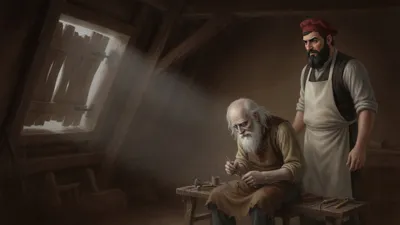
Before you read — think about:
- Dickens often builds a scene around one repeated physical action. Think of a book or film where a character's repeated gesture ended up carrying more meaning than their dialogue - what did it tell you, and how?
- What do you already know about what long isolation does to a person, and where did that knowledge come from - science, history, fiction, or experience?
- Several chapters in this novel are titled with a single noun naming a person by their trade rather than their name. What happens to a character when a book refers to them that way?
- Dickens called this whole first section of the novel 'Recalled to Life'. Now that you have reached its last chapter, what has that phrase come to mean to you so far, and what else could a writer make it mean?
- Dickens was an English novelist writing about French injustice seventy years after it happened, for readers who had strong opinions already. What responsibilities does a novelist take on when writing about real historical suffering?
Watch for these while reading:
- The white-haired man's voice: the comparisons Dickens uses to convey how it sounds, and how many of them he needs.
- What his hands do when they are not holding work, and how often Dickens comes back to them.
- The light in the garret - how much of it there is, who decides that, and what Dickens compares it to.
- Mr. Lorry's habit of falling back on the word 'business', and the places in this chapter where he reaches for it.
- The wine-shop keeper's wife, wherever she turns up, and exactly what she is doing when she does.
Vocabulary to know:
salutation (noun) — A greeting.; haggard (adjective) — Looking exhausted and worn down by suffering.; pitiable (adjective) — Deserving pity; painful to see or hear.; deplorable (adjective) — Deserving strong sorrow or disapproval; shockingly bad.; solitude (noun) — The state of being completely alone.; disuse (noun) — The state of no longer being used.; resonance (noun) — The full, ringing quality of a sound.; famished (adjective) — Extremely hungry; starving.; wilderness (noun) — A wild, empty region where no one lives.; mechanical (adjective) — Done automatically, without thought or feeling.; vacant (adjective) — Blank and empty; showing no thought or expression.; seclusion (noun) — The state of being shut away from other people and from the world.; parchment (noun) — A writing material made from treated animal skin, pale yellow in colour.; steadfastly (adverb) — Steadily and without looking away.; tatters (noun) — Clothes that have been torn into rags.; withered (adjective) — Dried up and shrunken.; vagrancy (noun) — Aimless wandering - here, of the mind rather than the feet.; swoon (noun) — A faint; a loss of consciousness.; endeavour (verb) — To make a serious effort to do something difficult.; disclosure (noun) — The revealing of information that was not known before.; lapse (verb) — To slip gradually away into another state.; revert (verb) — To return to a subject or a condition you were in before.; obliterate (verb) — To wipe something out completely.; abstraction (noun) — A state of being lost in thought and cut off from what is around you.; compassion (noun) — Deep sympathy for another person's suffering, together with the wish to relieve it.; recoil (verb) — To draw back suddenly in fear or shock.; coherently (adverb) — In a clear, connected, understandable way.; frenzy (noun) — A state of wild, uncontrolled agitation.; radiant (adjective) — Shining brightly; giving out light.; desolate (adjective) — Emptied of comfort, company, and hope.; pine (verb) — To waste away with longing or grief.; strive (verb) — To struggle or work very hard for something.; emblem (noun) — A thing that stands as a symbol for something larger.; lethargy (noun) — A heavy, exhausted state in which a person can barely move or respond.; provender (noun) — Food supplies, especially for a journey.; pallet (noun) — A thin, hard mattress laid on the floor.; sagacity (noun) — Sharp practical judgement and insight.; bewilderment (noun) — Complete confusion.; coercion (noun) — The use of force or threat to make someone obey.; submissive (adjective) — Yielding without resistance to someone else's authority.; discernible (adjective) — Able to be seen or made out.; postilion (noun) — A rider who guides a carriage team from the back of one of the horses.; mode (noun) — The current fashion.; captive (noun) — A person held prisoner.; restoration (noun) — The act of bringing something back to its former condition.; encompass (verb) — To surround something completely..
Chapter 7: Five Years Later
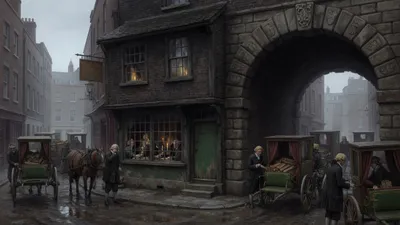
Before you read — think about:
- Five years pass between the end of the last section and the start of this one. What are the risks, and the opportunities, for a novelist who jumps his story forward in time?
- By the 1780s more than a hundred offences carried the death penalty in England, many of them thefts of small amounts. What does a society believe about people when it punishes them that way, and what does it believe about itself?
- Dickens is famous for describing institutions - banks, courts, schools, offices - as though they had personalities and moods. Pick an institution you know well and describe it that way in three sentences.
- What does a novelist reveal about a family by showing us the first ten minutes of their day rather than a dramatic moment?
- This chapter is set in 1780. What had happened in Britain, in America, and in France between 1775 and 1780 that a reader in 1859 would have taken for granted?
Watch for these while reading:
- The bank building itself: the words Dickens keeps repeating about it, and whether the partners take those words as insults or compliments.
- The narrator's tone as he lists the offences that the law punished with death, and where in that list he stops being funny.
- Temple Bar, and the practice of displaying heads on it - notice where that image turns up and how casually it is mentioned.
- How the people in this chapter talk: the misspellings, the mispronunciations, the invented words, and what Dickens builds out of a character's voice.
- The odd-job-man outside the bank and his son, and how far Dickens pushes the resemblance between them.
Vocabulary to know:
incommodious (adjective) — Cramped and inconvenient; badly suited to its purpose.; eminence (noun) — Distinction or superiority in some quality.; objectionable (adjective) — Unpleasant enough that people ought to complain about it.; embellishment (noun) — Decoration added to make something more attractive.; disinherit (verb) — To take away someone's right to inherit property or position.; obstinacy (noun) — Stubborn refusal to change or give way.; dingy (adjective) — Dark, dirty, and shabby.; musty (adjective) — Smelling stale and damp, like something long shut away.; insensate (adjective) — Without feeling or sense; brutally unthinking.; ferocity (noun) — Savage fierceness.; vogue (noun) — A current fashion or widespread practice.; forger (noun) — Someone who makes a fake copy of a document, signature, or banknote in order to cheat.; purloin (verb) — To steal something, especially in a sly way.; gamut (noun) — The full range or scale of something.; urchin (noun) — A rough, poorly dressed child of the streets.; renounce (verb) — To give something up formally and publicly.; appellation (noun) — A name or title given to someone.; proxy (noun) — A person who acts or speaks on someone else's behalf.; counterpane (noun) — A bedspread or quilt covering a bed.; exasperation (noun) — Extreme irritation.; trepidation (noun) — Nervous fear about what is coming.; apostrophe (noun) — A sudden exclamation addressed directly at someone or something.; deprecate (verb) — To express strong disapproval of something.; conceited (adjective) — Having far too high an opinion of oneself.; piety (noun) — Deep religious devotion.; rickety (adjective) — Shaky, unsteady, and likely to fall apart.; laudanum (noun) — A liquid medicine containing opium, used in Dickens's time as a painkiller and sleeping draught.; animosity (noun) — Strong hostility or ill will.; efficacy (noun) — The power of something to produce the effect it is meant to produce.; convivial (adjective) — Cheerful and sociable, in the way of a good party.; menagerie (noun) — A collection of wild animals kept for exhibition.; glean (verb) — To gather up small amounts of something left behind.; amiable (adjective) — Friendly and good-natured - used sarcastically here.; cogitate (verb) — To think deeply about something.; Barmecide (adjective) — Offering only the appearance of plenty - from a tale in the Arabian Nights in which a host serves an imaginary banquet..
Chapter 8: A Sight
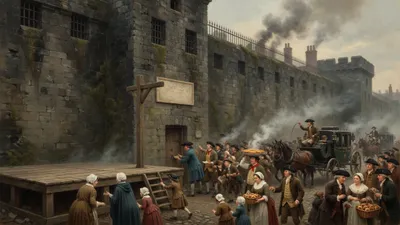
Before you read — think about:
- Criminal trials in 18th-century London were open to anyone who paid at the door. What arguments would you make for holding trials in public, and what arguments against?
- Dickens praises institutions for exactly what is worst about them, and expects you to hear the opposite. How do you signal irony in your own writing, and what happens when a reader misses it?
- Britain and France were on opposing sides of the American War of Independence through the late 1770s. What would that have meant, day to day, for someone who travelled regularly between London and Paris?
- The word 'sight' can mean something you happen to look at, or something people travel to see. What happens to a person when they are called a sight?
- What did an accused person actually have in an 18th-century English court - a lawyer, a right to speak, an appeal, a presumption of innocence? What would you want to know before you trusted a verdict from one?
Watch for these while reading:
- The Old Bailey and its surroundings as the narrator describes them: the diseases, the crowd, the cost of getting in.
- The language of the indictment, and what Dickens does to its rhythm as he reproduces it.
- The mirror fixed above the dock, and what the narrator says about everything it has reflected over the years.
- Jerry Cruncher inside a courtroom - his manner, his interests, and how much of the proceedings he manages to follow.
- A gentleman in a wig who appears to be looking at nothing but the ceiling.
Vocabulary to know:
dogged (adjective) — Stubborn and unwilling to be drawn out.; livelihood (noun) — The way a person earns what they need to live.; treason (noun) — The crime of betraying one's own country, especially by helping its enemies.; quartering (noun) — The old punishment for treason, in which the condemned body was cut into four parts.; barbarous (adjective) — Savagely cruel and uncivilised.; deference (noun) — Respectful submission to someone of higher rank.; notoriety (noun) — Fame for something bad.; debauchery (noun) — Wild, disorderly behaviour and excess.; villainy (noun) — Wicked or criminal behaviour.; dire (adjective) — Dreadful; extremely serious.; dock (noun) — The enclosure in a courtroom where an accused person stands during a trial.; pillory (noun) — A wooden frame with holes for the head and hands, in which offenders were locked up for public abuse.; mercenary (adjective) — Motivated purely by money.; aphorism (noun) — A short saying that states a general truth.; precept (noun) — A rule or principle for how to behave or think.; tainted (adjective) — Spoiled or contaminated.; demur (noun) — An objection or hesitation.; hurdle (noun) — A wooden frame on which condemned prisoners were dragged to the place of execution.; proviso (noun) — A condition attached to a statement or agreement.; counsel (noun) — The barrister or barristers representing a party in a legal case.; conspicuous (adjective) — Standing out so as to be easily noticed.; self-possessed (adjective) — Calm and in control of oneself under pressure.; indictment (noun) — The formal written charge that sets out the crime an accused person is being tried for.; denounce (verb) — To accuse someone publicly and formally of wrongdoing.; divers (adjective) — Various; several different ones - an old legal word.; dominion (noun) — The territory a ruler controls.; aforesaid (adjective) — Already mentioned earlier in the same document.; flinch (verb) — To draw back or wince from something painful or frightening.; theatrical (adjective) — Exaggerated and performed, as though for an audience.; abominable (adjective) — Detestable; deserving disgust.; infamy (noun) — Public shame and disgrace.; ponder (verb) — To think something over slowly and carefully.; engrossing (adjective) — Taking up the whole of a person's attention.; ogreish (adjective) — Like an ogre; monstrous in appetite.; scaffold (noun) — The raised platform on which executions were carried out.; doom (noun) — A sentence of destruction or death..
Chapter 9: A Disappointment
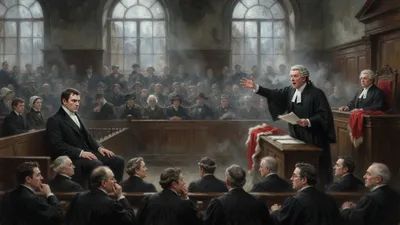
Before you read — think about:
- Official and legal language often piles clause on clause rather than building an argument. Why might a novelist reproduce that style at length instead of summarising it in a sentence?
- This chapter is called 'A Disappointment'. What is the difference between a disappointment and a defeat, and which is harder to describe well?
- What is a jury actually for? Why would a legal system hand a decision about someone's life to twelve people with no legal training?
- Trials turn up in novels far more often than battles or elections do. Why do you think that is - what does a courtroom give a storyteller that other settings do not?
- In the 1780s a person accused of treason in England could be defended by a barrister, while people accused of most other crimes could not. What practical difference would having a lawyer make?
Watch for these while reading:
- The blue-flies, and every point in the chapter at which the narrator brings them back.
- How the narrator handles the prosecutor's speech: how much of it he lets you hear directly, and where the mockery is hidden.
- The rhythm of cross-examination - the shape of the questions, and the shape of what comes back.
- Doctor Manette's face and voice while he is in the courtroom.
- The gentleman who has spent the day looking at the ceiling, and the exact moments Dickens chooses to mention him again.
Vocabulary to know:
forfeit (noun) — Something that must be given up as a penalty.; reproach (noun) — Blame or criticism directed at someone.; ferret (verb) — To search out something hidden with persistence.; disclose (verb) — To make something secret known.; auspicious (adjective) — Promising good fortune.; immolate (verb) — To sacrifice something, especially by burning it on an altar.; cherish (verb) — To hold someone or something dear and protect them.; immaculate (adjective) — Perfectly clean and entirely without fault.; unimpeachable (adjective) — Impossible to accuse of anything or to doubt.; secrete (verb) — To hide something away.; disparagement (noun) — Speech that belittles someone or lowers their reputation.; artful (adjective) — Cunning; skilled at getting round things.; pernicious (adjective) — Doing serious harm, especially in a gradual or hidden way.; asseveration (noun) — A solemn and emphatic declaration.; insinuation (noun) — An unpleasant suggestion made indirectly.; intoxicated (adjective) — Drunk.; procure (verb) — To obtain something, especially with effort or by arrangement.; timorous (adjective) — Nervous and easily frightened.; counterfeit (noun) — An imitation made to deceive.; plaintive (adjective) — Sounding sorrowful or mournful.; fatigued (adjective) — Worn out with tiredness.; beguile (verb) — To charm away time or trouble; to pass the time pleasantly.; heresy (noun) — An opinion that contradicts what an authority holds to be sacred truth.; captivity (noun) — The state of being imprisoned or confined.; garrison (noun) — A town or fort where soldiers are stationed.; blind (noun) — A deliberate deception used to hide what is really going on.; slovenly (adjective) — Careless and untidy in appearance or habits.; likeness (noun) — The quality of resembling someone; a resemblance.; rashness (noun) — Acting or speaking without proper thought.; upshot (noun) — The final result or outcome.; trafficker (noun) — Someone who deals or trades in something, usually shamefully.; unblushing (adjective) — Showing no shame at all.; scoundrel (noun) — A dishonest, unprincipled person.; extraction (noun) — The family or nation a person is descended from.; wrest (verb) — To pull or force something away from someone.; gallantry (noun) — Polite attentiveness, especially from a man towards a woman.; antipathy (noun) — A deep-rooted dislike.; interpose (verb) — To interrupt by placing oneself between two parties.; demeanour (noun) — The way a person carries and conducts themselves.; disreputable (adjective) — Not respectable; likely to be thought badly of.; commiseration (noun) — Sympathy expressed for someone's distress.; verdict (noun) — The jury's formal decision at the end of a trial.; insolent (adjective) — Rude in a way that shows deliberate disrespect.; vehemence (noun) — Great force of feeling or movement.; carrion (noun) — The flesh of dead animals, fed on by scavengers.; malign (verb) — To say harmful and untrue things about someone..
Chapter 10: Congratulatory

Before you read — think about:
- This chapter is called 'Congratulatory'. When a group gathers to congratulate someone, who is the occasion really for - the person being congratulated, or the people doing it?
- The English legal profession in the 1780s was split between solicitors, who dealt with clients and prepared cases, and barristers, who argued them in court. Why might a system divide the job that way, and what would be lost?
- Novels often pair two characters who are alike in one obvious respect and opposite in every other. Why is that pairing so useful to a storyteller?
- Taverns and chop-houses in 18th-century London were where a great deal of business, gossip and politics actually happened. What role do places like that play in a city, and what has replaced them?
- Dickens often ends a chapter on a single image rather than a line of dialogue. What makes a closing image stay with a reader?
Watch for these while reading:
- Doctor Manette's face at the moments when the conversation is not about him.
- Mr. Stryver's physical habits in a crowded group, and what the narrator says they predict about his career.
- The word 'business' once again - who reaches for it, and what each of them is using it to do.
- Mr. Carton's clothes, his gown, his wig, and how much he drinks.
- Glass and reflection: a mirror has already appeared once in this trial, so watch where glass turns up next.
Vocabulary to know:
sediment (noun) — The solid matter that settles at the bottom of a liquid.; cadence (noun) — The rise and fall of a voice; its rhythm.; fitfully (adverb) — Irregularly; in bursts that start and stop.; evoke (verb) — To call something up out of a person's memory or feeling.; incomprehensible (adjective) — Impossible to understand.; beneficial (adjective) — Producing a good effect.; fervently (adverb) — With intense feeling.; bluff (adjective) — Blunt and hearty in manner, without much tact.; delicacy (noun) — Sensitivity to other people's feelings; tact.; obligation (noun) — A debt of gratitude or duty owed to someone.; disinterestedly (adverb) — Without any personal advantage in mind.; quoth (verb) — Said - an old-fashioned form used for effect.; dismal (adjective) — Gloomy and depressing.; hackney-coach (noun) — A carriage available for hire in the street, like a taxi.; nettled (adjective) — Irritated or stung by a remark.; impediment (noun) — Something that gets in the way and slows things down.; restraint (noun) — A limit placed on what someone may do or say.; barrister (noun) — A lawyer qualified to argue cases in the higher courts.; counterpart (noun) — A person who exactly corresponds to another.; terrestrial (adjective) — Belonging to the earth; earthly.; numskull (noun) — A stupid person.; deportment (noun) — The way a person behaves and carries themselves in company.; laconic (adjective) — Using very few words.; rejoinder (noun) — A reply, especially a sharp or quick one.; strait (noun) — A situation of great difficulty or danger.; affirmative (noun) — An answer meaning yes.; drudge (noun) — Someone who does hard, dull work for little reward or recognition.; elate (verb) — To fill someone with pride or high spirits.; minutely (adverb) — In very small detail.; winding-sheet (noun) — A cloth used to wrap a dead body; also the name for melted wax running down a candle.; consolation (noun) — Comfort taken in trouble or disappointment.; goblet (noun) — A drinking glass with a stem and a bowl.; shiver (verb) — To break into small fragments.; solicitor (noun) — A lawyer who advises clients and prepares cases, but does not usually argue them in the higher courts.; defiance (noun) — Open resistance or challenge..
Chapter 11: The Jackal
Before you read — think about:
- This chapter is titled with the name of an animal. What does a writer gain by describing a person as an animal, and what does the character lose by it?
- Heavy drinking was ordinary, and entirely respectable, among professional men in 18th-century England. How do standards of acceptable behaviour shift over time, and who decides when they have shifted?
- London's Inns of Court were places where barristers both lived and worked, in chambers off the same few courtyards. What difference does it make when your home and your profession share an address?
- Dickens sets the ends of many chapters at dawn or at dusk. Why do writers reach for those two hours so often, and what do they get from them that midday could not give?
- This novel keeps setting one character beside another for comparison. Which pairings have you noticed so far, and what has each comparison actually shown you?
Watch for these while reading:
- The words the narrator uses for these two men at the points where he stops using their names.
- How Mr. Stryver describes his own success, and what he says about where he began.
- The physical business of a night's work: the jug, the basin, the towels, and what they are for.
- What Mr. Carton says about himself at school, in Paris, and in a room full of other people.
- The weather and the light in the closing paragraphs, and how much of that description belongs to the city and how much to the man walking through it.
Vocabulary to know:
detriment (noun) — Harm or damage done to something.; Bacchanalian (adjective) — Given to heavy drinking and riotous celebration, after Bacchus, the Roman god of wine.; propensity (noun) — A natural tendency to behave in a particular way.; lucrative (adjective) — Bringing in a great deal of money.; hew (verb) — To cut or chop with heavy blows.; visage (noun) — A person's face.; florid (adjective) — Red-faced and flushed.; glib (adjective) — Speaking easily and fluently, but without much depth.; unscrupulous (adjective) — Having no moral principles about how one gets what one wants.; advocate (noun) — A lawyer who pleads a case in court on someone else's behalf.; pith (noun) — The essential part; the heart of the matter.; carouse (verb) — To drink and celebrate noisily.; stealthily (adverb) — Quietly and secretly, trying not to be seen.; dissipated (adjective) — Worn out by too much drinking and pleasure-seeking.; jackal (noun) — A wild dog that feeds on what larger hunters leave; used here for a man who does another's work.; capacity (noun) — The role or position in which someone acts.; dexterously (adverb) — With skill and neatness.; seared (adjective) — Scorched; marked as if burnt.; precocious (adjective) — Developed earlier than is normal.; paunch (noun) — A fat stomach.; sullenly (adverb) — In a resentful, silently bad-tempered way.; steep (verb) — To soak something thoroughly in liquid.; knotty (adjective) — Full of difficulties; hard to untangle.; imperative (adjective) — Absolutely necessary.; eccentricity (noun) — Odd or unusual behaviour or appearance.; ludicrous (adjective) — Absurd enough to be laughable.; repast (noun) — A meal - used here as a joke for the prepared work.; invigorate (verb) — To give fresh strength or energy to.; gainsay (verb) — To deny or contradict.; despondency (noun) — Low spirits; loss of hope.; mirage (noun) — Something that appears real but is not there at all.; perseverance (noun) — Steady persistence in a course of action despite difficulty.; blight (noun) — A disease that withers plants; anything that ruins or spoils.; sensible (adjective) — Aware of something; conscious of it..
Chapter 12: Hundreds of People

Before you read — think about:
- Soho in the 1780s stood on the northern edge of London, with fields, hawthorn and forest trees just beyond it. How does a city neighbourhood change once it stops being the edge, and what disappears first?
- Some houses in fiction feel almost like characters. What makes a described place feel alive rather than like painted scenery behind the people?
- What does a household owe to someone who has worked in it for years without being family? Where is the line between a servant, an employee, and a friend - and who gets to draw it?
- London in the 1780s and 1790s held a large population of French people who had come over with very little. What does a city gain from a big community of newcomers, and what strains does it put on both sides?
- Novelists often use the weather to do emotional work for them. When does that feel powerful to you, and when does it feel like a cheap trick?
Watch for these while reading:
- The street-corner where the Doctor lives, and its echoes - count how many times Dickens comes back to them.
- Miss Pross's way of speaking: her exaggerations, her corrections of other people, and what the narrator quietly says about her underneath it.
- How each of the Doctor's three rooms is furnished, and what each one tells you about the person who uses it.
- Who arrives at the house across the afternoon and the evening, and in what order.
- Mr. Lorry's 'business eye', and what he chooses to turn it on.
Vocabulary to know:
relapse (noun) — A slipping back into a former state or habit.; shrewd (adjective) — Sharp in practical judgement.; vista (noun) — A long narrow view, especially one framed by buildings or trees.; congenial (adjective) — Agreeable; suited to one's taste.; languish (verb) — To grow weak and fade away.; staid (adjective) — Steady, serious, and unadventurous.; tranquil (adjective) — Calm and undisturbed.; anchorage (noun) — A safe place for a ship to lie at anchor.; purport (verb) — To claim or appear to be something.; shun (verb) — To keep away from deliberately.; menace (verb) — To threaten.; vigilance (noun) — Careful, watchful attention.; ingenious (adjective) — Clever and inventive.; innately (adverb) — By nature, rather than by learning.; disposition (noun) — The way things are arranged or placed.; thrift (noun) — Careful management of money and resources.; trifle (noun) — Something of very little importance or value.; disused (adjective) — No longer in use.; malice (noun) — The wish to harm or hurt someone.; meekness (noun) — Gentle, submissive behaviour.; affidavit (noun) — A written statement sworn to be true, used as evidence.; imputation (noun) — An accusation or suggestion of fault.; sombre (adjective) — Dark, dull, and joyless.; exalted (adjective) — Held in very high regard; raised up.; retributive (adjective) — Concerned with handing out deserved rewards and punishments.; compunction (noun) — A prick of conscience about doing something wrong.; fidelity (noun) — Faithfulness and loyalty.; zealous (adjective) — Full of eager, earnest commitment.; oppressor (noun) — Someone who treats others with prolonged cruelty or injustice.; suppression (noun) — The act of keeping something down or shut away.; lurk (verb) — To wait hidden, ready to appear.; mantle (noun) — A loose sleeveless cloak.; ravage (verb) — To search through or lay waste to thoroughly.; impoverished (adjective) — Made very poor.; impart (verb) — To pass on knowledge or information.; culinary (adjective) — Having to do with cooking.; unbend (verb) — To relax one's stiff or formal manner.; oppressive (adjective) — Uncomfortably heavy and close, especially of weather.; afflicted (adjective) — Suffering from something troublesome.; vivacity (noun) — Liveliness and animation.; teem (verb) — To be full to overflowing with something.; dungeon (noun) — A dark underground cell for prisoners.; inscription (noun) — Words carved or written on a surface.; fruitless (adjective) — Producing no result.; sultry (adjective) — Hot, damp, and airless.; incessant (adjective) — Never stopping.; stipulation (noun) — A condition demanded as part of an agreement.; foot-pad (noun) — A robber who attacks travellers on foot..
Chapter 13: Monseigneur in Town

Before you read — think about:
- In pre-revolutionary France a 'Farmer-General' was a private individual who paid the Crown for the right to collect its taxes and kept whatever surplus he could squeeze out. What would that arrangement do to the people being taxed, and what would it do to the man collecting?
- This chapter and the next carry almost the same title, changing only the last word. What does a pair of matched titles set up in a reader's mind before a word of either chapter is read?
- Satire works by exaggerating something in order to expose it. Where is the line between satire that lands and satire so broad that it lets the target off the hook?
- The French court ran on elaborate ceremony - fixed rules about who handed the king his shirt, who carried which candle, who might sit down. What is ceremony of that kind actually for, and what does an outsider see when they watch it?
- Dickens was an English novelist describing the French ruling class to English readers. What are the risks of writing about another country's aristocracy for your own countrymen, and how would you guard against them?
Watch for these while reading:
- The word Monseigneur, and how many different things Dickens manages to make it mean.
- Religious vocabulary - sanctuary, worship, devotion - and the places the narrator chooses to put it.
- Clothes, hair and dress, and how far Dickens is willing to push a point about them.
- Whether Saint Antoine gets mentioned at all in a chapter set nowhere near it - and if so, where the narrator chooses to put it.
- A close description of one man's face - the nose, the mouth, the lines round the eyes - and what the narrator says the small movements in it amount to.
Vocabulary to know:
sanctuary (noun) — The holiest, most private part of a temple - used here for a nobleman's inner room.; lacquey (noun) — A liveried manservant or footman.; dispense (verb) — To do without something.; perforce (adverb) — By necessity; whether one likes it or not.; impending (adjective) — About to happen and hanging over one.; bestow (verb) — To give or confer something, often grandly.; sumptuous (adjective) — Splendid and expensive.; plunder (verb) — To rob a place or people, especially openly and on a large scale.; destitute (adjective) — Completely lacking something.; brazen (adjective) — Shameless and bold about something that ought to cause shame.; ecclesiastic (noun) — A member of the clergy.; foisted (adjective) — Forced onto someone or something without being wanted or deserved.; dainty (adjective) — Delicate and refined - used sarcastically here.; courtly (adjective) — Belonging to a royal court; elegantly polite.; exquisite (adjective) — Extremely refined and delicate.; devotee (noun) — A devoted follower or worshipper.; misgiving (noun) — A feeling of doubt or unease about something.; talisman (noun) — An object believed to have magical power to protect or preserve.; cringing (noun) — Behaviour that shrinks and bows in exaggerated respect or fear.; fawning (noun) — Flattering and grovelling to win favour.; servility (noun) — Excessive willingness to serve and obey.; abject (adjective) — Utterly humbled and without dignity.; affably (adverb) — In a friendly, easy-mannered way.; devote (verb) — To give something over to a fate - here, to curse or consign it.; haughty (adjective) — Arrogantly proud and superior in manner.; treachery (noun) — Betrayal of trust.; patrician (adjective) — Belonging to the nobility or highest class.; vulgar (noun) — The common people, considered as a class.; deign (verb) — To condescend to do something one considers beneath one.; exterminate (verb) — To destroy completely.; brigand (noun) — A robber or bandit, especially one of a gang.; cowed (adjective) — Frightened into submission.; contemptuous (adjective) — Showing open scorn.; steadfastness (noun) — Unshakeable steadiness and constancy..
Chapter 14: Monseigneur in the Country

Before you read — think about:
- Under the old French system a peasant paid a tax to the state, a tax to the church, and dues to the local lord on top. What happens to farming, and to a village, when most of what is grown has to be handed over before anyone eats?
- This chapter's title repeats the last one and changes only the setting. What can a writer show through repetition-with-a-difference that straightforward contrast could not achieve?
- The men who repaired French roads often did so under the corvee - compulsory unpaid labour owed to the state. What does forced unpaid work do to a person's relationship with the government that demands it?
- Dickens describes landscapes as though they had moods. Try it yourself: describe a place you know well so that a feeling comes through without you ever naming the feeling.
- Noble families in 18th-century France usually kept both a Paris house and a country chateau. What would the relationship be between a lord who visits and the village that lives on his land all year?
Watch for these while reading:
- The crops, the soil, and what people are preparing to eat - and how Dickens writes about plants as though they shared the villagers' state of mind.
- The list of taxes, and where in the village Dickens says they are set down.
- The sunset, and what colour it puts on things and on people.
- The mender of roads: his blue cap, his gestures, and the way he tells a story to an audience.
- The two buildings that dominate the view from the village, and what Dickens says the choice between them amounts to.
Vocabulary to know:
inanimate (adjective) — Not alive; without the power of movement.; dejected (adjective) — Low in spirits; downcast.; vegetate (verb) — To grow in a dull, passive way, without energy.; coarse (adjective) — Rough and of poor quality.; fagged (verb) — Toiled wearily; laboured until exhausted.; steeped (adjective) — Soaked or bathed in something.; crag (noun) — A steep, rugged rock or cliff.; tannery (noun) — A place where animal hides are made into leather.; relay (noun) — A fresh set of horses kept ready to replace tired ones.; sustain (verb) — To keep something going; to support life.; dominant (adjective) — Towering over everything else; most powerful.; courier (noun) — A servant sent ahead to announce a traveller and arrange the way.; propitiate (verb) — To win favour from someone powerful by pleasing or appeasing them.; grizzled (adjective) — Grey-haired, or streaked with grey.; clemency (noun) — Mercy shown by someone with the power to punish.; vermin (noun) — Small destructive animals; used contemptuously of people.; obsequiousness (noun) — Excessive eagerness to please a superior.; functionary (noun) — A minor official.; dolt (noun) — A stupid person.; precipitate (verb) — To throw oneself headlong.; gossamer (adjective) — Fine, light and delicate, like cobweb.; lieu (noun) — Place or stead - used in the phrase 'in lieu of', meaning instead of.; rustic (adjective) — Belonging to the countryside; plain and unpolished.; distressful (adjective) — Full of distress and suffering.; petition (noun) — A formal request made to someone in authority.; malady (noun) — An illness or disease.; morsel (noun) — A very small piece of something.; league (noun) — An old measure of distance, roughly three miles.; casement (noun) — A window that opens on hinges at the side.; flambeau (noun) — A flaming torch.; chateau (noun) — A large French country house or castle belonging to a noble family..
Chapter 15: The Gorgon's Head

Before you read — think about:
- This chapter takes its title from Greek myth: the Gorgon's gaze turned whoever met it to stone. What does an author gain by naming a chapter after a myth instead of after its own events?
- A lettre de cachet was a sealed royal order allowing a person to be imprisoned indefinitely without charge or trial, obtained by anyone with enough influence. What does the mere existence of such a document do to a society - including to people it is never used against?
- Dickens describes buildings as though they had faces and moods. Where else have you seen a building do emotional work in a story, and how did the writer manage it?
- By the 1780s the French nobility had lost some of its old legal powers over the people on its land but kept nearly all of its privileges and its wealth. What happens to a ruling class that keeps its status after losing its function?
- Dickens sometimes lets his narrator step forward and tell the reader something about the future that no character in the room can know. What does that do to your sense of suspense - does it release the tension or increase it?
Watch for these while reading:
- Stone. Count the stone things in the first paragraph alone, then watch where stone turns up for the rest of the chapter.
- The sounds and lights of the chateau at night: two torches, an owl, a fountain, and a night that Dickens says holds its breath.
- How the Marquis takes snuff, and the exact moments in a conversation that he chooses for it.
- The small movements in the Marquis's face that the last chapter taught you to look for, and whether they behave the same way here.
- The passage of the night hours near the end, and what Dickens does with the sunrise when it comes.
Vocabulary to know:
balustrade (noun) — A railing supported by short pillars, along a staircase or terrace.; elicit (verb) — To draw out a response from someone or something.; remonstrance (noun) — A forceful protest or objection.; imperturbable (adjective) — Impossible to upset or disturb.; brink (noun) — The very edge of something, especially of a dangerous drop.; ominous (adjective) — Suggesting that something bad is coming.; scruple (noun) — A moral hesitation about doing something.; diplomacy (noun) — Skill in managing people and negotiations, often by indirect means.; importunity (noun) — Persistent, pressing demands.; poniard (verb) — To stab with a small slender dagger.; station (noun) — A person's rank and position in society.; detestation (noun) — Intense hatred.; grandeur (noun) — Impressive greatness and magnificence.; repression (noun) — The act of holding people down by force.; inheritor (noun) — A person who receives property or a title from someone who has died.; successor (noun) — The person who takes over a position or property after another.; redress (verb) — To set right a wrong.; finesse (noun) — Delicate skill in handling something.; perpetuate (verb) — To make something continue indefinitely.; relinquish (verb) — To give something up voluntarily.; integrity (noun) — Wholeness; the state of being taken all together.; extortion (noun) — Obtaining money from people by threats or by abuse of power.; mortgage (noun) — A debt secured against land or property.; endurance (noun) — The capacity to bear suffering over a long time.; refuge (noun) — A place of shelter and safety.; diabolic (adjective) — Devilish; fiendishly wicked.; avail (noun) — Use or benefit.; interrogate (verb) — To question someone closely and persistently.; voluptuous (adjective) — Richly and luxuriously comfortable.; unbidden (adjective) — Coming without being invited or wanted.; radiance (noun) — Bright light streaming out from something.; awe-stricken (adjective) — Overcome with wonder or dread.; delve (verb) — To dig.; trenchant (adjective) — Keen and sharp-edged.; portend (verb) — To be a sign that something is about to happen.; fraught (adjective) — Filled or loaded with something.; petrified (adjective) — Turned to stone.; hilt (noun) — The handle of a knife or sword..
Chapter 16: Two Promises

Before you read — think about:
- This chapter is called 'Two Promises'. In stories, which part of a promise is usually the interesting part - the making of it, the terms of it, or the keeping of it?
- Several chapters in this book are titled with a number - 'Five Years Later', 'Hundreds of People', 'Two Promises'. What does a number in a title do to a reader that an ordinary noun could not?
- London in the 1780s had a steady demand for teachers of modern European languages. What does a market for language tutors tell you about a society - who is learning, and what for?
- Dickens covers a year of Doctor Manette's recovery in a paragraph of summary rather than showing it in scenes. What are the risks of reporting a character's improvement instead of dramatising it?
- A conversation can be built almost entirely out of pauses. What has to be true about the people talking for a silence to carry real meaning on the page?
Watch for these while reading:
- Doctor Manette's hands, and everything he does with them during this conversation.
- How much of the talking each man does, and whether the balance shifts as the scene goes on.
- The gaps in the conversation - Dickens marks them deliberately, so count them.
- The word 'know', and how many times one speaker manages to use it inside a single speech.
- Where Lucie is while all this happens, and how the reader is told what she is doing.
Vocabulary to know:
conversant (adjective) — Well acquainted with a subject.; tutor (noun) — A private teacher who instructs individuals rather than a class.; attainment (noun) — A skill or level of knowledge that has been achieved.; ledger (noun) — A book in which a business records its accounts.; invariably (adverb) — Always; without exception.; assassination (noun) — The murder of an important person, usually for political reasons.; aggravate (verb) — To make something worse or sharper.; resolution (noun) — Firmness of purpose; determination.; vigour (noun) — Physical and mental strength and energy.; equably (adverb) — In an even-tempered, steady way.; constraint (noun) — Stiffness or awkwardness caused by holding something back.; deferentially (adverb) — With respectful submission.; manifest (adjective) — Obvious; plain to see.; fervent (adjective) — Intensely felt.; adjure (verb) — To beg or command someone earnestly and solemnly.; subdued (adjective) — Quiet and restrained, especially after strong feeling.; ungenerous (adjective) — Mean-spirited; unwilling to give due credit.; nurtured (adjective) — Cared for and encouraged to grow.; constancy (noun) — Steady faithfulness that does not change.; fervour (noun) — Intensity of feeling.; trustfulness (noun) — Complete readiness to trust.; hallowed (adjective) — Made holy; regarded as sacred.; forbear (verb) — To hold back from doing something one wants to do.; baseness (noun) — Meanness or moral lowness.; harbour (verb) — To keep a thought or feeling hidden in one's mind.; exile (noun) — Someone who lives away from their own country, by choice or by force.; exertion (noun) — Effort; hard work.; ascertain (verb) — To find out for certain.; presumption (noun) — Behaviour that takes more for granted than one has any right to.; suitor (noun) — A man who is courting a woman with a view to marriage.; testimony (noun) — A formal statement supporting something as true.; apprehension (noun) — A fear or misgiving about something.; prosper (verb) — To do well and succeed..
Chapter 17: A Companion Picture
Before you read — think about:
- This chapter is called 'A Companion Picture'. In painting, a companion picture is one of a matched pair, made to hang beside another. What does a writer signal by borrowing that term for a chapter?
- The Long Vacation was the stretch of months when the English courts did not sit and barristers left London entirely. What does a profession's calendar do to the shape of the lives lived inside it?
- What is the difference between advice and a lecture? Why do people so often give the second when they believe they are giving the first?
- What can a writer do with a character who barely speaks during a scene? How does one person's silence change the meaning of everything the other one says?
- In 18th-century England, marriage among professional men was discussed quite openly in terms of money, connections and advancement. How does that change what a proposal is, and what it is for?
Watch for these while reading:
- How long Sydney Carton has been working without a proper break, and what state that has left him in.
- Mr. Stryver's opinion of himself, and the route by which he arrives at it.
- The bowl of punch: who mixes it, who drinks it, and how often.
- Whether either man remembers anything the other has said in an earlier chapter, and how accurately he remembers it.
- The last exchange of the chapter, and how many words each man spends on it.
Vocabulary to know:
arrears (noun) — Work or payments that are overdue and have piled up.; grist (noun) — Grain brought to a mill to be ground; used for work that brings in profit.; application (noun) — Sustained hard mental work.; portly (adjective) — Stout and heavily built.; disposed (adjective) — Inclined or willing to do something.; intelligible (adjective) — Able to be understood.; concoct (verb) — To make something by mixing ingredients together.; boastfully (adverb) — In a self-praising way.; inflate (verb) — To swell up, literally or with self-importance.; moroseness (noun) — Gloomy, sulky bad temper.; hangdog (adjective) — Shamefaced and downcast, like a dog expecting a beating.; ill-conditioned (adjective) — Bad-tempered and badly behaved.; politic (adjective) — Shrewdly calculated to serve one's own interests.; matrimonial (adjective) — Having to do with marriage.; incorrigible (adjective) — Impossible to correct or reform.; ostentatious (adjective) — Showy; making a deliberate display.; preface (noun) — An introduction that comes before the main statement.; slighting (adjective) — Insulting by treating something as unimportant.; complacent (adjective) — Smugly satisfied with oneself.; designation (noun) — A name or label applied to someone.; patronage (noun) — A manner of treating someone as an inferior while appearing to help them.; tact (noun) — Skill in handling people without giving offence.; chum (noun) — A close friend, especially from school days..
Chapter 18: The Fellow of Delicacy

Before you read — think about:
- This chapter is called 'The Fellow of Delicacy'. What does the word 'delicacy' mean when it is applied to a person rather than to a fabric or a dish, and how could a title like that be meant two ways at once?
- Vauxhall and Ranelagh Gardens were London's great pleasure grounds, where thousands paid to walk, hear music, eat supper and be seen. What does a public pleasure ground do for a city, and what has taken their place?
- Dickens sets a great many of his scenes in workplaces rather than in homes. What does a workplace let a novelist show about people that a drawing-room cannot?
- Dickens often describes a person by how much space they seem to take up rather than by their features. What does that technique achieve that a description of a face cannot?
- Tellson's has been written about as though the bank itself had opinions and a temper. How do the places where people work shape the way they speak and behave inside them?
Watch for these while reading:
- The legal metaphors Mr. Stryver reaches for when he is nowhere near a courtroom.
- How much physical space Mr. Stryver seems to occupy, and what happens to the people standing near him.
- Mr. Lorry inside Tellson's, and how often his eye travels towards 'the House'.
- Whether Mr. Lorry keeps to the manner he reserves for bank customers all the way through this conversation.
- Vocabulary of size and force - big, full-blown, shouldering, bursting, concussion - and how often Dickens returns to it.
Vocabulary to know:
magnanimous (adjective) — Generous and noble-minded, especially towards someone weaker.; bestowal (noun) — The act of giving something as a gift or favour.; preliminaries (noun) — The preparatory steps that come before the main business.; plaintiff (noun) — The person who brings a case against another in a court of law.; defendant (noun) — The person against whom a legal case is brought.; brief (noun) — The set of instructions and papers given to a barrister for a case.; inaugurate (verb) — To begin something formally.; behove (verb) — To be right and necessary for someone to do.; full-blown (adjective) — Fully developed, like a flower completely open.; perpendicular (adjective) — Upright; at right angles to the ground.; pervade (verb) — To spread through and be felt in every part of something.; self-abnegating (adjective) — Denying or setting aside one's own self.; dubiously (adverb) — In a doubtful, uncertain way.; contentious (adjective) — Given to argument and quarrelling.; eligible (adjective) — Suitable and desirable, especially as a marriage partner.; crestfallen (adjective) — Disappointed and downcast.; forensically (adverb) — In the manner of a lawyer arguing in court.; mincing (adjective) — Affected and over-dainty in manner.; overbearing (adjective) — Domineering; forcing one's will on others.; explicit (adjective) — Stated plainly, leaving nothing implied.; soundness (noun) — Reliability; the quality of being well-founded.; concussion (noun) — A violent shaking or shock caused by impact.; venerable (adjective) — Deserving respect because of great age.; divine (verb) — To work something out by insight rather than evidence.; tactician (noun) — Someone skilled at manoeuvring to gain an advantage.; emissary (noun) — A person sent on a mission on someone else's behalf.; bootless (adjective) — Useless; achieving nothing.; reiterate (verb) — To say something again for emphasis.; laudable (adjective) — Deserving praise.; folly (noun) — Foolishness; a foolish act.; forbearance (noun) — Patient self-restraint under provocation.; erring (adjective) — Mistaken; going astray..
Chapter 19: The Fellow of No Delicacy

Before you read — think about:
- This chapter's title is the exact opposite of the last one's, word for word. What does a writer do to a reader by hanging two matched-and-opposite titles side by side?
- London emptied out in August: the courts rose, the wealthy left for the country, and the city changed character for months. What happens to a place when the people who run it all leave at once?
- Dickens has shown us one of these characters almost entirely from the outside - through what he drinks, what he wears, and how he speaks to other men. What are the limits of describing a person that way?
- In a weekly serial, readers have seven days between instalments to form and harden their opinion of a character. How might that change what a novelist can do with someone the audience has already judged?
- In the 1780s a professional man's reputation was effectively his whole livelihood, and there was no orderly way to rebuild one that had been lost. What does a society without second chances do to the people living in it?
Watch for these while reading:
- Where Sydney Carton has been spending his nights, and how the narrator lets you know without anyone saying it.
- The words the narrator chooses for the light inside this man and the cloud over him.
- How Lucie speaks to a visitor she has never been quite at ease with.
- Fire and ashes as images, and who applies them to whom.
- How much of the chapter is dialogue, and how little the narrator comments on what is said.
Vocabulary to know:
lounger (noun) — Someone who idles about without purpose.; transitory (adjective) — Lasting only a short time.; dreary (adjective) — Dull, bleak and depressing.; unattainable (adjective) — Impossible to reach or achieve.; irresolute (adjective) — Unable to decide; wavering.; conducive (adjective) — Tending to bring about a particular result.; profligate (noun) — Someone who lives wastefully and without self-control.; repentance (noun) — Deep regret for something one has done.; degradation (noun) — A fallen, dishonoured condition.; remorse (noun) — Bitter regret for wrongs one has done.; impel (verb) — To drive or urge someone forward.; sloth (noun) — Laziness; the habit of avoiding effort.; undeserving (adjective) — Not worthy of what one is given.; kindle (verb) — To set alight, or to stir into life.; inseparable (adjective) — Impossible to divide from something else.; quicken (verb) — To bring to life.; reclaim (verb) — To win someone back from a bad course of life.; attributable (adjective) — Able to be traced to a particular cause.; misdirected (adjective) — Aimed the wrong way; wasted.; deplore (verb) — To feel or express deep sorrow about something.; avowal (noun) — An open declaration of something private.; pervert (verb) — To turn something good to a wrong or ruinous use.; supplication (noun) — A humble, earnest request.; unison (noun) — Complete agreement or harmony.; impassable (adjective) — Impossible to cross.; ardent (adjective) — Burning with feeling; passionate.; environ (verb) — To surround.; waif (noun) — A small stray scrap of something, or someone homeless and lost..
Chapter 20: The Honest Tradesman

Before you read — think about:
- This chapter is called 'The Honest Tradesman'. Where else in this novel has a character insisted on a description of himself that the narrator plainly does not accept?
- Crowds in 18th-century London could gather in minutes and disappear just as quickly. What conditions make a crowd form, and what makes it change its mind about what it is doing?
- Funerals in Georgian London were public performances, with hired mourners, black cloaks, hatbands and other bought signs of grief. What is a funeral actually for, and who is it for?
- Dickens often plants a moment of real menace inside a scene played for comedy. What does a writer gain by refusing to keep the two apart, and what does it risk?
- Fleet Street in the 1780s carried two constant streams of traffic in opposite directions all day long. What can a novelist do with a character whose whole job is to sit still in a busy place and watch?
Watch for these while reading:
- How Jerry Cruncher adds to his wages beyond what Tellson's pays him, and how carefully the narrator explains it.
- Every word Jerry uses about his own trade, and how precise he is ever willing to be.
- Mrs. Cruncher: how much she is allowed to say in this chapter, and how much of it is her own.
- Young Jerry's questions, and the exact answers his father decides to give him.
- The crowd in Fleet-street: how fast it gathers, and how much any single person in it seems to know.
Vocabulary to know:
grisly (adjective) — Causing horror or disgust.; benevolent (adjective) — Kindly and well-meaning - used ironically here.; concourse (noun) — A large crowd gathered in one place.; engender (verb) — To give rise to; to produce.; uproar (noun) — A loud and confused disturbance.; smite (verb) — To strike a hard blow.; hearse (noun) — The carriage that carries a coffin to a burial.; trappings (noun) — The outward signs and decorations that go with a role.; rabble (noun) — A disorderly crowd.; deride (verb) — To mock and jeer at.; vociferate (verb) — To shout loudly and insistently.; acclamation (noun) — Loud and enthusiastic approval.; undertaker (noun) — Someone whose trade is arranging funerals.; refractory (adjective) — Stubbornly resistant to control.; cavalcade (noun) — A procession of riders, carriages, or marchers.; interment (noun) — The burial of a body.; deceased (adjective) — Dead - the formal term used in legal and funeral language.; impeach (verb) — To accuse someone formally of wrongdoing.; wreak (verb) — To inflict something violent upon someone.; vengeance (noun) — Punishment inflicted in return for a wrong.; condole (verb) — To express sympathy with someone in their grief.; mortality (noun) — The condition of being subject to death.; vigilant (adjective) — Keeping careful watch for trouble.; injunction (noun) — An order or command.; tackle (noun) — The equipment needed for a particular job.; feint (noun) — A pretended action meant to deceive.; disciple (noun) — A follower of a teacher or a way of life.; rank (adjective) — Growing too thickly and coarsely.; wrench (verb) — To pull or twist something open violently.; ubiquitous (adjective) — Seeming to be everywhere at once.; altercation (noun) — A noisy argument or quarrel.; ostensible (adjective) — Stated as the reason or purpose, but not the real one.; qualm (noun) — A sudden feeling of doubt or unease about doing something.; artless (adjective) — Innocent and without cunning - though the narrator's tone suggests otherwise.; recompense (noun) — Something given to make up for trouble or loss.; resurrection (noun) — A rising from the dead - and, in the slang of the time, the trade of digging up bodies..
Chapter 21: Knitting
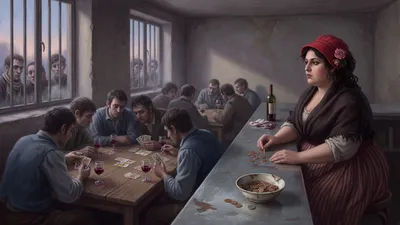
Before you read — think about:
- Dickens has given several chapters a bare one-word title naming a thing or an activity rather than a person. What expectations does a title like that set up before you read a line?
- Versailles was open: ordinary French people could walk the gardens and stand to watch the King and Queen pass in their carriage. What is the point of letting the people you rule come and look at you?
- Pre-revolutionary France ran an enormous network of paid informers who reported on ordinary conversations in shops, inns and streets. What does living under that kind of surveillance do to the way people talk to one another?
- This novel keeps giving us storytellers inside the story - characters recounting events to other characters. What changes when you hear an event described by a character rather than reading it straight from the narrator?
- Is there a real difference between justice and revenge? If you watched a group pursuing one of them, how would you work out which it was?
Watch for these while reading:
- The wine-shop before anything happens: who is there, who is missing, and what people are doing instead of drinking.
- How the mender of roads tells a story, and everything he manages to do with a blue cap.
- The man whose fingers keep travelling over his mouth and nose, and what the narrator says he seems to be hungry for.
- Madame Defarge's hands, and how much of this chapter she spends appearing to pay no attention at all.
- The colours and the light in the road-mender's account - notice in particular where he keeps putting the sun.
Vocabulary to know:
sallow (adjective) — Of an unhealthy yellowish colour, especially of skin.; descry (verb) — To catch sight of something at a distance.; smoulder (verb) — To burn slowly without flame.; dregs (noun) — The sediment left at the bottom of a liquid; the worst or lowest part of anything.; threshold (noun) — The strip of floor at a doorway; the point of entering.; preside (verb) — To be in charge of something, especially from a central position.; defaced (adjective) — Damaged so that the original design is spoiled.; athirst (adjective) — Thirsty - an old-fashioned form.; draught (noun) — A quantity of drink swallowed at once.; swarthy (adjective) — Dark-complexioned; weathered by the sun.; commence (verb) — To begin.; infallible (adjective) — Never failing to work.; indispensable (adjective) — Absolutely necessary; impossible to do without.; confide (verb) — To tell someone something privately.; perish (verb) — To die.; revengeful (adjective) — Full of the desire to take revenge.; tribunal (noun) — A court or body assembled to judge something.; stealth (noun) — Secret, cautious action meant to avoid notice.; hazard (noun) — Risk of harm.; parricide (noun) — The killing of a parent, or of someone regarded as standing in a parent's place.; serf (noun) — A labourer bound by law to the land he works on.; craving (noun) — An intense, hungry longing for something.; quality (noun) — High social rank.; gag (noun) — Something tied over or into the mouth to prevent speech.; spectacle (noun) — A public display arranged to be looked at.; recount (verb) — To tell the story of something that happened.; register (noun) — An official written record of names or facts.; extermination (noun) — Complete destruction of a group.; rapturous (adjective) — Filled with intense delight.; decipher (verb) — To work out the meaning of something written in code.; poltroon (noun) — An utter coward.; judiciously (adverb) — With good judgement; shrewdly.; prey (noun) — An animal hunted and killed by another.; flay (verb) — To strip the skin from something.; conveyance (noun) — A vehicle for carrying passengers.; shroud (noun) — A cloth in which a dead body is wrapped for burial.; intoxication (noun) — A state of excitement so great that it resembles drunkenness..
Chapter 22: Still Knitting

Before you read — think about:
- This chapter's title repeats the last one and adds a single word. What is a writer signalling when a title announces that nothing has moved on?
- A wine-shop in a poor quarter was the natural news exchange of the neighbourhood - cheap, crowded, and open all day. What places play that role in a community now, and what happens to a district that loses them?
- Dickens gives Madame Defarge almost no interior monologue: we know her almost entirely from what she does and says. What does a novelist gain, and lose, by building a major character from the outside only?
- In the 1780s, letters between London and Paris were slow and unreliable, and people could lose touch with family for years without meaning to. How does distance change a relationship when there is no quick way to close it?
- When a movement acquires enemies, who decides where the list of enemies stops? What safeguards, if any, are even possible?
Watch for these while reading:
- Madame Defarge with the accounts and the money at the end of the day, and what her husband does while she works.
- The images Madame Defarge reaches for when she is arguing - notice which natural forces she compares her cause to.
- Flies, in a chapter that is otherwise almost all conversation.
- How Madame Defarge answers a question she does not want to answer.
- The last paragraph, and how far into the future the narrator allows himself to look.
Vocabulary to know:
amicably (adverb) — In a friendly way.; ample (adjective) — More than enough.; avenged (adjective) — Having had a wrong paid back.; virtue (noun) — Moral goodness.; offal (noun) — Waste matter and refuse.; commission (verb) — To formally appoint someone to a task.; aquiline (adjective) — Hooked or curved like an eagle's beak.; complacently (adverb) — With calm, untroubled satisfaction.; retribution (noun) — Punishment inflicted as deserved payment for a wrong.; discontent (noun) — Dissatisfaction with one's conditions.; docile (adjective) — Obedient and easily taught.; tyrant (noun) — A ruler who uses power cruelly and without limit.; serene (adjective) — Calm and untroubled.; assiduously (adverb) — With constant, careful attention.; preoccupied (adjective) — Absorbed in one's own thoughts and not attending to others.; inquisitive (adjective) — Eager to investigate; nosy.; heedless (adjective) — Paying no attention to danger or warning.; antecedents (noun) — The history and background of a person or thing.; pastime (noun) — Something done to pass the time pleasantly.; coquetry (noun) — Flirtatious playfulness.; falter (verb) — To hesitate or waver.; deftly (adverb) — Neatly and skilfully.; bode (verb) — To be a sign of what is coming.; retort (verb) — To reply sharply.; baffled (adjective) — Frustrated and unable to make progress.; susceptibility (noun) — Sensitivity to feelings or influences.; vacantly (adverb) — Blankly; without interest or understanding.; discomfited (adjective) — Thrown into confusion and embarrassment.; brevity (noun) — Shortness of speech.; warble (verb) — To sing softly, with a trilling sound.; palpable (adjective) — So obvious it can almost be touched.; genteel (adjective) — Polite and refined, often in a self-conscious way.; proscribe (verb) — To condemn or outlaw someone by putting their name on an official list.; infernal (adjective) — Hellish; utterly detestable.; potent (adjective) — Powerful.; Jacquerie (noun) — A rising of French peasants; here, the secret network whose members call one another Jacques..
Chapter 23: One Night

Before you read — think about:
- This chapter is called 'One Night' and the next one is 'Nine Days'. What does a writer gain by measuring chapters in units of time rather than naming their subject?
- Weddings among people of modest means in the 1780s were often very small: a neighbouring church, two or three witnesses, no reception. What does the scale of a wedding tell you about the people holding it, then and now?
- Moonlight is one of the oldest props in English fiction. What can a writer do with it that daylight will not allow?
- Dickens set this novel seventy years before he wrote it, close enough that his first readers' grandparents could remember the events. What difference does it make when the past a novel describes is still inside living memory?
- Novelists often place a deliberately quiet, ordinary scene immediately before a large event. What does that placement do to a reader, and why is the quiet scene so often the one people remember?
Watch for these while reading:
- The moon, and how many different jobs Dickens manages to give it in one short chapter.
- Whether Doctor Manette refers to the years of his imprisonment at all, and in what tone if he does.
- The size of the wedding party, and exactly who is on the list.
- Lucie's habit of asking her father the same question in several different forms.
- The last paragraph: where everyone is, and what the light is doing.
Vocabulary to know:
consecrated (adjective) — Set apart and dedicated to something, as if to a sacred purpose.; self-reproachful (adjective) — Full of blame directed at oneself.; conviction (noun) — A firmly held belief.; unselfishness (noun) — Concern for others before oneself.; comprehend (verb) — To understand fully.; intersect (verb) — To cross something at a point.; felicity (noun) — Great happiness.; speculate (verb) — To guess or wonder about something without evidence.; rent (verb) — Torn violently away.; avenge (verb) — To take revenge on someone's behalf.; ignorant (adjective) — Not knowing something.; phantom (noun) — A ghost or figure produced by the mind.; anatomise (verb) — To take something apart in order to examine every piece of it.; perplexed (adjective) — Confusing; hard to untangle.; solitary (adjective) — Alone; kept apart from others.; commend (verb) — To entrust someone to another's care.; bidden (adjective) — Invited.; bridesmaid (noun) — A woman who attends the bride at a wedding.; apocryphal (adjective) — Of doubtful existence; widely spoken of but probably not real.; picturesque (adjective) — Striking enough to make a picture.; coverlet (noun) — A bedspread.; mastery (noun) — Control over something.; resolute (adjective) — Firmly determined.; assailant (noun) — Someone who attacks.; aspire (verb) — To aim at something high or difficult..
Chapter 24: Nine Days

Before you read — think about:
- This chapter is titled with a number of days. What does counting days do to the pace of a story, and how is it different from simply writing 'some time passed'?
- A honeymoon in 1780s England meant a fortnight of coaching to Warwickshire or Wales and back. What does a journey of that kind do to a new marriage?
- Dickens often delivers his most important information through the person who is not the main figure in the scene. What does a secondary viewpoint let a novelist do that the central character's own could not?
- What can a writer achieve by repeating almost the same small scene several times over, instead of writing one large one?
- Mr. Lorry has worked inside the same bank for his entire adult life. What does a lifetime spent in one institution do to a person, for good and for ill?
Watch for these while reading:
- Miss Pross and Mr. Lorry teasing each other, and what each of them claims about the other's tears.
- Doctor Manette's face when he comes out of his room, and what Mr. Lorry's shrewd glance makes of it.
- How the days are counted, and where in the chapter Dickens puts the numbers.
- What Mr. Lorry decides to do with his own time, and what he gives up in order to do it.
- The golden arm in the hall of the house, and where it turns up.
Vocabulary to know:
reconcilement (noun) — The process of coming to accept something.; inevitable (adjective) — Certain to happen and impossible to prevent.; bliss (noun) — Perfect happiness.; bridegroom (noun) — A man on his wedding day.; confer (verb) — To grant or bestow something on someone.; gratified (adjective) — Pleased and satisfied.; render (verb) — To cause something to become a particular way.; trifling (adjective) — Small and unimportant.; conceivable (adjective) — Able to be imagined or thought of.; fortnight (noun) — A period of two weeks.; chariot (noun) — A light four-wheeled carriage.; chaise (noun) — A light travelling carriage, usually for two.; revulsion (noun) — A sudden violent reaction or swing of feeling.; repress (verb) — To hold a feeling down and refuse to let it show.; drearily (adverb) — In a dull, cheerless way.; ascend (verb) — To go up.; induce (verb) — To persuade someone into doing something.; persuasion (noun) — The act of trying to convince someone.; echoless (adjective) — Giving back no echo; absorbing sound without returning it.; furtively (adverb) — Secretly, in a way meant not to be noticed.; reconcile (verb) — To make two conflicting things fit together.; conjunction (noun) — Combination; the state of acting together.; precaution (noun) — A measure taken in advance to prevent harm.; deception (noun) — The act of deliberately misleading someone.; advisable (adjective) — Sensible; to be recommended.; resort (noun) — Recourse to something as a course of action.; practicable (adjective) — Able to be done.; delusion (noun) — A false belief held despite all evidence.; betimes (adverb) — Early.; demonstrative (adjective) — Openly showing feeling.; harass (verb) — To trouble someone persistently.; inconsistency (noun) — Something that does not fit with the things around it.; nimble (adjective) — Quick and light in movement.; expert (adjective) — Highly skilled through practice..
Chapter 25: An Opinion
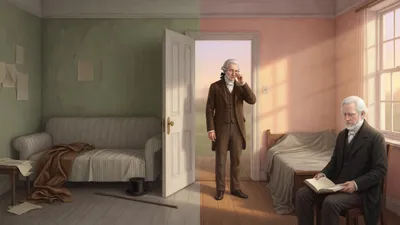
Before you read — think about:
- This chapter is called 'An Opinion'. In what settings does that word carry professional weight rather than just personal preference, and what changes when it does?
- Eighteenth-century medicine had almost no vocabulary for what we would now call psychology. What words did people reach for instead, and what does the vocabulary available to a society allow it to think about?
- Mr. Lorry has described himself as 'a mere man of business' since the fourth chapter of this book. Looking back over everything you have read, what work has that phrase been doing for him?
- Dickens gives a great many of his chapters the shape of a single sustained conversation. What has to be true of a conversation for it to carry a whole chapter on its own?
- Doctor Manette practises medicine in London and also conducts experiments. What did it actually mean to be called 'a scientific gentleman' in the 1780s, before medicine and science had separated into professions?
Watch for these while reading:
- The Doctor's hands, and how often he looks down at them.
- Mr. Lorry's bearing when he has something difficult to say, and how long he takes over the preliminaries.
- Which of the two men is asking the questions at any given point in the conversation.
- How Dickens marks the silences, and how many of them there are.
- Miss Pross: where she appears in this chapter, and what she is holding.
Vocabulary to know:
suspense (noun) — A state of anxious uncertainty about what will happen.; slumber (noun) — Sleep.; giddily (adverb) — Dizzily; unsteadily.; particle (noun) — A tiny fragment or amount.; toilette (noun) — The process of washing and dressing oneself.; overstep (verb) — To go beyond a proper limit.; incidental (adjective) — Occurring by the way, as a minor accompaniment.; allusion (noun) — An indirect reference to something.; acuteness (noun) — Sharpness or intensity.; severity (noun) — Extreme seriousness or harshness.; duration (noun) — The length of time something lasts.; resumption (noun) — The act of taking something up again.; collectedly (adverb) — Calmly and with self-control.; intricate (adjective) — Complicated and full of small connected parts.; unforeseen (adjective) — Not anticipated.; dread (noun) — Deep fear of something expected.; revival (noun) — A bringing back to life or activity.; association (noun) — A connection made in the mind between one thing and another.; desolately (adverb) — In a bleak, comfortless way.; reverence (noun) — Deep respect, especially of a religious kind.; affliction (noun) — Something that causes suffering.; counterweight (noun) — A weight that balances another.; henceforth (adverb) — From this time onward.; jarring (noun) — A harsh shaking or shock.; diffidence (noun) — Modest hesitancy; lack of confidence in one's own judgement.; overset (verb) — To upset or overturn.; abate (verb) — To reduce or weaken something.; profess (verb) — To claim something openly, whether or not it is true.; forge (noun) — A blacksmith's workshop with its fire and anvil.; yearn (verb) — To long for something intensely.; ingenuity (noun) — Cleverness and inventiveness.; retention (noun) — The act of keeping something rather than giving it up.; concession (noun) — Something given up or allowed in order to satisfy a demand or a fear.; disquieted (adjective) — Made uneasy.; sanction (verb) — To give official approval or permission for something.; grimness (noun) — Stern, forbidding severity.; accomplice (noun) — Someone who helps another commit a crime..
Chapter 26: A Plea

Before you read — think about:
- This chapter is called 'A Plea'. What makes a plea different from a request, a demand, or an argument?
- Dickens has now given us a long series of scenes in which two people talk privately, out of everyone else's hearing. What does a novel gain from staging so much of its business that way rather than in public?
- Dickens sometimes gives a decisive turn in a long novel to one of his shortest chapters. What can a short chapter do that a long one cannot?
- A newly married couple in the 1780s came home to a round of congratulatory visits from friends and relations. What is the social function of that first round of calls, and what is it like for the couple?
- Some novelists end a chapter by moving away from the people we have been sitting with and out into the street. What does a shift of that kind do to a reader?
Watch for these while reading:
- The first visitor the newly married couple receives, and what Charles Darnay notices as new about him.
- How often one speaker uses the phrase 'fashion of speech', and what he means by it each time.
- What is actually being asked for in this chapter, and how small the asker manages to make it sound.
- Lucie's forehead - the expression Dickens has been describing since the inn at Dover.
- Whose voice the chapter ends on, and whether the narrator tells you outright who is speaking.
Vocabulary to know:
rugged (adjective) — Rough and unpolished, but strong.; earnestness (noun) — Seriousness and sincerity of intention.; preach (verb) — To lecture someone about how they ought to behave.; insufferable (adjective) — Unbearable to be around.; avow (verb) — To admit or declare something openly.; claptrap (noun) — Showy nonsense designed to impress rather than to mean anything.; dissolute (adjective) — Given over to drink and reckless living.; indifferent (adjective) — Poor in quality; barely acceptable.; unornamental (adjective) — Not decorative; adding nothing to the look of a place.; tolerated (adjective) — Put up with rather than welcomed.; footing (noun) — The terms or basis on which a relationship stands.; privileged (adjective) — Granted a special right that others do not have.; unsubstantial (adjective) — Lacking solidity or weight.; recklessness (noun) — Complete disregard for danger or consequences.; lenient (adjective) — Merciful; not severe in judgement.; reparable (adjective) — Able to be repaired or put right.; purity (noun) — Freedom from anything corrupt or mixed in.; astounded (adjective) — Shocked into amazement.; forlorn (adjective) — Abandoned and wretched..
Chapter 27: Echoing Footsteps

Before you read — think about:
- What do you already know about the first year of the French Revolution, 1789 - and how much of what you think you know actually comes from a reliable source?
- Dickens introduced the echoes of the Soho corner back in chapter twelve and has kept them running ever since. What happens to a motif when a writer holds it for a dozen chapters before doing much with it?
- Novels published in weekly parts had to keep several storylines alive at once, for readers who might have missed an instalment. What techniques would you use to keep such a reader oriented?
- How much of what happens in a distant country actually reaches an ordinary household? What decides whether a piece of news travels at all?
- Dickens gave this novel's second section the title 'The Golden Thread'. Now that you are near the end of it, what do you think that phrase has been holding together?
Watch for these while reading:
- The echoes: whose footsteps Lucie hears in them, and how much of what she hears is inside her own house.
- Mr. Stryver, and what the narrator now finds to say about him.
- How often Sydney Carton comes to the house, and what the narrator says about his drinking when he does.
- Where Dickens puts a date, and how precise he chooses to be about it.
- Water: seas, waves, tides, floods. Notice where the imagery starts and how far it spreads.
Vocabulary to know:
directress (noun) — A woman who directs or manages a household.; resounding (adjective) — Echoing loudly.; prattling (adjective) — Chattering in the way small children do.; predominate (verb) — To be the strongest or most noticeable influence.; unruly (adjective) — Difficult to control.; halo (noun) — A ring of light around something.; blameless (adjective) — Free from fault.; instinctive (adjective) — Arising naturally, without being taught.; turbid (adjective) — Muddy and clouded.; astern (adverb) — Behind a ship.; plight (noun) — A difficult or bad condition.; swamped (adjective) — Flooded and overwhelmed.; desert (noun) — What a person deserves, good or bad.; exude (verb) — To give off or ooze out.; declaim (verb) — To speak grandly and at length, as if to an audience.; pensive (adjective) — Thoughtful in a slightly sad way.; mania (noun) — An obsessive craze.; peevish (adjective) — Irritable and complaining.; foreboding (noun) — A feeling that something bad is about to happen.; headlong (adjective) — Rushing forward without control.; bayonet (noun) — A blade fixed to the muzzle of a musket.; convulsively (adverb) — With sudden violent jerking movements.; semblance (noun) — Something that merely looks like the real thing.; whence (adverb) — From where.; pike (noun) — A long-handled weapon with a pointed steel head.; devise (verb) — To invent or work out.; demented (adjective) — Driven out of one's senses.; caldron (noun) — A great pot for boiling - spelt cauldron today.; vortex (noun) — A whirlpool; a centre that draws everything into it.; begrimed (adjective) — Blackened with dirt.; girdle (noun) — A belt worn round the waist.; detested (adjective) — Hated.; execration (noun) — A curse shouted aloud.; parley (noun) — A talk between enemies to discuss terms.; resistless (adjective) — Impossible to resist.; tumult (noun) — Loud confused uproar.; exultation (noun) — Triumphant rejoicing.; irruption (noun) — A violent bursting in.; inundation (noun) — A flood.; cavernous (adjective) — Like a cave; vast, dark and hollow.; swart (adjective) — Dark-coloured; swarthy.; grope (verb) — To feel about blindly with the hands..
Chapter 28: The Sea Still Rises
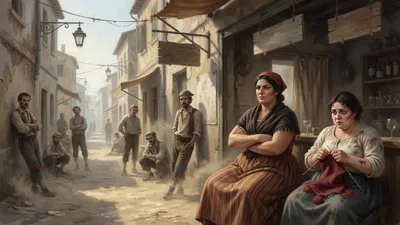
Before you read — think about:
- This chapter's title continues an image the last chapter used heavily. What does it mean for a writer to hand a metaphor forward from one chapter to the next instead of starting a new one?
- By July 1789 the price of bread in Paris had reached its highest point in living memory, and most working families spent the greater part of their income on it. What does a bread shortage do to a city, politically as well as physically?
- What is the difference between a crowd and a mob? Is the difference in what the people do, or in who is doing the describing?
- Dickens sometimes gives a character a nickname instead of a name. What does that do to the way a reader holds them in mind?
- News in revolutionary Paris travelled by word of mouth, by drum, and by people shouting from windows and rooftops. How does information behave when it moves that way, and what happens to it on the journey?
Watch for these while reading:
- Madame Defarge's hands, and what is in them now.
- The lamps hung across the streets of Saint Antoine, and how Dickens describes the way they swing.
- Whether anyone in Saint Antoine is still knitting, and what the knitting women's fingers are said to be like now.
- The final paragraphs, and where in Saint Antoine the narrator chooses to leave you.
- The drum, and who has charge of it.
Vocabulary to know:
exultant (adjective) — Triumphantly joyful.; fraternal (adjective) — Brotherly.; chary (adjective) — Cautious and unwilling to risk something.; portentously (adverb) — In a way that seems to warn of something coming.; contemplate (verb) — To look at or consider something steadily.; enthroned (adjective) — Placed as if on a throne; installed in power.; awry (adjective) — Crooked; twisted to one side.; vicious (adjective) — Cruel and ready to do harm.; sisterhood (noun) — A group of women bound together by a common purpose.; lieutenant (noun) — A second-in-command.; withal (adverb) — In addition; as well - an old-fashioned word.; threescore (noun) — Sixty - three times a score of twenty.; miscreant (noun) — A villain; someone who behaves wickedly.; rend (verb) — To tear violently apart.; drawl (noun) — Slow, drawn-out speech.; winnow (verb) — To separate grain from chaff by blowing air through it.; bushel (noun) — A large dry measure, about eight gallons.; agility (noun) — Quickness and skill in movement.; telegraph (noun) — A system for sending messages rapidly over a distance.; confines (noun) — The outermost limits of a place.; chaff (noun) — The husks separated from grain; worthless leftovers.; stifle (verb) — To smother or suffocate.; beseech (verb) — To beg urgently.; vehement (adjective) — Violently intense.; aloft (adverb) — Up high.; cavalry (noun) — Soldiers who fight on horseback.; spoils (noun) — Things taken by force after a victory.; beset (verb) — To surround and press in on.; infuse (verb) — To fill something with a quality.; flinty (adjective) — Hard as flint.; viands (noun) — Items of food.; husky (adjective) — Hoarse and rough in voice.; custodian (noun) — Someone who has charge of something..
Chapter 29: Fire Rises

Before you read — think about:
- This chapter is called 'Fire Rises', and the last two have leaned heavily on a rising sea. What happens when a writer swaps one elemental image for another partway through a story?
- The French countryside in 1789 was full of people on the roads - discharged soldiers, beggars, and men walking long distances looking for work. What does a country look like when large numbers of people are moving through it with no fixed home?
- Dickens keeps describing buildings as though they had faces. What happens to a reader's feelings about a place once the writer has given it a face?
- How does a novelist show a whole country changing, when a story can only ever be in one place at a time?
- In a village where most people could not read, how did news travel, and how did a community come to agree on what had happened?
Watch for these while reading:
- The mender of roads, and what colour cap he is wearing now.
- The stranger's shoes, his feet and his clothes - and what the road-mender does while the man is asleep.
- The stone faces of the chateau, and what the light does to them.
- Monsieur Gabelle, the official from the posting-house, and what the village now wants from him.
- The four compass directions, and how many times Dickens repeats them.
Vocabulary to know:
yore (noun) — Long ago - used in the phrase 'of yore'.; desolation (noun) — Emptiness and ruin.; shrivelled (adjective) — Dried up and wrinkled.; habitation (noun) — A place where people live.; chivalrous (adjective) — Gallant and courteous in the manner of a knight.; barren (adjective) — Producing nothing; empty of life.; caste (noun) — A fixed social class that a person is born into.; discern (verb) — To make something out, especially with difficulty.; barbarian (adjective) — Wild and uncivilised in appearance or manner.; dank (adjective) — Unpleasantly damp and cold.; benighted (adjective) — Kept in darkness and ignorance.; wayfarer (noun) — Someone travelling on foot.; ply (verb) — To work steadily at a task or trade.; attenuated (adjective) — Thinned or weakened.; footsore (adjective) — Having feet made sore by walking.; palter (verb) — To deal with something carelessly or trifle with it.; kine (noun) — Cows - an old plural form.; contagion (noun) — The spreading of something from person to person, like a disease.; sacristan (noun) — The officer who looks after a church and its contents.; tocsin (noun) — An alarm bell, or the signal it gives.; unkempt (adjective) — Untidy and uncared-for.; luminous (adjective) — Giving off light.; peremptory (adjective) — Leaving no room for refusal.; conflagration (noun) — A large destructive fire.; edifice (noun) — A large building.; anon (adverb) — Soon afterwards; presently.; begirt (verb) — Surrounded; encircled.; molten (adjective) — Melted by heat.; stupefied (adjective) — Dazed into helplessness.; trudge (verb) — To walk heavily and wearily.; enshrouded (adjective) — Wrapped in darkness or covering.; beacon (noun) — A fire or light set up as a signal.; instalment (noun) — A part-payment of a larger sum.; parapet (noun) — A low wall along the edge of a roof or balcony.; ill-omened (adjective) — Suggesting bad luck or disaster to come.; guttering (adjective) — Burning unsteadily and going out.; wend (verb) — To make one's way steadily.; quench (verb) — To put out a fire..
Chapter 30: Drawn to the Loadstone Rock

Before you read — think about:
- A loadstone is a naturally magnetic rock, and old sailors' tales told of a mountain of it that drew the nails out of passing ships until they fell apart. What does a title built on that image promise a reader?
- Between 1789 and 1792 large numbers of French nobles fled abroad; the French called them emigres. What is life like for a community of exiles who confidently expect to be going home soon?
- France suspended its monarchy and went to war with its neighbours in 1792. What do you know about that year, and how do you imagine British opinion divided over events across the Channel?
- By 1792 Britain was full of argument about the French Revolution, some people celebrating it and some appalled by it. How do people in one country form their opinions about a revolution in another?
- This chapter ends Book the Second of three. What do you expect a novelist to do with the last chapter of a section, and what would you feel cheated by?
Watch for these while reading:
- Tellson's Bank, and what it has turned into since we last spent time there.
- Mr. Lorry's age, and how many times it comes up in one conversation.
- Mr. Stryver, and the subject he is loud about now.
- The phrase 'latent uneasiness', and who the narrator attaches it to.
- Sailing, tides and magnetism as images, and how far Dickens is willing to push them.
Vocabulary to know:
ebb (noun) — The falling back of the tide.; tumultuous (adjective) — Loud, confused and disorderly.; enchantment (noun) — A magic spell.; dissociate (verb) — To separate oneself from something.; incur (verb) — To bring something upon oneself.; fabled (adjective) — Told of in fables; legendary.; mote (noun) — A speck, especially one in the eye.; dissimulation (noun) — The hiding of one's true feelings or intentions.; intrigue (noun) — Secret plotting.; besieged (adjective) — Surrounded by an attacking force.; munificent (adjective) — Very generous.; liberality (noun) — Generosity.; confiscation (noun) — The seizing of property by an authority.; provident (adjective) — Showing foresight; prepared for the future.; remittance (noun) — A sum of money sent to someone.; brethren (noun) — Brothers; fellow members of a group.; penitential (adjective) — Belonging to punishment or repentance.; disorganised (adjective) — Thrown into disorder; no longer functioning in an orderly way.; fourscore (noun) — Eighty - four times a score of twenty.; counsellor (noun) — Someone who gives advice.; transact (verb) — To carry out business.; compromising (adjective) — Likely to expose someone to danger or disgrace.; sacked (adjective) — Plundered by an army or a mob.; judicious (adjective) — Showing good sense and careful judgement.; codger (noun) — An old man - an affectionately rude word.; reverses (noun) — Changes of fortune for the worse.; refugee (noun) — Someone who has fled their country to escape danger.; orthodoxy (noun) — The generally accepted opinion.; vapouring (noun) — Empty boastful talk.; latent (adjective) — Present but not yet showing itself.; broach (verb) — To raise a subject for discussion.; akin (adjective) — Similar in nature.; heretofore (adverb) — Formerly; up to now.; inviolate (adjective) — Kept whole and unbroken.; verging (verb) — Approaching or nearing.; disparaging (adjective) — Belittling; speaking of someone with contempt.; degenerate (adjective) — Fallen away from the standard of one's family or kind.; craven (noun) — A coward.; doctrine (noun) — A set of beliefs held and taught by a group.; ruffian (noun) — A violent, lawless person.; blatant (adjective) — Loud and offensively obvious.; pestilent (adjective) — Deadly; spreading harm like a plague.; contamination (noun) — The spreading of something harmful by contact.; approbation (noun) — Approval.; indignity (noun) — Treatment that humiliates a person.; razed (adjective) — Levelled to the ground.; sequestration (noun) — The legal seizure of property until a claim is settled.; impost (noun) — A tax or duty.; recourse (noun) — Turning to a source of help, especially the law.; supplicate (verb) — To beg humbly.; succour (verb) — To give help to someone in distress.; dolorous (adjective) — Full of sorrow.; culminate (verb) — To reach a final and highest point.; aversion (noun) — Strong dislike or repugnance.; uphold (verb) — To support or maintain something.; renunciation (noun) — The formal giving-up of a right or possession.; annihilate (verb) — To destroy completely.; disquiet (noun) — Uneasiness of mind.; mariner (noun) — A sailor.; loadstone (noun) — A naturally magnetic stone; anything that attracts irresistibly..
Chapter 31: In Secret

Before you read — think about:
- By late 1792 revolutionary France had abolished the old forms of address and required everyone to be called 'Citizen'. What does a change in how people address one another actually do to a society?
- Travel through France in 1792 meant showing papers at every town gate, to bands of local volunteers rather than to trained officials. What follows when enforcement of a rule is local and improvised rather than central and uniform?
- Dickens called this last section of the novel 'The Track of a Storm'. What does that title lead you to expect of the chapters inside it?
- Novelists often send a character into a place the reader already understands better than the character does. What does that gap in knowledge do to the experience of reading?
- In September 1792 the French monarchy had just been suspended and foreign armies were advancing on the frontiers. What happens inside a country that believes it is about to be invaded?
Watch for these while reading:
- The red cap and the tricolour cockade, and how universal they have become.
- How Charles Darnay is addressed at each stage of his journey, and which of his names people use.
- The narrator stepping forward to tell you something the characters cannot yet know.
- Manners - the courtesies people go on observing, and the places Dickens chooses to show them.
- Counting: who counts what in this chapter, and how often.
Vocabulary to know:
fare (verb) — To travel.; equipage (noun) — A carriage together with its horses and attendants.; capricious (adjective) — Changing suddenly and without reason.; deem (verb) — To judge or consider something to be the case.; indivisible (adjective) — Impossible to divide into parts.; fraternity (noun) — Brotherhood; the bond between people who treat each other as equals.; befall (verb) — To happen to someone.; personage (noun) — A person of rank or importance.; cockade (noun) — A knot of ribbon worn on a hat as a badge of allegiance.; sabre (noun) — A heavy sword with a curved blade.; gird (verb) — To bind or encircle something tightly.; dragoon (noun) — A mounted soldier; here used of the pace such soldiers ride at.; thatch (verb) — To cover with straw or reeds.; chronically (adverb) — Continually; as a settled long-term condition.; farrier (noun) — A blacksmith who shoes horses.; press (noun) — A dense crowd.; decree (noun) — An official order having the force of law.; banish (verb) — To expel someone from a country by official order.; cluster (noun) — A small group close together.; diversified (adjective) — Broken up by variety.; ambuscade (noun) — An ambush.; ingress (noun) — The act of going in; entry.; egress (noun) — The act of going out; exit.; medley (noun) — A mixed assortment.; waning (adjective) — Growing weaker or dimmer.; sand (verb) — To sprinkle sand on wet ink to dry it.; unprecedented (adjective) — Never having happened before.; doggedly (adverb) — Stubbornly and without giving way.; orator (noun) — A public speaker.; ambassador (noun) — A country's official representative in another country.; isolate (verb) — To cut off from contact with others.; garner (verb) — To gather in a harvest.; generality (noun) — The greater part of people.; detention (noun) — The state of being held in custody.; wicket (noun) — A small door set into a larger gate.; noisome (adjective) — Foul-smelling and disgusting.; subordinate (noun) — Someone of lower rank.; vaulted (adjective) — Built with an arched roof.; refinement (noun) — Elegance and polish of manner.; squalor (noun) — Filthy and degraded conditions.; stateliness (noun) — Dignified grandeur of bearing.; frivolity (noun) — Lack of seriousness; light-hearted triviality.; apparition (noun) — A ghostly figure.; inversion (noun) — A turning upside down of the usual order.; calamity (noun) — A disaster.; impertinence (noun) — Rudeness; an improper liberty.; embrasure (noun) — The recessed opening of a window in a thick wall.; obstinately (adverb) — Stubbornly refusing to stop..
Chapter 32: The Grindstone

Before you read — think about:
- This chapter is named after an ordinary workshop object rather than a person or a place. What happens when a writer builds a whole chapter around a single machine?
- Tellson's Paris branch occupied part of a great house whose owner had fled the country. What is it like to work in a building that used to belong to somebody else, and who owns such a building now?
- Dickens often shows violence at a slight distance rather than head-on. What does that distance do to a reader?
- By September 1792 Paris believed it was about to be invaded and was gripped by fear of enemies inside the city. What do you know about what a fear of internal enemies does to a place?
- A chapter can end on an object rather than on a person. What does that kind of ending do?
Watch for these while reading:
- The Paris branch of Tellson's, and every way in which it is unlike the London one.
- The grindstone in the courtyard, and the point at which it first appears.
- Mr. Lorry at the window - how many times he opens it and closes it again.
- How much Mr. Lorry lets himself say out loud about what he expects, and how much he keeps back.
- Colour in this chapter, and red in particular.
Vocabulary to know:
metempsychosis (noun) — The passing of a soul into another body after death.; absolve (verb) — To clear someone of blame or guilt.; precipitation (noun) — Great haste.; whitewash (verb) — To paint over something with a white coating.; alcove (noun) — A recess in a room.; provocation (noun) — Something that causes a reaction.; tarnish (verb) — To lose brightness through exposure to air.; depositor (noun) — Someone who has placed money or valuables in a bank.; blighted (adjective) — Spoiled or ruined, especially of crops.; pendent (adjective) — Hanging down.; colonnade (noun) — A row of columns supporting a roof.; grindstone (noun) — A revolving stone wheel used for sharpening tools and blades.; smithy (noun) — A blacksmith's workshop.; lattice (noun) — A framework of crossed strips, used as a screen or blind.; unwonted (adjective) — Unusual; not customary.; imploringly (adverb) — In a begging, pleading way.; irrepressible (adjective) — Impossible to hold back.; charmed (adjective) — Protected as if by magic.; serviceable (adjective) — Useful; able to be of service.; throng (noun) — A dense crowd of people.; matted (adjective) — Tangled into a thick mass.; gore (noun) — Thick blood from a wound.; ligature (noun) — A cord or strip used for binding.; frantic (adjective) — Wild with excitement or fear.; unbrutalised (adjective) — Not yet made brutal; still capable of ordinary feeling.; ashy (adjective) — Grey-white, like ashes.; impetuous (adjective) — Acting quickly and with force, without hesitation.; kindred (noun) — A person's relatives.; stupor (noun) — A dazed state close to unconsciousness.; affrighted (adjective) — Frightened - an older form of the word.; armoury (noun) — A place where weapons are kept or serviced.; besmeared (adjective) — Smeared all over.; gorgeous (adjective) — Richly and showily splendid..
Chapter 33: The Shadow

Before you read — think about:
- This chapter is called 'The Shadow'. Where has Dickens used shadows in this novel so far, and what has each one been used for?
- In revolutionary Paris a household could be registered and watched by its own local committee, made up of its neighbours. What does it mean to be 'known' by a body like that?
- Miss Pross has almost no French and complete confidence. What is comedy doing inside a scene of real danger, and when does it stop working?
- Wartime and revolutionary governments have often required people to carry papers proving who they are. What does a standing demand to be identifiable do to ordinary life?
- Novelists sometimes describe the same thing twice within a few lines, in almost the same words. What is that repetition for?
Watch for these while reading:
- Mr. Lorry's reasoning about the Bank, and what he concludes he cannot do.
- Madame Defarge's knitting, and whether it ever stops.
- Miss Pross's English, and what she chooses to say in it.
- How Mr. Lorry explains things to Lucie, and how much of it he sounds as if he believes.
- The word 'shadow', and everyone it lands on.
Vocabulary to know:
imperil (verb) — To put something in danger.; repudiate (verb) — To reject or refuse to have anything to do with.; distracted (adjective) — Thrown into confusion and disorder.; compromise (verb) — To expose someone to danger or suspicion.; quest (noun) — A search.; melancholy (adjective) — Gloomy and sad.; lag (verb) — To move or pass slowly and heavily.; domicile (noun) — A dwelling place.; transport (noun) — An overwhelming rush of emotion.; impassive (adjective) — Showing no feeling whatever.; acquiescence (noun) — Reluctant agreement without protest.; heed (noun) — Attention.; attendant (adjective) — Accompanying; going along with something.; indistinct (adjective) — Not clearly defined.; lowering (adjective) — Dark and threatening, like a gathering sky.; behalf (noun) — The interest or benefit of another person.; suppliant (noun) — Someone who begs humbly for something.; thankless (adjective) — Ungrateful..
Chapter 34: Calm in Storm

Before you read — think about:
- 'Calm in Storm' sets two opposites side by side in three words. Where else has this novel joined opposites like that, and what does the habit prepare a reader for?
- The Terror rested on a Law of Suspects, under which being suspected was itself grounds for arrest. What happens to a society when an accusation is enough on its own?
- Dickens spent his own career campaigning about prisons, schools and courts. What difference does it make to a novel when its author has strong public opinions about the institutions in it?
- Dickens sometimes stops telling a story and compresses months of history into a few dense paragraphs. What does a reader gain, and lose, when a novel turns into a chronicle?
- This novel keeps describing history as weather - storms, floods, rising tides. What are the advantages of that metaphor, and what does it quietly hide?
Watch for these while reading:
- How much of what happened at La Force the reader is told, and how much the narrator declines to tell.
- Mr. Lorry watching his friend, and what he expects to see happen.
- The guillotine, and the jokes people are reported to make about it.
- How Dickens marks the passing of time without narrating it.
- The word 'recalled', and where in the chapter it turns up again.
Vocabulary to know:
populace (noun) — The ordinary people of a place, taken as a mass.; carnage (noun) — Widespread slaughter.; massacre (verb) — To kill a large number of people indiscriminately.; lavish (verb) — To give something in great abundance.; notable (adjective) — Worthy of notice; remarkable.; accord (verb) — To grant something formally.; mischance (noun) — Bad luck; an unlucky accident.; besought (verb) — Begged - the past form of beseech.; Samaritan (noun) — Someone who helps a stranger in distress, from the parable of the Good Samaritan.; solicitude (noun) — Anxious care for someone's welfare.; litter (noun) — A stretcher for carrying a sick or injured person.; butchery (noun) — Brutal slaughter.; dormant (adjective) — Inactive but not dead; capable of waking.; persevering (adjective) — Continuing steadily despite difficulty.; sagacious (adjective) — Shrewd and discerning.; unbecoming (adjective) — Not suitable to a person's character or position.; tinge (verb) — To colour something slightly.; invested (adjective) — Given a power or authority formally.; deliverance (noun) — Rescue from danger or captivity.; preceding (adjective) — Coming before in time or order.; era (noun) — A distinct period of history.; alluvial (adjective) — Made of soil deposited by rivers.; stubble (noun) — The short stalks left standing after corn is cut.; deluge (noun) — A great flood.; relenting (adjective) — Softening; growing gentler or less harsh.; gorged (adjective) — Stuffed full.; usage (noun) — Long-established custom.; jest (noun) — A joke.; infallibly (adverb) — Without ever failing.; supersede (verb) — To take the place of something.; shear (verb) — To cut off cleanly.; eloquent (adjective) — Skilled at speaking persuasively.; lop (verb) — To cut off, especially a branch or a head.; brood (noun) — A family of young; a set of things produced together.; encumbered (adjective) — Burdened or obstructed.; humane (adjective) — Showing compassion.; assassin (noun) — A murderer, especially one who kills for a cause..
Chapter 35: The Wood-Sawyer
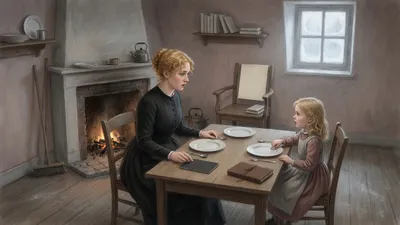
Before you read — think about:
- This chapter is named after a working man's trade rather than after any of the main characters. What does it do to a story when a chapter is named for a minor figure?
- Under the Republic everyone was to be addressed as 'citizen' and 'citizeness' by law. What is the difference between a custom people adopt voluntarily and the very same custom once it is compulsory?
- What does a writer risk by giving a very minor character a memorable catchphrase, and what does it buy?
- Under the Republic, France adopted a new calendar with new month-names and a ten-day week. Why would a new government want to change how people measure time?
- What are a writer's options for conveying that a long stretch of time has passed, and what does each one cost?
Watch for these while reading:
- The wood-sawyer, and the phrase he keeps repeating.
- What Lucie does with her days, and how exactly Dickens times it.
- Snow, and where in the chapter it falls.
- Doctor Manette's confidence, and the words he uses about his own power.
- Who passes through this corner of the street, and how long each of them stays.
Vocabulary to know:
stalwart (adjective) — Strongly built and sturdy.; loathsome (adjective) — Causing disgust.; slake (verb) — To satisfy a thirst.; avocation (noun) — A person's regular occupation.; comely (adjective) — Pleasant to look at.; resignedly (adverb) — With patient acceptance of something one cannot change.; inclement (adjective) — Harsh or severe, of weather.; hovel (noun) — A small, wretched dwelling.; prescribed (adjective) — Laid down as a rule.; redundancy (noun) — An excess of something.; jocosely (adverb) — In a joking way.; accost (verb) — To approach and speak to someone, often boldly.; billet (noun) — A short thick length of firewood.; thenceforth (adverb) — From that time onward.; grate (noun) — A barred opening; a grating.; canonise (verb) — To declare someone a saint.; gnashing (noun) — A violent grinding together of the teeth.; devilry (noun) — Wicked mischief.; warped (adjective) — Twisted out of true shape.; slough (noun) — A patch of deep mud.; disjointed (adjective) — Out of joint; lacking connection or order.; feathery (adjective) — Light and soft, like feathers.; yearning (adjective) — Full of intense longing.; implicitly (adverb) — Absolutely and without question.; staunch (adjective) — Loyal and dependable.; murky (adjective) — Dark and gloomy.; denote (verb) — To be a sign of.; faltering (adjective) — Hesitating and unsteady..
Chapter 36: Triumph

Before you read — think about:
- This chapter is called 'Triumph'. Whose triumph would you expect a chapter with that title to be about, at this point in the story?
- The Revolutionary Tribunal tried and sentenced people in minutes, and there was no appeal. What does speed do to justice, and is there a point at which a fast trial stops being a trial?
- Dickens keeps telling you what people are wearing. What does clothing tell you about a person in a time of political danger?
- This novel has now put two men on trial for their lives, in two countries, about twenty years apart. What comparison do you think Dickens is inviting?
- How does a novelist keep a courtroom scene tense when the reader already understands the rules the court is working under?
Watch for these while reading:
- The gaolers' joke about the Evening Paper, and how the daily list is read out.
- Who in the courtroom is still wearing their ordinary clothes.
- Two figures in the front row of the audience, and where they are looking.
- Doctor Manette's part in the day, and how much of it the reader is told about in advance.
- The five judges and the public prosecutor, and what the narrator finds to say about their manner.
Vocabulary to know:
arraign (verb) — To bring someone before a court to answer a charge.; prevailing (adjective) — Most common; predominant.; turbulent (adjective) — Disorderly and unruly.; felon (noun) — Someone who has committed a serious crime.; garb (noun) — Clothing, especially of a distinctive kind.; acceptation (noun) — The accepted meaning of a word.; overladen (adjective) — Loaded with far too much.; entreaty (noun) — An earnest request.; exaltation (noun) — The act of praising someone highly.; capriciously (adverb) — In a sudden, unpredictable way.; corroborate (verb) — To confirm someone else's account with further evidence.; discretion (noun) — Good judgement about what to say and when.; distasteful (adjective) — Offensive to one's feelings.; resign (verb) — To give up formally.; acquittal (noun) — A court's decision that an accused person is not guilty.; fickleness (noun) — Changeableness; unreliability of feeling.; compensate (verb) — To make up for a loss.; strew (verb) — To scatter something over a surface.; caress (noun) — A gentle touch of affection.; misdoubt (verb) — To have doubts about something.; brawling (adjective) — Noisy and quarrelsome.; elevate (verb) — To raise up.; waterspout (noun) — A column of spinning water drawn up from the sea.; remonstrate (verb) — To protest or object.; pestilence (noun) — A deadly epidemic disease.; boastfulness (noun) — The habit of bragging.; spectacles (noun) — Eyeglasses..
Chapter 37: A Knock at the Door

Before you read — think about:
- This chapter is called 'A Knock at the Door'. Why is that phrase so reliably effective in fiction, and what has to be true of a story for it to work?
- Under the Republic every house had to display, on the doorpost, the names of everybody living inside it. What does compulsory registration of residents do to a neighbourhood?
- Prisoners in this period were expected to pay for their own food and their guards while in prison. What follows in a system where being imprisoned costs the prisoner money?
- Dickens gives Miss Pross a comic set-piece about her Englishness in the middle of a dangerous situation. What is national loyalty for, and how does it look from outside?
- Very short chapters usually do one job. Which jobs are short chapters best at?
Watch for these while reading:
- Doctor Manette's manner now, and how the rest of the household behaves towards him.
- The family's daily arrangements, and what they have given up in order to be inconspicuous.
- The story the Doctor tells his granddaughter by the fire.
- Miss Pross's method of shopping in a language she refuses to learn.
- Questions asked at the end of this chapter, and which of them get answers.
Vocabulary to know:
frugal (adjective) — Sparing; careful with money and supplies.; retainer (noun) — A servant attached to a household.; ordinance (noun) — An official rule or decree.; legibly (adverb) — Clearly enough to be read.; inmate (noun) — Someone living in a particular house or institution.; embellish (verb) — To decorate or add to something.; consumption (noun) — The using up of goods.; needful (adjective) — Necessary.; purveyor (noun) — Someone who supplies provisions.; maxim (noun) — A short saying expressing a rule of conduct.; knavish (adjective) — Dishonest and sly.; access (noun) — A sudden fit or outburst of feeling.; prospect (noun) — A likelihood of something happening.; intervening (adjective) — Lying between two things.; visitation (noun) — A visit, especially one that brings trouble.; abstractedly (adverb) — As though one's mind were elsewhere.; section (noun) — One of the districts into which revolutionary Paris was divided, each with its own committee.; supreme (adjective) — Highest in authority.; dumb (adjective) — Silent; unable or refusing to speak..
Chapter 38: A Hand at Cards
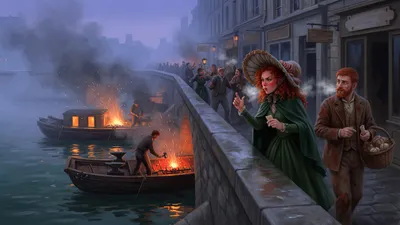
Before you read — think about:
- This chapter is titled with a card-playing metaphor. What does a game metaphor do to a scene of real danger, and what does it risk?
- Both the old French regime and the new Republic employed large numbers of spies and informers. What sort of person takes that work?
- Dickens likes to give a scene one controlling metaphor and then sustain it for pages. What are the risks of an extended metaphor, and what does it buy a writer?
- In 1793 Britain and France were at war with each other. What would it be like to be a citizen of one of those countries living openly in the other?
- A long scene can be built almost entirely on one person talking while others listen. What has to be true of the talker for a scene like that to hold?
Watch for these while reading:
- Miss Pross's shopping expedition, and what she and Jerry are watching out for as they go.
- Which of the people in the wine-shop notice the scream, and what they assume has happened.
- Mr. Cruncher's hair, and what the shadow on the wall is doing.
- Which of the men in the room says the least.
- The last line of the chapter, and who is left out of it.
Vocabulary to know:
gregarious (adjective) — Fond of gathering in groups.; barge (noun) — A flat-bottomed boat for carrying goods on a river.; antiquity (noun) — The ancient past.; cavalier (noun) — A gentleman escorting a lady.; outlandish (adjective) — Foreign-looking; strange.; vindicate (verb) — To defend or justify something.; voluble (adjective) — Speaking rapidly and at length.; furtive (adjective) — Secretive; behaving as though afraid of being seen.; meddlesome (adjective) — Given to interfering.; reticule (noun) — A small drawstring handbag.; estranged (adjective) — No longer close; alienated.; culpability (noun) — Blameworthiness.; condescension (noun) — Behaviour that treats another as an inferior while appearing gracious.; syllable (noun) — A single unit of sound in a word.; cant (noun) — The special slang of a particular group.; deduce (verb) — To work something out from evidence.; unreserved (adjective) — Frank; holding nothing back.; irresolutely (adverb) — Hesitantly; without decision.; negligent (adjective) — Carelessly casual.; reproachful (adjective) — Expressing blame or disappointment.; braced (adjective) — Tensed and made firm.; abhorrence (noun) — Utter loathing.; consternation (noun) — Dismay and alarm.; stead (noun) — Use or service, in the phrase 'stand in good stead'.; stake (noun) — What is risked on the outcome of a game or venture.; subornation (noun) — The bribing of someone to commit a crime, especially to lie under oath.; inference (noun) — A conclusion drawn from evidence.; treacherous (adjective) — Betraying trust.; denunciation (noun) — A public accusation, especially to the authorities.; vaunt (verb) — To boast about something.; tempter (noun) — Someone who deliberately leads another into wrongdoing.; eavesdropper (noun) — Someone who listens secretly to others' conversations.; signally (adverb) — Conspicuously; notably.; ominously (adverb) — In a way that suggests coming harm.; tergiversation (noun) — Repeated changing of sides or evasion of the truth.; unrelenting (adjective) — Never softening or giving way.; quash (verb) — To put an end to something completely.; livid (adjective) — Greyish-blue with shock or rage.; benevolence (noun) — Kindly good will.; discreditable (adjective) — Bringing shame or disgrace.; demean (verb) — To lower oneself in dignity.; dissonance (noun) — A jarring lack of agreement.; inscrutability (noun) — The quality of being impossible to read.; enumerate (verb) — To list one by one.; goblin (adjective) — Like a mischievous, ugly spirit.; elongate (verb) — To grow longer.; taciturn (adjective) — Saying very little.; imposition (noun) — A deception practised on someone.; evasively (adverb) — In a way that avoids giving a direct answer.; sham (noun) — A pretence; something fake.; hearth (noun) — The floor of a fireplace..
Chapter 39: The Game Made
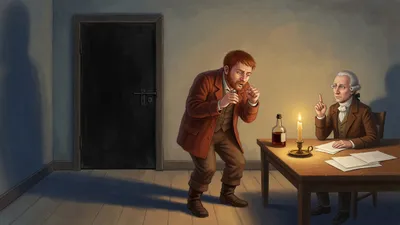
Before you read — think about:
- This chapter is called 'The Game Made'. In card-playing, the game is 'made' when the outcome is settled. What does a title like that promise, and what does it withhold?
- Dickens gives some of his most important scenes to two people sitting by a fire. Why is a fireside such a useful place for a novelist?
- Paris at this date had streets that went uncleaned, theatres that stayed full, and churches where no prayers were said. What does it tell you about a city that some ordinary things continue and others stop?
- This novel keeps sending characters out to walk the streets alone at night. What can a writer do with a night walk that a conversation cannot?
- Dickens read the burial service over more than one of his own characters. What does a writer take on by putting real scripture into a novel?
Watch for these while reading:
- Mr. Cruncher's speech to Mr. Lorry, and how many times he says 'if it wos so'.
- What Sydney Carton actually tells Mr. Lorry he has arranged, and how much he claims for it.
- The questions Carton asks Mr. Lorry about his own long life.
- A sentence of scripture, and every place it comes back.
- The jury at the day's trial, and one juryman in particular.
Vocabulary to know:
infirmity (noun) — A physical weakness or ailment.; cogitation (noun) — Deep thought.; abashed (adjective) — Embarrassed and ashamed.; prevaricate (verb) — To avoid telling the plain truth.; peroration (noun) — The closing section of a speech.; repent (verb) — To feel real regret and change one's conduct.; ensure (verb) — To make certain of something.; overborne (adjective) — Worn down and overwhelmed.; contrived (adjective) — Deliberately arranged rather than natural.; anticipate (verb) — To act before something happens so as to forestall it.; untrimmed (adjective) — Not cut or tidied.; embers (noun) — The glowing remains of a fire.; wistfully (adverb) — With a quiet, longing sadness.; vagabond (adjective) — Wandering; without a settled home or habit.; prowl (verb) — To move about quietly and watchfully.; inquisitively (adverb) — In a prying, curious way.; droll (adjective) — Amusingly odd.; batch (noun) — A group of things dealt with together.; glimmering (adjective) — Shining faintly and unsteadily.; tortuous (adjective) — Full of twists and turns.; thoroughfare (noun) — A road or street open at both ends.; chemist (noun) — A person who prepares and sells medicines.; negligence (noun) — Carelessness; lack of attention.; competitor (noun) — Someone competing against others.; impostor (noun) — Someone who pretends to be what they are not.; plunderer (noun) — Someone who robs on a large scale.; abounding (adjective) — Existing in great numbers.; gentility (noun) — The condition of belonging to the polite classes.; eddy (noun) — A small whirlpool in a current.; absorb (verb) — To take something in and make it part of oneself.; surmise (verb) — To guess from slight evidence.; astir (adjective) — In movement; up and busy.; sustaining (adjective) — Giving strength and support.; animate (verb) — To bring to life; to enliven.; procedure (noun) — The established way of doing something, especially in law.; suicidal (adjective) — Destructive to oneself.; empanel (verb) — To enrol people as a jury.; uncompromising (adjective) — Refusing to soften or give way.; expound (verb) — To set something out in detail.; cannonier (noun) — A soldier who works a cannon.; commendation (noun) — Praise and approval.; specimen (noun) — A sample used for comparison or study..
Chapter 40: The Substance of the Shadow

Before you read — think about:
- This chapter is called 'The Substance of the Shadow'. What is the difference between a shadow and the thing that casts it, and why might a writer use that distinction as a title?
- Before the Revolution a French nobleman could obtain a lettre de cachet - a sealed royal order imprisoning a named person indefinitely, without charge or trial. What does the existence of such a power do to everyone who lives under it, including the powerful?
- A document written years earlier can be read out in court long afterwards. What are the risks of judging someone by something they wrote in very different circumstances?
- A long novel sometimes stops and inserts a document - a letter, a diary, a report. What has to be true of that document for the interruption to be worth making?
- Doctors, lawyers and priests are all bound by rules about confidentiality. What is professional confidence for, and when should it give way?
Watch for these while reading:
- The date at the head of the document, and the date on which it is being read out.
- How certain the writer says he is about what he remembers, and how often he says it.
- The breaks in the document, and what the writer says he is doing during them.
- The reactions of the people in the courtroom - Dickens keeps cutting back to them.
- The last sentence of the document.
Vocabulary to know:
narrative (noun) — An account of connected events.; distinctness (noun) — Clearness; the quality of being easy to make out.; scrapings (noun) — Small amounts scraped off a surface.; circumstantial (adjective) — Full of detail; relating to the surrounding circumstances.; presentiment (noun) — A feeling that something is about to happen.; unimpaired (adjective) — Not weakened or damaged.; imperious (adjective) — Commanding; expecting instant obedience.; armorial (adjective) — Relating to a coat of arms.; haughtily (adverb) — In a proud, superior way.; immunities (noun) — Legal exemptions and privileges.; obnoxious (adjective) — Offensive and hateful; the kind of thing people want rid of.; denouncer (noun) — Someone who publicly accuses another.; pinioned (adjective) — With the arms bound to the sides.; frenzied (adjective) — Wildly out of control.; shrieks (noun) — Piercing cries.; narcotic (noun) — A drug that dulls pain and induces sleep.; tranquillise (verb) — To calm.; suffocation (noun) — The state of being unable to breathe.; benumbed (adjective) — Deadened; made unable to feel.; betrothed (adjective) — Engaged to be married.; atonement (noun) — Something done to make amends for a wrong.; inducement (noun) — Something offered to persuade someone.; rouleau (noun) — A cylinder of coins wrapped in paper.; contempt (noun) — Complete lack of respect.; degrading (adjective) — Lowering someone's dignity.; outrage (noun) — A shocking act of violence or injustice.; pillaged (adjective) — Robbed and stripped bare.; memorials (noun) — Written statements submitted to an authority.; compromised (adjective) — Put at risk of harm or exposure.; apprehensive (adjective) — Anxious about what may happen.; distrusted (adjective) — Regarded with suspicion.; jealously (adverb) — Watchfully, guarding something closely.; constraining (adjective) — Forcing; holding under restraint.; incumbrance (noun) — A burden or hindrance.; graciously (adverb) — In a manner meant to seem kind and condescending at once.; notorious (adjective) — Famous for something bad.; descendants (noun) — A person's children, grandchildren and later family.; utterance (noun) — Something said or expressed.; laboriously (adverb) — With great effort.; lamenting (adjective) — Expressing grief.; piercing (adjective) — Sharp enough to go through; penetrating.; dilated (adjective) — Widened.; clenched (adjective) — Closed tightly.; fringed (adjective) — Bordered with a decorative edge.; embroidery (noun) — Decorative needlework.; species (noun) — A kind or sort.; stature (noun) — A person's natural height.; variation (noun) — A change or difference from what is usual.; unanimously (adverb) — With everyone in agreement.; virtuous (adjective) — Morally good.; wrought (verb) — Worked or made - an old past form of 'work'.; anathematise (verb) — To curse formally and solemnly.; prodigious (adjective) — Enormous.; obscure (adjective) — Hidden; hard to see or find..
Chapter 41: Dusk

Before you read — think about:
- This chapter is called 'Dusk' and the next one 'Darkness'. What does a writer set up by naming two chapters after successive stages of the same thing?
- What is the difference between comforting someone and being useful to them? Can one get in the way of the other?
- Dickens ends many chapters by moving one character away from the group and leaving them alone. What does that do?
- A very short chapter placed after a very long one changes the pace of a book. What effects can a novelist get from that contrast?
- In a story where a great deal has already been withheld from the reader, what makes a reader keep trusting the narrator?
Watch for these while reading:
- Where each member of the family is standing, and who moves first.
- Sydney Carton, and where in the scene he first moves.
- What Carton says out loud and what he says close to somebody's ear.
- Doctor Manette after the verdict, and how the others now speak to him.
- The last line of the chapter, and whether the narrator explains it.
Vocabulary to know:
prosecutor (noun) — The official who argues the case against an accused person.; sentence (noun) — The punishment a court orders.; adjourn (verb) — To break off a meeting or court sitting until later.; acquiesce (verb) — To accept something without protest.; demonstration (noun) — An open show of feeling by a crowd.; recognisant (adjective) — Aware of something; acknowledging it.; consolatory (adjective) — Meant to comfort.; supposition (noun) — Something assumed rather than known.; stricken (adjective) — Overwhelmed by grief or shock.; wantonly (adverb) — Cruelly and without reason.; mortally (adverb) — Fatally; in a way that causes death.; blooming (adjective) — Healthy and fresh-looking.; conquered (adjective) — Overcome and subdued.; unconscious (adjective) — Not aware; senseless.; assurances (noun) — Promises meant to remove doubt.; celebration (noun) — A public marking of an occasion..
Chapter 42: Darkness

Before you read — think about:
- This chapter is called 'Darkness' and follows one called 'Dusk'. What has a writer committed to by naming chapters in that sequence?
- Revolutionary Paris was divided into Sections, each with a local committee that could order arrests. What does it mean for that kind of power to be held so locally?
- Getting out of Paris in 1793 required papers signed by more than one authority, and they could be cancelled at any time. What is it like to depend on a document?
- Dickens often lets a character overhear a conversation rather than be told about it. What does eavesdropping give a novelist that direct telling does not?
- Dickens has built this whole novel out of pairs and comparisons - two cities, two trials, two men. Which pairing has told you most, and why?
Watch for these while reading:
- The wine-shop as Sydney Carton finds it, and how he behaves there.
- Who does most of the talking in the wine-shop, and who says least.
- Monsieur Defarge's face and answers during that conversation.
- The papers Mr. Lorry is asked to keep, and the exact instructions attached to each one.
- The hours, and how the chapter keeps track of them.
Vocabulary to know:
inveteracy (noun) — Long-established, deeply fixed hostility.; implacably (adverb) — In a way that cannot be softened or appeased.; deprecatory (adjective) — Apologetic; trying to ward off disapproval.; mediation (noun) — An attempt to settle a dispute between two sides.; entangling (adjective) — Drawing someone into difficulty they cannot easily get out of.; frontier (noun) — The border between two countries.; certificate (noun) — An official document confirming a fact.; appointed (adjective) — Fixed or arranged in advance.; obtained (verb) — Got hold of something, especially with effort.; traversing (verb) — Crossing or travelling through.; monotonously (adverb) — In an unvarying, wearying way.; moaningly (adverb) — With low sounds of grief.; whimpering (adjective) — Making small frightened sounds.; perplexedly (adverb) — In a puzzled way.; pacifically (adverb) — Peaceably; in a calming manner.; wrathfully (adverb) — Angrily.; croaking (adjective) — Making a harsh, hoarse sound.; outwatched (verb) — Stayed awake longer than.; rehearsed (verb) — Went over something in advance to prepare for it.; reliance (noun) — Dependence on someone or something.; repetition (noun) — The act of saying or doing something again.; pretence (noun) — An act put on to deceive.; inevitably (adverb) — In a way that cannot be avoided.; unquestionably (adverb) — Beyond any doubt.; straying (adjective) — Wandering away from where it should be.; horrified (adjective) — Filled with horror.; memorable (adjective) — Impossible to forget.; momentary (adjective) — Lasting only a moment.; minority (noun) — The smaller part of a group.; sympathise (verb) — To share or understand another's feelings.; prolonged (adjective) — Lasting a long time..
Chapter 43: Fifty-two

Before you read — think about:
- This chapter is titled with a number. What does a bare number do at the head of a chapter that a phrase could not?
- The Conciergerie held prisoners for a very short time before trial or execution. What is it like to be somewhere that everyone passes through and nobody stays?
- Condemned prisoners in this period were usually allowed to write letters. What would you want to put in a letter that you knew would be read after your death, and what would you leave out?
- Dickens has now spent several chapters showing plans being made without telling the reader what they are for. What keeps a reader patient through that, and when does patience run out?
- This novel began with a message that meant nothing to anyone who heard it - 'Recalled to Life'. Looking back from here, how many different things has that phrase been made to mean?
Watch for these while reading:
- How Charles Darnay spends the hours he has, and who he writes to.
- The other prisoners of the fifty-two, and the two or three Dickens singles out.
- Sydney Carton's manner, and how it differs from every previous scene he has been in.
- Errands: who goes out, what each of them goes out for, and how much the narrator explains at the time.
- A young woman among the prisoners.
Vocabulary to know:
condemnation (noun) — The act of sentencing someone to punishment.; seamstress (noun) — A woman who sews for a living.; work-worn (adjective) — Worn out by hard labour.; hunger-worn (adjective) — Wasted by lack of food.; fortitude (noun) — Courage in bearing pain or trouble.; resignation (noun) — Acceptance of something one cannot change.; bitterness (noun) — Sharp resentment.; concealment (noun) — The act of hiding something.; assignation (noun) — A secretly arranged meeting.; countersigned (adjective) — Signed by a second person to confirm the first signature.; cautionary (adjective) — Serving as a warning.; self-possession (noun) — Calm control of oneself.; stimulate (verb) — To rouse to action.; gesticulation (noun) — Vigorous movement of the hands in speaking.; watchfully (adverb) — With careful attention.; inarticulately (adverb) — Without forming clear words.; unintelligible (adjective) — Impossible to understand.; unspeakable (adjective) — Too great or too dreadful to be put into words.; intolerable (adjective) — Impossible to bear.; supernatural (adjective) — Beyond the ordinary laws of nature.; faculties (noun) — The powers of the mind.; oblivious (adjective) — Completely unaware.; overfraught (adjective) — Overloaded.; likelihood (noun) — Probability.; preservation (noun) — The act of keeping something safe.; disproportionate (adjective) — Out of all proportion.; dissatisfied (adjective) — Not content.; betrothal (noun) — An engagement to be married.; boundless (adjective) — Without limit.; countless (adjective) — Too many to count.; everlasting (adjective) — Lasting for ever.; forgetfulness (noun) — The state of not remembering.; heartless (adjective) — Without pity.; impatience (noun) — Restless unwillingness to wait.; retrospect (noun) — A looking back over past events.; unaccountably (adverb) — In a way that cannot be explained.; virtually (adverb) — In effect, if not strictly in fact.; wrongfully (adverb) — Unjustly.; tanneries (noun) — Places where animal hides are made into leather.; contend (verb) — To struggle against something..
Chapter 44: The Knitting Done

Before you read — think about:
- This chapter is called 'The Knitting Done'. A piece of work being finished can be a relief or a threat. Which does the title sound like to you, and why?
- Dickens has several separate strands to tie off as this novel ends. What are a novelist's options for closing a plot, and what makes each one satisfying or unsatisfying?
- Revolutionary Paris was full of foreigners who spoke no French. What is daily life like in a city whose language you do not have?
- Under the Terror, ordinary neighbours served on committees with the power to denounce. What does it do to a community when official power is handed to the people next door?
- Dickens often runs two scenes at once and cuts between them. What does that technique do to suspense, and what does it cost in clarity?
Watch for these while reading:
- What Jerry Cruncher promises, and how many times he says it.
- Miss Pross's arrangements for following the others, and why she and Jerry are staying behind.
- Madame Defarge's errand, and what she is carrying.
- Madame Defarge's decision about whether to tell her husband what she means to do.
- The clock, and how the chapter keeps track of the hours.
Vocabulary to know:
accoutred (adjective) — Equipped or dressed for a purpose.; commencement (noun) — The beginning of something.; completion (noun) — The finishing of something.; unencumbered (adjective) — Not weighed down or hindered.; overloading (noun) — The act of putting too much weight on something.; facilitate (verb) — To make something easier.; emergency (noun) — A sudden situation requiring immediate action.; perturbation (noun) — Anxiety and agitation.; protestations (noun) — Emphatic declarations.; solemnity (noun) — Great seriousness.; submission (noun) — The act of yielding to another's authority.; inveterate (adjective) — Long-established and unlikely to change.; malevolent (adjective) — Wishing harm to others.; annihilation (noun) — Total destruction.; meditative (adjective) — Thoughtful.; ruminating (adjective) — Turning something over in the mind.; satellite (noun) — A follower who attends on someone more powerful.; signalling (noun) — The act of making signs to communicate.; scornfully (adverb) — With contempt.; contemptuously (adverb) — Showing complete lack of respect.; idiomatic (adjective) — Using the natural expressions of a language.; transparently (adverb) — Obviously; in a way that hides nothing.; perception (noun) — Understanding gained through the senses.; determination (noun) — Firmness of purpose.; unchangeable (adjective) — Impossible to alter.; disfigurement (noun) — Damage that spoils someone's appearance.; smothered (adjective) — Muffled; stifled.; stillness (noun) — Complete quiet.; diversity (noun) — Variety.; endowments (noun) — Natural gifts or qualities.; appreciative (adjective) — Showing understanding and gratitude.; cherished (adjective) — Held dear.; nonsensical (adjective) — Absurd; making no sense.; consultation (noun) — A discussion to decide something.; bethought (verb) — Reminded oneself; called to mind.; hesitating (adjective) — Pausing in doubt.; protracted (adjective) — Drawn out over a long time.; rapturously (adverb) — With intense delight.; celestial (adjective) — Heavenly..
Chapter 45: The Footsteps Die Out For Ever

Before you read — think about:
- This is the last chapter of the novel, and its title is a sentence rather than a name. What does a writer signal by ending on a full clause?
- The echoes of the Soho corner were introduced back in chapter twelve as a young woman's 'foolish fancy'. Looking back over the whole book, what has Dickens done with them?
- Novels written in weekly parts had to end in a way that satisfied readers who had been waiting a year. What do you think a reader is owed by a last chapter?
- This book has argued with itself about the French Revolution for forty-four chapters, showing the cruelty that caused it and the cruelty it produced. What would count as a fair ending to an argument like that?
- Dickens said he had the last pages of this book in mind before he wrote the first. What difference does it make to a novel if the writer knew the ending all along?
Watch for these while reading:
- The tumbrils, and the comparison Dickens makes for them in the first paragraph.
- The knitting women counting at the foot of the scaffold.
- How much of this chapter is given to people who have not been named before.
- Where the narrator stops describing and starts speaking in the first person.
- The very last word of the novel, and the very first word of chapter one.
Vocabulary to know:
insatiate (adjective) — Never satisfied.; devouring (adjective) — Consuming greedily.; peppercorn (noun) — A dried berry used as a spice; something of the smallest possible value.; oppressors (noun) — Those who rule others cruelly.; rapacious (adjective) — Greedy and grasping.; expiation (noun) — The making of amends for a wrong.; conjuration (noun) — A solemn appeal or entreaty.; uncomplaining (adjective) — Bearing something without protest.; petulantly (adverb) — In a childishly sulky way.; questionable (adjective) — Doubtful; open to challenge.; elevation (noun) — A raised place.; curiosity (noun) — Eagerness to see or know.; shattered (adjective) — Broken to pieces.; perishing (adjective) — Dying.; transformations (noun) — Complete changes of form.; generations (noun) — Successive stages of a family or a people.; changeless (adjective) — Never altering.; tranquilly (adverb) — Calmly.; majestically (adverb) — With grandeur and dignity.; believeth (verb) — Believes - the old form used in the King James Bible.; whosoever (pronoun) — Whoever - an old emphatic form.; anniversary (noun) — The yearly return of a date.; relinquished (verb) — Let go of; released from one’s hold.; outskirts (noun) — The outer edges of a town..
About the Author
Charles Dickens (1812-1870) was the most popular English novelist of his century and, by most measures, the most influential. His own childhood turned sharply when his father was imprisoned for debt and twelve-year-old Charles was sent to paste labels on jars in a blacking warehouse; the experience left him with a lifelong anger about poverty, debt, and the way institutions treat the powerless, and prisons appear in nearly everything he wrote. He published almost all of his novels in serial parts, writing to deadline while the earlier chapters were already in readers' hands, which is why his books are so full of hooks, coincidences, and characters you can recognise from a single line. A Tale of Two Cities appeared in 1859 in All the Year Round, the weekly magazine he founded and edited, and it is one of only two historical novels he wrote.
The novel begins in 1775 and moves between Georgian England and a France in the last years before the Revolution of 1789. In pre-revolutionary France the aristocracy and the clergy were largely exempt from the taxes that fell on everyone else, and a nobleman's authority over the peasants on his land was close to absolute; the storming of the Bastille prison in July 1789 became the moment that stood for the whole system giving way. England in the same decade was not the orderly place its own citizens liked to imagine: highwaymen worked the main roads, mobs formed quickly, and the gallows were used constantly and with almost no sense of proportion. Dickens wrote seventy years later, from a Britain that was watching its own working class organise and that remembered the Revolution with a mixture of horror and fascination; his principal source was Thomas Carlyle's history The French Revolution, and he knew his readers would arrive already holding strong opinions about it.