

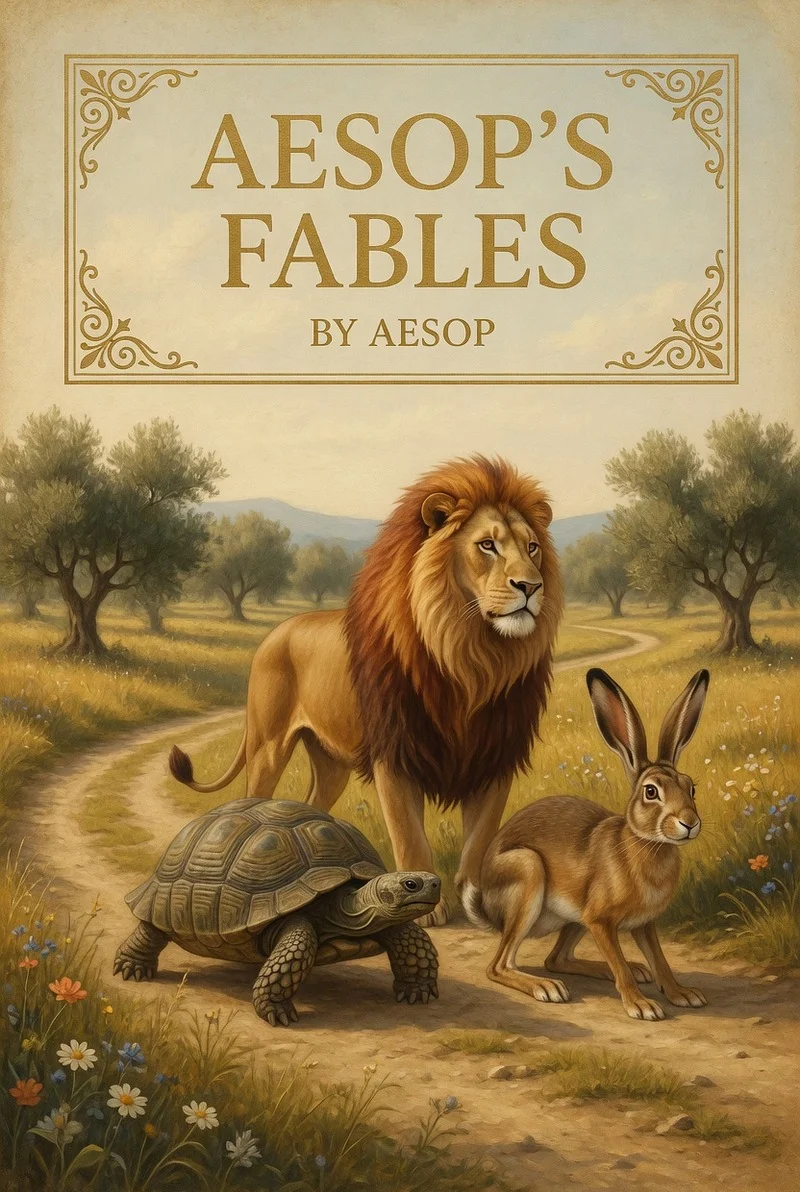
About This Book
These are short animal fables. The animals talk and act like people, and each tale ends with a pointed lesson. You will meet a hare and a tortoise, a lion and a mouse, a fox who wants grapes, and other familiar figures. Each story is one sitting long.
This collection uses a literary English translation, not a first-reader rewrite. Third graders can handle the longer sentences and older words (consented, belittle, sparingly) while still finishing a fable in a few minutes. The tales are good practice for finding a moral, comparing characters, and noticing how a writer makes a small animal stand for a human habit.
Meet the Characters

More about The Tortoise
The Tortoise is a gentle, patient animal who never rushes. He is happy to take his time and keeps trying, one small step after another. In the meadow the other animals know him as calm, steady, and dependable.

More about The Hare
The Hare is quick, energetic, and very proud of how fast he can run. He loves to show off his speed and sometimes teases the slower animals. He is playful and cheerful, though he can be a little too sure of himself.

More about The Lion
The Lion is the strongest and grandest animal in the land, respected by all the other beasts. He can look fierce, but underneath he has a fair and noble heart. Everyone in the story knows him as the king of the animals.

More about The Mouse
The Mouse is little, gentle, and easy to overlook, but he is quick-thinking and kind. Though he is one of the smallest animals in the fields, he is brave at heart and always ready to help a friend in need.

More about The Fox
The Fox is smart, sly, and always quick with a plan. He loves to think his way around problems and to outwit others to get what he wants. Clever and charming, he is one of the most cunning animals in all the fables.

More about The Crow
The Crow is a clever black bird who watches the world carefully. She is patient and good at solving problems once she sets her mind to them. Though she looks plain in her dark feathers, she is far sharper than she first appears.

More about The Ant
The Ant is a tiny, busy worker who spends warm days collecting food. She is careful, organized, and always thinking ahead. The other insects know her as the one who never sits still for long.

More about The Grasshopper
The Grasshopper loves warm days, music, and play. He is cheerful and full of energy, and he would rather sing in the tall grass than do chores. He does not worry much about tomorrow.

More about The Shepherd Boy
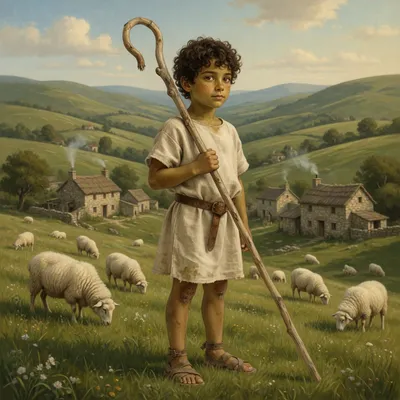
The shepherd boy lives in a small village and spends his days on the green hillside with the sheep. He can feel lonely and restless with only the flock for company. He likes attention and sometimes looks for a way to make the quiet day more exciting.

More about The Wolf
The Wolf is a real wild animal who lives in the woods beyond the pasture. He is lean, quiet, and watchful. The villagers know that a wolf near the flock means trouble for the sheep.

More about The North Wind
The North Wind is the cold, strong wind that rushes over the hills. He is loud, boastful, and sure that force can win any contest. He likes to show how powerful his gusts can be.

More about The Sun
The Sun shines over the country road and the fields. He is calm, patient, and sure that warmth can do what shouting cannot. He watches the world below with a quiet, kindly light.

More about The Traveler
The traveler is an ordinary man walking a long country road. He wears a warm cloak because the weather can change quickly. He just wants to reach the next village in peace.

More about The Dog
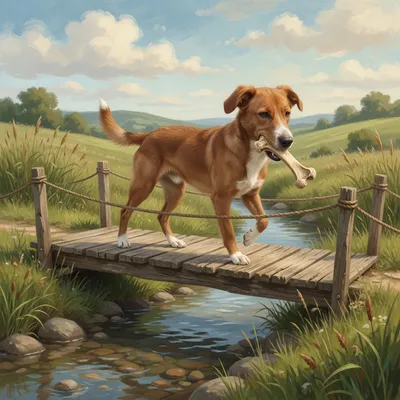
The Dog is a friendly farm dog who is very proud of the bone he has found. He is cheerful and a little greedy. He does not always stop to think before he wants more.

More about The Town Mouse
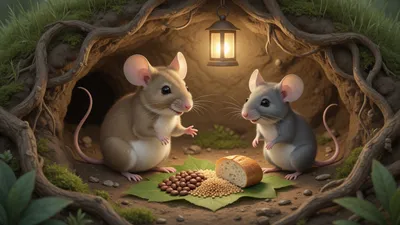
The Town Mouse lives in a grand house in the city and is used to fine food and fine rooms. He is polite, a little proud, and eager to show his cousin how exciting town life can be.

More about The Country Mouse
The Country Mouse lives in a cozy burrow under the grassy field. He is warm-hearted, a little shy, and proud of the simple food he can share. Quiet country life is the only life he has known.

More about The Goose
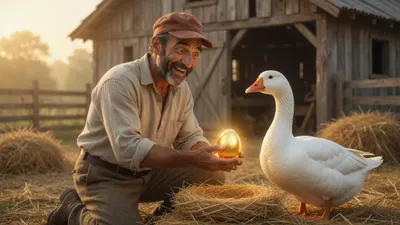
The Goose lives in the farmer's yard and nests in the straw. She is calm and watchful. Each day she tends her nest the way any goose would.

More about The Farmer
The farmer works a small farm with a wooden barn and a straw yard. He is used to a simple life. When something wonderful happens, he has to decide how to treat that gift.
Pre-Reading Discussion Questions
- What is the difference between a joke and a story that is trying to teach a lesson?
- When have you seen someone brag and then fail at the thing they bragged about?
- Why might a small character in a story still matter?
- What do people sometimes say when they cannot get something they wanted?
- When is it hard to tell the truth after you have already fooled someone?
- Would you rather have a plain, safe life or a fancy, risky one? Why?
Themes & Big Ideas to Track
- How a writer uses animals to show human habits
- The difference between speed and persistence
- What a moral line at the end of a tale is doing
- How pride, greed, and fear change a character's choices
- When force fails and gentleness works
- How security can matter more than luxury
Chapter-by-Chapter Study Guide
Chapter 1: The Tortoise and the Hare
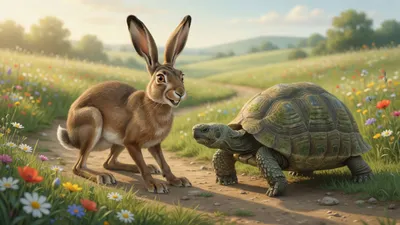
Before you read — think about:
- Have you ever been told you are too slow?
- When is it hard to wait your turn?
- What do you do when a pal brags?
- Have you ever been in a race, or watched one?
- How do you feel when someone says you cannot do a job?
Watch for these while reading:
- How the hare talks to the tortoise.
- How the tortoise talks back.
- Who else is in the field with them.
- How each animal moves.
- How sure each animal looks.
Vocabulary to know:
mocking (adjective) — making fun of someone in a mean, teasing way; amused (adjective) — finding something funny; judge (noun) — the one who watches a race and says who wins; nap (noun) — a short sleep in the day; steadily (adverb) — moving in the same slow way, without stopping; agreed (verb) — said yes to a plan; consented (verb) — agreed to do something; ridiculous (adjective) — silly or absurd; easy to laugh at.
Chapter 2: The Ant and the Grasshopper
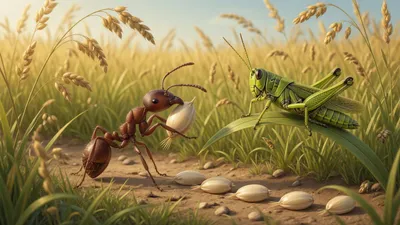
Before you read — think about:
- What jobs do you do at home?
- What do you like to do on a warm day?
- When is it hard to stop playing and help?
- Have you ever watched ants? What were they doing?
- What snack do you like on a hot day?
Watch for these while reading:
- What the ants are doing in the sun.
- What the grasshopper is carrying.
- What the ants ask him.
- What he says he did all summer.
- How the ants look at the grasshopper.
Vocabulary to know:
stored (verb) — put food away to keep it for later; starving (adjective) — very, very hungry; humbly (adverb) — in a small, polite way, not bragging; begged (verb) — asked again and again for help; disgust (noun) — a yuck feeling, like you do not like it at all; grain (noun) — tiny dry seeds people and ants keep as food; bustling (verb) — moving about in a busy, hurried way; whined (verb) — complained in a weak, high, self-pitying voice.
Chapter 3: The Lion and the Mouse
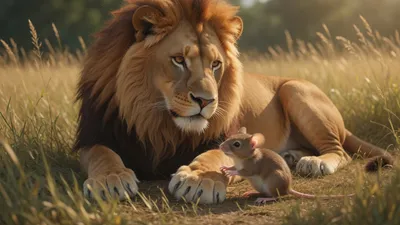
Before you read — think about:
- Have you ever been close to a very big animal? How did it feel?
- How do you talk to someone much bigger than you?
- What does it mean to make a promise?
- Have you ever made a pal jump by mistake?
- How do you say sorry if you bump someone?
Watch for these while reading:
- Where the lion is at the start.
- How the mouse feels when she meets him.
- What the mouse asks for.
- What the lion thinks of her words.
- How small the mouse looks next to the lion.
Vocabulary to know:
timid (adjective) — shy and a little scared; spare (verb) — to let someone go and not hurt them; repay (verb) — to do something kind back for a kindness; generous (adjective) — kind and willing to give or let go; gnawed (verb) — chewed and chewed with small teeth; net (noun) — ropes tied in a criss-cross to catch an animal; unexpectedly (adverb) — by surprise; without warning; stalking (verb) — hunting by following quietly.
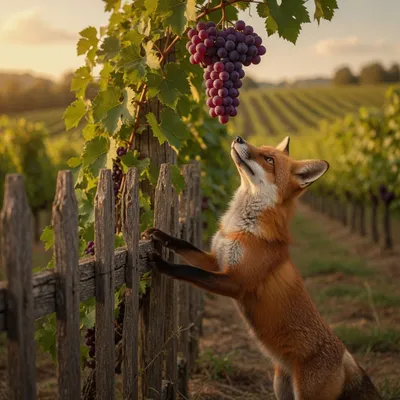
Chapter 4: The Fox and the Grapes
Before you read — think about:
- What do you do when you really want a snack?
- What is your favorite fruit? How does it taste?
- What do you do when a try feels too hard?
- Have you ever wanted something in a shop window?
- How does your face look when you want a snack?
Watch for these while reading:
- Where the grapes hang.
- How the fox looks at them.
- How high he has to go.
- The words he uses for the grapes.
- How he holds his head when he leaves.
Vocabulary to know:
ripe (adjective) — ready to eat; gazed (verb) — looked for a long time; leap (noun) — a big jump; vain (adjective) — with no luck; it did not work; longingly (adverb) — in a wanting way, like you really wish you had it; spied (verb) — saw; spotted; scornfully (adverb) — in a way that shows you look down on something; gaping (verb) — staring with the mouth open, as if hungry or amazed.
Chapter 5: The Boy Who Cried Wolf
Before you read — think about:
- How do you feel when a job is boring?
- Have you ever had to look after something important?
- Who do you call when you need help?
- How do you feel if a pal tricks you?
- Who do you tell if you need help at school?
Watch for these while reading:
- What the boy does all day.
- What his master told him to shout.
- The words the boy uses.
- How the villagers come from town.
- How the boy looks when they arrive.
Vocabulary to know:
shepherd (noun) — a person whose job is to watch sheep; flock (noun) — a group of sheep that stay together; pasture (noun) — a grassy field where sheep eat; amuse (verb) — to do something for fun when you are bored; village (noun) — a small town with homes close together; trick (noun) — a joke that fools someone; underbrush (noun) — low bushes and plants growing under trees.
Chapter 6: The Crow and the Pitcher
Before you read — think about:
- How does it feel to be very thirsty?
- Where do you get a drink at home? At school?
- What is a pitcher? What do people keep in one?
- What do you drink when you are hot?
- Where do birds find water near your home?
Watch for these while reading:
- Why the crow needs a drink.
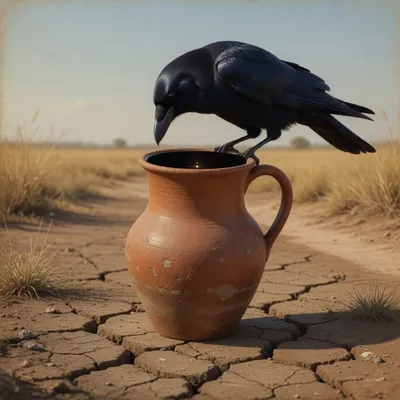
- The shape of the pitcher.
- How high the water sits.
- How the crow moves around the pitcher.
- How he uses his beak.
Vocabulary to know:
thirsty (adjective) — needing a drink; pitcher (noun) — a tall jar that holds water; pebbles (noun) — small, smooth stones; narrow (adjective) — not wide; a tight opening; idea (noun) — a new thought that can help you; neck (noun) — the thin top of a pitcher or bottle; thirst (noun) — the need or strong wish to drink; wits (noun) — clever thinking; the mind used to solve a problem.
Chapter 7: The North Wind and the Sun
Before you read — think about:
- What does the wind feel like on your face?
- What does the sun feel like on your face?
- Have you ever argued with a pal about who is best?
- What do you wear when it is cold?
- How do you ask a pal for a turn without grabbing?
Watch for these while reading:
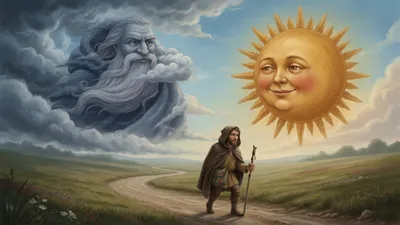
- What the wind and the sun are talking about.
- Who walks down the road.
- What the traveler is wearing.
- How the wind sounds.
- How the sun feels.
Vocabulary to know:
quarrel (noun) — an angry talk about who is right; cloak (noun) — a warm wrap that hangs from the shoulders; gust (noun) — a sudden strong rush of wind; gentle (adjective) — soft and kind, not rough; warmth (noun) — the nice feeling of being warm; traveler (noun) — a person on a trip from one place to another; disputing (verb) — arguing about who is right; bluster (noun) — loud, boastful, bullying talk or wind.
Chapter 8: The Dog and His Reflection
Before you read — think about:
- Have you ever seen your face in a puddle?
- Is a face in a puddle the same as a real pal?
- What do dogs like to carry?
- How do you take care of something you really like?
- When is one treat enough?
Watch for these while reading:
- What the dog is carrying.
- Where he is walking.
- How still the water looks.
- What he thinks he sees.
- How he looks at the bone.
Vocabulary to know:
prize (noun) — something you are glad you got; reflected (verb) — shown back, like a face in still water; greedy (adjective) — wanting more than you need, even if you already have some; footbridge (noun) — a small bridge you walk over; scramble (verb) — to climb out in a hurry, using hands and feet; bone (noun) — a hard treat a dog likes to chew; butcher (noun) — a person who cuts and sells meat; realized (verb) — understood something clearly, often too late.
Chapter 9: The Town Mouse and the Country Mouse
Before you read — think about:
- What is a city like? What is the country like?
- Have you ever slept at someone else's house? What was different?
- Which foods feel plain to you? Which feel fancy?
- Where do you feel most safe?
- What would you pack if you went to visit a pal?
Watch for these while reading:
- What the country mouse serves for lunch.
- How the town mouse acts at the meal.
- What the town mouse talks about.
- What they find on the town table.
- How the town house looks next to the country nest.
Vocabulary to know:
relative (noun) — family, like a cousin; sparingly (adverb) — eating only a little bit; luxuries (noun) — fancy things you do not need but like a lot; banquet (noun) — a very big, fancy meal; scurried (verb) — ran with small, quick steps; plain (adjective) — easy to see; you can tell right away; tempting (adjective) — looking so good it is hard to resist; security (noun) — safety and freedom from fear.
Chapter 10: The Goose That Laid the Golden Eggs
Before you read — think about:
- What is the most special thing you own? Why is it special?
- How do you feel when you have to wait for something good?
- What do you know about geese and eggs?
- When is one treat a day enough?
- What do people do with gold in stories?
Watch for these while reading:
- What the man finds in the nest each day.
- What he does with the eggs.
- How the man looks when he thinks about gold.
- How the goose looks in the yard.
- How the nest looks each morning.
Vocabulary to know:
golden (adjective) — made of gold, or shining like gold; glittering (adjective) — shining with little lights; impatient (adjective) — not wanting to wait; market (noun) — a place where people buy and sell things; nest (noun) — the bed a bird makes for eggs; countryman (noun) — a man who lives in the country; a farmer; possessed (verb) — owned; had as one's own; precious (adjective) — of great value; not to be wasted.
About the Author
People have told these fables for more than two thousand years and have attached them to Aesop, a storyteller in ancient Greece. We know almost nothing certain about his life. What survived is the habit of putting a human lesson in an animal's mouth.
For centuries these tales were spoken aloud, then written down in many languages. That is why you may know more than one version of the same fable. The wording in this book is a public-domain English translation, closer to a classic storybook than to a modern easy reader.