


About This Book
On a raw winter afternoon in the marsh country of Kent, an orphan boy called Pip stands alone in a churchyard, trying to work out what his dead parents looked like from the shapes of the letters cut into their gravestones. He lives beside the village forge with his sharp-tempered older sister and her husband Joe, the blacksmith, in a flat country of tidal creeks, mudbanks, and prison ships moored somewhere out in the mist. Before that afternoon is over, a starving man with an iron on his leg rises out of the graves and takes hold of him — and Pip goes home carrying a secret he cannot tell anyone in the house.
Great Expectations is narrated by a grown man looking back at the boy he used to be, and the two of them do not agree with each other. That double vision — a storyteller who can see his younger self clearly and refuses to let him off — is one of the most useful things a reader your age can watch a writer do, because the questions the book is working on are the ones you are living through: who you want to become, what that has to do with money and class and where you come from, and how much of the judging is done by other people and how much you do to yourself. It is also, simply, a tremendous read: a locked and shuttered house, a mystery running under everything, one of the strangest rooms in English literature, and some of the funniest minor characters ever written.
Meet the Characters

More about Pip
Pip is an orphan growing up in the marsh country of Kent, raised by his much older sister and her husband, the village blacksmith. He is imaginative, anxious, and desperate to be thought good, but he is also easily made to feel small and ashamed of where he comes from. The whole story is told in his own voice.

More about Joe Gargery
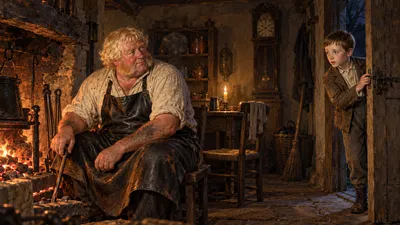
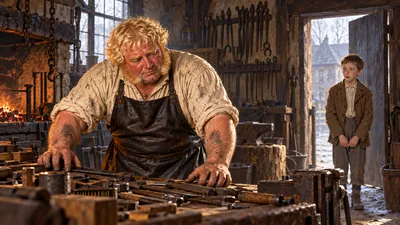
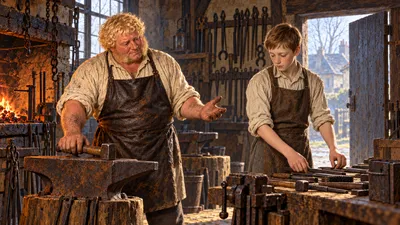
Joe is the village blacksmith and Pip's brother-in-law, a gentle giant who never learned to read properly and who treats Pip more like a fellow sufferer than a child. He is patient, honest, and slow to anger, and he keeps peace at home mainly by absorbing whatever is thrown at him. His forge is the warmest place in Pip's world.

More about Mrs. Joe Gargery
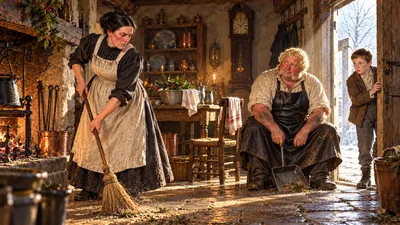
Mrs. Joe is Pip's sister, more than twenty years older than he is, and she has raised him since their parents died — a fact she reminds the household of constantly. She keeps a scoured, spotless kitchen and rules it with a temper everyone in the house works around, her husband included. She is proud of her own hardness and calls it duty.

More about Biddy
Biddy is an orphan like Pip, related somehow to the parish clerk's great-aunt, who keeps the village's ramshackle evening school and the little shop attached to it. She is untidy and poor and learns everything she meets almost without appearing to try. She is calm, observant, and much cleverer than the village has noticed.

More about Miss Havisham
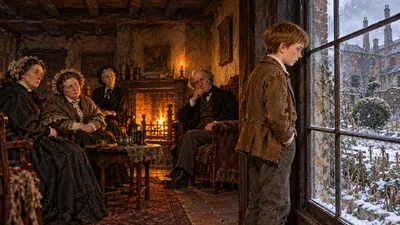
Miss Havisham is a rich, reclusive lady who lives behind locked gates at Satis House, on the edge of the market town near Pip's village. She has not been outside in many years and keeps every shutter closed against daylight, so that nobody in the town has any real idea what goes on inside. One day she sends word that she wants a boy to come and play there.

More about Estella
Estella is the beautiful, proud girl Miss Havisham is bringing up at Satis House. She has been raised to be admired and to expect the world to arrange itself around her, and she speaks to Pip with a cool contempt he finds impossible to forget. She is close to Pip in age but treats him as though he belonged to a different species.

More about Abel Magwitch
In the opening pages of the novel a starving escaped prisoner rises out of the marsh graveyard and takes hold of Pip. He is cold, hunted, and half-wild with hunger, still dragging the leg-iron he has not managed to file off, and he frightens Pip badly. Dickens withholds his name for a long stretch of the book, so for many chapters Pip simply calls him 'my convict'.

More about Uncle Pumblechook
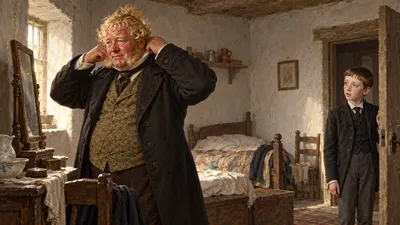
Uncle Pumblechook is Joe's uncle, though Pip's sister has firmly claimed him as her own relation. He sells corn and seed in the nearest market town, drives his own chaise-cart, and never misses a chance to remind a room how well he is doing. He speaks to children entirely in arithmetic and improving lectures.

More about Mr. Wopsle
Mr. Wopsle is the clerk at the village church, and he has a deep voice he is uncommonly proud of. He believes that if the Church were only thrown open to competition he would have made his mark in it, and he takes every chance to declaim at the neighbours. He is a fixture at any village gathering where there is a chance of being listened to.

More about Dolge Orlick
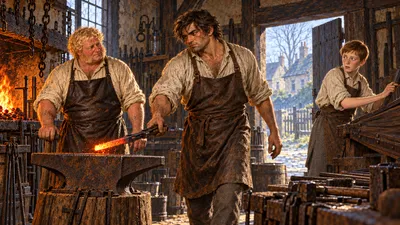
Orlick is the journeyman Joe keeps at the forge for weekly wages. He insists his Christian name is Dolge, which nobody in the village believes, and he seems to have chosen it as an affront to their understanding. He slouches in to work as if by accident, says little, and is not liked.

More about Mr. Jaggers
Mr. Jaggers is a London lawyer with a reputation that has travelled far beyond London, and he turns up in the county on business of his own. He asks questions in a way that makes people feel they are already in the witness box, and he never says one word more than he has decided to say. Everyone who meets him comes away slightly afraid of him.

More about Wemmick
Wemmick is the clerk who keeps the front office of a busy London law practice running, and he deals with the crowd on the stairs with complete, unhurried calm. He collects small keepsakes and takes a quiet, practical interest in what he calls portable property. He is exact, unsentimental at the desk, and difficult to surprise.

More about Matthew Pocket
Matthew Pocket is a scholar who read at Cambridge, kept his honesty and lost his prospects, and now coaches young gentlemen for a living at a crowded, cheerful, thoroughly disorganised house by the river at Hammersmith. He is kind, clear-minded, and hopelessly unable to run a household. He is one of the few people in the book who says plainly what he thinks and expects nothing for it.

More about Herbert Pocket
Herbert Pocket is a good-humoured, talkative young man, a distant relative of Miss Havisham's, who is trying to make his way in the London business world on very little money and a great deal of optimism. He is generous, quick to like people, and awkwardly tactful. He is the sort of friend who tells you the truth without making you feel worse for having heard it.

More about Bentley Drummle
Bentley Drummle is one of the young gentlemen reading with Mr. Pocket, a rich young man from Somersetshire who is next heir but one to a baronetcy and mentions it. He is idle, proud, close with his money, reserved, and suspicious, and he takes up a book as though its writer had done him an injury. He does not try to be liked.

More about Startop
Startop is one of the young gentlemen reading with Mr. Pocket, kept at home by an adoring mother when he ought to have been at school and devoted to her in return. He is gentle, companionable, and quick to warm to people. He is the easiest of the pupils to be in a boat with.
Pre-Reading Discussion Questions
- What do people in your own community treat as the visible signs of someone's social class — and how accurate are those signs?
- What makes someone a 'gentleman' in the sense of manners and money, and what makes someone a decent human being? Are those the same thing?
- Why might a writer choose to tell a story in the voice of someone remembering it years afterwards, instead of as it happens?
- What does it feel like to be somewhere you have been told, in words or without them, that you do not belong?
- In a place where almost everyone does the work their parents did, what would it take for one person to end up somewhere completely different?
- A landscape can set the mood of a story before anything has happened in it. What kind of place would you choose to open a story you wanted to feel uneasy?
Themes & Big Ideas to Track
- Social class as something performed — notice how often people here are judged by hands, boots, accents, and table manners rather than by anything they have actually done.
- The gap between the Pip telling the story and the Pip inside it: watch for the moments when the narrator steps in front of his younger self.
- The language of crime — chains, guilt, hiding, punishment — and how readily it attaches itself to people who have committed no crime.
- Houses and rooms as portraits of whoever lives in them: the forge, the shuttered house behind its gate, the London lodgings.
- Dickens's habit of doubling: characters, settings, and situations tend to arrive in pairs that comment on each other.
- Comedy sitting directly beside fear, often inside the same sentence — and what that does to how a scene lands.
Chapter-by-Chapter Study Guide
Chapter 1

Before you read — think about:
- This novel is told in the first person by someone looking back at his own life. What can that kind of narrator give you that an outside narrator cannot — and what should you stay sceptical about?
- Dickens's own family lost its money suddenly when he was a boy, and he was sent out to work. Does knowing that about a writer change how you read their fiction, and should it?
- The novel is set in a period when people assumed a person's rank in society could be read off their speech, their hands, and their clothes. Where do you see the same assumption operating today?
- Why might a novelist spend the opening pages establishing a place in detail before establishing a plot? What does a reader gain from that?
- Dickens called this book Great Expectations. Before you read a page, what does the word 'expectations' suggest to you — and whose expectations might a novel be about?
Watch for these while reading:
- The narrator's voice: notice how often the grown man telling the story steps in front of the child he is describing.
- The landscape — which details Dickens selects out of a flat, empty stretch of country, and what mood those choices build.
- How the chapter handles names: who is given a full name, who is given a shortened one, and who is given none at all.
- The physical details Dickens attaches to people — hands, faces, clothing, and the way they move.
- Comedy sitting immediately beside fear; watch for sentences that are funny and unsettling in the same breath.
Vocabulary to know:
explicit (adjective) — clearly and fully stated, with nothing left out; likeness (noun) — a painted or drawn picture of a person; lozenges (noun) — small diamond-shaped stones or slabs; indebted (adjective) — owing something to someone or something; bleak (adjective) — bare, cold and cheerless; nettles (noun) — weeds whose leaves sting the skin; parish (noun) — the district belonging to a village church; aforesaid (adjective) — mentioned earlier; a formal, legal-sounding word; intersected (verb) — crossed or cut through; dikes (noun) — banks or channels built to control water on low ground; leaden (adjective) — dull grey, like the metal lead; lair (noun) — a wild animal's den; a place something dangerous comes out of; coarse (adjective) — rough and cheaply made; briars (noun) — thorny bushes or stems; ravenously (adverb) — in an extremely hungry way; undersized (adjective) — smaller than is usual for one's age; earnestly (adverb) — very seriously and sincerely; timidly (adverb) — in a shy, frightened way; giddy (adjective) — dizzy and unsteady; weathercock (noun) — a weather vane, often shaped like a rooster, on top of a church tower; wittles (noun) — the man's pronunciation of 'victuals', meaning food; gibbet (noun) — a wooden frame from which the bodies of executed criminals were once hung in public; beacon (noun) — a marker set up as a guide for sailors; cask (noun) — a barrel; eluding (verb) — escaping or slipping away from; prospect (noun) — a wide view of the land spread out ahead; faltered (verb) — spoke unsteadily, in a hesitating voice.
Chapter 2
Before you read — think about:
- Great Expectations first appeared in weekly instalments. What does a novelist have to achieve on the last page of each instalment, and how might that shape the way individual scenes are built?
- Where is the line between discipline and cruelty, and who gets to decide where that line falls?
- Can a character be genuinely funny and genuinely frightening at the same time? What does a writer gain by making one person both?
- Dickens wrote for an enormous audience that included many readers with little formal schooling. What can a novelist do to hold a readership that wide?
- When you retell an embarrassing memory from your own childhood, how much do you soften it — and what does that suggest about memory as a source of truth?
Watch for these while reading:
- Mrs. Joe's habits of speech — in particular, how she talks about Pip while he is standing directly in front of her.
- Joe's grammar and vocabulary, and what Dickens is signalling to the reader by writing him this way.
- The kitchen and the forge as two different kinds of room, and which of them the narrator's attention keeps drifting toward.
- Objects the narrator returns to more than once: the fire, the Dutch clock, and Mrs. Joe's apron.
- How much of what Pip is thinking he keeps to himself, and how the older narrator lets the reader hear it anyway.
Vocabulary to know:
flaxen (adjective) — pale yellow, like straw; prevailing (adjective) — most noticeable; dominating everything else; impregnable (adjective) — impossible to get through or past; reproach (noun) — blame expressed openly to someone's face; adjoined (verb) — was joined onto; stood directly against; imparted (verb) — passed on a piece of news or a secret; dismal (adjective) — gloomy and depressing; intelligence (noun) — information or news; waistcoat (noun) — a sleeveless buttoned garment worn under a jacket; divined (verb) — worked out or guessed without being told; obstruction (noun) — something blocking the way; connubial (adjective) — to do with marriage or married life; whimpered (verb) — made a small, unhappy crying sound; disconsolately (adverb) — in a miserable way that no comfort can reach; fugitive (noun) — someone running away from the law; larceny (noun) — theft, especially of goods; trenchant (adjective) — sharp, forceful and decisive; apothecary (noun) — an old word for a chemist who mixed and sold medicines; dexterity (noun) — skill and quickness with the hands; hewed (verb) — chopped or cut with heavy force; freemasonry (noun) — an unspoken fellowship between people who share the same trouble; exertions (noun) — efforts; consternation (noun) — shocked dismay; remonstrance (noun) — a protest or objection made directly to someone; aghast (adjective) — filled with sudden horror or shock; bolting (verb) — swallowing food whole, far too fast; elixir (noun) — a drink or medicine believed to cure almost anything; restorative (noun) — something given to bring back health or strength; bootjack (noun) — a wooden device that grips a boot while it is pulled off the foot; garret (noun) — a small room in the roof of a house; augmented (verb) — increased; added to; emphatic (adjective) — expressed with strong force; hulks (noun) — old warships moored offshore and used as floating prisons; badger (verb) — to pester someone with constant questions; thimble (noun) — a metal cap worn over a fingertip while sewing; deliverance (noun) — rescue from danger or trouble; repulsed (verb) — pushed away; refused to receive; pall (noun) — a heavy dark cloth spread over a coffin; here, the blackness outside the window; mincemeat (noun) — a sweet mixture of dried fruit and spices used to fill pies; decanted (verb) — poured a liquid carefully from one container into another; earthenware (noun) — dishes and pots made of baked clay; interlocutor (noun) — the person one is speaking with; sensible (adjective) — sharply aware of something; conscious of it.
Chapter 3

Before you read — think about:
- In serialised fiction each chapter is short and has to do a great deal of work at once. What different jobs might a single short chapter be asked to perform?
- Is a person who helps someone out of fear still doing a good deed? Does the motive change the value of the act?
- Dickens constantly describes people by comparing them to animals. What does that technique do to a reader's sympathy — and can it work in both directions?
- What is the difference between charity and complicity — between helping someone in need and helping someone evade the law?
- Think of a landscape you know well seen in bad weather. How much of your sense of a familiar place depends on being able to see across it?
Watch for these while reading:
- How Pip's own state of mind colours the way the marsh country is described to us.
- The animals Pip passes on his way, and the role Dickens gives them in the scene.
- Physical detail in the way people handle food, tools and their own bodies.
- Cold as a plain physical fact — who feels it, and the words Dickens finds for it.
- Pip's manners: how carefully he keeps trying to be polite in circumstances that hardly call for it.
Vocabulary to know:
rimy (adjective) — covered with frost; clammy (adjective) — unpleasantly damp and cold to the touch; phantom (noun) — a ghost or a frightening imagined figure; disagreeable (adjective) — unpleasant; hard to bear; obstinately (adverb) — stubbornly, refusing to give way; accusatory (adjective) — seeming to blame someone; blubbered (verb) — sobbed something out noisily; flourish (noun) — a showy sweeping movement; riveted (verb) — fastened on as firmly as metal fixed with a bolt; despatch (noun) — speed and promptness; hoarse (adjective) — rough and croaking in the voice; oath (noun) — a swear word said in anger; ague (noun) — a fever that makes a person shake with cold; rheumatic (adjective) — causing aching, stiff joints; gallows (noun) — the wooden frame on which criminals were hanged; distrustfully (adverb) — in a way that shows suspicion; imp (noun) — a small mischievous devil; here, a term for a sly child; warmint (noun) — the man's pronunciation of 'varmint', meaning a hunted pest of a creature; desolation (noun) — the state of being utterly alone and miserable; impelled (verb) — pushed or forced someone to act; gruff (adjective) — rough and low in sound or manner; scrutiny (noun) — a long, searching look; delicately (adverb) — carefully, so as not to offend; perishing (verb) — dying, especially from cold or hunger; muskets (noun) — long-barrelled guns carried by soldiers of the period; shrouded (verb) — hid something from sight as if wrapping it in cloth; chafe (noun) — a sore place rubbed raw on the skin; fetter (noun) — a chain or iron ring fastened round a prisoner's ankle; imprecations (noun) — curses spoken in anger; clerical (adjective) — belonging to a clergyman; cravat (noun) — a cloth worn wound about the neck, like an early necktie.
Chapter 4
Before you read — think about:
- Dickens is famous for minor characters who exist mainly to be laughed at. Is comic exaggeration a fair way to draw a person?
- Much of what we now picture as a traditional Christmas was shaped by Victorian writers, Dickens above all. What do you associate with the occasion, and where do your associations come from?
- When a narrator knows something none of the other characters know, what does that do to a reader's experience of a scene?
- In this period respectability functioned almost like a possession. What does it cost a person to lose it, and who gets to decide when it is lost?
- How much should a reader trust a narrator's account of how badly other people treated him?
Watch for these while reading:
- The clothes people put on for a special occasion, and the way the narrator describes them.
- The parlour and the kitchen as two rooms with two entirely different sets of rules.
- The talk at the table: its subjects, its manners, and who is expected to stay silent.
- Joe's small, wordless ways of siding with Pip when he cannot say anything out loud.
- How Dickens introduces a person we have not met — which single physical detail he chooses to fix them by.
Vocabulary to know:
constable (noun) — a police officer; prodigiously (adverb) — enormously; to a remarkable degree; festivities (noun) — the celebrations of a special occasion; salutation (noun) — a greeting; conciliatory (adjective) — meant to calm someone down or win them over; occasioned (verb) — caused; brought about; unceremoniously (adverb) — abruptly and without politeness; countenances (noun) — faces, or the expressions on them; flounce (noun) — a strip of gathered cloth used as a decorative border; crockery (noun) — dishes and ornaments made of china or clay; counterpart (noun) — an exact match of something else; exquisite (adjective) — extremely refined or finely developed; vicariously (adverb) — through someone else acting on your behalf; blithe (adjective) — cheerful and carefree; penitentials (noun) — Dickens's joking word for clothes worn as if they were a punishment; dictates (noun) — the commands or requirements of something; dissuading (adjective) — trying to talk someone out of doing something; compassionate (adjective) — feeling pity and concern for others; assailed (verb) — attacked, especially all at once; remorse (noun) — deep regret for something you have done; vengeance (noun) — punishment inflicted in revenge; divulged (verb) — made a secret known; banns (noun) — the public announcement in church of an intended marriage, which anyone may object to; vestry (noun) — the small room in a church where the clergyman changes and business is done; congregation (noun) — the people gathered for a church service; wheelwright (noun) — a craftsman who makes and repairs wooden wheels; cornchandler (noun) — a dealer in corn and animal feed; retorted (verb) — replied sharply or quickly; adjourned (verb) — moved to another place to continue; juvenile (adjective) — youthful; belonging to a younger person; regaled (verb) — supplied generously — used here with heavy sarcasm; goads (noun) — sharp sticks used to drive cattle; here, remarks used the same way; declamation (noun) — loud, theatrical public speaking; presentiment (noun) — a feeling that something bad is going to happen; tersely (adverb) — in very few words; intimated (verb) — hinted at; suggested indirectly; hypothetical (adjective) — imagined for the sake of argument rather than real; homily (noun) — a sermon, especially a moralising one; deduced (verb) — worked out by reasoning from something else; prodigal (noun) — a wasteful son in a famous Bible story who ends up feeding pigs; gluttony (noun) — greedy overeating; detestable (adjective) — deserving to be hated; contumaciously (adverb) — stubbornly refusing to obey; recital (noun) — a long spoken listing of events; misdemeanours (noun) — minor offences or pieces of bad behaviour; abhorrence (noun) — strong disgust; appalling (adjective) — shocking and horrifying; spasmodic (adjective) — happening in sudden jerks the body cannot control; omnipotent (adjective) — all-powerful; imperiously (adverb) — in a commanding way that expects instant obedience; meditative (adjective) — deep in thought; genial (adjective) — warm and good-humoured; vivaciously (adverb) — in a lively, animated way.
Chapter 5
Before you read — think about:
- What is the difference between justice and vengeance?
- How does a crowd behave differently from the individuals who make it up?
- Dickens often stages his most important scenes by firelight. What can a writer do with a small circle of light inside a large darkness?
- Rural England had no police force in the period this novel describes. What do you know about how order was kept before modern policing?
- Dickens campaigned publicly about the conditions inside prisons. What responsibilities, if any, does a society owe to people it has locked up?
Watch for these while reading:
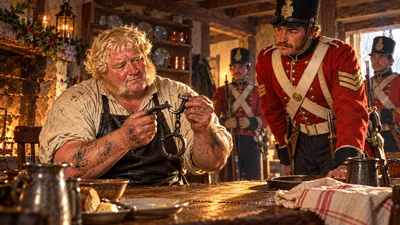
- The sergeant's manner, and the way he adjusts it for different people in the room.
- The mood of the room, and how fast it changes when the outside world comes in through the door.
- Joe at his trade — Dickens takes real trouble over what a blacksmith actually does.
- Weather and light: the hour of the day, and how much either of them allows anyone to see.
- Where Pip is physically placed from scene to scene — carried, set down, led, held, kept at the back.
Vocabulary to know:
apparition (noun) — a sudden startling appearance, as though of a ghost; lament (noun) — a cry of grief or complaint; invitingly (adverb) — in a way that seems to offer something; gallant (adjective) — elaborately polite, especially towards women; resent (verb) — to feel angry or bitter about something; insomuch (adverb) — to such a degree that; audibly (adverb) — loudly enough to be heard; necessitate (verb) — to make something necessary; trooping (verb) — coming in a group, one after another; apprehension (noun) — dread about what is going to happen; appreciative (adjective) — good at recognising the value of things; inference (noun) — a conclusion reached from evidence rather than direct proof; impending (adjective) — about to happen; liberal (adjective) — generous with what one gives out; joviality (noun) — loud good humour; clustering (verb) — gathering closely in a group; menace (noun) — a threatening quality; murky (adjective) — dark and hard to see through; mustered (verb) — gathered up, especially courage; stipulated (verb) — stated as a firm condition; arid (adjective) — dry — here, meaning without anything to drink; treasonably (adverb) — in a way that betrays the side you are supposed to be on; stragglers (noun) — people who trail along behind a group; dreary (adjective) — dull, bleak and depressing; dispersed (verb) — spread out in different directions; sleet (noun) — rain mixed with snow or ice; treacherous (adjective) — betraying someone who trusted you; diverged (verb) — turned away from a route; dispelled (verb) — driven away or cleared; dissociate (verb) — to separate one thing from another in your mind; decisive (adjective) — quick and firm in making choices; stifled (verb) — smothered so that a sound is cut off; asunder (adverb) — apart; into separate pieces; execrating (verb) — cursing violently; plight (noun) — a bad situation someone is stuck in; livid (adjective) — greyish-blue, like a bruise; drained of colour; disdainfully (adverb) — with open contempt; manacled (adjective) — with the hands chained together; grovelling (adjective) — cringing; unable to meet anyone's eye; exasperated (adjective) — driven to furious irritation; interposition (noun) — the act of stepping in between; parley (noun) — a talk or argument between opposing sides; lieu (noun) — place — used in the phrase 'in lieu of', meaning instead of; alighted (verb) — got down from something you were being carried on; comprehended (verb) — understood; kindled (verb) — lit; set burning; pitchy (adjective) — smoky and black, like burning tar; dram (noun) — a small measure of strong drink; moored (verb) — held in place on the water by chains or ropes; cribbed (adjective) — shut into a narrow space.
Chapter 6
Before you read — think about:
- This novel's narrator judges his younger self severely. Is that kind of retrospective honesty the same thing as taking responsibility?
- How does a writer keep a reader's sympathy for a character who has behaved badly?
- Dickens was a campaigner as well as a novelist. Where does the line fall between a novel that has a point of view and a novel that lectures?
- A very short chapter can do work a long one cannot. What might a novelist choose to use one for?
- How much of your own character do you think was settled before you had any say in the matter?
Watch for these while reading:
- The narrator's vocabulary whenever he is describing his own motives.
- How the adults in the kitchen go about explaining things none of them witnessed.
- Joe: what he actually says, and how much of what he does goes unsaid.
- Small domestic details — the fireside, the table, the ordinary routine — and the weight the narrator gives them.
- The length of this chapter set beside the last one, and what Dickens uses the difference for.
Vocabulary to know:
pilfering (noun) — stealing small things; exonerated (verb) — cleared of blame; disclosure (noun) — the act of telling something that was hidden; dregs (noun) — the last bits left at the bottom; composed (adjective) — calm and settled; mistrusted (verb) — suspected; had doubts about; thenceforth (adverb) — from that time onwards; morbidly (adverb) — in an unhealthily gloomy way; subsequent (adjective) — coming later in time; conviction (noun) — a firm belief; untaught (adjective) — not trained or instructed by anyone; excommunicated (verb) — formally shut out of a church; persisted (verb) — kept doing something despite everything; circumstantial (adjective) — indirect — evidence that suggests guilt without proving it; capital (adjective) — punishable by death; staggering (verb) — walking unsteadily; drunkard (noun) — someone who is habitually drunk; surveying (verb) — looking over something carefully; premises (noun) — a building and the ground it stands on; malice (noun) — the wish to hurt or spite someone; unanimously (adverb) — with everyone agreeing; naught (noun) — nothing — used in the phrase 'set at naught', meaning dismissed; slumberous (adjective) — sleepy; half asleep; exceptional (adjective) — unusual; out of the ordinary.
Chapter 7
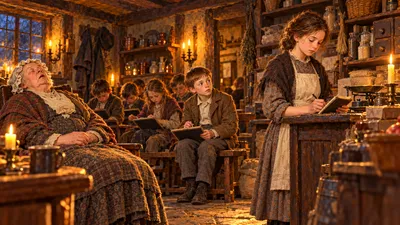
Before you read — think about:
- What does a village school in the early 1800s look like in your imagination, and what would it realistically have been able to teach?
- Reading and writing were far from universal in this period. What can a person do with literacy that they cannot do without it — and what can they do perfectly well without it?
- Dickens gives many characters a signature phrase or verbal habit. What does that do for a reader, and what does it cost?
- How do families pass poverty, or opportunity, from one generation to the next?
- Dickens's narrator often begins by mocking his own childhood misunderstandings. Why might a writer choose to open at his own expense?
Watch for these while reading:
- How this village goes about educating its children, and who is actually doing the teaching.
- Joe's habits while he talks — what his hands are doing, and when.
- The words Mrs. Joe invents or mispronounces, and what they reveal about her.
- The gap between what Pip knows and what Pip thinks he knows.
- Money in this household: who earns it, who keeps it, and what it is publicly said to be for.
Vocabulary to know:
exaltation (noun) — being raised to a higher or holier position; deceased (adjective) — dead; theological (adjective) — to do with the study of religion; Catechism (noun) — a set of questions and answers used to teach church doctrine to children; apprenticed (verb) — formally bound to learn a trade from a master; pampered (verb) — spoiled with too much comfort or indulgence; compromised (verb) — damaged or put at risk; liquidation (noun) — the paying off of a debt; infirmity (noun) — physical weakness caused by age or illness; oration (noun) — a formal, dramatic speech; venerated (verb) — regarded with deep respect, almost worship; withering (adjective) — scornful enough to shrivel the person it is aimed at; oracle (noun) — a source consulted for authoritative answers; extremities (noun) — the far parts of the body — hands, feet, and hair-ends; elaborated (adjective) — carefully arranged and dressed up; baffle (verb) — to confuse and defeat someone's attempts; purblind (adjective) — half-blind; only dimly able to see; cipher (verb) — to do arithmetic; expending (verb) — using up energy or effort on something; contrived (verb) — managed to produce something with difficulty; epistle (noun) — a letter, especially a grand-sounding one; indispensable (adjective) — absolutely necessary; inasmuch (adverb) — to the extent that; seeing that; erudition (noun) — deep learning and scholarship; misgiving (noun) — a feeling of doubt or unease; monosyllable (noun) — a word of one syllable; patronage (noun) — a superior, condescending kindness; judicial (adjective) — having the manner of a judge; perspicuity (noun) — clearness of expression; manifest (adjective) — obvious; plain to see; couplet (noun) — two lines of verse that rhyme; uncongenial (adjective) — unsuitable and uncomfortable; signify (verb) — to matter; to be of importance; sagaciously (adverb) — with an air of great wisdom; assented (verb) — agreed; contemptible (adjective) — deserving to be looked down on; relishing (verb) — enjoying; candour (noun) — complete honesty, even when it is awkward; placid (adjective) — calm and untroubled; drudging (verb) — doing hard, dull work without rest; replenish (verb) — to fill up again; reposing (verb) — placing trust in someone; keenly (adverb) — sharply and bitingly; multitude (noun) — a very large number; peal (noun) — a loud ringing of bells; seclusion (noun) — the state of living shut away from other people; barricaded (adjective) — blocked up and defended against entry; astounded (adjective) — amazed; callous (adjective) — hard-hearted; unfeeling; harrowed (verb) — raked over roughly, as a field is broken up; ablutions (noun) — a thorough washing; sackcloth (noun) — rough cloth traditionally worn as a sign of repentance; trussed (verb) — tied up tightly, like a bird prepared for roasting.
Chapter 8
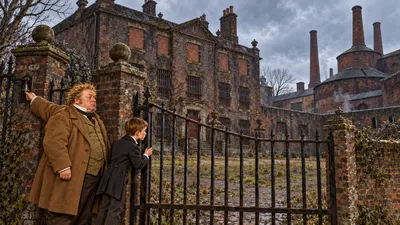
Before you read — think about:
- Buildings in fiction often stand in for the people who live in them. What can a writer say through a house that would be clumsy said directly?
- Dickens gives his places deliberately odd names. What are you willing to assume about somewhere from its name alone?
- Brewing, corn-dealing and blacksmithing were all family trades in this period. What happens to a small town when one of its trades dies out?
- Gothic fiction was enormously popular by the 1860s, and every one of Dickens's readers would have known its conventions. What do you already know about that tradition, and what makes a reader enjoy being frightened by a book?
- First impressions are supposed to be unreliable. Are they? What do you actually notice first about a person, and how much weight should that noticing carry?
Watch for these while reading:
- Light and its sources — daylight, candlelight, firelight — and the mood each one is made to carry.
- Doors and gates — who opens them, who locks them, and who is kept on which side.
- The exact words characters choose when they describe each other.
- The words Pip reaches for when he has to describe something he has never seen before.
- Anyone who gives an order without explaining it, and what Pip does with the order.
Vocabulary to know:
farinaceous (adjective) — consisting of or tasting of flour and meal; seedsman (noun) — a dealer in seeds; speculation (noun) — an idea formed by guessing rather than knowing; singular (adjective) — strange; remarkable; affinity (noun) — a natural likeness or connection between two things; corduroys (noun) — trousers made of ribbed cotton cloth, worn by working men; saddler (noun) — a maker of saddles and harness; poring (verb) — studying something closely and for a long time; mortifying (adjective) — humiliating; intended to subdue pride; candid (adjective) — frank and honest; pompously (adverb) — in a self-important way; gormandizing (verb) — eating greedily and with obvious pleasure; acquit (verb) — to conduct or behave oneself; rustily (adverb) — in a state of rust; discomfited (adjective) — embarrassed and thrown off balance; propound (verb) — to put forward a question or idea; crevice (noun) — a narrow crack; disused (adjective) — no longer in use; rigging (noun) — the ropes and lines that hold up a ship's sails; shrill (adjective) — high-pitched and piercing; loiter (verb) — to hang about instead of moving on; self-possessed (adjective) — calm and completely in command of oneself; scornful (adjective) — full of contempt; bridal (adjective) — belonging to a bride or a wedding; trinkets (noun) — small ornaments or pieces of jewellery; lustre (noun) — brightness; a shining surface; ghastly (adjective) — horrifying, and deathly pale; waxwork (noun) — a life-sized model of a person made in wax; vault (noun) — a burial chamber under a church; diversion (noun) — amusement; something to pass the time; disputatious (adjective) — fond of arguing; dogged (adjective) — stubbornly unresponsive; sullen (adjective) — silently bad-tempered; melancholy (adjective) — deeply and quietly sad; transfixed (adjective) — fixed in place, unable to move; brooding (adjective) — darkly thoughtful, dwelling on something painful; knaves (noun) — the correct name in some card games for the cards Pip calls Jacks; infectious (adjective) — easily passed from one person to another; misdealt (verb) — dealt the cards wrongly; denounced (verb) — publicly condemned; aversion (noun) — strong dislike; beggared (verb) — won every card from an opponent in the game of beggar-my-neighbour; confounded (verb) — bewildered; thrown into confusion; insolently (adverb) — rudely and disrespectfully; spurned (adjective) — rejected with contempt; counteraction (noun) — something done to work against a feeling or force; capricious (adjective) — changing mood without warning or reason; coercion (noun) — forcing someone to do something by threat; perpetual (adjective) — never-ending; vigils (noun) — periods of being kept awake, often as a punishment; rank (adjective) — overgrown and coarse from neglect; oppressed (adjective) — weighed down and made uneasy; reek (noun) — a strong smell, or a rising cloud of smoke; shroud (noun) — a cloth in which a dead body is wrapped for burial; taunting (adjective) — mocking; deliberately provoking; despicable (adjective) — deserving contempt; vulgar (adjective) — common; lacking refinement; genteelly (adverb) — in the manner of the well-bred upper classes.
Chapter 9
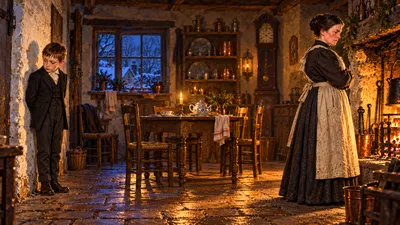
Before you read — think about:
- This story is told by an adult about his own childhood. Where do you think the boundary sits between explaining a child's behaviour and excusing it?
- Many Victorian families had one relative who was treated as the household's authority on the wider world. What gives a person that role, and what does the family pay for it?
- What does it actually mean to call someone 'common'? Where does the word get its force, and what work is it doing when somebody uses it?
- Dickens's narrator sometimes stops and addresses the reader directly. What does a novelist gain by breaking the frame like that, and what does it cost?
- Apprenticeship was how most boys of Pip's class entered a trade. What do you know about how young people were prepared for work before modern schooling existed?
Watch for these while reading:
- Who in this household asks Pip questions, and what they intend to do with the answers.
- Uncle Pumblechook's method of talking to a child, and how consistent it is from scene to scene.
- The forge as a place Pip goes to, and what happens to the writing whenever he is in it.
- Joe's way of reasoning something out, and the kind of authority his conclusions carry.
- The words characters reach for when they talk about rank, and which characters use them most.
Vocabulary to know:
ignominiously (adverb) — in a way that brings shame and humiliation; monstrosity (noun) — something grotesque or unnatural; reservations (noun) — things deliberately held back and not said; incomprehensible (adjective) — impossible to understand; contemplation (noun) — the act of looking at or considering something; devouring (adjective) — consuming; greedy and all-absorbing; inquisitively (adverb) — in a nosy, questioning way; reticence (noun) — unwillingness to say much; adamantine (adjective) — as hard and unyielding as the hardest stone; interposed (verb) — cut in between two people; aggravated (adjective) — irritated to the point of not thinking straight; gratifying (adjective) — pleasing; giving satisfaction; inferred (verb) — worked something out from indirect evidence; conceitedly (adverb) — in a self-satisfied way; frantic (adjective) — wild with panic; reckless (adjective) — acting without caring about the consequences; caparisoned (adjective) — dressed in ornamental harness, as a fine horse is; coursers (noun) — swift, spirited horses; sedan-chair (noun) — an enclosed chair carried on poles by two servants; flighty (adjective) — not quite sane; wildly changeable; testily (adverb) — irritably; ajar (adjective) — slightly open; obtrusive (adjective) — pushed forward so as to be noticed; artlessness (noun) — the appearance of being simple and honest; hazarded (verb) — risked saying something; phenomenon (noun) — a remarkable event or thing; marvels (noun) — wonderful or astonishing things; premium (noun) — a sum of money paid to bind a boy apprentice to a trade; rumination (noun) — slow, thorough thinking; vanquished (verb) — defeated completely; metaphysics (noun) — the branch of philosophy dealing with what things really are; gentlefolks (noun) — people of good family and breeding; callings (noun) — trades or occupations; reflectively (adverb) — thoughtfully; alluding (verb) — referring to something indirectly; unthankful (adjective) — ungrateful.
Chapter 10
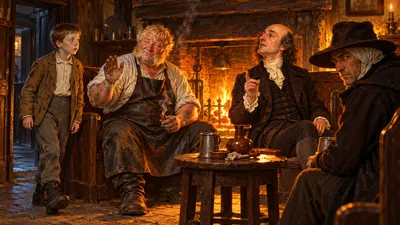
Before you read — think about:
- What makes someone a good teacher? Does it depend mainly on what they know, or on something else entirely?
- The village public house was a central institution in rural England. What role did a place like that play, and who was and was not welcome in it?
- Dickens introduces an enormous number of characters. What techniques can a novelist use to make a new one memorable in only a few lines?
- Self-improvement was a powerful Victorian ideal — the belief that anybody could rise by their own effort. How true was that then, and how true is it now?
- What does it mean to call a piece of writing comic when the situation being described is genuinely miserable?
Watch for these while reading:
- How the evening school actually runs, minute by minute, and who keeps it running.
- The small physical habits Dickens hands out to people he wants you to remember.
- The Three Jolly Bargemen: who is in the room, what the room is like, and how Joe behaves in it.
- How adults in this book talk in front of Pip, as against how they talk to him.
- The way Pip's attention travels around a room, and what it settles on.
Vocabulary to know:
felicitous (adjective) — well-chosen; happily suitable; pursuance (noun) — the carrying out of a plan; luminous (adjective) — brilliantly clear; conception (noun) — an idea or plan that has been formed; obliging (adjective) — eager to be helpful; synopsis (noun) — a short summary; indiscriminate (adjective) — aimed at everybody without distinction; totter (noun) — an unsteady lurching movement; derision (noun) — open mockery; paroxysm (noun) — a sudden violent attack of pain or illness; ascertaining (verb) — finding out for certain; defaced (adjective) — damaged and spoiled on the surface; illegibly (adverb) — so badly printed or written as to be unreadable; speckled (adjective) — covered with small marks or spots; ironmould (noun) — a rust-coloured stain left on paper or cloth; specimens (noun) — examples of a kind of thing; refractory (adjective) — stubbornly disobedient; monotonous (adjective) — unvaried and dull in tone; reverence (noun) — deep respect; din (noun) — a loud continuous noise; fortuitously (adverb) — by chance, without aim; prohibition (noun) — a rule forbidding something; bedchamber (noun) — a bedroom; snuffers (noun) — scissor-like tools for trimming a candle wick so it burns brightly; settle (noun) — a long wooden bench with a high back; originate (verb) — to be the first to produce or propose something; sentiment (noun) — an opinion or toast offered aloud in company; cunning (adjective) — sly; cleverly deceitful; solitary (adjective) — lonely and unfrequented; vagrants (noun) — people with no settled home who wander from place to place; majestic (adjective) — grand and dignified; cogitation (noun) — deep thought; expounded (verb) — explained at length; rumple (verb) — to ruffle or mess up; inflammatory (adjective) — causing soreness and irritation; ophthalmic (adjective) — having to do with the eyes; dumb-show (noun) — a message acted out in silence, without words; pointedly (adverb) — in a way meant to be unmistakably noticed; reclined (verb) — leaned back at ease; principally (adverb) — mainly; stupefied (adjective) — stunned into dullness; unable to think; misdeed (noun) — a wrong action; sweltering (adjective) — damp and greasy from being carried about in the heat; intimacy (noun) — close familiar contact; conspiracy (noun) — a secret agreement to do something unlawful.
Chapter 11
Before you read — think about:
- Dickens gives some characters names that seem to describe them. How far can a name carry a characterisation before it starts to be a substitute for one?
- Satire works by exaggerating people. When does satire feel fair, and when does it start to feel like bullying?
- Victorian society had elaborate rules about how a person of a given rank should behave in company. What do social rules of that kind actually accomplish, for the people who follow them and for everyone else?
- What makes a physical description memorable? Think of a character from any book whose appearance you can still picture, and work out why.
- Dickens's novels are full of scenes in which a child is watched by adults. What does being observed do to the way a person behaves?
Watch for these while reading:
- Which rooms of this house Pip is taken into, and what each one is being used for.
- How the visitors talk about a person who is not in the room with them.
- The single detail Dickens selects for each new face — a mouth, a hand, a pair of eyebrows.
- Anything in the house that has been left exactly as it was, and how it is described.
- Estella's tone from one exchange to the next, and how quickly it moves.
Vocabulary to know:
superciliously (adverb) — in a haughty, looking-down-the-nose way; pervade (verb) — to spread through the whole of something; traversed (verb) — crossed or travelled along; detached (adjective) — standing separately, not joined to the main building; extinct (adjective) — no longer existing or operating; eddies (noun) — small swirling currents of air or water; toadies (noun) — people who flatter someone in the hope of gaining from them; humbugs (noun) — frauds; people who pretend to be what they are not; listless (adjective) — without energy or interest; abruptness (noun) — sudden bluntness of manner; commendable (adjective) — deserving praise; induced (verb) — persuaded into doing something; bereaved (adjective) — having lost someone to death; proprieties (noun) — the rules of correct social behaviour; burly (adjective) — large and strongly built; complexion (noun) — the natural colour and appearance of the skin, especially the face; prematurely (adverb) — earlier than would be expected; bristling (adjective) — standing stiffly upright; persuasive (adjective) — good at winning people over; discernible (adjective) — able to be made out or noticed; epergne (noun) — an ornamental centrepiece for a dining table; expanse (noun) — a wide continuous area; fungus (noun) — a mushroom or mould that grows on decaying matter; blotchy (adjective) — covered in irregular patches; transpired (verb) — happened; came about; ponderous (adjective) — heavy and slow-moving; realisation (noun) — the making real of something previously only imagined; fitful (adjective) — irregular; starting and stopping; discontented (adjective) — unhappy with the situation; obnoxious (adjective) — exposed to someone's dislike; offensive to them; plaintively (adverb) — in a mournful, complaining tone; rebuff (noun) — a blunt rejection of something offered; amiably (adverb) — in a pleasant, friendly way; undermining (verb) — wearing away at the base of something; corrugated (adjective) — wrinkled into ridges; fermenting (adjective) — bubbling up and working, as brewing liquid does; insensible (adjective) — unconscious; inexplicable (adjective) — impossible to explain; blandly (adverb) — in a smooth, mild way that hides something sharper; inefficacy (noun) — failure to produce any effect; defiance (noun) — open refusal to obey or accept; fortitude (noun) — courage in bearing pain or trouble; artful (adjective) — cunning; skilled at getting one's way; precedence (noun) — the right to go before others; gnawed (verb) — chewed at persistently; distraught (adjective) — deeply agitated and distracted; condescend (verb) — to lower oneself to deal with someone thought inferior; spontaneous (adjective) — happening naturally, without being planted or planned; offshoot (noun) — a side-growth from a main stem; daintily (adverb) — delicately and precisely; unparalleled (adjective) — having no equal; preliminaries (noun) — the formal steps taken before the main event; obtruded (verb) — pushed forward where it was not wanted; bloodthirsty (adjective) — eager for violence; denuded (adjective) — stripped bare; squaring (verb) — taking up a boxer's stance; nicety (noun) — precision; exact correctness of detail; anatomy (noun) — the structure of the body; sponging (verb) — wiping oneself down with a wet sponge; sanguinary (adjective) — bloody.
Chapter 12

Before you read — think about:
- Novels have to compress time. What techniques can a writer use to move a story on by months without losing the reader?
- Dickens's own first job, at twelve, was in a factory. How might an experience like that shape a novelist's treatment of children and work?
- Dickens set this novel roughly forty years before he wrote it. Why might a novelist choose to set a story a generation in the past rather than in the present day?
- What does it cost a household when one person's temper sets the weather for everybody else in it?
- How does a reader keep track of a character who is talked about far more often than they are shown?
Watch for these while reading:
- How much time this chapter covers, and the sentences Dickens uses to tell you so.
- Who Pip confides in, and who he does not.
- The questions Miss Havisham puts to Pip, and what she does with his answers.
- The routines that grow up around this house — the things that happen over and over.
- Uncle Pumblechook's way of handling Pip physically, and whether it ever varies.
Vocabulary to know:
incrimsoned (adjective) — reddened, as though dyed crimson; avenge (verb) — to punish someone in return for a wrong; penalties (noun) — punishments laid down for an offence; incurred (verb) — brought upon oneself; ravaging (verb) — raiding and doing violent damage to; studious (adjective) — devoted to study; trepidation (noun) — nervous dread; damnatory (adjective) — proving guilt; leading to condemnation; haled (verb) — dragged or hauled somewhere by force; myrmidons (noun) — followers who carry out orders without question; suborned (adjective) — secretly bribed into doing something wrong; mercenaries (noun) — people who fight purely for money; testimony (noun) — evidence; proof of something; accessory (noun) — someone who helps in a crime without committing it themselves; retaliations (noun) — acts of revenge; injudicious (adjective) — showing poor judgement; goaded (verb) — provoked into action; visage (noun) — a person's face; indignant (adjective) — angry at something felt to be unfair; miserly (adjective) — hoarding; unwilling to share; contradictory (adjective) — conflicting; not consistent with each other; lavish (adjective) — given in great, extravagant quantity; ceremonious (adjective) — formal and dignified; homage (noun) — public respect or honour paid to someone; lyrical (adjective) — song-like; expressing feeling in verse; ditty (noun) — a short simple song; subdued (adjective) — quiet and hushed; discern (verb) — to make out or recognise; potent (adjective) — powerful; strong in effect; fraught (adjective) — loaded or filled with something unpleasant; insupportable (adjective) — unbearable; linchpin (noun) — the pin that keeps a wheel on its axle; stolidity (noun) — dull, unimaginative heaviness of mind; imbecility (noun) — foolishness; stupidity; spiteful (adjective) — full of a wish to hurt; pummel (verb) — to strike repeatedly with the fists; wrenching (verb) — pulling out with a violent twist; depreciatory (adjective) — belittling; suggesting low worth; unremunerative (adjective) — not paying well; construe (verb) — to interpret as meaning something; besought (verb) — begged; pleaded for; displeasure (noun) — annoyance; disapproval; indentures (noun) — the legal papers that bind an apprentice to a master; dejectedly (adverb) — in a downcast, disheartened way.
Chapter 13
Before you read — think about:
- Dickens's narrator reports both what he felt at the time and what he thinks of it now. What is a reader supposed to do with two verdicts at once?
- Legal ceremonies — signing, witnessing, swearing — turn an agreement into a fact. What does the ceremony add that the agreement by itself does not?
- Dickens is famous for characters whose speech is recognisable in a single line. What can dialogue tell you about a person that description cannot?
- In this period a boy of Pip's class had essentially one route into adult work. How much does knowing your route in advance limit what you can imagine for yourself?
- What is the difference between an honour and an obligation, and can something be both at the same time?
Watch for these while reading:
- What people put on, and take off, for an occasion they consider important.
- Who each character is actually addressing when they speak, and who they are really speaking to.
- The Town Hall, the inn and the parlour as public rooms, and where Pip is positioned in each of them.
- Uncle Pumblechook's talent for arranging himself close to anything that has gone well.
- Joe's phrasing when he is trying to be formal, set beside his phrasing at the forge.
Vocabulary to know:
arraying (verb) — dressing oneself, especially in fine clothes; augur (verb) — to predict from signs; inscribed (verb) — wrote or carved something onto a surface; ostentatiously (adverb) — in a showy way meant to be noticed; pageant (noun) — a grand public display or parade; procession (noun) — a line of people moving forward ceremonially; forcible (adjective) — vigorous and emphatic; argumentation (noun) — the act of reasoning a case out; reared (verb) — brought up; raised; epitaph (noun) — words written in memory of someone who has died; endeavour (verb) — to make a serious attempt; wherefore (adverb) — for what reason; why; guineas (noun) — old English coins worth a pound and a shilling each; conveying (verb) — communicating or transmitting something; intellects (noun) — a person's powers of thinking; subtle (adjective) — clever in an indirect, not obvious way; mollified (adjective) — calmed down; less angry; impostor (noun) — someone pretending to be what they are not; curtly (adverb) — briefly and rudely; abject (adjective) — utterly contemptible and low; hypocrite (noun) — someone who pretends to virtues they do not have; swindlers (noun) — cheats who take credit or money dishonestly; custody (noun) — the state of being held or guarded; criminality (noun) — criminal behaviour; beholden (adjective) — owing thanks or a debt to someone; diabolical (adjective) — devilish; magisterial (adjective) — belonging to a magistrate, a local judge; benevolent (adjective) — kindly; wishing to do good; tract (noun) — a short printed pamphlet, usually preaching something; woodcut (noun) — a picture printed from a carved wooden block; malevolent (adjective) — wishing harm on others; attested (verb) — officially witnessed and certified; scaffold (noun) — the raised platform on which executions were carried out; windfall (noun) — an unexpected piece of good fortune, especially money; inscrutably (adverb) — in a way impossible to understand or explain; excrescence (noun) — an ugly growth sticking out of something; exalted (verb) — raised to a high position; beneficent (adjective) — doing good; generous; contriver (noun) — someone who plans and brings a thing about; fiendishly (adverb) — cruelly, as a fiend would; vagaries (noun) — unpredictable wild behaviour; impertinent (adjective) — rudely nosy; wretched (adjective) — thoroughly miserable.
Chapter 14
Before you read — think about:
- Novelists sometimes stop the plot to let a narrator take stock. What has to be true of the writing for that to work rather than stall the book?
- Dickens's readers included many people from the classes he was writing about. What difference does it make to a novel when its audience overlaps with its subject?
- Is discontent a fault, a symptom, or an engine? Can it be all three at once?
- Victorian apprenticeships ran for years and could not easily be broken. What do you know about how binding agreements of that kind worked, and what they meant for the person bound?
- How does a first-person narrator convince a reader of something he openly says he cannot explain?
Watch for these while reading:
- How long a stretch of time this chapter is standing on, and how the narrator signals it.
- The words the narrator chooses about himself, and how harsh they are.
- The forge and the marsh landscape, and whether either is described the way it was earlier in the book.
- Which sentences belong to the boy and which to the man remembering him.
- Anything the narrator gives credit for to somebody other than himself.
Vocabulary to know:
ingratitude (noun) — failure to be thankful; retributive (adjective) — given as a deserved punishment; testify (verb) — to state something from one's own experience; sanctified (verb) — made holy or precious; saloon (noun) — a large elegant reception room; portal (noun) — a grand doorway; chaste (adjective) — plain and pure in style; ungracious (adjective) — unkind and ungrateful in spirit; excusably (adverb) — in a way that can be forgiven; inexcusably (adverb) — in a way that cannot be forgiven; distinguished (adjective) — marked out as important or admirable; anvil (noun) — the heavy iron block a blacksmith hammers metal on; endurance (noun) — the bearing of something difficult over a long time; perspective (noun) — the view ahead; the prospect of what is to come; murmur (noun) — a quiet complaint; industry (noun) — hard and steady work; zeal (noun) — energy and enthusiasm for a task; amiable (adjective) — good-natured and easy to like; intermixed (verb) — mingled in among other things; aspiring (adjective) — constantly reaching after something higher; grimiest (adjective) — dirtiest with soot and grease; exult (verb) — to rejoice openly, often at someone else's expense; despise (verb) — to look down on with contempt; bellows (noun) — the device that blows air into a forge fire to make it burn hotter; scorning (verb) — regarding with contempt; homely (adjective) — plain and ordinary, in a domestic way.
Chapter 15
Before you read — think about:
- Dickens gives many of his characters a distinctive way of moving. What can a walk tell a reader that a face cannot?
- Melodrama — heightened emotion, unmistakable villains, a moral hammered home — was the dominant theatrical form of the period. What do you know about it, and where can you still see its traces?
- What is the difference between educating someone and improving them? Is it possible to do the second without insulting the person?
- Villages in this period were small and their memories were long. What is it like to live somewhere you cannot avoid anybody?
- Dickens's chapters often run several separate errands at once. How does a writer keep a reader oriented when a chapter keeps changing subject?
Watch for these while reading:
- The old Battery out on the marshes, and how it is described now beside the first time we saw it.
- Joe's method of arguing a point, and how long he takes to arrive anywhere.
- Who is listening at the edge of a scene without being spoken to.
- Names and nicknames, and how the people in this book refer to one another.
- How Dickens uses weather, darkness and distance whenever anybody is travelling.
Vocabulary to know:
preposterous (adjective) — utterly ridiculous; bestow (verb) — to give something as a gift or favour; lay-figure (noun) — a jointed model of a human body used by artists for practice; mauled (verb) — handled roughly and injured; tuition (noun) — teaching; earthwork (noun) — a bank or mound of earth built as a defence; aslant (adverb) — at a slanting angle; picturesque (adjective) — pretty enough to be worth painting; plumed (verb) — congratulated oneself; preened; descrying (verb) — catching sight of something at a distance; sunders (noun) — a dialect form of 'asunder', meaning apart; gridiron (noun) — a metal frame of bars for grilling food over a fire; steadfastly (adverb) — firmly and without wavering; delusion (noun) — a false belief firmly held; cordiality (noun) — warmth of welcome; ulterior (adjective) — hidden behind the stated reason; successor (noun) — something that comes after and takes the place of another; journeyman (noun) — a fully trained workman employed by another for daily or weekly wages; wilfully (adverb) — deliberately and stubbornly; affront (noun) — a deliberate insult; swarthy (adjective) — dark-skinned and weather-darkened; slouching (verb) — moving in a heavy, drooping, unhurried way; hermitage (noun) — a solitary dwelling far from other people; accosted (verb) — spoken to abruptly by someone; injurious (adjective) — harmful; unfair to someone; morose (adjective) — gloomy and bad-tempered; fiend (noun) — a devil; hostility (noun) — open enmity; unscrupulous (adjective) — having no scruples; not caring what is fair; durst (verb) — an old form of 'dared'; ill-favoured (adjective) — ugly; unpleasant to look at; dunder-headed (adjective) — stupid; thick-headed; shrew (noun) — a scolding, sharp-tongued woman; lapsing (verb) — slipping gradually into a state; frenzy (noun) — wild uncontrollable excitement; parenthetical (adjective) — inserted as an aside, in brackets; lull (noun) — a period of quiet after noise; discomposure (noun) — disturbance of calm; sedative (adjective) — calming; malignant (adjective) — full of ill will; Providence (noun) — the guiding hand of God in events; wearisomeness (noun) — the quality of being exhaustingly dull; unoffending (adjective) — having done nothing wrong; ferocious (adjective) — savage; fierce; maudlin (adjective) — tearfully and foolishly sentimental; extenuating (adjective) — making an offence seem less serious; monomania (noun) — obsession with one single idea; procrastinating (adjective) — putting off what should be done at once; feebleness (noun) — weakness; benefactor (noun) — someone who gives money or help to another; turnpike (noun) — a gate on a road where travellers paid a toll; requited (verb) — repaid or rewarded; sulkily (adverb) — in a resentful, brooding way; unwonted (adjective) — unusual; not customary; surmising (verb) — guessing.
Chapter 16
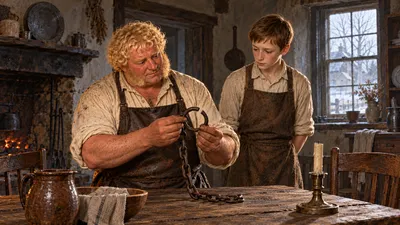
Before you read — think about:
- Detective fiction barely existed when Dickens was writing. What does a novel do differently from a detective story when a crime happens inside it?
- Sunday was the one fixed day off for working people, and much of village social life ran through the church. What did a single day of rest a week actually mean for someone doing physical work?
- What is the difference between guilt and responsibility? Is it possible to feel one without the other?
- Dickens holds some of his explanations back for a long time. What does a novelist risk by withholding, and what does he gain?
- How much should a reader trust a narrator's theory about events he did not witness?
Watch for these while reading:
- Which facts the narrator hands you, and which things he gives you only his opinion about.
- How the household's daily arrangements change, and who does the changing.
- Dickens's use of small physical evidence, and how precisely it is described.
- Who the narrator suspects, and on what grounds.
- Biddy: what she notices, and how quickly.
Vocabulary to know:
legitimate (adjective) — reasonable and justified; obligations (noun) — debts of duty or gratitude; disarrangement (noun) — disorder; things moved out of place; corroborated (verb) — confirmed by other evidence; manacle (noun) — an iron ring locked round a wrist or ankle; retaken (verb) — captured again; divers (adjective) — an old word meaning several or various; altercation (noun) — a noisy argument; assailant (noun) — the person who carried out an attack; felled (verb) — knocked down; undesignedly (adverb) — without intending to; unspeakable (adjective) — too great to be put into words; contention (noun) — an argument or dispute; alienate (verb) — to turn someone against you; assort (verb) — to classify something by putting it with similar things; fabulous (adjective) — belonging to fable; invented; temporized (verb) — delayed making a decision to gain time; wavering (verb) — hesitating between two choices; culprit (noun) — the guilty person; multiplied (verb) — increased in number; visionary (adjective) — existing only in the imagination; impaired (adjective) — damaged in function; unintelligible (adjective) — impossible to understand; tremulous (adjective) — trembling; unsteady; aberration (noun) — a departure from a normal state of mind; attendant (noun) — someone employed to look after another person; wreck (noun) — the ruined remains of something; moistened (adjective) — wet with tears; concurred (verb) — agreed; lustily (adverb) — loudly and vigorously; qualified (adjective) — partial; agreed to only up to a point; avail (noun) — use; effect; bethought (verb) — thought of; called to mind; dislocate (verb) — to knock a joint out of place; shattered (adjective) — badly broken; severely weakened; exultant (adjective) — triumphant; vagabond (adjective) — like a wanderer or tramp; manifested (verb) — showed clearly; conciliate (verb) — to win someone over and keep them friendly; propitiation (noun) — the act of appeasing someone to avoid their anger; doggedly (adverb) — stubbornly and without expression.
Chapter 17

Before you read — think about:
- Novels often ask a reader to like a narrator and disapprove of him at the same time. Is that a comfortable position for a reader to be in?
- The word 'gentleman' has shifted meaning many times. What did it mean in this period, and what does it mean now?
- In this period a person's social position was largely fixed at birth. What did the few available routes upward actually look like?
- What is the difference between wanting a different life and being ungrateful for the one you have?
- Dickens uses the same landscape to mean different things at different points in a book. What can a returning setting do that a new one cannot?
Watch for these while reading:
- How much time this chapter covers, and which events out of it the narrator bothers to record.
- Biddy's answers — their length, and how much she leaves unsaid.
- Where the conversations in this book happen, and what difference the place makes to them.
- The narrator's habit of correcting himself halfway through a sentence.
- Which of Pip's opinions shift during the chapter and which stay exactly where they were.
Vocabulary to know:
spectre (noun) — a ghost; imperceptibly (adverb) — so gradually as not to be noticed; wholesome (adjective) — healthy and good in a plain, unshowy way; stratagem (noun) — a clever scheme; observant (adjective) — watchful; noticing things; theoretically (adverb) — in principle, though not in practice; accomplished (adjective) — skilled; well versed in something; glistening (noun) — a wet shine; drudge (noun) — someone made to do hard, dull work; incompetence (noun) — total inability to do a job properly; untoward (adjective) — unfavourable; going against a person; latent (adjective) — present but not yet showing; self-forgetfulness (noun) — the habit of thinking of others before oneself; severity (noun) — sternness; disgusted (adjective) — sickened; filled with distaste; absurd (adjective) — ridiculous; vexation (noun) — irritated distress; utterance (noun) — the act of saying something aloud; over-particular (adjective) — too fussy about what one will accept; dissatisfied (adjective) — not content; disconcerted (adjective) — thrown off balance; lunatic (adjective) — mad; spite (verb) — to act deliberately to annoy or hurt someone; independently (adverb) — without depending on anyone else; inconsistency (noun) — a failure to act in line with what one believes; dazed (adjective) — stunned and unable to think clearly; misplaced (adjective) — given to the wrong object; soothing (adjective) — calming; ill-used (adjective) — badly treated; relish (verb) — to take pleasure in; derived (verb) — got or obtained from something; embankment (noun) — a raised bank of earth holding back water; stile (noun) — a set of steps for climbing over a fence or wall; ooze (noun) — soft wet mud; stagnant (adjective) — still and unmoving, like water that never flows; jiggered (verb) — a made-up threat-word with no fixed meaning, used to sound menacing; supposititious (adjective) — imagined; supposed rather than real; savagely (adverb) — in a fierce, brutal way; murderous (adjective) — involving or intending killing; attachment (noun) — affection or fondness for someone; interpretation (noun) — the meaning someone reads into something; outrage (noun) — a shocking offence; obscure (verb) — to block from view; reciprocated (verb) — returned a feeling or action in kind; immeasurably (adverb) — beyond measuring; enormously; disaffection (noun) — loss of loyalty or liking; confounding (adjective) — bewildering; throwing everything into confusion; missile (noun) — an object thrown or fired as a weapon; perplexities (noun) — states of confusion; premature (adjective) — happening earlier than expected.
Chapter 18
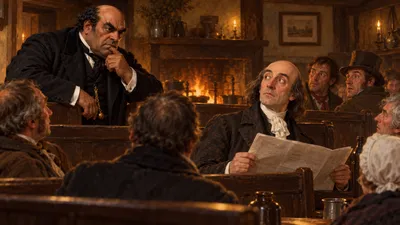
Before you read — think about:
- Dickens wrote many of his characters to be performed — read aloud, acted, imitated. Which characters so far would you most like to hear read aloud, and why?
- How does Dickens use a character's speech habits — a repeated phrase, a favourite word — to make them recognisable without describing them again?
- Great Expectations ran as a weekly serial from December 1860. What do you know about how Victorian readers met a novel — who read it, how often, and at what price?
- Blacksmithing was a skilled trade with real standing in a village. What did a village blacksmith actually do for a community in this period?
- How does a novelist make a reader trust a narrator who has already admitted, in his own account, to lying?
Watch for these while reading:
- Dialect and grammar: whose speech Dickens spells phonetically and whose he does not.
- Joe's behaviour when he is out of his depth, and what his hands are doing.
- The length and shape of Joe's sentences compared with everyone else's.
- The fire and the coals.
- How Biddy responds to things — what she says, and what she does instead of speaking.
Vocabulary to know:
imbrued (adjective) — soaked or stained, especially with blood; gloated (verb) — dwelt on something with unpleasant satisfaction; abhorrent (adjective) — disgusting; hateful; inquest (noun) — an official inquiry into a suspicious death; barbarously (adverb) — brutally; savagely; practitioner (noun) — a working doctor; paralytic (adjective) — shaking and helpless, as if partly paralysed; competency (noun) — fitness or capability, especially mental; coroner (noun) — the official who investigates unexplained deaths; beadle (noun) — a minor parish official who kept order; wilful (adjective) — deliberate; intentional; sarcastically (adverb) — with cutting mockery; confirmatory (adjective) — agreeing with and backing up what was said; evade (verb) — to avoid answering directly; interrogative (adjective) — in the manner of someone conducting a questioning; cross-examined (verb) — questioned in court by the opposing side to test the evidence; subterfuge (noun) — a trick used to avoid something; juryman (noun) — a member of a jury; sovereign (adjective) — belonging to the ruling monarch; effectually (adverb) — with complete effect; disclose (verb) — to make something known; quailed (verb) — flinched with fear; anticipate (verb) — to say or do something before the proper time; ascertain (verb) — to find out for certain; originating (noun) — the act of starting something off; bearer (noun) — the person who carries or delivers something; pious (adjective) — religious in a way that may be beside the point; disinterestedness (noun) — the state of wanting nothing for oneself; bewildered (adjective) — utterly confused; possessor (noun) — the person who currently owns something; surpassed (verb) — exceeded; went beyond; encumbered (verb) — loaded down with a condition or burden; empowered (verb) — given official authority to do something; allusion (noun) — an indirect mention; gravest (adjective) — most serious; observance (noun) — the keeping of a rule or condition; stipulations (noun) — conditions formally laid down; disparagement (noun) — things said to lower someone's reputation; endowed (verb) — provided with something as a gift; maintenance (noun) — the cost of supporting someone day to day; guardian (noun) — a person legally responsible for someone who is not yet an adult; inclinations (noun) — preferences; what a person is drawn to; shrewdly (adverb) — with sharp judgement; dumbfoundered (adjective) — struck speechless with astonishment; compensation (noun) — payment made to make up for a loss; by-paths (noun) — small side-paths off a main road; pugilistic (adjective) — to do with fist-fighting; placable (adjective) — easily calmed down; expostulatory (adjective) — protesting; objecting; evincing (verb) — showing or displaying a feeling; valedictory (adjective) — said as a farewell; hackney-coach (noun) — a coach available for hire, like a taxi; resented (verb) — felt bitter about; rustic (adjective) — belonging to the countryside; unrefined; wreaths (noun) — curling rings of smoke.
Chapter 19
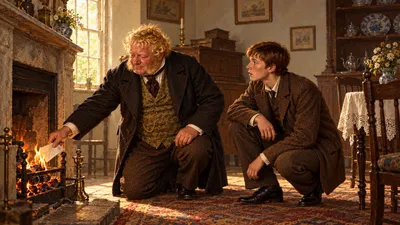
Before you read — think about:
- Dickens is praised for his comic minor characters and criticised for making them types rather than people. Which charge do you think is fairer?
- Leaving home for the first time is one of the oldest subjects in fiction. What has to happen on the page for a departure scene to work?
- In the nineteenth century clothes announced a person's rank before they opened their mouth. What do you know about how dress operated as a social signal then?
- Dickens's readers knew London intimately and had never seen the marsh country. How might a novelist handle a place his readers know well, as against one they have never been to?
- Novels often make a character's inner state visible through what they notice in the landscape around them. Where have you seen that done, in this book or anywhere else?
Watch for these while reading:
- Who Pip says goodbye to, and the way he goes about each one.
- The manner tradespeople adopt toward a customer, and what governs it.
- Biddy's phrasing when she disagrees with somebody.
- Things in the village that Pip looks at as though for the last time.
- The mists on the marshes, and what the narrator does with them.
Vocabulary to know:
intervened (verb) — came between two points in time; divest (verb) — to rid oneself of something; deteriorated (adjective) — made worse; emancipation (noun) — release from bondage or obligation; sublime (adjective) — lofty and elevated — here used mockingly; compassion (noun) — pity for other people's suffering; obscurely (adverb) — in a way nobody notices or remembers; bestowing (verb) — granting something as a gift from a superior position; condescension (noun) — kindness offered in a way that reminds people of their lower position; felon (noun) — a person convicted of a serious crime; veritably (adverb) — truly; actually; transported (verb) — sent overseas as a convicted criminal's punishment; henceforth (adverb) — from now on; twelvemonth (noun) — a year; elevation (noun) — a lifting up; sphere (noun) — the level of society a person belongs to; provoking (adjective) — irritating; likely to cause annoyance; snappishly (adverb) — irritably and sharply; disdainful (adjective) — contemptuous; competent (adjective) — properly able to do something; envious (adjective) — resentful of someone else's good fortune; grudging (adjective) — unwilling to allow someone their due; virtuous (adjective) — morally superior — here, self-righteous; waiving (verb) — setting aside for the moment; clemency (noun) — mercy shown by someone with power; prosperous (adjective) — doing well financially; audacious (adjective) — outrageously bold; preparatory (adjective) — done in preparation for something; gloss (noun) — a shine on a surface; miscreant (noun) — a wrongdoer; deferential (adjective) — respectful in a way that puts oneself lower; vogue (noun) — current fashion; gentry (noun) — people of good birth just below the nobility; remunerate (verb) — to pay someone for their work; esteem (verb) — to value highly; stupendous (adjective) — astonishingly great; hosier (noun) — a seller of stockings and underclothes; officiating (adjective) — acting in an official capacity at the time; collation (noun) — a light meal set out for a guest; adjuration (noun) — a solemn appeal or entreaty; deficiency (noun) — a shortcoming; something lacking; fervent (adjective) — intensely enthusiastic; apostrophising (verb) — addressing a speech to someone or something absent; fledgling (noun) — a young bird just growing its feathers; flaccid (adjective) — limp; without firmness; affable (adjective) — easy and friendly in manner; servile (adjective) — grovelling; excessively submissive; lauded (verb) — praised highly; repudiated (verb) — rejected as untrue; amalgamation (noun) — the joining of businesses into one; monopoly (noun) — complete control of a trade by one seller; deputy (noun) — someone acting on another's behalf; slumberously (adverb) — half asleep; affability (noun) — friendliness; scant (adjective) — very little; futile (adjective) — pointless; bound to fail; circuitously (adverb) — by a roundabout route; constrainedly (adverb) — awkwardly; without ease; abreast (adverb) — level with; alongside; dismay (noun) — distressed disappointment.
Chapter 20

Before you read — think about:
- London in this period held more than a million people and had almost nothing that we would recognise as a police force. What do you know about how the city worked?
- Dickens walked London for hours at night and knew it street by street. What can a novelist do with a city he knows that intimately?
- Dickens's narrator is remembering, not reporting. What difference does it make that everything in this book reaches us through one person's memory of it?
- First impressions of an unfamiliar place are usually wrong. What do you notice first about somewhere you have never been, and how much is it worth?
- A first-person narrator can describe only what he happens to see. What does a novelist gain by limiting the reader that way, and what does he give up?
Watch for these while reading:
- The smells, the dirt and the noise of the city, and how often the narrator returns to them.
- Rooms and offices treated as portraits of the people who use them.
- Anyone whose manner changes according to who they are speaking to.
- The things Pip notices and cannot explain.
- How money gets mentioned, and by whom.
Vocabulary to know:
metropolis (noun) — a very large capital city; ravel (noun) — a tangle; treasonable (adjective) — amounting to betrayal of one's country; immensity (noun) — enormous size; equipage (noun) — a carriage together with its horses and attendants; coronets (noun) — small crowns painted on a carriage as a mark of noble rank; harrow (noun) — a spiked frame, here fixed to a coach to stop people riding for free; ascent (noun) — the act of climbing up; ushered (verb) — shown into a place; velveteen (noun) — a cheap cotton cloth made to imitate velvet; knee-breeches (noun) — trousers fastened just below the knee; perusal (noun) — careful reading; eccentrically (adverb) — oddly; at a strange angle; distorted (adjective) — twisted out of shape; scabbard (noun) — the sheath a sword is kept in; casts (noun) — moulded copies of something, here of human faces; horsehair (noun) — stiff hair used to stuff old furniture; cliental (adjective) — belonging to the client; detrimental (adjective) — damaging; litter (noun) — an untidy scattering of objects; grit (noun) — fine gravelly dust; asmear (adjective) — smeared all over; bulging (verb) — swelling outward; bystander (noun) — someone standing nearby who is not involved; deaden (verb) — to muffle a sound; whence (adverb) — from where; personage (noun) — an important person; culprits (noun) — people found guilty; mildewed (adjective) — spotted with mould from damp; executioner (noun) — the official who carries out death sentences; lounging (verb) — hanging about idly; excitable (adjective) — easily worked up; temperament (noun) — a person's natural disposition; testimonies (noun) — pieces of evidence or proof; submissively (adverb) — obediently; without protest; meekly (adverb) — quietly and without resistance; devastating (adjective) — crushing; overwhelming; suitor (noun) — someone bringing a request or a case; relinquishing (verb) — letting go of; supplicant (noun) — a person begging for something; indifference (noun) — complete lack of concern; irate (adjective) — furious; infernal (adjective) — hellish — used as strong abuse; scoundrel (noun) — a dishonest, worthless person; booby (noun) — a fool; blustered (verb) — burst out loudly and angrily; guileless (adjective) — innocent — used here with heavy irony; confectioner (noun) — a maker of cakes and sweets; allowance (noun) — a fixed sum of money given regularly; outrunning (verb) — getting ahead of; here, spending beyond one's means; decisively (adverb) — in a firm way that settles a matter.
Chapter 21

Before you read — think about:
- Dickens frequently describes a face by comparing it to a manufactured object. What does that technique do to a reader's sense of the person?
- The old inns and courts of legal London were a strange half-professional, half-residential world. What do you know about how lawyers and their clerks lived and worked in that period?
- What does a person's home tell you about them when they did not choose it?
- Waiting is hard to make interesting on the page. What can a novelist do with a character who has nothing to do?
- Dickens's descriptions of buildings run to great length. Do long descriptive passages slow a novel down, or do they do work that plot cannot?
Watch for these while reading:
- Wemmick's face, the ornaments he wears, and his manner of walking.
- The way strangers in London treat somebody who has just arrived.
- The buildings themselves — their state of repair, and the words the narrator finds for it.
- Anything the narrator says he expected, set beside what he actually finds.
- Small courtesies — handshakes, introductions, offers of help — and who performs them.
Vocabulary to know:
stature (noun) — a person's height; chisel (noun) — a tool with a flat blade for cutting wood or stone; dints (noun) — small dents; embellishment (noun) — decoration added to something plain; bereavements (noun) — losses of people through death; brooch (noun) — an ornament pinned to clothing; urn (noun) — a vase used to hold the ashes of the dead; laden (adjective) — loaded down; mottled (adjective) — marked with patches of different colour; self-contained (adjective) — keeping to oneself; not needing others; toleration (noun) — putting up with something rather than approving it; depreciation (noun) — the act of running something down in value; alleviated (verb) — made less severe; disembodied (adjective) — existing without a body; imaginary; dingiest (adjective) — grimiest and most dismal; wicket-gate (noun) — a small gate set into or beside a larger one; disgorged (verb) — emptied out, as if spat forth; dilapidated (adjective) — falling to pieces from neglect; makeshift (noun) — a poor temporary substitute; appeased (verb) — satisfied so as to calm anger; interment (noun) — burial; frowzy (adjective) — stale, dingy and unwashed; forlorn (adjective) — abandoned and pitiful; penance (noun) — punishment accepted to show sorrow for wrongdoing; dust-hole (noun) — a place where ashes and rubbish are tipped; lodgers (noun) — people renting rooms in someone else's building; guillotine (noun) — a machine with a heavy falling blade used for beheading; encrusting (adjective) — forming a hard coating; dolefully (adverb) — sadly and gloomily; overrated (adjective) — thought better of than it deserves; neckcloth (noun) — a cloth worn wound round the neck; pottle (noun) — a small basket for holding fruit; incoherently (adverb) — in a way that does not make sense; combated (verb) — fought against; castors (noun) — a set of small bottles for oil, vinegar and condiments; musty (adjective) — smelling stale and damp; prowling (adjective) — moving about stealthily, as if hunting.
Chapter 22

Before you read — think about:
- Dickens's friendships between young men are among the warmest things he wrote. What has to be on the page for a friendship to be convincing rather than merely asserted?
- Rules about how to behave in company are learned rather than natural, and are policed hard. What are such rules actually for?
- Dickens's own father was imprisoned for debt when Dickens was a boy. How might an experience like that shape the way a novelist writes about money?
- Novelists have to decide how much of a character's inner life to state outright and how much to leave a reader to infer from behaviour. Which do you find more convincing, and why?
- Dickens fills his novels with households run on strange principles. What can a family's daily arrangements tell a reader that dialogue cannot?
Watch for these while reading:
- How the two young men handle the thing that happened between them before.
- The room and its furnishings, and where each item has actually come from.
- Corrections offered as asides, and the manner in which they are offered.
- What Pip chooses to say about himself, and what he keeps back.
- Children, and the adults who are responsible for them.
Vocabulary to know:
magnanimous (adjective) — generous in forgiving; acquiesced (verb) — agreed without argument; affianced (adjective) — promised in marriage; betrothed (adjective) — engaged to be married; Tartar (noun) — a fierce, hard-tempered person; haughty (adjective) — arrogantly proud; wreak (verb) — to inflict something, especially revenge; solicitor (noun) — a lawyer who advises clients and prepares cases; constraint (noun) — stiffness caused by holding something back; propitiate (verb) — to win someone's favour by flattering or appeasing them; courtier (noun) — someone skilled at flattering the powerful; incapacity (noun) — inability to do something; imbued (verb) — filled with a feeling or idea; languor (noun) — a lack of physical energy; ungainly (adjective) — awkward in build or movement; communicative (adjective) — willing to talk openly; prophesy (verb) — to predict; avaricious (adjective) — greedy for money or possessions; harmonious (adjective) — agreeing well together; musically pleasing; circumjacent (adjective) — lying all around; congelation (noun) — the state of having set solid from cold; alloy (noun) — something that lowers the purity of a thing; indisputable (adjective) — impossible to argue against; riotous (adjective) — wild and disorderly in behaviour; extravagant (adjective) — spending far more than one can afford; undutiful (adjective) — failing in one's duty to family; disinherited (verb) — cut out of a will; heiress (noun) — a woman who inherits a fortune; grudge (noun) — a long-held resentment; perseverance (noun) — stubborn persistence; strenuous (adjective) — requiring great effort; asseverates (verb) — declares firmly and solemnly; varnish (noun) — a shiny coating; here, a surface polish of manners; susceptibility (noun) — openness to being affected, especially by feeling; idolized (verb) — worshipped; admired beyond reason; counsels (noun) — private discussions in which advice is given; scheming (adjective) — plotting for one's own advantage; time-serving (adjective) — flattering whoever is useful at the moment; unreservedly (adverb) — completely, holding nothing back; inveterate (adjective) — long-established and unlikely to change; fawning (noun) — grovelling flattery; advancement (noun) — improvement in position or fortune; bridegroom (noun) — a man on his wedding day; mortification (noun) — crushing public humiliation; degradation (noun) — a fall into disgrace and ruin; encroached (verb) — intruded on something that should be left alone; benefactress (noun) — a woman who gives money or help to another; broached (verb) — raised a subject for discussion; capitalist (noun) — someone who invests money in business; enterprising (adjective) — full of business initiative; chartering (verb) — hiring ships for a voyage; magnificence (noun) — impressive grandeur; accumulative (adjective) — gathering and building up over time; unassuming (adjective) — modest; not showing off; incipient (adjective) — just beginning; in an early stage; superstition (noun) — an irrational belief held out of habit; prepossessions (noun) — opinions formed in advance; ventriloquist (noun) — a performer who makes a voice seem to come from elsewhere; lamentation (noun) — loud expression of grief; inexpertly (adverb) — clumsily; without skill.
Chapter 23

Before you read — think about:
- Dickens's comedy often depends on a character repeating one gesture. What is the mechanism there, and what does repetition eventually cost?
- Dickens is sometimes accused of sentimentality about children. From what you have read of this book so far, is the charge fair?
- Pip has now met three very different households. What do you already expect a household in a novel to be doing for the story?
- Is it possible to be funny about somebody without being cruel to them? Where does the line fall?
- What makes a first-person narrator likeable to a reader when his subject is people he considers beneath him?
Watch for these while reading:
- How the adults in this house occupy themselves.
- Names, and how much weight the people here place on them.
- The two other young men, and how much Dickens chooses to tell you about each.
- How Dickens keeps a crowded scene legible when a dozen people are in the room.
- Anything Pip decides to do because other people are doing it.
Vocabulary to know:
unaffected (adjective) — natural; not putting on airs; ludicrous (adjective) — absurd enough to be laughed at; contraction (noun) — a drawing together; foregone (adjective) — earlier; already gone before; Knight (noun) — a man given the lowest hereditary-sounding honour, addressed as 'Sir'; Baronet (noun) — the holder of a hereditary title ranking just below a baron; Chancellor (noun) — a very senior officer of state; tacked (verb) — attached loosely, as with a stitch or a nail; knighted (verb) — made a knight by the monarch; engrossed (adjective) — written out in large formal handwriting; vellum (noun) — fine parchment made from calfskin; trowel (noun) — a flat-bladed tool for spreading mortar; plebeian (adjective) — belonging to the common people; ward (noun) — guardianship; watchful care; ornamental (adjective) — decorative rather than useful; Woolsack (noun) — the seat of the Lord Chancellor — a byword for the top of the legal profession; mitre (noun) — a bishop's tall ceremonial hat; forelock (noun) — the lock of hair over the forehead; dower (noun) — the property or portion a bride brings to a marriage; indifferent (adjective) — mediocre; of poor quality; boarded (verb) — lodged and taken meals somewhere; unacquainted (adjective) — not known to one another; Grinder (noun) — a private tutor who crams pupils for examinations; preferment (noun) — promotion or advancement given as a favour; loftier (adjective) — higher; more ambitious; refurbished (verb) — polished up again for use; acquirements (noun) — things a person has learned; accomplishments; compilation (noun) — the assembling of material into a book; installation (noun) — the act of being formally settled into a place; aristocratic (adjective) — belonging to the nobility; bashful (adjective) — shy and self-conscious; heir (noun) — the person who will inherit a title or property; baronetcy (noun) — the rank and title of a baronet; elect (noun) — the chosen few; sulky (adjective) — silently resentful; affliction (noun) — a distressing misfortune; unutterable (adjective) — too great to be put into words; grossly (adverb) — coarsely; in an obvious and excessive way; serpentine (adjective) — snake-like; localities (noun) — places; neighbourhoods; sagacious (adjective) — wise — used sarcastically here; enlisted (verb) — signed up as recruits; prodigious (adjective) — enormous; concussion (noun) — a violent knock or shock; mite (noun) — a very small child; dissipated (adjective) — worn out by loose living; steeped (verb) — soaked; imperilled (adjective) — put in danger; artifices (noun) — small clever tricks; abashed (adjective) — embarrassed and put out of countenance; desolate (adjective) — utterly wretched; irrepressible (adjective) — impossible to keep down; mutiny (noun) — open rebellion; exemplified (verb) — shown by example; billeted (verb) — lodged somewhere by order, as soldiers are; whitlow (noun) — an infected swelling beside a fingernail; poultice (verb) — to treat with a soft heated dressing; adepts (noun) — people highly skilled at something; wherry (noun) — a light rowing boat used on rivers; insensibly (adverb) — to the point of unconsciousness.
Chapter 24

Before you read — think about:
- How does a novelist show a reader that two people who work closely together are nothing alike?
- Dickens worked as a court reporter in his twenties before he wrote any fiction. How might a job like that shape a novelist?
- What is the difference between being good at your job and being a good person? Can being very good at one make the other harder?
- A tutor, a guardian and a friend are three different kinds of adult in a young person's life. What does each of them owe?
- First-person narration means the reader only meets people when the narrator does. How does a novelist introduce a large cast under that restriction?
Watch for these while reading:
- The difference between the way Wemmick talks and the way Mr. Jaggers talks.
- Wemmick's ornaments, which have been mentioned before.
- Rooms, staircases, and the marks people leave on them.
- Advice Pip is given, and how much of it he understands.
- Mr. Jaggers's way of asking a question.
Vocabulary to know:
designed (verb) — intended for a particular purpose; destiny (noun) — the future laid out for someone; rudiments (noun) — the first basic elements of a subject; investing (verb) — giving someone a role or authority; dispense (verb) — to do without; zealous (adjective) — eager and wholehearted; compact (noun) — an agreement; retain (verb) — to keep; submitted (verb) — put forward for approval; discomfiture (noun) — embarrassed confusion; poising (verb) — balancing; creaking (adjective) — making a dry squeaking noise; man-trap (noun) — a spring trap set to catch a person; amenities (noun) — the pleasant features of something; symmetrically (adverb) — in exact balance on opposite sides; publican (noun) — the keeper of a public house; rat-catcher (noun) — a man employed to kill rats; coffers (noun) — the money-chests of a business; Bailey (noun) — the Old Bailey, London's central criminal court; flabby (adjective) — soft and loose in flesh; terrier (noun) — a small breed of dog kept for hunting vermin; smelter (noun) — someone who melts down metal; perspiration (noun) — sweat; likenesses (noun) — portraits or models resembling a person; recoiling (verb) — drawing back in horror; apostrophe (noun) — a speech addressed to somebody absent or dead; testators (noun) — people who have made wills; diffidence (noun) — shyness about a subject; curiosities (noun) — odd objects kept because they are interesting; portable (adjective) — able to be carried about; summer-house (noun) — a small garden building for sitting out in; tamed (adjective) — made obedient; wildness (noun) — the original untamed state of something; affirmative (noun) — a yes; fanciful (adjective) — showing an odd or elaborate taste; magistrates (noun) — officials who judge minor cases; rapture (noun) — intense absorbed delight; denunciations (noun) — public condemnations; convulsive (adjective) — jerking uncontrollably.
Chapter 25

Before you read — think about:
- Dickens's unpleasant characters are often more memorable than his admirable ones. Why do you think that is?
- Before the railways and the great embankments, the Thames was London’s busiest thoroughfare, carrying cargo, passengers and pleasure craft all at once. What do you know about how a river shapes the city built along it?
- The novel has now moved from a marsh village to a great city. What does a writer have to change when the setting shifts that far?
- Wealthy families of this period could produce a son with no occupation and no need of one. What did young men in that position actually do with their time?
- How much of a person's character do you think is settled by the family that raised them?
Watch for these while reading:
- How Drummle and Startop each behave when they are out in a boat.
- Wemmick's way of talking about his work.
- Small objects that somebody is proud of.
- Who is looking after whom.
- The relatives who reappear, and what they appear to want.
Vocabulary to know:
sluggish (adjective) — slow-moving and dull; loll (verb) — to hang or lounge about limply; blockhead (noun) — a stupid person; devotedly (adverb) — with loyal affection; amphibious (adjective) — able to live both on land and in water; wake (noun) — the trail of disturbed water left behind a boat; impressibility (noun) — the state of being easily marked or influenced; indigestive (adjective) — suffering from bad digestion; rigidity (noun) — stiff refusal to bend; cupidity (noun) — greed for money; complacent (adjective) — smugly satisfied with oneself; forbearance (noun) — patient tolerance of someone; dolt (noun) — a slow-witted fool; cracksmen (noun) — burglars who break into houses or safes; Britannia (noun) — a cheap silvery alloy used instead of silver; plate (noun) — household articles made of silver or gold; repeater (noun) — a watch that chimes the hour when a catch is pressed; inveigled (verb) — tricked or coaxed into doing something; beguile (verb) — to pass time pleasantly; commended (verb) — praised; gothic (adjective) — in the pointed medieval architectural style; sham (adjective) — fake; flagstaff (noun) — a pole for flying a flag; chasm (noun) — a deep gap; ordnance (noun) — artillery; heavy guns; lattice-work (noun) — a criss-crossed framework of strips; ingenious (adjective) — cleverly designed; contrivance (noun) — a device someone has invented; impede (verb) — to get in the way of; fortifications (noun) — defensive walls and works; besieged (adjective) — surrounded by an enemy force; provisions (noun) — supplies of food; bower (noun) — a leafy shelter in a garden; arbour (noun) — a shaded garden seat under trellis or branches; freehold (noun) — property owned outright rather than rented; cordial (adjective) — warm and hearty; jocose (adjective) — playfully humorous; bestirring (verb) — rousing oneself into activity; exultingly (adverb) — with triumphant delight; felonious (adjective) — criminal; forgery (noun) — the crime of faking documents or signatures; condemnation (noun) — a sentence of death; trifles (noun) — small unimportant objects; proprietor (noun) — the owner; inducted (verb) — formally brought into a place; brazen (adjective) — made of brass; bijou (noun) — a small decorative object; egress (noun) — a way out; turret (noun) — a small tower; discharge (noun) — the firing of a gun.
Chapter 26
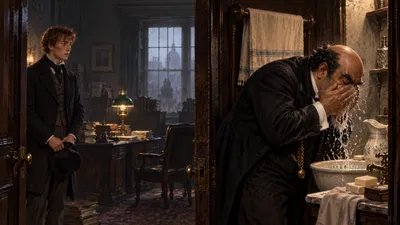
Before you read — think about:
- A dinner party is one of the oldest scenes in the novel. What can a writer do with a table full of people that cannot be done anywhere else?
- Dickens gives Mr. Jaggers habits that are almost ritual. What does a private ritual do for the person who performs it?
- A first-person narrator cannot show the reader a scene he has left the room for. How does a novelist work around that limitation?
- Young men in a group behave differently from young men on their own. What changes, and why?
- Dickens became famous for reading his own work aloud to enormous audiences. What kinds of scene do you think worked best in performance?
Watch for these while reading:
- Mr. Jaggers's house, and how much of the office he brings home with him.
- How Mr. Jaggers distributes his attention around the table.
- The food, the plates, and who hands out what.
- Startop and Drummle set side by side.
- Anything Pip finds himself unable to explain.
Vocabulary to know:
cashier (noun) — the person in a business who handles the money; admission (noun) — the act of admitting or conceding something; surgeon (noun) — a doctor who performs operations; perfumer (noun) — a maker or seller of perfume; laving (verb) — washing; gargling (verb) — rinsing the throat with liquid; penknife (noun) — a small folding knife; slinking (verb) — moving furtively; conclusive (adjective) — settling the matter beyond argument; halo (noun) — a ring of light or atmosphere surrounding something; encircled (verb) — surrounded; stately (adjective) — grand and dignified; garlands (noun) — carved or woven wreaths used as decoration; panelled (adjective) — lined with flat sections of wood; capacious (adjective) — roomy; holding a great deal; dumb-waiter (noun) — a stand of shelves beside a table, so that no servant is needed; decanters (noun) — glass bottles for serving wine; hearth-rug (noun) — the rug laid in front of a fireplace; sprawly (adjective) — spreading out awkwardly; deterred (verb) — put off from doing something; reticent (adjective) — unwilling to say much; discourse (noun) — talk; conversation; lithe (adjective) — slim and supple; nimble (adjective) — quick and light in movement; panting (verb) — breathing hard; flutter (noun) — a state of nervous agitation; caldron (noun) — a large cooking pot — here, the witches' pot in Macbeth; accessories (noun) — the additional things that go with a meal; circuit (noun) — a complete round; resemblance (noun) — a likeness; hesitatingly (adverb) — with uncertainty; nigh (adjective) — near; suspense (noun) — a state of anxious uncertainty; wrenched (verb) — pulled out with force; dispositions (noun) — natural characters or temperaments; expenditure (noun) — spending; inclination (noun) — a natural tendency; gird (verb) — to jeer or sneer at; rallied (verb) — teased good-humouredly; chaff (noun) — the light husks blown off grain; ferocity (noun) — savage fierceness; baring (verb) — uncovering; spanning (verb) — measuring by stretching the hand across; entreatingly (adverb) — pleadingly; immovable (adjective) — impossible to shift; sinews (noun) — the tough cords connecting muscle to bone; leisurely (adjective) — unhurried; zest (noun) — something that adds relish or flavour; discretion (noun) — good judgement about what to say; boorish (adjective) — rude and ill-mannered; obtuseness (noun) — slow-wittedness that cannot be argued with; exhorted (verb) — urged strongly; lumpish (adjective) — heavy and dull; pleasantry (noun) — a light joking remark; adversary (noun) — an opponent; dexterously (adverb) — with quick skill; sluicing (verb) — washing with a flood of water; festoon (noun) — a hanging loop of cloth.
Chapter 27

Before you read — think about:
- Letters in nineteenth-century novels do work that dialogue cannot. What can a writer put into a letter that would be awkward in a scene?
- Dickens is famous for making a reader laugh and wince in the same moment. What has to be true of a scene for both to happen at once?
- The novel's title promises 'expectations'. Now that some of them have arrived, what has the word come to mean for you as a reader?
- Theatre in this period ranged from great national companies down to tiny suburban houses. What do you know about how plays were staged, cast and paid for then?
- A first-person narrator can report what another person says and does, but never what they think. What tools does a writer still have for showing an inner life from the outside?
Watch for these while reading:
- How the chapter's opening letter is written — its spelling, its manners, its postscript.
- Which details Dickens gives a whole sentence to, and which he passes over in a clause.
- What Pip has done to his rooms, and who he appears to have done it for.
- The words characters use to address one another, and any changes in them.
- Whose fault the narrator says things are.
Vocabulary to know:
obliged (adjective) — grateful; indebted; larks (noun) — high-spirited fun — Joe's private word between the two of them; incongruity (noun) — the state of two things not fitting together; reassurance (noun) — something that removes a worry; sensitiveness (noun) — acute touchiness about something; meannesses (noun) — small, shabby acts; upholsterer (noun) — a tradesman who supplies and covers furniture; bondage (noun) — the state of being owned or bound to service; refuse (noun) — leftovers; what nobody else wants; breeches (noun) — trousers reaching just below the knee; avenging (adjective) — taking revenge — Pip's joking name for the boy he cannot afford; floorcloth (noun) — a painted canvas floor covering; considerate (adjective) — thoughtful about other people's feelings; drizzly (adjective) — with fine persistent rain; sooty (adjective) — blackened with soot; pursuant (adjective) — in accordance with an order; compromising (adjective) — embarrassing; likely to damage a reputation; playacting (noun) — acting on the stage; play-bill (noun) — a printed poster advertising a play; metropolitan (adjective) — belonging to a great city; renown (noun) — fame; tragic (adjective) — belonging to serious drama about suffering; sensation (noun) — a great public stir; solemnity (noun) — grave seriousness; peck (noun) — an old dry measure of two gallons — here, a great quantity; argumentative (adjective) — sounding as though making a case; denoted (verb) — indicated; showed; incidentally (adverb) — by the way; in passing; chimney-piece (noun) — the shelf above a fireplace; dispirited (adjective) — discouraged; whooping-cough (noun) — an illness causing violent fits of coughing; impartiality (noun) — fairness that takes no side; providentially (adverb) — by lucky intervention; exacted (verb) — demanded and obtained; humouring (verb) — handling gently so as to keep something going; slop-basin (noun) — a bowl on a tea table for the dregs of cups; insoluble (adjective) — impossible to solve; purified (verb) — made clean, especially in a religious sense; unaccountable (adjective) — impossible to explain; afflicted (adjective) — troubled by an ailment; pettishly (adverb) — in a peevish, childish way; lucid (adjective) — clear and easy to follow; exposition (noun) — a clear explanation of something; abode (noun) — a dwelling place; subsided (verb) — settled back down into something; relapsed (verb) — slipped back into a former state; blusterous (adjective) — loud and boastful; formality (noun) — careful correctness of manner; correspondence (noun) — the exchange of letters; partings (noun) — occasions of separation; welded (verb) — joined by heating metal until the pieces fuse; whitesmith (noun) — a worker in tin or light-coloured metals.
Chapter 28
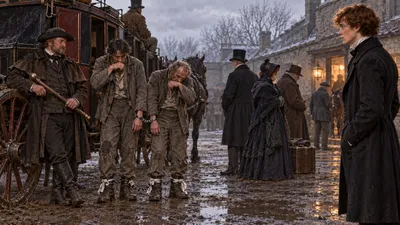
Before you read — think about:
- Dickens's chapters often move a character physically from one place to another. What can a journey do for a story that a scene standing still cannot?
- Dickens loved parodying other people's prose styles. What does a writer have to understand about a style in order to make fun of it well?
- What is the difference between shame and guilt? Do the two make people behave differently?
- Returning to a place you left is never the same as being there. What changes — the place, or you?
- A novel has to decide how much the reader is told before the characters are told it. Which do you prefer as a reader, and why?
Watch for these while reading:
- The reasons Pip gives himself for his decisions.
- How strangers on a public journey behave toward one another.
- Cold, darkness and weather on the road.
- Anything Pip reads.
- Names — which ones characters use for one another.
Vocabulary to know:
repair (verb) — to go to a place; repentance (noun) — sorrow for having done wrong; exacting (adjective) — demanding a great deal; self-swindlers (noun) — people who cheat themselves; pretences (noun) — false reasons put forward to cover the real one; spurious (adjective) — counterfeit; not genuine; compactly (adverb) — neatly and tightly; sleight (noun) — cunning skill of hand, as in conjuring; indecision (noun) — inability to make up one's mind; airing (verb) — displaying in public; hoot (verb) — to jeer at loudly in public; patroness (noun) — a woman who supports or protects someone; customary (adjective) — usual; done as a matter of habit; dock-yards (noun) — shipbuilding and naval yards where convicts were set to work; dangling (verb) — hanging loosely; constitutionally (adverb) — by one's very nature; faltering (verb) — wavering; losing steadiness; degraded (adjective) — brought low; stripped of dignity; gaoler (noun) — a jailer; bludgeon (noun) — a short heavy club; Curator (noun) — the keeper of a museum collection; allotted (verb) — assigned as a share; attire (noun) — clothing; appraised (verb) — sized up for value; slued (verb) — swung round; mangy (adjective) — shabby and diseased-looking; garlanded (verb) — decorated with a wreath — used here with grim irony; choleric (adjective) — quick-tempered; breach (noun) — a breaking of an agreement; pernicious (adjective) — harmful in a creeping, poisonous way; infamous (adjective) — disgraceful; baize (noun) — a coarse woollen cloth; hearthstone (noun) — soft stone used for whitening floors and steps; amiss (adverb) — as an offence; wrongly; incommoded (verb) — inconvenienced; acuteness (noun) — sharpness of feeling; marrow (noun) — the soft tissue inside a bone; pungent (adjective) — sharply biting; lethargic (adjective) — sluggish and drowsy; cowering (verb) — crouching down for shelter; execrated (verb) — cursed violently; assuredly (adverb) — certainly; alight (verb) — to get down from a coach; spirited (verb) — carried off swiftly and quietly; undefined (adjective) — having no clear shape; remissness (noun) — carelessness in duty; artificer (noun) — a skilled craftsman; eminently (adverb) — notably; to a high degree; commodious (adjective) — roomy and convenient; irrespective (adjective) — without regard to something; Mentor (noun) — a wise guide — from the tutor of Telemachus in Homer; lustrous (adjective) — shining; Esquimaux (noun) — an old spelling for the Inuit peoples of the Arctic.
Chapter 29

Before you read — think about:
- Fairy tales stand behind a great many novels — the poor boy, the enchanted house, the princess. What does a novelist gain by borrowing that shape, and what is the risk?
- A novel this long has to keep reminding a reader of things established hundreds of pages earlier. How can a writer do that without it reading like a summary?
- A disused brewery stands in the grounds of Satis House, and brewing was one of the great provincial industries of this period. What do you know about how a trade fortune was made in a market town, and how money of that kind stood socially beside inherited land?
- What is the difference between what a person deserves and what a person is given? Does the difference change how they feel about it?
- How does a reader tell the difference between what a narrator has observed and what a narrator has assumed?
Watch for these while reading:
- Which parts of Satis House have changed since Pip last saw it, and which have not.
- How Miss Havisham speaks when other people are in the room, and how she speaks when they are not.
- Anything Pip notices and cannot hold on to.
- The garden and the brewery yard, and who remembers what about them.
- Mr. Jaggers's manner in this house compared with his manner in his own.
Vocabulary to know:
betimes (adverb) — early; reserved (verb) — kept back for a particular person; hearths (noun) — the floors of fireplaces; vermin (noun) — pests such as rats and insects; seared (adjective) — scorched and dried out; clasping (verb) — gripping tightly; sinewy (adjective) — stringy and strong, like muscle; attributes (noun) — qualities belonging to someone; labyrinth (noun) — a maze; conventional (adjective) — following the usual pattern; unqualified (adjective) — complete; without any softening; irresistible (adjective) — impossible to resist; devoutly (adverb) — with religious sincerity; sober (adjective) — plain and unshowy in colour; barrow (noun) — a hand-pushed cart; retort (noun) — a sharp reply; proportions (noun) — dimensions; relative size; patchwork (adjective) — made of sewn-together scraps of cloth; recess (noun) — an alcove set back in a wall; slovenly (adjective) — untidy and careless; dormouse (noun) — a small rodent famous for sleeping a great deal; looming (verb) — appearing large and shadowy; reverberating (verb) — echoing on after the sound is made; yore (noun) — long ago — used in the phrase 'of yore'; grimly (adverb) — in a harsh, humourless way; archly (adverb) — in a knowing, teasing way; womanly (adjective) — having the qualities of a grown woman; disparity (noun) — a great difference between two things; inaccessibility (noun) — the quality of being impossible to reach; composure (noun) — calm self-control; subjection (noun) — the state of being brought under control; hankerings (noun) — persistent cravings; gentility (noun) — the condition of belonging to the genteel classes; ill-regulated (adjective) — badly controlled or ordered; aspirations (noun) — ambitions; incidental (adjective) — casual; treated as of no importance; reluctance (noun) — unwillingness; rankled (verb) — caused lasting resentment; eliciting (verb) — drawing something out of somebody; verily (adverb) — truly; condescending (verb) — lowering oneself to deal with an inferior; jargon (noun) — confused talk; tinge (noun) — a slight trace; secluded (adjective) — kept apart from other people; involuntary (adjective) — not deliberate; discrepancy (noun) — a difference between two things that ought to match; chinks (noun) — narrow cracks; cherished (verb) — held dear; tormented (verb) — caused prolonged suffering to; funereal (adjective) — belonging to a funeral; mournful; mouldering (adjective) — slowly rotting; enchantment (noun) — a magic spell; a state of being bewitched; vehemence (noun) — forceful intensity of feeling; dire (adjective) — dreadful; smiter (noun) — one who strikes a blow; imposing (adjective) — impressively large; ceremoniously (adverb) — with formal solemnity; punctual (adjective) — arriving exactly on time; extorted (verb) — obtained by pressure.
Chapter 30

Before you read — think about:
- Novels of this period often print an actual document on the page — a playbill, a notice, a newspaper paragraph. What can a writer do by showing a reader the document itself?
- Friendship between young men is often the most honest relationship in a Victorian novel. Why might that be?
- Shakespeare was performed constantly in this period, in every kind of theatre from the grandest to the roughest. What do you know about how his plays were staged and received then?
- The years this novel looks back on were the last age of the stage-coach, before the railways swept it away. What do you know about how long-distance coach travel actually worked — the timetables, the fares, and why it mattered where on the coach a passenger sat?
- Money that has not arrived yet shapes people's lives as much as money they already have. Where do you see that happening?
Watch for these while reading:
- How Pip is treated in the streets of his own town.
- Herbert's manner when he has something difficult to say.
- The gap between what Pip intends to do and what he actually does.
- The Avenger, and what Pip finds for him to do.
- Whose opinions Pip repeats as though they were his own.
Vocabulary to know:
summary (adjective) — done immediately, without formality; exceptionally (adverb) — as an exception to the rule; pitfall (noun) — a hidden trap; lashing (verb) — whipping; deeming (verb) — judging; considering; serene (adjective) — calm and untroubled; beseem (verb) — to be fitting for someone; quell (verb) — to put down or subdue; populace (noun) — the ordinary people of a place; feigned (verb) — pretended; contrition (noun) — deep sorrow for wrongdoing; prostrated (verb) — threw oneself flat on the ground; inexpressible (adjective) — too great to be put into words; rotatory (adjective) — turning in circles; beseeching (verb) — begging; spectators (noun) — people watching; strutting (verb) — walking with an exaggerated air of importance; wreaked (verb) — inflicted; akimbo (adverb) — with hands on hips and elbows turned outward; smirked (verb) — smiled in a smug, irritating way; drawling (verb) — speaking in a slow affected way; culminated (verb) — reached its highest point; ejected (verb) — thrown out; recompense (noun) — compensation for a wrong; invulnerable (adjective) — impossible to harm; yelping (verb) — giving short sharp cries; loathing (noun) — intense disgust; reparation (noun) — something done to make amends; despatched (verb) — sent off promptly; antechamber (noun) — a small room leading into a larger one; taskmaster (noun) — someone who imposes hard work on another; shifts (noun) — makeshift expedients; extremity (noun) — a condition of desperate need; fender (noun) — the low metal guard round a fireplace; adoration (noun) — worshipful love; impetuosity (noun) — the habit of acting on impulse; analysis (noun) — a breaking-down of something into its parts; constancy (noun) — faithfulness; not changing one's mind; indefinite (adjective) — vague; without clear limits; despondency (noun) — low spirits; hopelessness; gift-horse (noun) — a present one ought not to inspect too closely; concession (noun) — an admission granted reluctantly; bide (verb) — to wait for; enlightenment (noun) — the giving of information that clears something up; repulsive (adjective) — disgusting; driving people away; inheritance (noun) — property received from someone else's will or gift; detach (verb) — to separate oneself from something; abominate (verb) — to hate intensely; dustman (noun) — a man who collects household rubbish; matrimonially (adverb) — with regard to marriage; crestfallen (adjective) — downcast; meek (adjective) — quiet and submissive; victualling (noun) — the supplying of food to ships; purser (noun) — the officer who keeps a ship's accounts and stores; invalid (noun) — someone too ill to leave their room; rafters (noun) — the beams supporting a roof or ceiling; engendering (verb) — producing; giving rise to; abet (verb) — to help and encourage; quest (noun) — a search.
Chapter 31

Before you read — think about:
- Dickens's comic writing often describes something absurd in completely straight, formal language. What does that contrast achieve?
- A chapter can be almost entirely comic and still move a novel forward. What kinds of work can comedy do that a serious scene cannot?
- Novelists often build a scene out of many small accumulating details instead of one summarising sentence. What does accumulation do to a reader that a summary cannot?
- Dreams turn up in novels far more often than they do in most people's accounts of their own lives. What can a novelist use a dream for?
- Shakespeare's plays were cut, rewritten and reshaped constantly in this period. What do you think about altering a classic text for a new audience?
Watch for these while reading:
- The gap between what is happening on the stage and the way the narrator describes it.
- Objects and garments that get more attention than the people wearing them.
- Who is enjoying themselves, and who is not.
- Anything Pip and Herbert say to somebody other than each other.
- Anything the narrator admits about his own behaviour.
Vocabulary to know:
elevated (adjective) — raised up; nobility (noun) — the aristocratic class of a country; wash-leather (noun) — soft leather used for cleaning; venerable (adjective) — impressive through age; Peer (noun) — a member of the nobility entitled to sit in the House of Lords; chivalry (noun) — the knights of a country taken together; gifted (adjective) — talented; decease (noun) — death; truncheon (noun) — a short staff carried as a symbol of office; conceive (verb) — to form an idea; to suppose; perceptibly (adverb) — noticeably; contiguous (adjective) — immediately next to something; derisively (adverb) — mockingly; buxom (adjective) — plump and healthy-looking; diadem (noun) — a crown or jewelled headband; ancestral (adjective) — inherited from one's forefathers; inconsistent (adjective) — not agreeing with itself; strolling (adjective) — travelling from place to place; discrimination (noun) — fine judgement between things; prey (noun) — a helpless victim of something; muslin (noun) — a fine thin cotton cloth; accumulated (verb) — piled up; undecided (adjective) — unable to make up one's mind; inclining (verb) — leaning towards an opinion; usage (noun) — established custom; peals (noun) — loud bursts of sound; primeval (adjective) — belonging to the earliest ages of the world; ecclesiastical (adjective) — belonging to the church; comprehensive (adjective) — covering everything; very ample; descried (verb) — caught sight of at a distance; admonished (verb) — warned; moralizing (verb) — drawing a moral lesson from something; enhanced (verb) — increased; bearers (noun) — those who carry a coffin; slackened (verb) — eased off; droll (adjective) — oddly amusing; elocution (noun) — the art of clear and expressive speaking; hooted (verb) — jeered at loudly; divesting (verb) — stripping off; garments (noun) — articles of clothing; affluent (adjective) — wealthy; sables (noun) — black mourning garments; flay (verb) — to strip the skin off; complacently (adverb) — with smug satisfaction; capitally (adverb) — excellently; approbation (noun) — approval; profile (noun) — a side view; wafer (noun) — a small disc of gummed paper; folly (noun) — foolishness; blatant (adjective) — noisily obvious; rasping (adjective) — harsh and grating; malignity (noun) — spiteful ill will; braces (noun) — straps worn over the shoulders to hold up trousers; bereft (adjective) — deprived; left without.
Chapter 32

Before you read — think about:
- A narrator who is in love describes everything through that. How can a reader tell when a description has been coloured by feeling?
- Extended metaphors — comparing one thing to another and then keeping it up for pages — are a Dickens speciality. What is the risk of sustaining one that long?
- Not every chapter of a long novel does the same job. What are some of the different jobs a chapter can do?
- How much should a reader trust a narrator's sense of what is beneath him?
- Coaching inns and coach offices were the transport hubs of their day. What do you know about how people arranged to meet before there was any way to send a quick message ahead?
Watch for these while reading:
- How Pip spends time he cannot fill.
- Wemmick out of the office, and how much of the office comes with him.
- The way people speak to one another when one of them holds all the power.
- Anything described as though it were something else entirely.
- Places Pip goes that he had not planned to go to.
Vocabulary to know:
obedience (noun) — compliance with an instruction; fain (adjective) — obliged; content for lack of better; haunting (verb) — visiting a place obsessively; unreason (noun) — a state of being unable to think sensibly; beat (noun) — the area a person regularly walks or works in; flourishing (adjective) — thriving; squint (noun) — a quick look; irreconcilability (noun) — the state of two things being impossible to fit together; precision (noun) — exactness; affecting (verb) — pretending; lodge (noun) — the gatehouse of a prison or estate; exaggerated (adjective) — overdone; carried too far; consequent (adjective) — following as a result; felons (noun) — people convicted of serious crimes; paupers (noun) — people supported by public charity; excusable (adjective) — able to be forgiven; potman (noun) — a man who carries beer round from a public house; disorderly (adjective) — unruly and untidy; cistern (noun) — a water tank; whisperers (noun) — people speaking under their breath; conference (noun) — a private discussion; blow (noun) — full flower — as in 'in full blow'; forbidding (adjective) — discouraging approach; successive (adjective) — following one after another; subordinate (noun) — a person of lower rank in an organisation; quantum (noun) — the required amount; principal (noun) — the person in charge of a business; greenhouse (noun) — a glass house for raising plants — used here as a grim joke; portly (adjective) — stout and dignified; pallor (noun) — unnatural paleness; commission (verb) — to instruct someone to do something for you; tumblers (noun) — a breed of pigeon that turns somersaults in flight; Coiner (noun) — someone who makes counterfeit money; Recorder (noun) — the judge whose report to the Crown decided a condemned prisoner's fate; turnkeys (noun) — prison warders; studded (adjective) — set with metal knobs; articled (adjective) — bound by a legal agreement to train in a profession; facetious (adjective) — jokey; treating a matter lightly; wicket (noun) — a small door set within a larger gate; subtlety (noun) — clever indirectness; suppliants (noun) — people humbly asking for something; encompassed (verb) — surrounded; taint (noun) — a trace of something corrupting; contaminated (adjective) — made unclean by contact; exhaled (verb) — breathed out; sauntered (verb) — strolled; conservatory (noun) — a glass house for plants — the narrator's second joke about the prison; nameless (adjective) — impossible to identify or put a name to.
Chapter 33

Before you read — think about:
- Dickens often fixes a character in a reader's mind by comparing them to an object, an animal or a trade rather than describing them directly. What does a comparison like that give a reader that a plain description would not?
- Ten miles took an hour or more by carriage, and two people alone in one had nowhere else to look. What do you know about how journeys of that kind worked?
- Dickens's descriptions of rooms and furniture often run for a whole paragraph before anybody speaks. What is that delay doing?
- Is it possible to be certain that somebody wishes you well? What would count as evidence?
- Old houses and old trees carry the fashions of periods long gone. What does a writer gain by noticing that a place is out of date?
Watch for these while reading:
- Who is giving instructions, and who is carrying them out.
- How Estella talks about herself.
- What Pip decides not to say.
- Places the journey passes.
- Moments the narrator cannot account for.
Vocabulary to know:
furred (adjective) — trimmed or lined with fur; slightingly (adverb) — dismissively, as if the matter hardly mattered; devices (noun) — one's own wishes or schemes; diminishing (adjective) — making things look smaller; superfluous (adjective) — more than is needed; cruet (noun) — a small bottle for sauce or vinegar at table; pattens (noun) — wooden overshoes worn to keep the feet out of mud; grate (noun) — the metal frame holding a fire; scorched (adjective) — burnt on the surface; bushel (noun) — an old measure of eight gallons — here, a great heap; conflagration (noun) — a great fire; composedly (adverb) — calmly; beset (verb) — attacked from all sides; harassed; insinuations (noun) — indirect suggestions meant to damage somebody; misrepresent (verb) — to give a false account of somebody; anonymous (adjective) — written without a name; perplexity (noun) — puzzled confusion; languidly (adverb) — without energy; diffident (adjective) — shy and lacking confidence; thwarted (adjective) — prevented from getting what one wants; intriguing (verb) — plotting secretly; suppressed (adjective) — kept down; not allowed to speak or act; defenceless (adjective) — unable to protect oneself; proverb (noun) — a short traditional saying; impair (verb) — to damage or weaken; fawners (noun) — people who flatter to gain advantage; plotters (noun) — people who scheme; gliding (verb) — moving away smoothly; reverting (verb) — returning to an earlier state or manner; puppets (noun) — figures moved about by somebody else; adjuncts (noun) — things added to something else; teaboard (noun) — a tray for tea things; salt-cellars (noun) — small dishes for salt at table; bulrushes (noun) — tall marsh reeds — here, a joke about a Bible picture; typified (verb) — represented; stood as a symbol for; casket (noun) — a small ornamental box; appliances (noun) — pieces of equipment; ostler (noun) — a man who looks after horses at an inn; chambermaid (noun) — a maid who cleans bedrooms at an inn; animosity (noun) — open hostility; wretches (noun) — miserable or despicable people; habituated (adjective) — grown used to something; chary (adjective) — cautious about giving something away; glare (noun) — a sudden strong light; wrung (verb) — squeezed or forced out; averse (adjective) — unwilling; opposed to; staid (adjective) — sober and old-fashioned; hoops (noun) — the stiff frames that once held out wide skirts; embroidered (adjective) — decorated with sewn patterns; ruffles (noun) — gathered frills of lace at the wrist or throat; farthingale (noun) — a hooped underskirt of an earlier century; solitaire (noun) — an ornamental neck-band worn with an old-fashioned wig; fluttering (verb) — moving quickly and lightly; treatises (noun) — formal written works on a subject; judicious (adjective) — showing good judgement; dignities (noun) — titles and ranks of honour.
Chapter 34

Before you read — think about:
- When a novel stops narrating individual scenes and starts describing habits, what changes for the reader?
- Dickens's comic prose often borrows the vocabulary of one activity to describe a completely different one. What does that borrowing achieve?
- Young men with money and no occupation were a recognised social type in this period. What do you know about how such a life was regarded?
- How does a novelist keep a reader interested in a character whose situation is not changing?
- Almost everybody in this book is short of money except the person telling the story. What does that do to the way you read him?
Watch for these while reading:
- How Pip describes his own competence.
- What Herbert does all day.
- How often Pip says 'we' rather than 'I', and who that includes.
- How much time this chapter covers.
- The Avenger, and Pip's feelings about him now.
Vocabulary to know:
chronic (adjective) — constant and long-lasting; uneasiness (noun) — a low, persistent discomfort of mind; weariness (noun) — tiredness of spirit; disquiet (noun) — unease; lack of peace; restlessness (noun) — inability to settle; beneficial (adjective) — doing good; corrupted (verb) — spoiled something that was sound; remorseful (adjective) — sorry for what one has done; unwittingly (adverb) — without meaning to; littlenesses (noun) — petty behaviours; evoked (verb) — called forth; slumbering (adjective) — sleeping; dormant; twinge (noun) — a sharp brief pang; incongruous (adjective) — out of keeping with its surroundings; infallible (adjective) — certain never to fail; fortnight (noun) — two weeks; invariably (adverb) — always; without exception; predominant (adjective) — most important; ruling over the rest; floundering (verb) — moving clumsily and without control; unintentional (adjective) — not meant; desponding (adjective) — low-spirited; descry (verb) — to make out at a distance; despondent (adjective) — in very low spirits; compelling (verb) — forcing; transact (verb) — to carry out a piece of business; footstool (noun) — a low stool for resting the feet on; generalising (verb) — describing a long period in broad terms; skeleton (adjective) — bare; stripped to the bone; consorted (verb) — kept company with; almanac (noun) — a yearly calendar of dates and facts; magnates (noun) — great men of business; detested (verb) — hated; livery (noun) — the uniform worn by a servant; remunerative (adjective) — profitable; presuming (verb) — daring; taking a liberty; sincerity (noun) — genuineness; confront (verb) — to face something difficult directly; fortified (verb) — strengthened; copious (adjective) — plentiful; stationery (noun) — writing materials; memorandum (noun) — a written record or note; formalities (noun) — correct procedures; edifying (adjective) — morally improving; meritorious (adjective) — deserving of praise; rueful (adjective) — regretful and sorry for oneself; accumulating (adjective) — piling up; assiduity (noun) — persistent hard effort; docketed (verb) — labelled on the back for filing; symmetrical (adjective) — evenly balanced in shape; administrative (adjective) — to do with organising and managing; margin (noun) — an amount added on for safety; solvency (noun) — the state of being able to pay one's debts; hush (noun) — a period of calm quiet; seal (noun) — a blob of wax closing a letter, stamped with a design.
Chapter 35
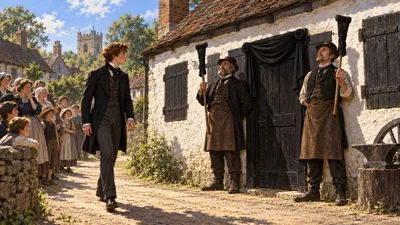
Before you read — think about:
- Dickens builds a great many of his descriptions on comparison — this thing is like that thing. What can a comparison do that a plain description cannot?
- The novel keeps returning to the same marsh churchyard. What does a writer gain by bringing a character back to one place again and again?
- What do you think a village does for the people in it that a city cannot?
- Dickens's chapters often end with an image rather than a statement. What does that leave a reader doing?
- Some novels are careful to tell you the weather. What work can weather do beyond setting a scene?
Watch for these while reading:
- Who is running the arrangements.
- Joe's clothes, and when they change.
- What Biddy says, and how much of it Pip answers.
- The marsh landscape, seen again.
- Any phrase the narrator repeats to himself more than once.
Vocabulary to know:
compass (verb) — to take in or grasp with the mind; blankness (noun) — emptiness; revengefully (adverb) — in a spirit of revenge; consolation (noun) — comfort offered to someone in grief; intermediate (adjective) — coming in between two points; execution (noun) — the taking possession of a house by officials — here, by the undertakers; dismally (adverb) — gloomily; bandage (noun) — a strip of cloth wound round something; postboy (noun) — a man who rode one of the horses drawing a hired carriage; sawpit (noun) — a pit over which timber is sawn; intoxication (noun) — drunkenness; sable (adjective) — black, especially in mourning dress; warders (noun) — guards; wager (noun) — a bet; bazaar (noun) — a market of many small stalls; entangled (adjective) — caught up in something; obsequious (adjective) — excessively eager to please; preference (noun) — what one would rather have; filed (verb) — walked in a line; remains (noun) — a dead body; housing (noun) — a heavy cloth covering; blundering (verb) — moving clumsily; vigorous (adjective) — strong and energetic; intercept (verb) — to cut off and meet on the way; vantage (noun) — a position giving a good view; exuberant (adjective) — overflowing with high spirits; emergence (noun) — the act of coming into view; streaming (adjective) — flowing loose behind; surpassingly (adverb) — exceedingly; vainglorious (adjective) — boastfully proud; strewed (verb) — scattered over; worldly (adjective) — concerned with money and status rather than the spirit; reservation (noun) — an exception silently made to a general statement; hardihood (noun) — brazen boldness; notoriously (adverb) — as everybody well knows; immortal (adjective) — never dying; mummery (noun) — ridiculous ceremonial display; wholesomer (adjective) — healthier; less oppressive; restraint (noun) — awkward stiffness that keeps people from being natural; downcast (adjective) — looking downward; industrious (adjective) — hard-working; quarries (noun) — pits where stone is dug out; temperate (adjective) — moderate; not extreme; virtuously (adverb) — with a show of moral superiority; cogent (adjective) — convincing — used sarcastically here; reconcilable (adjective) — able to be made consistent with something else; pathetically (adverb) — in a way that stirs pity; ungenerous (adjective) — mean-spirited; disclosed (verb) — revealed.
Chapter 36

Before you read — think about:
- Dickens's dialogue often works by having one person refuse to answer. What can a novelist do with a conversation where one side gives nothing?
- Attorneys in Victorian fiction are almost never the hero. What does a nineteenth-century reader already assume about a lawyer before the novelist has written a word?
- Dickens breaks speech constantly — dashes, half-finished sentences, words that stop short. What can a sentence that stops short tell a reader that a complete one cannot?
- Some characters in a novel are built to stay exactly the same, and some are built to change. What is a novelist using each kind for?
- Dickens wrote for an audience that often heard novels read aloud in a family circle rather than reading them silently. What does a writer do differently for listeners than for readers?
Watch for these while reading:
- Mr. Jaggers's method of answering a question.
- The two casts on the shelf.
- Where Wemmick's opinions are being given from.
- Any passage where Pip is reasoning rather than reporting.
- How the chapter's last paragraph judges the day.
Vocabulary to know:
exemplary (adjective) — serving as a model — used ironically here; fulfilment (noun) — the carrying out of something predicted or promised; majority (noun) — the legal age of adulthood; auspicious (adjective) — promising good fortune; punctuality (noun) — the habit of arriving exactly on time; coattails (noun) — the long back flaps of a formal coat; apoplectic (adjective) — looking as though about to burst a blood vessel; bearings (noun) — the true position or state of something; reluctantly (adverb) — unwillingly; waive (verb) — to set aside for the moment; triumphantly (adverb) — with the air of having won; cash-book (noun) — the ledger recording money paid in and out; earnest (noun) — a part payment made as a promise of more to come; annum (noun) — year — used in the phrase 'per annum'; donor (noun) — the person who gives something; fountain-head (noun) — the original source of something; liberality (noun) — generosity; aback (adverb) — by surprise; in a startled state; afresh (adverb) — again from the beginning; revert (verb) — to go back to an earlier subject; negativing (verb) — denying; refusing; suspended (adjective) — held in an unfinished state; discouraging (adjective) — disheartening; deliberate (adjective) — carefully considered; loophole (noun) — a gap that lets somebody get round a rule; gravity (noun) — seriousness; capacity (noun) — the role or character in which someone acts; towelling (verb) — drying oneself with a towel; unbend (verb) — to relax from stiffness; guarded (adjective) — cautious; giving nothing away; felony (noun) — a serious crime; desirous (adjective) — wishing very much; disheartening (adjective) — discouraging; athletic (adjective) — involving physical exercise; extinguished (verb) — put out.
Chapter 37

Before you read — think about:
- Dickens's happiest scenes are often domestic and very small in scale. Why might a novelist put so much weight on an ordinary evening indoors?
- This novel keeps two settings in play at once — a country neighbourhood and a city. What does a writer gain by moving a character between them?
- Dickens's novels are crowded. How does a writer keep a large cast in a reader's head over eight hundred pages?
- What is the difference between generosity and repayment? Can a single act be both?
- Deafness, blindness and other barriers to communication turn up often in fiction. What can a novelist do with a character who cannot hear?
Watch for these while reading:
- How the Castle works, and who knows how it works.
- Wemmick's opinions, and where he is standing when he gives them.
- What Pip says about Herbert, and what he leaves out.
- Anything done purely for the Aged's pleasure.
- How much time passes between one paragraph and the next.
Vocabulary to know:
ensuing (adjective) — following next; pilgrimage (noun) — a journey made to a place of special importance; battlements (noun) — the notched top of a castle wall; undeterred (adjective) — not put off; pacific (adjective) — peaceable; chirping (adjective) — brightly cheerful, like a bird; warehousing (noun) — the trade of storing goods in warehouses; pantomime (noun) — silent acting with gestures; ingenuity (noun) — cleverness at inventing things; moat (noun) — a ditch of water round a castle; escort (noun) — somebody accompanying another person; kite (noun) — a light frame flown on a string; unpunctual (adjective) — not arriving on time; rawness (noun) — inexperience; rendered (verb) — given; troublesome (adjective) — causing difficulty; accountant (noun) — someone who keeps and audits financial records; delegated (verb) — handed over to somebody else to do; nominal (adjective) — in name only; simmered (verb) — cooked gently just below boiling; jorum (noun) — a large bowl of drink, or its contents; participate (verb) — to take part; snugly (adverb) — cosily and securely; tranquillity (noun) — calm; methodical (adjective) — orderly and systematic; undesirable (adjective) — unattractive; not to be wished for; repose (noun) — rest; trifling (adjective) — slight; not serious; spectacles (noun) — eyeglasses; peculiarity (noun) — a distinguishing oddity; powder-mill (noun) — a factory making gunpowder — proverbially dangerous; vigilance (noun) — watchful care; elongation (noun) — a lengthening; unwound (verb) — unwrapped from around something; deliberation (noun) — unhurried care; abstraction (noun) — absent-mindedness; enthralling (adjective) — gripping; holding the attention completely; girdle (noun) — a belt or band worn round the waist; cestus (noun) — a belt from classical mythology; slumber (noun) — sleep; rubicund (adjective) — red-faced; appertaining (verb) — belonging or relating to; upshot (noun) — the final result; shipping-broker (noun) — an agent who arranges cargoes and ships; sundry (adjective) — various; contingent (adjective) — depending on something else happening first; negotiation (noun) — the arranging of an agreement; radiant (adjective) — shining with happiness; restraining (verb) — holding back; narrate (verb) — to tell as a story.
Chapter 38

Before you read — think about:
- Dickens borrows from myth and fable at key moments. What does a novelist gain by dropping a story-within-a-story into a chapter?
- Novels often ask you to watch a relationship you can see is bad for somebody. What keeps that readable rather than merely frustrating?
- Dickens's dialogue can run for pages with almost no description around it. What has to be true of the speech for that to work?
- Before gas reached private houses, an indoor evening was lit entirely by firelight and by candles in wall sconces. What did that do to how a room was arranged and used after dark?
- Richmond in this period was one of the genteel settlements just outside London, close enough for town society and far enough to be a separate world. Why would a family with social ambitions want to be established somewhere like that rather than in town itself?
Watch for these while reading:
- Where Pip is standing, or sitting, in each scene.
- Miss Havisham's hands.
- How Estella answers a question she does not want to answer.
- Rooms Pip has been in before, and whether anything in them has moved.
- Any comparison the narrator reaches for when plain description will not do.
Vocabulary to know:
unquiet (adjective) — restless; unable to settle; frivolity (noun) — light-mindedness; a taste for amusement; theology (noun) — the study of religion; subsisted (verb) — existed; continued to be present; conduced (verb) — contributed towards a result; steward (noun) — a servant who manages an estate or household; maddened (verb) — drove to distraction; harping (verb) — dwelling on one subject continually; habitually (adverb) — as a matter of habit; advisedly (adverb) — deliberately, after thought; mumbling (verb) — mouthing or chewing at something; pry (verb) — to force one's way in where one is not wanted; probe (verb) — to search into a wound; witch-like (adjective) — resembling a witch; fascinated (verb) — held spellbound; mortally (adverb) — fatally; to the death; wan (adjective) — pale and sickly; malicious (adjective) — intending harm; staked (verb) — gambled; perversion (noun) — a twisting of something out of its proper use; staved (verb) — kept off; delayed; sconces (noun) — candle-holders fixed to a wall; dulness (noun) — lack of brightness; gropings (noun) — blind feeling movements; ingrate (noun) — an ungrateful person; stock (noun) — a block of wood — used as an insult for someone unfeeling; lavished (verb) — poured out generously; impossibilities (noun) — things that cannot be done; unmindful (adjective) — forgetful of; not paying attention to; musing (adjective) — thoughtful; confinement (noun) — being shut in; blighted (verb) — withered; ruined; relics (noun) — objects surviving from the past; strewn (verb) — scattered about; adrift (adjective) — loose and unfastened; wrecks (noun) — ruined remains; tatters (noun) — torn shreds of cloth; skilful (adjective) — practised and able; unearthly (adjective) — not of this world; ghostly; streaks (noun) — long thin lines; ceaseless (adjective) — never stopping; infused (verb) — mixed in throughout; forasmuch (conjunction) — an old formal word meaning 'seeing that'; leer (verb) — to look sideways in an unpleasant way; pledge (verb) — to drink a toast to somebody; peerless (adjective) — without equal; incensed (adjective) — furiously angry; impudence (noun) — shameless cheek; certificate (noun) — a written statement confirming a fact; importing (verb) — stating; conveying as its meaning; avowal (noun) — an open admission; repudiate (verb) — to reject or disown; untenable (adjective) — impossible to defend; snorting (verb) — breathing out noisily in contempt; adequately (adverb) — sufficiently; referable (adjective) — able to be traced back to a cause; stooping (verb) — lowering oneself; persistent (adjective) — refusing to give up.
Chapter 39

Before you read — think about:
- The Temple and the Inns of Court were a distinct quarter of London with their own customs and boundaries. What do you know about that world?
- Dickens's readers argued about his novels in public while they were still being written. What kinds of thing do you imagine they argued about?
- Unlike most of Dickens's novels, this one first appeared without any illustrations. What does a novel lose, and what might it gain, when a reader has no pictures to look at?
- Reading and study have come up repeatedly in this book. What is the difference between being educated and being informed?
- Dickens's chapters vary enormously in length. What might make a novelist give one chapter far more room than its neighbours?
Watch for these while reading:
- How Pip is spending his time, and with whom.
- What the narrator notices about the room he is sitting in.
- How much time passes between the chapter's first page and its last.
- Objects the narrator describes in unusual detail.
- How the chapter is lit — lamps, candles, firelight.
Vocabulary to know:
enlighten (verb) — to give somebody understanding of something; tenure (noun) — the terms on which something is held; veil (noun) — a covering that hides what is behind it; eternity (noun) — endless time; gusts (noun) — sudden strong rushes of wind; shipwreck (noun) — the destruction of a ship at sea; blasts (noun) — violent bursts of wind or rain; rages (noun) — furious outbursts; alterations (noun) — changes made to a building or place; discharges (noun) — firings of a gun; shuddering (verb) — shaking violently; barges (noun) — flat-bottomed boats used on rivers; flawed (verb) — broken up; spoiled; stair-head (noun) — the top of a staircase; contracted (adjective) — narrowed; drawn in; substantially (adverb) — solidly; in a well-made way; voyager (noun) — someone who travels by sea; exposure (noun) — being out in all weathers; inhospitably (adverb) — unwelcomingly; furrowed (adjective) — deeply lined, like a ploughed field; veinous (adjective) — showing prominent veins; exasperating (adjective) — intensely irritating; intervening (adjective) — coming between two points in time; self-possession (noun) — composure; control of oneself; repulse (verb) — to drive away; to reject; singularity (noun) — strangeness; neckerchief (noun) — a cloth worn round the neck; draggled (adjective) — wet and trailing; sheep-farmer (noun) — somebody who raises sheep for a living; stock-breeder (noun) — someone who raises livestock; disordered (adjective) — irregular; out of its proper working; minor (noun) — somebody under the legal age of adulthood; suffocating (verb) — unable to breathe; surge (verb) — to heave or swell like the sea; repugnance (noun) — intense distaste; dunghill (noun) — a heap of manure — used as an image of the lowest place; wagers (noun) — bets; prospered (verb) — succeeded; did well; colonists (noun) — settlers in a colony; blight (noun) — a ruinous curse; reiterate (verb) — to say again; dilated (verb) — swelled; grew larger; wasted (verb) — burnt away to nothing; intensified (verb) — made stronger; fidelity (noun) — faithfulness; smarts (noun) — sharp stinging pains; pursuers (noun) — people chasing somebody.
Chapter 40

Before you read — think about:
- Lawyers in Victorian fiction speak in a very particular way. What do you know about legal language, and why it is built as it is?
- Transportation to Australia was a real and enormous system that moved tens of thousands of people. What do you know about how it worked?
- You have reached the last of this novel's three stages. What do you think a writer has to get done in a book's final third that they could not do earlier?
- How does a novelist manage a reader's sympathy when two people in a room want completely different things?
- Dickens often gives a character a single possession that says everything about them. What can an object do that a description cannot?
Watch for these while reading:
- The practical problems Pip has to solve, and the order he solves them in.
- How the visitor eats, sits, moves and handles things.
- Mr. Jaggers's choice of words.
- What Pip is unable to say aloud.
- Small objects that are produced from pockets.
Vocabulary to know:
precautions (noun) — steps taken in advance to prevent harm; concourse (noun) — a crowd gathered together; engender (verb) — to give rise to; animated (adjective) — lively; brought to life; rag-bag (noun) — a bag of scraps — used here of a person; attributed (verb) — explained as being caused by; adjacent (adjective) — next to; neighbouring; watchman (noun) — a man employed to guard a place at night; rekindling (verb) — lighting again; lurker (noun) — somebody hiding and waiting; prolix (adjective) — tediously long-winded; incoherent (adjective) — not holding together; unable to be reasoned out; wholesale (adjective) — sweeping; taking in everything at once; laundress (noun) — a woman employed to clean chambers and wash linen; dubiously (adverb) — doubtfully; uncouth (adjective) — rough and unmannerly; insurmountable (adjective) — impossible to get over; grubber (noun) — a hearty eater; constitution (noun) — a person's physical make-up; surplus (noun) — what is left over; tongs (noun) — a gripping tool for lifting coals; dandling (verb) — moving up and down as one would a child; intelligible (adjective) — able to be understood; mire (noun) — deep mud; fretful (adjective) — irritable and uneasy; advertise (verb) — to make publicly known; disguising (adjective) — used to conceal identity; proprietorship (noun) — the state of owning something; complacency (noun) — quiet self-satisfaction; physiognomy (noun) — the face, considered as a guide to character; antecedents (noun) — a thing's or person's past history; reliance (noun) — trust placed in something; seafaring (adjective) — belonging to life at sea; slop (noun) — cheap ready-made clothing sold to sailors; dean (noun) — a senior clergyman of a cathedral; assumption (noun) — the taking on of something, such as a role or dress; transacted (verb) — carried out as business; vouchers (noun) — documents proving that money has been paid out; balance (noun) — the amount still remaining in an account; branded (adjective) — permanently marked as belonging to a class; jackknife (noun) — a large folding pocket knife; pannikins (noun) — small metal drinking cups; wedge (noun) — a tapering piece cut from something; Bondsman (noun) — somebody held in bondage or forced labour; conceded (verb) — allowed as a concession; rouge (noun) — red cosmetic colouring for the face; repress (verb) — to keep down or hidden; grizzled (adjective) — grey-haired; knotted (adjective) — gnarled; lumpy with muscle and bone; tattooed (verb) — marked as if with ink under the skin; Calendar (noun) — the published list of criminals awaiting trial; agonies (noun) — extreme sufferings; enlist (verb) — to join the army; Exhibitor (noun) — somebody who displays a thing for others to admire; proficiency (noun) — skill; misshapen (adjective) — badly formed.
Chapter 41

Before you read — think about:
- Dickens was the editor of the weekly journal in which this novel first appeared, so he decided himself how much room each instalment got. What difference might it make when the writer is also the person allotting the space?
- Herbert has called Pip 'Handel' since the two of them first shared rooms. What can a nickname do that a person's real name cannot?
- Many of Dickens's characters have a phrase they return to again and again. What does a repeated phrase do for a reader over the length of a long book?
- Newgate Prison stood in the middle of London, only a short walk from the Inns of Court. What do you know about the part Newgate played in the public life of the city?
- A novelist can tell you what a character is thinking, or show you what they do, or let a second character say it aloud. What does each of those three cost the writer?
Watch for these while reading:
- Furniture, and the things the visitor keeps about him.
- Herbert's manner.
- Words and phrases the visitor repeats.
- The hour, and how often the narrator marks it.
- Questions that get asked more than once.
Vocabulary to know:
comrade (noun) — a companion or partner — the visitor's habitual name for Herbert; boast (noun) — a proud claim about what one has done; low (adjective) — coarse or vulgar — the visitor's own word for behaviour beneath a gentleman; muzzle (noun) — a strap put over an animal's mouth — here, a guard the visitor promises to keep on his own manners; jealous (adjective) — watchful and unwilling to allow something; interchanged (verb) — exchanged, each giving the same thing to the other; stunned (adjective) — so shocked that one cannot think clearly; intent (adjective) — fixed upon doing something; renounce (verb) — to give up a claim to something formally; partnership (noun) — a share in the ownership of a business; misfortunes (noun) — pieces of bad luck; ignorant (adjective) — without education or knowledge; toil (noun) — long, hard work; forsook (verb) — abandoned; tenderness (noun) — gentle concern for someone; extricate (verb) — to free oneself from a difficult position; conscious (adjective) — aware of something; desperation (noun) — a state of hopelessness that drives reckless action; pretext (noun) — a reason given to hide the real one; project (noun) — a plan agreed upon; anxious (adjective) — eagerly wanting something to happen; unrefreshed (adjective) — not rested by sleep; preface (noun) — an introduction that comes before the main matter; pocket-book (noun) — a small case for carrying banknotes and papers; tangle (noun) — a twisted, knotted mass.
Chapter 42

Before you read — think about:
- Dickens spells his characters' accents out on the page instead of smoothing them into standard English. What does a writer gain by doing that, and what does he risk?
- Anyone telling their own life aloud decides what to put in and what to leave out. What makes a person's account of themselves worth trusting?
- A long novel has to carry its reader across many years without narrating every one of them. What can a writer do to make a long stretch of time pass quickly on the page?
- Dickens read his own work aloud to enormous paying audiences and made a second career of it. What does that suggest about how he built his sentences?
- This novel keeps naming real places — the marshes, the hulks, Newgate, the Temple. What can a real place-name do in a work of fiction that an invented one cannot?
Watch for these while reading:
- Who is listening, and what the listeners do while the speaker talks.
- The speaker's grammar, and the places where it slips.
- Comparisons the speaker reaches for.
- The fire, and what the speaker does with his hands.
- The narrator's feelings towards the speaker as he listens.
Vocabulary to know:
notion (noun) — an idea or the least knowledge of something; tinker (noun) — a travelling mender of pots and pans; ragged (adjective) — dressed in torn and worn-out clothes; poacher (noun) — someone who takes game or fish from land they have no right to; hawker (noun) — a person who sells goods from door to door or in the street; haymaker (noun) — a labourer hired to cut and dry grass for hay; wagoner (noun) — a man who drives a wagon for a living; heath (noun) — open uncultivated land covered with rough low plants; booth (noun) — a temporary tent or stall put up at a fair or race meeting; breast-pin (noun) — an ornamental pin worn in the front of a shirt or cravat; surname (noun) — a family name, as distinct from a first name; decline (noun) — a wasting illness that slowly weakens a person until they die; parlour (noun) — a sitting room in a private house; horrors (noun) — terrifying visions suffered by a very sick or heavy-drinking person; drivelling (adjective) — talking nonsense; feeble-minded; raved (verb) — talked wildly and without sense; keeper (noun) — an attendant employed to look after somebody who cannot be left alone; riddance (noun) — the welcome removal of somebody or something unwanted; gamed (verb) — gambled; craft (noun) — cunning; skill in deceiving; overmatched (verb) — proved too strong or too clever for someone; mercy (noun) — kindness shown to someone who is in one's power; circulation (noun) — the passing of money from hand to hand in ordinary use; prosecution (noun) — the side in a trial that argues the accused is guilty; evidence (noun) — the facts and testimony put before a court; character (noun) — a person's reputation as vouched for by others — something a court would weigh; schoolfellows (noun) — people who attended the same school as one another; rascal (noun) — a dishonest, worthless person; verdict (noun) — a jury's decision at the end of a trial; offender (noun) — someone who has broken the law, especially more than once; prison-ship (noun) — an old vessel moored in a river or estuary and used to hold convicts; black-hole (noun) — a dark punishment cell aboard ship or in a barracks; irons (noun) — chains or shackles put on a prisoner; professed (verb) — claimed openly, often falsely.
Chapter 43

Before you read — think about:
- A chapter can do more than move the story along — it can fix a place in the reader's mind, or set a mood, or change the pace. What else do you think a chapter can be for?
- Victorian England argued endlessly about whether a person's position should be inherited or earned. Where do you think that argument stood in Dickens's lifetime?
- Letters, notes and messages carried by hand run all through this novel. What do you know about how post and messages actually moved before the telephone?
- A first-person narrator can refuse to tell you something. What does it do to a reader when the storyteller announces that he will not go into a subject?
- The Thames was a working highway as much as a river — coal, cargo, passengers, traffic of every kind. What do you know about what a great river does for the city built along it?
Watch for these while reading:
- The reasons Pip gives himself for what he does.
- The weather, and the words the narrator chooses for it.
- How much room the narrator gives to describing the places he passes through.
- The narrator's habit of noticing what people are wearing.
- What Pip says aloud, set against what he tells the reader.
Vocabulary to know:
abyss (noun) — a gap so deep it cannot be measured; harboured (verb) — sheltered or hid someone; informer (noun) — a person who gives information about a criminal to the authorities, often for reward; stain (noun) — a mark of disgrace that will not come off; consultation (noun) — a meeting held to decide something together; devise (verb) — to think out or invent a plan; suspicious (adjective) — arousing distrust; here, of the kind that draws the attention of the authorities; expedition (noun) — a journey undertaken for a purpose; impatience (noun) — eagerness that will not wait; coffee-room (noun) — the public dining room of an inn; lame (adjective) — feeble; unconvincing; smeary (adjective) — covered in smears and greasy marks; box (noun) — a partitioned seating compartment in an inn or coffee-house; yield (verb) — to give way; budging (verb) — moving even slightly; smithies (noun) — blacksmiths' workshops; public-houses (noun) — inns where drink is sold to the public; great-jowled (adjective) — having a heavy lower jaw and thick cheeks; sneered (verb) — spoke with contempt; smouldering (adjective) — burning slowly without flame; here, of anger held in; incursion (noun) — a sudden entry into a place; great-coats (noun) — heavy outdoor overcoats; sidling (verb) — moving sideways, awkwardly; stonily (adverb) — without any expression at all; imploringly (adverb) — in a begging or pleading way; dust-coloured (adjective) — of the greyish-brown colour of dust.
Chapter 44

Before you read — think about:
- Emigration carried enormous numbers of Britons out to the colonies in this period, to make a fortune or to repair one. What do you know about why people went, and what they expected to find?
- Dickens wrote with an eye on the theatre, and adaptations of his novels were often on the London stage before he had finished writing them. What can a novelist borrow from the stage?
- Most of Dickens's readers would never have set foot in a house like Satis House. What is a novelist doing when they take a reader inside a world the reader will never see?
- Long sentences that pile clause on clause were ordinary in nineteenth-century prose. What can one very long sentence do that several short ones cannot?
- How does a reader's attention change between the opening chapters of a very long book and its later ones?
Watch for these while reading:
- Who is seated, who is standing, and who moves.
- Candles and firelight, and how time gets measured by them.
- Miss Havisham's manner of speaking.
- Questions that get answered with another question.
- How the narrator handles his own feelings when he is reporting them years afterwards.
Vocabulary to know:
settee (noun) — a long padded seat for more than one person; knitting (noun) — handwork done with wool and needles; ruin (noun) — the wreck of something once whole; enrich (verb) — to make richer; station (noun) — one's rank or standing in society; whim (noun) — a sudden wish with no particular reason behind it; coincidence (noun) — two things happening together by chance and not by design; haggard (adjective) — worn and hollow-looking from strain; wrath (noun) — fierce anger; outburst (noun) — a sudden release of strong feeling; self-seeking (adjective) — concerned only with one's own advantage; snares (noun) — traps; base (adjective) — dishonourable; unworthy; credence (noun) — belief in something as true; upright (adjective) — honest and straightforward; superseded (verb) — took the place of someone, pushing them aside; reddened (verb) — blushed; vacantly (adverb) — with an empty, unfocused look; plied (verb) — worked steadily at something with the hands; refrained (verb) — held back from doing something; untried (adjective) — without experience; fatal (adjective) — certain to end badly; adoption (noun) — the act of taking a child into one's family as one's own; brute (noun) — a coarse, unfeeling person; embodiment (noun) — the living form of an idea or quality; ecstasy (noun) — an overwhelming state of feeling — here, of misery rather than joy; rhapsody (noun) — an outpouring of intense feeling in speech; incredulous (adjective) — unable to believe what one is seeing or hearing; intricacies (noun) — the winding, complicated parts of something; night-porter (noun) — a doorkeeper on duty after the gates are shut; superscription (noun) — the address or heading written on the outside of a letter; lantern (noun) — a portable case holding a light; esquire (noun) — a courtesy title written after a gentleman's name; betrayed (verb) — gave away a secret.
Chapter 45

Before you read — think about:
- Dickens is famous for making objects behave like people — a chair that sulks, a house that broods, a fire that grumbles. What does that do to a scene?
- A great deal of Dickens's comedy works by exaggeration: a thing described as far bigger, older or more absurd than it can really be. What is the effect of describing something in terms too large for it?
- Dickens was a famous walker of London at night, covering twenty or thirty miles after dark at a stretch. What do you think a city offers a writer at night that it does not offer by day?
- Can a passage of writing be frightening and funny at the same time, or does one of those cancel the other out?
- Dickens often opens a chapter with a single sentence that moves a character from one place to another. What is a writer economising on when he does that?
Watch for these while reading:
- Objects in the room, and the language the narrator uses for them.
- How the narrator measures the passing of time.
- Wemmick's manner.
- Food, and who prepares it for whom.
- Pip's own judgement of himself, wherever it surfaces.
Vocabulary to know:
chariot (noun) — a light closed carriage for hire; chamberlain (noun) — the servant in charge of the bedrooms at an inn; bedstead (noun) — the wooden or metal frame of a bed; despotic (adjective) — behaving like a tyrant; straddling (verb) — standing with its legs wide apart over something; arbitrary (adjective) — done as one pleases, without reason or rule; rushlight (noun) — a thin, feeble candle made from a rush dipped in fat; perforated (adjective) — pierced with holes; footsore (adjective) — with feet aching from long walking; tester (noun) — the flat canopy over a four-poster bed; objectionable (adjective) — unpleasant enough to be complained about; teems (verb) — swarms; is full to overflowing; plaited (verb) — wove or braided together; weltering (verb) — lying soaked in something; conjugate (verb) — to run a verb through all its forms, as a grammar exercise; imperative (adjective) — of the form of a verb used for giving orders; postern (noun) — a small back gate; drawbridge (noun) — a bridge that can be raised to close off a way in; documentary (adjective) — existing in written form, as a record; confidential (adjective) — private and trusted; not to be repeated; uncolonial (adjective) — not connected with the colonies — a careful double negative used to avoid saying anything plainly; conjectures (noun) — guesses made without proof; nightcap (noun) — a soft cap worn in bed; rakish (adjective) — jaunty; dashingly untidy; tacit (adjective) — understood without being said; adverted (verb) — referred to something indirectly; fealty (noun) — loyalty owed to a master or an employer; compressed (verb) — pressed tightly together; post-office (noun) — the narrator's private name for Wemmick's long, letter-slot mouth; cover (noun) — the thicket in which a hunted animal hides; bedridden (adjective) — unable to get out of bed; bow-window (noun) — a window curving outward from a wall; tenement (noun) — a dwelling held by a tenant; lodgings; prudent (adjective) — careful and sensible about risk; packet-boat (noun) — a vessel running to a fixed timetable, carrying mail and passengers.
Chapter 46

Before you read — think about:
- How do you think a novelist handles a stretch of time in which more or less the same thing happens over and over?
- There are characters in this book you are plainly not meant to like. What, if anything, does a reader owe a character they dislike?
- Nineteenth-century London had enormous numbers of lodging-houses letting rooms to strangers. What do you know about who lived that way, and why?
- Most novelists lean hardest on what a character can see. What can a writer do with sound that description alone cannot do?
- In a story built on a secret that must be kept, how does a writer keep the reader aware of the danger without simply repeating themselves?
Watch for these while reading:
- The route Pip takes, and how easily he finds his way.
- Rooms Pip is in for the first time, and what he notices first.
- Herbert's manner in a place Pip has never been.
- Anything that reminds Pip of an earlier moment in his own story.
- How Pip speaks about his own future, and how much of it he can actually see.
Vocabulary to know:
long-shore (adjective) — belonging to the shore rather than the open sea; boat-builders (noun) — workers who construct boats; stranded (adjective) — left aground and unable to move; hulls (noun) — the main bodies of ships; slime (noun) — soft, slippery mud; ship-breakers (noun) — workers who take old ships apart for their materials; rope-walk (noun) — a long narrow ground or shed where rope is twisted; vista (noun) — a long narrow view; superannuated (adjective) — worn out with age and no longer fit for use; deposed (verb) — removed from a position, as a ruler is; corner-cupboard (noun) — a cupboard built to fit into the angle of a room; engravings (noun) — pictures printed from an etched metal plate; top-boots (noun) — tall riding boots with a turned-down upper part; gout (noun) — a painful swelling of the joints, especially in the feet and hands; godsend (noun) — an unexpected piece of good fortune; fostered (verb) — encouraged and helped to grow; psychological (adjective) — to do with the mind and feelings; truculent (adjective) — aggressive and quarrelsome; ogre (noun) — a man-eating giant in fairy tales; captive (adjective) — held prisoner; mutton-chops (noun) — cuts of sheep meat on the bone; resigned (adjective) — accepting something unpleasant without complaint; winning (adjective) — charming; attractive in manner; shark (noun) — a greedy, grasping person; grog (noun) — spirits mixed with water; prolonged (adjective) — going on for a long time; commune (verb) — to talk with, here with oneself; venture (noun) — an undertaking that carries risk; watermen (noun) — men who work boats on a river; elated (adjective) — delighted and full of spirits; shoot (verb) — to steer a boat swiftly through a narrow gap, especially under a bridge; consigned (verb) — handed over into someone's care; redeeming (adjective) — making up for what is bad; fatigued (adjective) — worn out; rash (adjective) — acting without thought of the danger.
Chapter 47

Before you read — think about:
- Some novelists speak straight out to their readers — 'you', 'dear reader'. What does that do to a book, and why do you suppose it went out of fashion?
- Waiting is hard to write about, because by definition nothing happens. How might a novelist make a long wait interesting on the page?
- London fog in this period was a physical fact of the city, thick enough to stop traffic and stain a shirt. What do you know about what caused it and what it was like to live with?
- A novelist may give a paragraph to six months and ten pages to a single evening. What do you think decides how much room a stretch of time gets?
- What do you think it does to a person to carry a secret they can share with only two or three people?
Watch for these while reading:
- How the narrator describes his own state of mind.
- Money, and where Pip's is coming from now.
- Times of day, and the state of the tide.
- The narrator's jokes, and who or what they are aimed at.
- Sentences that address the reader directly.
Vocabulary to know:
privilege (noun) — a special right or advantage granted to one person; footing (noun) — the terms on which one person stands with another; creditor (noun) — a person to whom money is owed; heartless (adjective) — without feeling for others; fraud (noun) — a deliberate deception for gain; revelation (noun) — the act of making something known that was hidden; hoarded (verb) — stored up and clung to; rent (verb) — torn apart; dissimilar (adjective) — unlike; dominant (adjective) — standing above everything else; fleeter (adjective) — faster; inaction (noun) — the state of having nothing one can do; starlings (noun) — the pointed piles built round a bridge's supports to break the current; wharf (noun) — a landing place where boats tie up; questionable (adjective) — doubtful; not clearly deserved; ominously (adverb) — in a way that suggests something bad; predatory (adjective) — hunting and preying on others; propensities (noun) — natural tendencies or leanings; chop-house (noun) — a cheap eating house serving grilled meat; dominions (noun) — the territory over which someone rules; boatswain (noun) — a ship's officer in charge of the crew and equipment; census (noun) — an official count of a population; gaiters (noun) — cloth or leather coverings buttoned over the ankles; confute (verb) — to prove someone wrong in argument; plenipotentiary (noun) — an envoy given full power to act for a government; solicited (verb) — formally asked for something; conceding (verb) — granting or allowing something; hornpipe (noun) — a lively solo dance associated with sailors; worsted (noun) — a smooth woollen yarn; shock (noun) — a thick, untidy mass of hair; phosphoric (adjective) — glowing with a pale greenish light; cowardice (noun) — lack of courage; sententious (adjective) — fond of delivering short solemn sayings; enchanter (noun) — a magician in a story; antipodes (noun) — the part of the world diametrically opposite one's own; necromantic (adjective) — to do with magic and the raising of spirits; unmanned (adjective) — overcome by feeling; robbed of composure; scuffle (noun) — a short, confused struggle; disfigured (adjective) — spoiled in appearance by injury.
Chapter 48
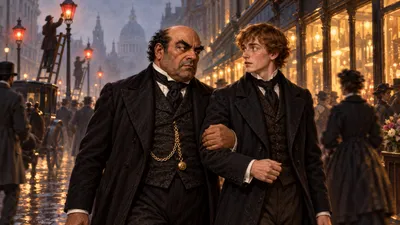
Before you read — think about:
- A new novel in three volumes cost about a guinea and a half — more than a week's wages. What difference does the price of a book make to who is able to read it at all?
- Gas was spreading through London in this period, and lamp-lighters went round at dusk with ladders. What do you know about how a great city was lit before electricity?
- Dickens spent his twenties as a shorthand reporter, writing down other people's words for a living, before he wrote any fiction. What might years of that have taught him about dialogue?
- Cards, betting and games of chance turn up constantly in Victorian novels as a way of talking about something else. What can a game stand in for?
- This novel has kept several separate stories running at once for hundreds of pages. What is a reader actually doing while a novelist holds three or four threads in the air?
Watch for these while reading:
- How Mr. Jaggers asks a question.
- Wemmick's behaviour, and where he is when he behaves that way.
- Light and shadow in the office.
- How much talking Pip does compared with the others.
- Phrases that get repeated word for word by more than one person.
Vocabulary to know:
overtaking (verb) — catching up with and passing; slanted (verb) — turned off at an angle; lamp-lighters (noun) — men employed to light the street lamps at dusk; bustle (noun) — busy, noisy activity; winding-sheets (noun) — sheets of melted wax hanging down a candle, thought to foretell a death; pool (noun) — the stakes played for in a game; toss-up (noun) — a matter that could go either way, like the flip of a coin; cringes (verb) — behaves in a servile, cowering way; supremacy (noun) — the state of being the stronger or the master; arrested (verb) — caught and held; association (noun) — a connection made in the mind between two things; identification (noun) — the act of recognising who somebody is; brewery (noun) — a building where beer is made; conceal (verb) — to hide; readiness (noun) — the state of being prepared for something at any moment; externally (adverb) — on the outside only; evaporated (verb) — disappeared like vapour; unscrewed (adjective) — loosened; relaxed out of a tightened state; twin (noun) — one of two people born together — used here for two versions of the same man; sly (adjective) — knowing and secretive; score (noun) — a set of twenty; admiration (noun) — warm approval and respect; police-office (noun) — the magistrates' court where a case was first heard; implicate (verb) — to show that somebody was involved in a crime; improbabilities (noun) — things unlikely to be true; tramping (adjective) — living by travelling on foot from place to place; broomstick (noun) — the handle of a broom — 'married over the broomstick' meant an informal wedding with no ceremony; fury (noun) — a person of violent rage; bruised (adjective) — marked by a blow; lacerated (adjective) — torn and cut; brambles (noun) — prickly wild bushes; shreds (noun) — small torn pieces; salary (noun) — regular pay for employment.
Chapter 49

Before you read — think about:
- English cathedral towns still carry the ruins of the religious houses broken up in the sixteenth century, often built into later sheds, walls and stables. What do you know about how that came about?
- Money in this book is almost never simply money — it is a favour, a debt, a punishment, or a proof of something. Why do you think novelists find money so useful?
- Most Victorian readers borrowed novels from a circulating library rather than buying them. What might that arrangement have done to the way novels were written?
- The chapters of this novel are numbered but not titled. What difference would titles make to the way a reader reads?
- A first-person narrator has to be present for everything they report. What does that rule cost a novelist, and how might a writer work around it?
Watch for these while reading:
- How the town looks and sounds to Pip on his way in.
- Miss Havisham's voice.
- What Pip chooses to tell, and what he withholds.
- Anything either of them repeats.
- The order in which Pip asks his questions.
Vocabulary to know:
credentials (noun) — evidence of one's right to be somewhere or to be believed; waywardness (noun) — the habit of behaving unpredictably and as one pleases; unfrequented (adjective) — little used; where few people go; refectories (noun) — the dining halls of a monastery; priory (noun) — a religious house governed by a prior; rooks (noun) — large black birds of the crow family that nest in colonies; supplementary (adjective) — additional; provided as an extra; discursive (adjective) — wandering from one thing to another; resolute (adjective) — determined; firmly settled; weighty (adjective) — serious and important; ivory (noun) — the hard white substance of an elephant's tusk; tablets (noun) — small flat leaves for writing on and wiping clean; tarnished (adjective) — dulled and discoloured with age; authority (noun) — a written order giving someone the power to act; irresponsible (adjective) — not required to account to anyone; absolve (verb) — to clear someone of blame or suspicion; profiting (verb) — gaining an advantage from something; averted (verb) — turned away; grievous (adjective) — very serious and causing great harm; mould (verb) — to shape something into a chosen form; diseased (adjective) — unhealthy; made ill; profound (adjective) — very deep or complete; unfitness (noun) — the state of being unsuited to something; unworthiness (noun) — the belief or condition of not deserving anything; looking-glass (noun) — a mirror; bemoan (verb) — to lament; to grieve aloud over; commiseration (noun) — sorrow felt for another's suffering; orphan (noun) — a child whose parents are dead or unknown; prolonging (verb) — making something last longer; twilight (noun) — the dim light after sunset; wilderness (noun) — a wild, neglected expanse; miniature (adjective) — very small; in tiny form; latch (noun) — a simple catch for fastening a door; threshold (noun) — the strip of floor under a doorway; beam (noun) — a long horizontal timber supporting a roof or floor; illusion (noun) — something seen that is not really there; mournfulness (noun) — an air of deep sadness; awe (noun) — a feeling of fear mixed with wonder; double-caped (adjective) — having two shoulder capes, as heavy coats of the period did; rottenness (noun) — matter that has decayed; tinder (noun) — dry material that catches fire instantly; consume (verb) — to destroy completely, as fire does; pronounced (verb) — officially declared; vestige (noun) — the smallest surviving trace; cotton-wool (noun) — soft raw cotton used in dressing injuries; collectedly (adverb) — calmly and with self-control; innumerable (adjective) — too many to be counted.
Chapter 50

Before you read — think about:
- Before hospitals were common, nursing a sick or injured person was ordinary work done at home. What do you know about how illness and injury were cared for in a household?
- A conversation can be carried on while both people are doing something else with their hands. What difference does that make to what gets said?
- What makes one person a good listener and another a bad one?
- Physical pain is famously hard to write about. How would you go about describing it to somebody who was not feeling it?
- Victorian novels did not always handle friendship between men well. What have you noticed about the way this book has drawn Pip and Herbert so far?
Watch for these while reading:
- Herbert's hands, and what they are doing while he talks.
- Where Herbert places himself in relation to Pip.
- Anything Pip asks twice.
- Subjects the two friends avoid.
- Interruptions, and who makes them.
Vocabulary to know:
dressed (verb) — cleaned and bandaged, as a wound is; sling (noun) — a loop of cloth hung from the neck to support an injured arm; blistered (adjective) — covered with raised patches of burnt skin; nurses (noun) — people who care for the sick; utmost (noun) — the greatest effort one can make; avoidance (noun) — the act of deliberately keeping away from something; resume (verb) — to take a subject up again; shrink (verb) — to draw back from something unpleasant; pegging (noun) — thumping on the floor with a stick to summon somebody; victim (noun) — a person harmed or killed by another; throttled (verb) — seized by the throat and choked; merited (verb) — deserved; reputation (noun) — what a person is generally known for; doubtful (adjective) — uncertain; open to question; vanished (verb) — disappeared suddenly and completely; grieved (verb) — felt deep sorrow; barbed (verb) — gave a sharp point to; made more wounding; genius (noun) — a spirit that shapes a person's fortunes — here, an evil one; fever (noun) — a raised body temperature, often with confusion.
Chapter 51
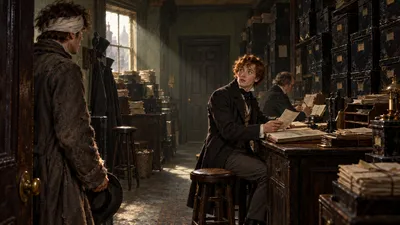
Before you read — think about:
- Smithfield was London's live cattle market until the middle of the century, standing right beside the courts and the prison. What do you know about what a working meat market in the centre of a city was like?
- What do you think you owe a person you have decided you dislike?
- How does a novelist keep a reader interested in a scene where nothing physical happens at all?
- Dickens often gives a character one piece of physical business that stands for them entirely — a handkerchief, a pen, a way of standing before a fire. What is a writer buying with a habit like that?
- In a long novel, information works rather like money. What do you think makes a piece of knowledge valuable to whoever is holding it?
Watch for these while reading:
- Where each person stands or sits in the office.
- Mr. Jaggers's handkerchief.
- Wemmick's pen.
- Words and phrases that get repeated exactly.
- How Pip presents what he knows, and in what order.
Vocabulary to know:
momentous (adjective) — of great importance in its consequences; withheld (verb) — held back; prevented from going; representations (noun) — arguments put to somebody to persuade them; stricken (adjective) — laid low; struck down; periodical (adjective) — happening at regular intervals; accounts (noun) — the written record of money received and paid out; speciality (noun) — the special character of a particular occasion; inseparable (adjective) — impossible to think of apart from something else; exhausted (verb) — used up completely; swaying (verb) — rocking gently from side to side; obdurate (adjective) — stubbornly refusing to be moved; dismissed (verb) — sent away from a job; retrospectively (adverb) — with reference to the past; latitude (noun) — the room a person has to act as they think best; generated (verb) — produced; brought into being; spawn (noun) — fish eggs laid in large numbers; here a harsh metaphor for children Jaggers imagines growing into future court cases; forsworn (verb) — made to swear falsely; bedevilled (verb) — tormented; thrown into confusion; inkling (noun) — the first faint sign of something; furlongs (noun) — units of distance, each an eighth of a mile; disgrace (noun) — public shame; chopper (noun) — a heavy cutting tool; forefinger (noun) — the finger next to the thumb; inflexible (adjective) — refusing to bend or give way; abeyance (noun) — a state of being temporarily unsettled or suspended; opportune (adjective) — arriving at exactly the right moment; shoplifting (noun) — stealing goods from a shop; snivelling (verb) — crying and sniffing in a weak, whining way; spluttering (verb) — spitting out words in a broken, uneven way; humbly (adverb) — meekly; without protest; withdrew (verb) — went out; removed himself.
Chapter 52

Before you read — think about:
- Victorian novels were reviewed at length in newspapers and magazines, and a good review could decide whether a book sold. What do you think a review is for, and who do you think it is written for?
- How does a novelist show a reader that a plan is being made, without boring them with every detail of it?
- Coaching inns and the coaches themselves were a whole industry, with timetables, yards and habits of their own. What do you know about travelling by public coach?
- What do you think makes gratitude difficult?
- How does a reader keep track of the time of day in a novel — and why might a writer want them to?
Watch for these while reading:
- Dates, days of the week, and hours.
- What Pip can and cannot do with his hands.
- How Herbert talks about the future.
- Names that come up in conversation with strangers.
- The order in which Pip does things.
Vocabulary to know:
branch-house (noun) — an office of a firm set up in another place; extension (noun) — the enlargement of something; anchor (noun) — the weight that holds a vessel in place — here, the thing that steadies a person; airy (adjective) — light and unreal; made of nothing solid; caravan (noun) — a company of travellers crossing a desert together; symptoms (noun) — signs of illness; serviceable (adjective) — usable; able to do its work; disabled (adjective) — unable to use part of the body; freak (noun) — a sudden odd notion with no reason behind it; steamer (noun) — a ship driven by steam; vessel (noun) — a ship or boat; ebb-tide (noun) — the outgoing tide; calculated (verb) — worked out by reckoning; critical (adjective) — dangerous; at which everything may turn; investigations (noun) — careful inquiries made to find something out; passports (noun) — official papers permitting a person to travel abroad; hindrance (noun) — something that gets in the way; sitter (noun) — a passenger in a rowing boat who does not row; sluice-house (noun) — a small building at a gate that controls the flow of water; limekiln (noun) — a furnace in which limestone is burned to make lime; proffered (adjective) — offered; scale (noun) — a balance — 'turned the scale' means decided the matter; injunction (noun) — an order or instruction that must be obeyed; mechanically (adverb) — without conscious thought; by-ways (noun) — small side roads; jolting (verb) — shaking roughly along; befall (verb) — to happen to somebody; octagonal (adjective) — eight-sided; font (noun) — the stone basin in a church that holds water for baptism.
Chapter 53

Before you read — think about:
- Lime-burning was an ordinary country industry — limestone burnt in a kiln to make lime for mortar and for the fields. What do you know about the small industries that used to stand out in open country?
- How does a writer make a reader feel that a place is empty?
- The moon and the tide were practical working facts for anybody who travelled at night or made a living on the water. What do you know about how people managed before there were lights everywhere?
- Some writers describe thought as if it moved at a completely different speed from events. What do you make of the idea that a mind can run faster than a clock?
- Dickens often begins a chapter with a single sentence about the weather or the light. What is an opening sentence like that doing?
Watch for these while reading:
- The moon, and how often the narrator looks at it.
- Distances, and how the narrator measures them.
- What is burning, and where.
- Pictures that come into the narrator's mind.
- What the narrator says about time passing.
Vocabulary to know:
enclosed (adjective) — fenced or walled in as private farmland; ribbon (noun) — a long narrow strip; spits (noun) — narrow points of land or sand running out into water; specks (noun) — tiny points; banked-up (adjective) — raised on a bank above the surrounding ground; reeds (noun) — tall water plants with hollow stems; flats (noun) — low level ground; excavation (noun) — a hole dug out of the ground; rude (adjective) — rough; not made with any care; vapour (noun) — a cloud of steam or smoke; truckle (adjective) — of a low bed on castors that can be pushed under another; loft (noun) — a room in the roof space of a building; irresolute (adjective) — unable to decide what to do; wick (noun) — the cord in a candle that carries the flame; noose (noun) — a loop of rope that tightens when pulled; desisted (verb) — stopped doing something; exclusion (noun) — the shutting out of something; substitution (noun) — the putting of one thing in place of another; flint (noun) — a hard stone struck against steel to make sparks; perpendicular (adjective) — standing straight up; fixture (noun) — something fastened permanently in place; unbind (verb) — to untie; lured (verb) — tempted into a trap; brass-bound (adjective) — reinforced with brass fittings; snarling (verb) — showing the teeth and growling; unclenched (verb) — opened a closed fist; brink (noun) — the very edge; inconceivable (adjective) — impossible to imagine; rapidity (noun) — great speed; misremembered (verb) — remembered wrongly by others; despised (verb) — looked down on with contempt; pardon (noun) — forgiveness; bloodshot (adjective) — red and inflamed, as eyes are after drinking or lack of sleep; slung (verb) — hung by a strap; villain (noun) — a wicked person; bullock (noun) — a young bull raised for meat; tilting (verb) — tipping to one side; alehouses (noun) — places where beer is sold and drunk; dissolved (verb) — disappeared by mixing into something else; vividness (noun) — brightness and clearness, as of a picture; crouching (verb) — bending low, ready to spring; stair-rails (noun) — the bars supporting a staircase handrail; pollards (noun) — trees cut back to the trunk so that new shoots grow from the top; flared (verb) — waved a flame about so that it blazed; smuggling (verb) — moving somebody or something secretly and illegally; scowling (verb) — frowning angrily; plummet (noun) — a lead weight on a line, used for measuring depth; stone-hammer (noun) — a heavy long-handled hammer used in quarrying; responsive (adjective) — answering; tumult (noun) — a confused uproar; unbound (adjective) — no longer tied; inflamed (adjective) — red, hot and swollen; lotion (noun) — a liquid preparation applied to the skin; thanksgiving (noun) — an expression of gratitude; post-chaise (noun) — a fast hired carriage with horses changed at each stage; tidings (noun) — news; archway (noun) — a covered passage under an arch; indistinct (adjective) — not clearly heard or seen; warrant (noun) — a document from a magistrate authorising an arrest; gainsaying (verb) — denying or contradicting.
Chapter 54

Before you read — think about:
- Steam was replacing sail on the world's shipping in exactly these years. What do you know about what changed once ships stopped depending on the wind?
- How does a novelist write a long journey without it turning into a list of places?
- Small isolated communities have a reputation for knowing more than they say. What do you know about how information travelled in places where everybody knew everybody?
- What do you think makes waiting for something you cannot control so hard?
- How much does a reader need to be told about what a character is feeling, and how much can be left to what the character does?
Watch for these while reading:
- Times, tides and distances.
- Everything the narrator notices on the water.
- How the man in the cloak behaves compared with everybody else.
- Who speaks and who stays silent.
- The weather and the light as the day goes on.
Vocabulary to know:
pea-coats (noun) — short heavy woollen coats worn by sailors; necessaries (noun) — the few things a person cannot do without; vex (verb) — to trouble or worry; high-water (noun) — the top of the tide; reaches (noun) — long straight stretches of a river between bends; oarsmen (noun) — people who row; colliers (noun) — ships that carry coal; coasting-traders (noun) — vessels that carry goods along the coast rather than overseas; tithe (noun) — a tenth part; scullers (noun) — small boats rowed with a pair of short oars, or the people rowing them; skiffs (noun) — light narrow rowing boats; tiers (noun) — rows of ships moored side by side; coal-whippers (noun) — dock labourers who hauled coal out of a ship's hold by rope and pulley; counterweights (noun) — weights used to balance another weight; bowsprit (noun) — the spar running forward from a ship's bow; stern (noun) — the back of a boat; boat-cloak (noun) — a long cloak worn on the water; river-pilot (noun) — someone who guides vessels along a river; hempen (adjective) — made of hemp fibre; hawsers (noun) — thick ropes used for mooring or towing ships; buoys (noun) — floating markers anchored in water; cleaving (verb) — cutting a way through; figure-head (noun) — a carved figure fixed under a ship's bowsprit; capstans (noun) — upright drums turned by hand to wind in a ship's cable; bulwarks (noun) — the raised sides of a ship above the deck; lightermen (noun) — men who work the flat barges that carry cargo between ship and shore; fenders (noun) — pads hung over a boat's side to stop it knocking; warily (adverb) — watchfully and with caution; token (noun) — a sign of something; molestation (noun) — interference; being troubled by somebody; gunwale (noun) — the upper edge of a boat's side; shallows (noun) — places where the water is not deep; mudbanks (noun) — ridges of mud left by a tide; ballast-lighters (noun) — flat barges used to carry heavy material that steadies a ship; shoal-lighthouse (noun) — a small light built over shallow water to warn shipping; haze (noun) — a thin mist; gull (noun) — a seabird; tavern (noun) — an inn where drink and lodging can be had; thowels (noun) — the pins in a boat's side that an oar works against; causeway (noun) — a raised road or landing built up over wet ground; rudder (noun) — the flat piece at a boat's stern used for steering; boat-hook (noun) — a pole with a hook for pulling a boat in; apportioned (verb) — shared out; bandboxes (noun) — light boxes for hats and collars; bloated (adjective) — swollen out of shape; four-oared (adjective) — rowed by four oars; physic (noun) — medicine, especially of a purging kind; vacillating (verb) — wavering; unable to hold to an opinion; impracticable (adjective) — impossible to carry out; caged (adjective) — shut in as if in a cage; feasible (adjective) — able to be done; reconnoitre (verb) — to go ahead and inspect a place before venturing into it; complied (verb) — did as asked; embarked (verb) — gone aboard a vessel; adjured (verb) — urged somebody solemnly to do something; rudder-lines (noun) — the cords by which a steersman works the rudder; athwart (adverb) — across; surrender (verb) — to give oneself up; capsized (verb) — overturned in the water; mill-weirs (noun) — dams built across a stream to drive a mill wheel.
Chapter 55
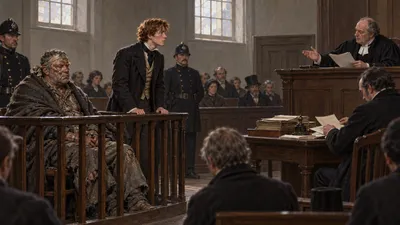
Before you read — think about:
- English law took a convicted felon's property for the Crown. What do you know about how the law of that period treated a criminal's family and dependants?
- The London docks employed thousands of people in this period, in trades that had nothing to do with going to sea. What do you know about the kinds of work a great port creates around it?
- What do you think makes a friendship survive a long separation?
- Dickens is very good at people who mean well and say exactly the wrong thing. What makes that funny rather than merely awkward?
- The novel is called Great Expectations. What do you think a title like that promises a reader at the start, and what has it come to mean for you by this point in the book?
Watch for these while reading:
- How Pip describes what he has decided not to do.
- How Herbert says difficult things.
- Wemmick's manner away from the office.
- Money, and who is counting it.
- Rooms and houses Pip goes into, and how he feels in them.
Vocabulary to know:
Sessions (noun) — the periodic sittings of a criminal court; querulous (adjective) — complaining in a peevish way; memorialise (verb) — to make a formal written appeal to an authority; outlaw (noun) — a person put outside the protection of the law; sickened (verb) — made weary and disgusted; banking-house (noun) — a firm that keeps and lends money; justification (noun) — a reason offered for doing something; portentous (adjective) — solemn and self-important, as if announcing something grave; exordium (noun) — the formal opening of a speech; engaging (adjective) — charming; winning one's liking; preoccupied (adjective) — with the mind already fully taken up by something else; lingering (adjective) — staying on and not going away; dutifully (adverb) — out of a sense of duty; seaport (noun) — a town with a harbour for seagoing ships; knuckles (noun) — the joints of the fingers; disastrous (adjective) — ending in complete failure; issue (noun) — the outcome of something; instruments (noun) — people used by somebody else to carry out their plans; beforehand (adverb) — ahead of somebody else; earlier; fidgety (adjective) — restless and unable to sit still; sleeker (adjective) — smoother and glossier; fishing-rod (noun) — a pole with a line for catching fish; kid (noun) — fine soft leather made from a young goat's skin; beheld (verb) — saw; damsel (noun) — a young unmarried woman; pillar (noun) — an upright column supporting a building; backer (noun) — a supporter who stands behind somebody; best-man (noun) — the bridegroom's chief attendant at a wedding; pew-opener (noun) — a church attendant who unlocked the box pews for worshippers; devolved (verb) — passed as a duty to somebody; scandalised (adjective) — shocked by something improper; estimable (adjective) — deserving respect; briskness (noun) — quick cheerful energy; heedful (adjective) — taking careful thought; bagatelle (noun) — a table game in which balls are struck into holes; violoncello (noun) — a cello — a large stringed instrument played upright; melodious (adjective) — sweet-sounding; fowls (noun) — domestic birds kept for eggs and meat.
Chapter 56
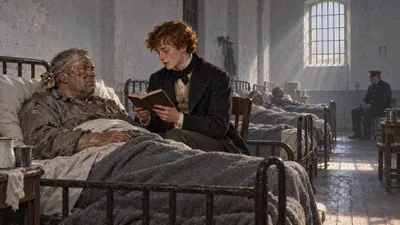
Before you read — think about:
- Novels are divided into chapters, and a reader almost always pauses at the break. What do you think that pause does to a reader, and how might it shape where a novelist chooses to end a chapter?
- Dickens argued all his life, in print, about the state of English institutions — prisons, schools, workhouses and courts. What do you think a novelist can do to a public argument that a pamphlet cannot?
- What is the difference between explaining yourself and excusing yourself?
- What do you know about who attended trials in the nineteenth century, and why they went?
- A novelist can either sum up a stretch of time in a few sentences, or slow down and give a single scene in full. What do you think a writer gains by choosing one over the other?
Watch for these while reading:
- How much either of them says, and how little.
- Weather and light in the courtroom.
- Numbers, and how precisely the narrator gives them.
- How other people behave towards Pip and towards the man he visits.
- Anything the narrator says he still remembers as he writes.
Vocabulary to know:
interval (noun) — the time between two events; ribs (noun) — the curved bones of the chest; lungs (noun) — the organs used for breathing; prison-breaker (noun) — somebody known for escaping from custody; recurring (adjective) — happening again and again at intervals; postponement (noun) — a putting off to a later date; unsay (verb) — to take back something already said or established; indelible (adjective) — impossible to rub out; penned (verb) — shut into a small enclosure; sheriffs (noun) — the chief civic officers of a county or city; nosegays (noun) — small bunches of sweet-smelling flowers, once carried in court against infection; gewgaws (noun) — showy ornaments of little value; criers (noun) — court officers who call for silence and announce proceedings; gallery (noun) — an upper floor of seats for spectators; exile (noun) — forced removal from one's own country; indulgence (noun) — the giving way to a desire; scourge (noun) — a cause of great suffering to others; haven (noun) — a place of safety; proscribed (adjective) — forbidden by law to be there; shaft (noun) — a narrow beam of light; doomed (verb) — formally sentenced; fragments (noun) — small broken pieces; petition (noun) — a formal written request to an authority; absorbed (adjective) — completely taken up by something; roam (verb) — to wander without a fixed route; mansions (noun) — large town houses; harshly (adverb) — severely; unkindly; malefactors (noun) — wrongdoers; criminals; pressures (noun) — small presses of the hand used as signals; film (noun) — a thin covering that dulls the eyes; governor (noun) — the official in charge of a prison; beckoned (verb) — signalled with a hand for somebody to come or go; sinner (noun) — somebody who has done wrong.
Chapter 57

Before you read — think about:
- Dickens's character names are famous in themselves — Pumblechook, Wopsle, Havisham, Magwitch. What do you think a novelist is doing when they choose a name, and can a name be too obviously chosen?
- A novelist can play a stretch of time out as a scene, with speech and gesture, or fold it into a paragraph of summary. What does a reader get from each, and what does each cost?
- Dickens's books were reprinted abroad without his permission and without any payment to him, and he argued about it publicly for years. What do you think an author is owed for work that travels beyond their own country?
- London's docks, and the counting-houses that traded through them, employed a great many people in this period. What do you know about how goods and money moved through a port city?
- A novel this long asks a reader to carry a great many people and places in their head at once. What helps you keep track, and what do you do when you have lost the thread?
Watch for these while reading:
- How the narrator describes what he is not sure really happened.
- The rooms in the Temple, and how Dickens describes them.
- The names characters use for one another.
- Objects that get more attention than they seem to deserve.
- Words and images Dickens repeats, and how far apart he places them.
Vocabulary to know:
tenancy (noun) — the holding of a property as a tenant; determine (verb) — to come to an end — used of a lease or tenancy; underlet (verb) — to let a property to somebody else while still holding the lease; perception (noun) — the clear seeing or understanding of something; harassed (adjective) — worn out by being troubled again and again; furnace (noun) — an enclosed fire for great heat; jeweller (noun) — a dealer in jewellery; slender (adjective) — thin; barely enough; interminable (adjective) — seeming to have no end; implored (verb) — begged desperately; phases (noun) — stages that follow one another; transformations (noun) — complete changes of form; moderation (noun) — the avoiding of extremes; nourishment (noun) — food that keeps a person alive and well; indite (verb) — to compose and write out; pen-tray (noun) — a shallow dish on a desk for holding pens; wield (verb) — to handle a heavy tool or weapon; crow-bar (noun) — an iron bar used as a lever; sledgehammer (noun) — a large heavy hammer swung with both hands; downstroke (noun) — a downward stroke of a pen; upstroke (noun) — an upward stroke of a pen; inkstand (noun) — a stand holding ink and pens; orthographical (adjective) — to do with spelling; stumbling-block (noun) — an obstacle that trips one up; blot (noun) — a spot of spilled ink; unbounded (adjective) — without limit; deferred (verb) — put off until later; legacies (noun) — gifts of money or property left in a will; bilious (adjective) — suffering from an upset stomach and bad temper with it; shovelful (noun) — as much as a shovel will hold — here, of news; till (noun) — the drawer in a shop where money is kept; cash-box (noun) — a lockable box for money; annuals (noun) — flowering plants that live for a single season; unrestricted (adjective) — with nothing held back; unassertive (adjective) — not pushing oneself forward; tureen (noun) — a deep covered dish for serving soup; outspread (adjective) — spread out wide; rampages (noun) — outbursts of violent temper — the household word for Mrs. Joe's rages; whisker (noun) — the hair on a man's cheek; coverlet (noun) — a bedspread; husky (adjective) — hoarse with feeling; receipt (noun) — a written acknowledgement that money has been paid; errant (adjective) — wandering; straying from the right path; hushing (adjective) — quieting and comforting; worthier (adjective) — more deserving; occupation (noun) — a job or trade; sped (verb) — fared; got on.
Chapter 58
Before you read — think about:
- A country town's surgeon or apothecary was often one of the few educated men in it, and knew everybody's business. What do you know about who provided medical care outside the cities, and what standing they had?
- Dickens is often at his plainest when he describes the countryside. What is a writer doing when the prose suddenly gets simple?
- The last chapters of a long novel have to tidy a great deal away. What do you look for in an ending, and what makes one feel earned rather than arranged?
- What do you think it takes to pay off a debt of gratitude, as opposed to a debt of money?
- Dickens often ends a long paragraph with one very short sentence. What can a short sentence do in that position?
Watch for these while reading:
- How people in the town behave towards Pip.
- The route Pip takes through the village, and which way round he chooses to go.
- The weather and the season.
- What Pip has come to say.
- Comparisons Dickens makes to animals, and who gets them.
Vocabulary to know:
demeanour (noun) — the way a person behaves towards others; assign (verb) — to allot or give out; accommodation (noun) — lodging; a place to stay; auction (noun) — a public sale where goods go to the highest bidder; effects (noun) — a person's movable belongings; whitewashed (adjective) — painted with a thin white lime wash; inscriptions (noun) — words written or cut on a surface; auctioneer (noun) — the person who conducts a sale by auction; catalogue-compiler (noun) — somebody who draws up the list of items for a sale; nocturnal (adjective) — happening in the night; muffin (noun) — a soft round bread cake eaten toasted; watercress (noun) — a peppery salad plant grown in running water; abstinence (noun) — the deliberate going without of something; downfall (noun) — a fall from prosperity; fishily (adverb) — with a cold, staring, fish-like look; behoof (noun) — benefit or advantage; debilitating (adjective) — weakening; shay-cart (noun) — a light two-wheeled cart; pig-headedness (noun) — stubbornness; pretender (noun) — somebody who falsely claims a position or merit; arrogance (noun) — an offensive sense of one's own importance; untruthfulness (noun) — the habit of lying; soaring (verb) — flying high; barefoot (adverb) — with nothing on the feet; mistress (noun) — a woman in charge of a school; roundabout (adjective) — indirect; going the long way; limes (noun) — large shade trees with heart-shaped leaves; chestnut-trees (noun) — tall broad trees bearing spiny fruit; midsummer (noun) — the middle of summer; deal (noun) — plain pine board, used for cheap furniture; restoring (adjective) — bringing back strength or calm; irrevocable (adjective) — impossible to take back; quivering (adjective) — trembling; charity (noun) — goodwill towards other people; farthing (noun) — a coin worth a quarter of a penny — the smallest sum there was; chimney-corner (noun) — the seat beside a fireplace; finger-post (noun) — a signpost with a pointing hand on it; composition (noun) — an agreement with creditors to settle debts by instalments; ample (adjective) — more than enough; undivided (adjective) — belonging to one person alone; frugally (adverb) — carefully and without waste; mints (noun) — enormous sums — a mint is where coins are made; inaptitude (noun) — unfitness for a task.
Chapter 59
Before you read — think about:
- Some novels are still read a century and a half after they were written, and others vanish within a decade. What do you think keeps a book being read long after the world it describes has gone?
- Great cities in this period grew faster than anyone could plan for. What do you know about how London changed across Dickens's lifetime?
- Some readers say a book is a different book the second time. What do you think you would notice on a second reading of this one that you could not have noticed on the first?
- A narrator writing years afterwards has decided how much to tell. What have you noticed about the things this particular narrator chooses to keep back?
- Nineteenth-century readers wrote to authors constantly about what became of their characters. Why do you think readers want to know what happens after the last page?
Watch for these while reading:
- The time of day, and how it changes.
- Things that are in the same place as before.
- How much the narrator tells you about his own feelings.
- Small gestures rather than speeches.
- Sentences that echo earlier ones in the book.
Vocabulary to know:
hale (adjective) — strong and healthy, especially in older age; fenced (verb) — shut in as if by a fence; stool (noun) — a seat with no back; churchyard (noun) — the burial ground round a church; tombstone (noun) — a stone marking a grave; sacred (adjective) — set apart in honour of somebody; matronly (adjective) — having the settled manner of a married woman with a family; wedding-ring (noun) — the plain ring worn to show that one is married; eloquence (noun) — the power to express something forcefully; bachelor (noun) — an unmarried man; foremost (adjective) — most important; first in place; ill-treatment (noun) — cruel or harsh handling; release (noun) — a setting free from something that has held one; abundance (noun) — plenty; more than enough; declined (verb) — drawn towards its close; mounds (noun) — low heaps of earth or rubble; silvery (adjective) — pale and shining like silver; scatter (verb) — to drive away in all directions; trace (verb) — to follow the outline of something; majesty (noun) — impressive dignity; indescribable (adjective) — impossible to put into words; ensued (verb) — followed on; resistance (noun) — the act of refusing to give way; wanderer (noun) — somebody who lives far from home and moves about; sufficient (adjective) — enough; incompatible (adjective) — unable to exist alongside something else.
About the Author
Charles Dickens (1812–1870) was the most popular English novelist of the nineteenth century and one of the most widely read writers who has ever lived. When he was twelve his father was imprisoned for debt and Dickens was sent to paste labels on pots in a blacking factory, an experience of sudden humiliation and lost prospects that he kept secret for most of his life and returned to, in disguised forms, in book after book. He published his novels in cheap monthly or weekly instalments, which meant enormous audiences could afford them and which shaped how he wrote: strong chapter endings, running mysteries, and a huge cast of vividly named characters. Great Expectations, written near the end of his career and narrated in the first person, is his most controlled and most personal book about class and shame.
Great Expectations appeared as a weekly serial in 1860–61 in Dickens's own magazine All the Year Round, though its events are set a generation or two earlier, in an England of stagecoaches, hulks (decommissioned warships moored in the estuary and used as floating prisons), and the transportation of convicts to Australia. It was a society in which social rank was assumed to be visible — in your speech, your hands, your boots, your table manners — and in which a person born into a labouring family could not simply decide to belong somewhere else. At the same time, new money from trade and manufacturing was unsettling those lines, so that a gentleman might be someone with land and ancestry or someone who had merely bought the appearance of both. Victorian readers also lived with a criminal law that had until recently hanged people for minor property offences, which is part of why the novel treats convicts, guilt, and respectability as open questions rather than settled categories.