

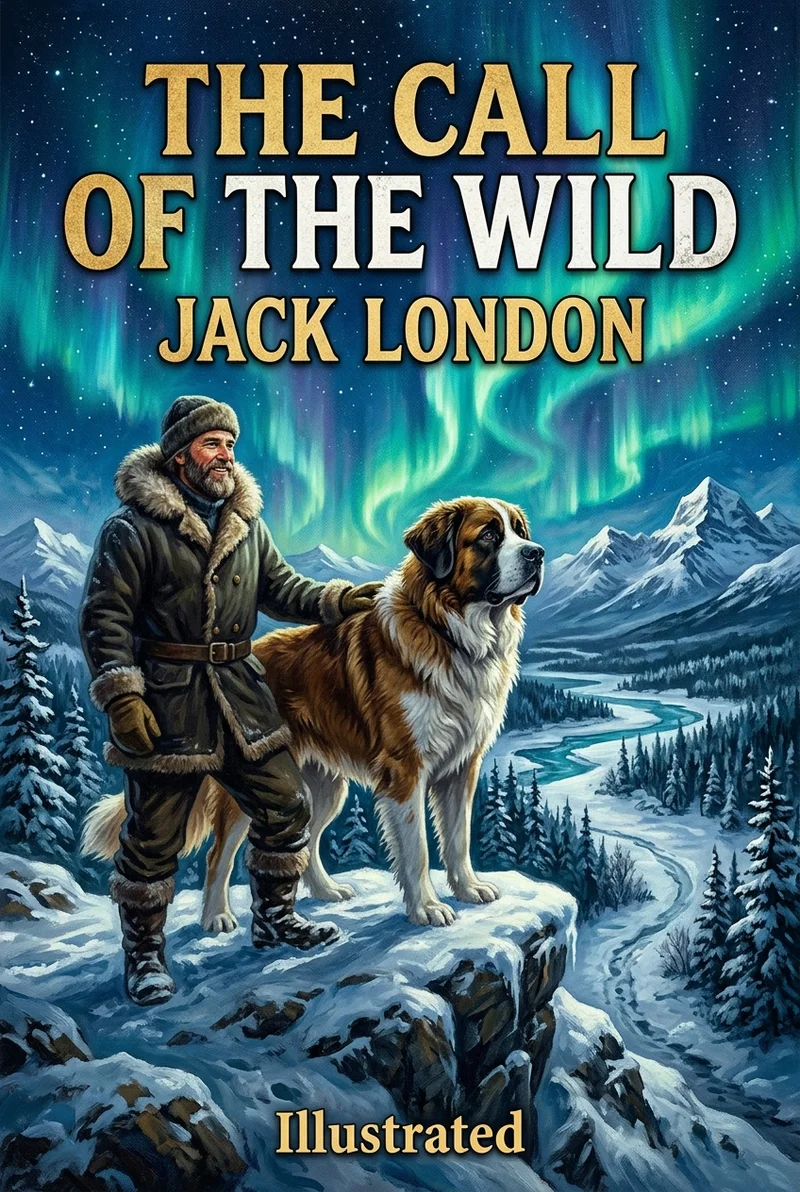
About This Book
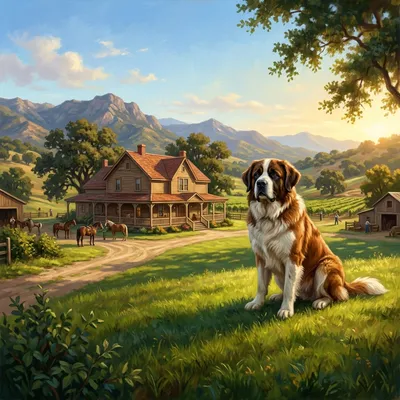
"The Call of the Wild" follows the extraordinary journey of Buck, a powerful and comfortable dog living on a sunny estate in California. His peaceful life is shattered when he is stolen and sold to be used as a sled dog during the Klondike Gold Rush. Suddenly thrust into a brutal, freezing, and unforgiving environment, Buck must rely on his instincts to survive. As Buck travels deeper into the treacherous Yukon Territory, he faces fierce rivalries with other sled dogs, harsh human masters, and the relentless forces of nature. The story explores his transformation from a civilized pet into a resilient survivor who feels an ancient, primal calling drawing him toward the wilderness.
This classic novel offers a gripping adventure that explores themes of survival, resilience, and the deep connection between animals and the natural world. It challenges readers to consider what happens when civilization is stripped away and primal instincts take over, all told through the unique and compelling perspective of a dog.
Meet the Characters

More about Buck
Buck is a strong and pampered dog who lives a comfortable life on a large estate in sunny California. He is proud, intelligent, and completely unaware of the harsh world outside his peaceful home.

More about John Thornton
John Thornton is an experienced frontiersman who understands the harsh reality of the Yukon but maintains a compassionate heart. He respects animals and treats them with kindness rather than cruelty.

More about Francois
Francois is a professional sled driver who works for the Canadian government delivering mail across the frozen north. He is a strict but fair master who expects hard work from his dogs but understands their needs.

More about Spitz
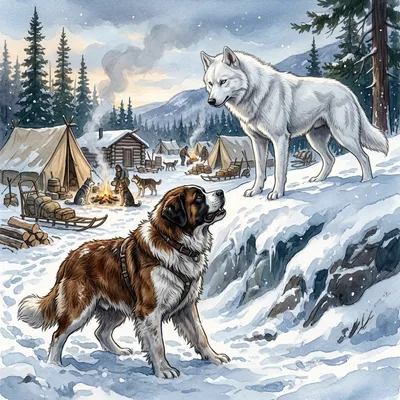
Spitz is an experienced and ruthless sled dog who has survived the Yukon by being dominant and unforgiving. He is the alpha dog of the team and quickly views any new, strong dog as a threat to his position.
Pre-Reading Discussion Questions
- Have you ever had an experience that forced you to adapt quickly to a completely new environment?
- What do you think is the difference between living in a "civilized" world versus the wild?
- How much do you rely on your instincts versus things you have been taught?
- What qualities are most important when trying to survive in a harsh and unforgiving place?
- Do you believe animals experience emotions and thoughts similar to humans? Why or why not?
Themes & Big Ideas to Track
- The struggle for survival and the "law of club and fang."
- The conflict between civilization and the natural world.
- The power of instinct and ancestral memory.
- The varying relationships between humans and animals, ranging from cruel to deeply loving.
- The idea of mastery and what it means to be a leader.
Chapter-by-Chapter Study Guide
Chapter 1: Into the Primitive
Before you read — think about:
- You may know this story from a movie about a dog in the gold rush. What people, animals, and places do you already picture — and how will you notice what is actually on THIS page?
- What is your earliest memory of a dog you knew well, and what was that dog like?
- A California ranch in the 1890s ran on horses, servants, and a telegraph, not cars or phones. How would that change an ordinary day at home?
- How much of who a person is comes from the place they grew up in?
- How can a writer tell a story through an animal's senses without making the animal talk like a person?
Watch for these while reading:
- Judge Miller's place in the Santa Clara Valley: the land, the house, and everyone who lives on it.
- The narrator's habit of telling you what Buck is thinking, and how that differs from an ordinary animal story.
- The work people and dogs do around Judge Miller's place, and the tools they use.
- Every mention of money in this chapter: wages, debts, prices. London keeps careful count of what things cost.
- Which people, animals, and places actually appear in this chapter, compared with any Call of the Wild movie you already know.
Vocabulary to know:
brumal (adjective) — Wintry, cold, or relating to winter.; ferine (adjective) — Wild, untamed, or savage.; demesne (noun) — A large estate or territory ruled over by a master.; populous (adjective) — Crowded with inhabitants or heavily populated.; obscurely (adverb) — In an inconspicuous, hidden, or unnoticeable way.; imperiously (adverb) — In a commanding, arrogant, or domineering manner.; sated (adjective) — Completely full and satisfied, especially from food or comfort.; egotistical (adjective) — Excessively proud of oneself and self-centered.; insular (adjective) — Isolated or narrow-minded due to living in a self-contained world.; progeny (noun) — Children, offspring, or descendants.; treachery (noun) — An act of betrayal, disloyalty, or deceit.; unwonted (adjective) — Unusual, unfamiliar, or out of the ordinary.; intimate (verb) — To hint, imply, or communicate something subtly.; futilely (adverb) — Pointlessly or uselessly, achieving no result.; lacerated (adjective) — Deeply cut, torn, or mangled.; impending (adjective) — About to happen; looming or approaching soon.; calamity (noun) — A major disaster, tragedy, or sudden misfortune.; unkempt (adjective) — Messy, untidy, or uncombed in appearance.; retaliated (verb) — Struck back or responded in kind to an attack.; metamorphosed (verb) — Transformed completely in appearance, character, or nature.; surcharged (adjective) — Filled to overflowing with emotion, energy, or power.; exquisite (adjective) — Extremely sharp, intense, or severe in feeling or pain.; soliloquized (verb) — Spoke thoughts aloud to oneself while alone.; consignment (noun) — A batch of goods or animals delivered for shipment or trade.; ruction (noun) — A noisy disturbance, fight, or violent quarrel.; primitive (adjective) — Belonging to an ancient, wild, or unsophisticated state of nature.; latent (adjective) — Hidden, dormant, or present but not yet visible or active.; docilely (adverb) — Submissively, quietly, and easily managed.; conciliate (verb) — To soothe, appease, or win over someone through peaceful action.; uncouth (adjective) — Crude, unrefined, or lacking good manners.; swarthy (adjective) — Having a dark or sun-tanned skin complexion.; morose (adjective) — Gloomy, sullen, and bad-tempered.; incurious (adjective) — Lacking interest or curiosity; indifferent.; pervaded (verb) — Spread throughout every part of a space or atmosphere.; paddocks (noun) — Enclosed fields or pastures where animals are kept.; boded (verb) — Served as a sign or omen of a particular future result.; fawned (verb) — Behaved with exaggerated affection or servility to gain favor.; weazened (adjective) — Withered, shriveled, or wrinkled with age.; despatches (noun) — Official written messages or reports sent with speed..
Chapter 2: The Law of Club and Fang
Before you read — think about:
- You may already picture a sled-dog team from a movie, a photo, or a nature show. What does that team look like in your mind — and how will you notice the dogs, men, and places that are actually on THIS page?
- A Yukon camp in the 1890s had a fire, a pot, and no electric light or phone. How is that different from an ordinary evening at your house?
- How does extreme cold change what matters in a day? What becomes important that usually is not?
- What do you already know about who lived and worked in the Yukon Territory in the 1890s?
- How can an author make an animal's thoughts believable without making the animal talk like a person?
Watch for these while reading:
- The dogs already in the team, including Dave, Sol-leks, Billee and Joe, and how each one behaves in harness.
- Spitz's manner toward the newer dogs on the team.
- The daily routine of the trail: harnessing, breaking camp, feeding, and where the dogs sleep at night.
- Passages where the narrator reaches back past Buck's own life to the dogs and wolves that came before him.
- Which dogs, men, and camp settings actually appear in this chapter, compared with any sled-dog movie you already know.
Vocabulary to know:
primordial (adjective) — existing from the earliest times; ancient, wild, and untamed; imperative (adjective) — absolutely necessary; urgent and requiring immediate attention; vicarious (adjective) — experienced through watching or reading about another person's actions rather than doing them yourself; combatants (noun) — people or animals involved in a fight or battle; antagonist (noun) — an opponent or enemy in a conflict or struggle; assailants (noun) — attackers who launch a physical assault; draught (adjective) — used for pulling heavy loads, such as a cart or sled; tuition (noun) — teaching, instruction, or guidance; introspective (adjective) — quiet and thoughtful, often examining one's own feelings and thoughts; perpetual (adjective) — continuing forever without stopping; constant; malignant (adjective) — evil, harmful, or filled with intense malice; appeasement (noun) — the act of giving in to demands in order to avoid conflict or bring peace; writhing (adjective) — twisting and squirming in pain, anger, or discomfort; diabolically (adverb) — wickedly or devilishly; in a cruel and clever way; incarnation (noun) — the living embodiment or physical form of a specific quality or idea; belligerent (adjective) — hostile, aggressive, and eager to start a fight; discomfiture (noun) — a feeling of embarrassment, unease, or confusion; prowess (noun) — extraordinary skill, courage, or ability in a specific activity; indiscretion (noun) — an unwise or careless act showing poor judgment; consternation (noun) — a sudden feeling of anxiety, dismay, or confusion caused by something unexpected; ignominiously (adverb) — shamefully, embarrassingly, or in a way that causes a loss of dignity; disconsolate (adjective) — extremely unhappy, gloomy, and unable to be comforted; unmolested (adjective) — left alone without being bothered, harmed, or disturbed; placatingly (adverb) — in a gentle or soothing manner intended to make someone less angry; arduous (adjective) — involving strenuous effort; difficult and exhausting; spasmodically (adverb) — in sudden, brief, or jerky movements; courier (noun) — a messenger carrying important documents, packages, or messages; trouncing (noun) — a severe defeat or physical beating; forbiddingly (adverb) — in a stern, unwelcoming, or threatening manner; indispensable (adjective) — absolutely necessary; something you cannot do without; ravenous (adjective) — extremely hungry or greedy for food; fastidiousness (noun) — extreme care or pickiness regarding cleanliness, order, or standards; malingerer (noun) — someone who pretends to be sick or injured to get out of work or duty; retrogression (noun) — the act or process of returning to a lower, simpler, or worse state; callous (adjective) — hardened against feeling; insensitive or unfeeling toward pain; loathsome (adjective) — causing feelings of disgust, hatred, or intense dislike; nutriment (noun) — nourishment or food that sustains strength and health; acuteness (noun) — sharpness, keenness, or sensitivity of senses or mind; cadences (noun) — rhythmic flows or beats of sound, music, or voices.
Chapter 3: The Dominant Primordial Beast
Before you read — think about:
- You may know this story from a movie about dogs in the North. What people, dogs, and winter places do you already picture — and how will you notice what is actually on THIS page?
- In a Yukon winter in the 1890s, frozen rivers and lakes were the roads. There were no cars and no plowed highways. How is that different from how you travel now?
- Some people describe instinct as a kind of inherited memory. What do you think that means?
- What do you already know about wolves, and where did you learn it?
- How can an author describe the same kind of landscape many times over without it becoming dull?
Watch for these while reading:
- The country the team crosses, including Lake Le Barge, the Thirty Mile River and the Hootalinqua, and how the weather sets the pace.
- The relationship between Buck and Spitz, and the small everyday things it keeps coming down to.
- Perrault and Francois at work: what each man is responsible for, and how differently they handle the dogs.
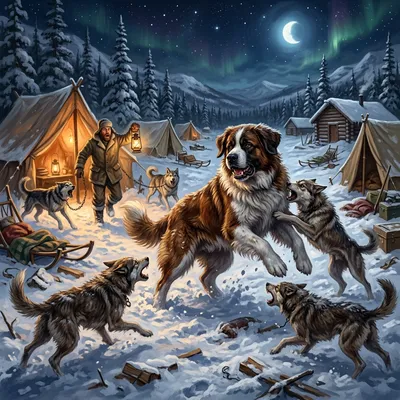
- Whatever lives at the edges of the camps at night, and how the sled dogs regard it.
- Which dogs, men, and stretches of trail actually appear in this chapter, compared with any Call of the Wild movie you already know.
Vocabulary to know:
trace (noun) — One of the two side straps or chains connecting a pulled sled to a harnessed dog.; quarter (noun) — Mercy or pity shown to a defeated opponent or enemy.; champion (noun) — The dominant, victorious leader of the pack who has defeated all rivals.; deliberateness (noun) — Careful, slow, and intentional behavior that avoids hasty mistakes.; precipitate (adjective) — Done suddenly or rashly without careful thought or planning.; divined (verb) — Discovered, understood, or figured out through intuition or subtle signs.; bleak (adjective) — Cold, miserable, dreary, and unwelcoming.; perpendicular (adjective) — Rising straight up at a sharp ninety-degree angle; steep or vertical.; loath (adjective) — Unwilling, reluctant, or disinclined to do something.; trespasser (noun) — Someone or something that enters another's territory or property without permission.; supremacy (noun) — The state of having supreme power, authority, or highest rank.; heralded (verb) — Signaled, announced, or indicated the arrival of something.; pandemonium (noun) — Wild and noisy disorder or confusion; complete chaos.; skulking (adjective) — Moving around stealthily, quietly, or nervously to avoid being noticed.; score (noun) — A group or set of twenty items or individuals.; gaunt (adjective) — Extremely thin and bony from hunger, suffering, or age.; capsized (verb) — Overturned or flipped upside down.; famished (adjective) — Extremely hungry or starving.; draggled (adjective) — Wet, dirty, and limp from being dragged through mud or water.; slavered (adjective) — Covered with drool or saliva.; onset (noun) — The beginning or initial attack of something violent or intense.; beset (verb) — Surrounded and attacked from all sides.; trice (noun) — A very short moment or instant.; adversary (noun) — An opponent, enemy, or competitor in a conflict or contest.; jugular (noun) — A major vein in the neck that carries blood from the head back to the heart.; goaded (verb) — Provoked, urged, or driven to take action or become angry.; plight (noun) — A dangerous, difficult, or unfortunate situation.; grievously (adverb) — Severely, terribly, or dangerously, causing deep pain or harm.; marauders (noun) — Raiders or bandits who roam around looking for loot or prey.; contemplation (noun) — Deep, quiet, and thoughtful observation or reflection.; exertion (noun) — Physical or mental effort put into an activity.; defied (verb) — Openly resisted, challenged, or refused to yield to something.; eddies (noun) — Circular currents of water, air, or snow moving against the main flow.; daunted (verb) — Intimidated, discouraged, or made fearful.; resolutely (adverb) — In a firm, determined, and unwavering manner.; skirted (verb) — Moved along the outer edge or border of an area.; singed (verb) — Slightly burned or scorched at the edges or surface.; hoisted (verb) — Raised, lifted, or pulled upward using ropes or strength.; conspicuous (adjective) — Easily seen, noticeable, or standing out clearly.; rejoinder (noun) — A sharp, quick, or clever reply to a statement.; preeminently (adverb) — Above all else; to a superior or distinguished degree.; bide (verb) — To wait patiently for a favorable opportunity.; incomprehensible (adjective) — Impossible or extremely difficult to understand.; shirked (verb) — Avoided or neglected a responsibility, duty, or work.; abjectly (adverb) — In a completely miserable, humble, or hopeless manner.; mutiny (noun) — Open rebellion against authority, especially by soldiers or sailors against commanders.; prostrate (adjective) — Lying stretched out face downward on the ground, helpless or submissive.; culprits (noun) — People or animals guilty of a crime, misdeed, or fault.; craftily (adverb) — In a sly, cunning, or deceitful way.; covert (adjective) — Secret, hidden, or disguised rather than open.; insubordination (noun) — Refusal to obey authority or orders; disobedience.; bickering (noun) — Petty, irritable arguing or squabbling over unimportant matters.; jangling (noun) — Harsh, discordant, or irritating sound and noise.; apprehension (noun) — Anxiety or fearful expectation that something bad will happen.; ordained (adjective) — Established, ordered, or decreed by authority or fate.; nocturnal (adjective) — Occurring, active, or done during the night.; eerie (adjective) — Strange, mysterious, and causing a feeling of fear or unease.; travail (noun) — Painful, laborious, or agonizing effort and struggle.; plaint (noun) — A mournful cry or expression of sorrow and grief.; recuperated (verb) — Recovered health, strength, or energy after illness or exhaustion..
Chapter 4: Who Has Won to Mastership
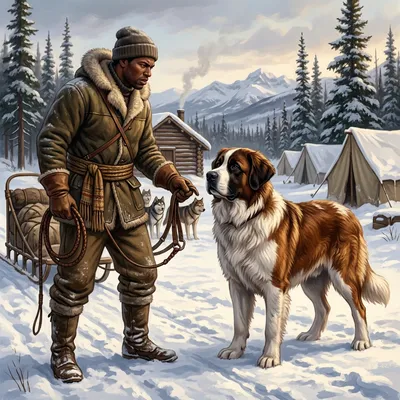
Before you read — think about:
- What do you already picture a sled-dog team looking like — from a movie, a photo, a nature show — and how will you notice the team on THIS page?
- What makes a team run well, beyond the skill of the individuals on it?
- In the 1890s, winter mail in the Yukon moved by dog sled. How does a letter or a package reach you now, and what would that old job demand that yours does not?
- What do you owe to the people, or the animals, who do hard work for you?
- Has anyone ever put you in charge of something? What was the hardest part of it?
Watch for these while reading:
- How Francois and Perrault decide the order of the team, and the reasons they give for it.
- The numbers behind the run: miles per day, pounds of mail, and how many dogs are pulling.
- Passages where the narrator reaches back past Buck's own life.
- Dave and Sol-leks in the traces, and the pride each of them takes in the work.
- Which dogs, drivers, and trail details actually appear in this chapter, compared with any sled-dog movie you already know.
Vocabulary to know:
mastership (noun) — Complete dominance, control, or leadership over others.; Sunland (noun) — The warm, sunny southern region where Buck lived before being brought to the North.; dog-busters (noun) — People who tame, break, or train wild sled dogs.; mushers (noun) — Drivers or handlers of dog sled teams.; coveted (adjective) — Eagerly wished for or highly desired by many.; obdurate (adjective) — Stubbornly refusing to change one's mind or yield.; remotest (adjective) — Farthest away in distance, time, or relationship.; complied (verb) — Obeyed a command, wish, or rule.; forevalued (verb) — Estimated or appreciated the worth of something in advance.; undervalued (verb) — Failed to fully appreciate or rate highly enough.; excelled (verb) — Did extremely well or surpassed others in a skill.; unruly (adjective) — Disorderly, disruptive, and difficult to control.; solidarity (noun) — Unity or agreement among individuals with a common purpose.; celerity (noun) — Swiftness or speed of movement.; infrequent (adjective) — Not occurring often; rare.; deluged (verb) — Overwhelmed with a large amount of something, like a flood.; aspired (verb) — Directed one's hopes or ambitions toward achieving something.; riddled (verb) — Filled or pierced with many holes.; monotonous (adjective) — Dull, tedious, and repetitively uniform.; fivescore (noun) — A group of one hundred (five times twenty).; potent (adjective) — Having great power, influence, or effect.; lapsed (verb) — Faded away, slipped, or passed out of active use.; quickened (verb) — Became more active, animated, or fast.; resiliency (noun) — The ability to spring back or recover quickly from strain or hardship.; suppressedly (adverb) — Done in a quiet, held-back, or restrained manner.; friction (noun) — The resistance encountered when one surface moves against another.; unapproachable (adjective) — Distant, unfriendly, or difficult to talk to.; consultation (noun) — A meeting to discuss something or seek expert advice.; prodded (verb) — Poked or jabbed with a finger, stick, or instrument.; resented (verb) — Felt bitter, angry, or aggrieved about something.; floundered (verb) — Struggled awkwardly or clumsily to move through mud, snow, or water.; lugubriously (adverb) — In a mournful, sad, or gloomy manner.; remnant (noun) — A small remaining quantity or piece of something.; perplexed (adjective) — Completely baffled, confused, or puzzled.; involuntarily (adverb) — Done automatically or without conscious control.; convulsive (adjective) — Involving sudden, violent, uncontrollable jerks or spasms.; yearning (verb) — Feeling an intense longing or devotion toward someone or something.; retraced (verb) — Went back over a path or steps previously taken..
Chapter 5: The Toil of Trace and Trail
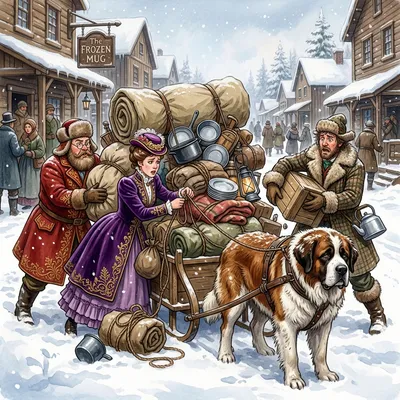
Before you read — think about:
- You may know a movie about people heading north after gold, with a famous dog in the traces. What people, animals, and outfits do you already picture — and how will you notice what is actually on THIS page?
- In the 1890s, a trip from Skaguay toward Dawson meant weeks on the ice with dogs, not a ride in a truck or a plane. How does your family make a long trip now?
- This chapter's title uses the word toil. What does that word mean to you, and when have you felt it?
- Why do people take big risks for the chance at money?
- How can an author make a reader care about a character who never says a word?
Watch for these while reading:
- The three newcomers who take the team over, Hal, Charles and Mercedes, and what each of them has brought north.
- How the outfit is packed, and what the experienced men standing around the camp have to say about it.
- The arithmetic of the trip: how many dogs, how many pounds of dog food, and how many miles still to go.
- The Yukon in spring: the length of the days, the weather, and the look of the trail.
- Which people, dogs, and pieces of gear actually appear in this chapter, compared with any gold-rush movie you already know.
Vocabulary to know:
wretched (adjective) — in a very unhappy, poor, or miserable condition; dwindled (verb) — gradually diminished or shrank in size, amount, or strength; feigned (verb) — faked or pretended to have a feeling, injury, or condition; fatigue (noun) — extreme tiredness resulting from mental or physical exertion; prolonged (adjective) — continuing for a long time or longer than usual; tottered (verb) — walked or moved unsteadily, as if about to fall; stopover (noun) — a brief break or stay in a journey; congested (adjective) — overcrowded or clogged with people, vehicles, or items; salient (adjective) — most noticeable, prominent, or important; callowness (noun) — inexperience, immaturity, or lack of adult wisdom; chaffering (noun) — bargaining or haggling over the price of something; slipshod (adjective) — careless, untidy, or poorly organized; slovenly (adjective) — messy, dirty, or lacking neatness and order; remonstrance (noun) — a forceful protest or expression of criticism; contraption (noun) — a machine or device that appears overly complicated or strange; gee-pole (noun) — a heavy pole attached to the side of a dog sled used by the driver to steer and balance the load; imploringly (adverb) — in a pleading manner, begging earnestly for help or mercy; repugnance (noun) — intense disgust or strong dislike; clannish (adjective) — inclined to stick together closely within a group while excluding outsiders; unwieldy (adjective) — difficult to carry or move because of size, shape, or weight; forged (verb) — moved forward steadily and stubbornly, especially through difficulty; thoroughfare (noun) — a main road or public highway open at both ends; overhauled (verb) — thoroughly examined, repaired, or reorganized; inexorable (adjective) — impossible to stop, prevent, or persuade; superfluous (adjective) — exceeding what is necessary, extra, or unneeded; averred (verb) — stated or declared to be true in a firm and confident manner; apparel (noun) — clothing or garments; zeal (noun) — great energy, enthusiasm, or eagerness in pursuit of a cause; formidable (adjective) — inspiring fear, awe, or respect through impressive size, strength, or power; mongrels (noun) — dogs of mixed or indeterminate breed; indeterminate (adjective) — not exactly known, established, or defined; bewildered (adjective) — completely puzzled, confused, or disoriented; forlorn (adjective) — pitifully sad, abandoned, or lonely; computation (noun) — the mathematical process of calculating or determining an amount; inevitable (adjective) — certain to happen and impossible to avoid; chronic (adjective) — persisting for a long time or constantly recurring; voracious (adjective) — having a huge appetite or eager desire for food; orthodox (adjective) — conforming to established, traditional, or accepted rules and beliefs; cajole (verb) — persuade someone to do something through flattery, gentle urging, or coaxing; sapped (verb) — gradually weakened, drained, or destroyed energy or strength; incompetence (noun) — inability to do something successfully or efficiently; grittily (adverb) — in a courageous, determined, and tough manner; amenities (noun) — desirable or useful features that provide comfort, convenience, or pleasure; glamour (noun) — an attractive, exciting, or romantic quality that makes someone or something seem special; irritability (noun) — a state of being easily annoyed, frustrated, or angered; inkling (noun) — a slight knowledge, hint, or vague notion about something; wrangled (verb) — engaged in a long, noisy, or angry argument; relevant (adjective) — closely connected or appropriate to the matter at hand; copious (adjective) — abundant in supply or quantity; grievance (noun) — a cause for complaint or resentment based on a perceived wrong; chivalrously (adverb) — in a polite, respectful, and honorable manner, especially toward women; impeachment (noun) — a challenge or accusation regarding someone's character, validity, or conduct; prerogative (noun) — a special right or privilege belonging to a particular individual or class; importuned (verb) — harassed or begged someone persistently and urgently for something; recital (noun) — a detailed statement or account of a series of events; innutritious (adjective) — lacking nourishing value or useful dietary nutrients; perambulating (adjective) — walking or traveling about from place to place; insensible (adjective) — unconscious or unable to feel pain, sensation, or emotion; fraught (adjective) — filled or burdened with something undesirable, such as danger or difficulty; fissures (noun) — long, narrow cracks or openings in a rock, ground, or ice.
Chapter 6: For the Love of a Man
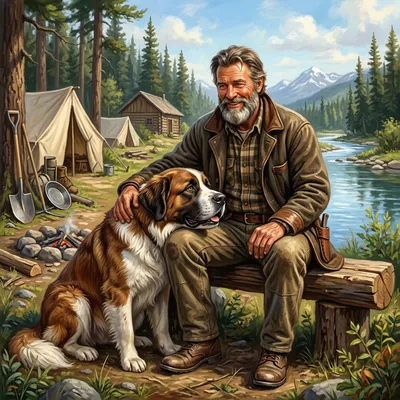
Before you read — think about:
- Some movies of this story make one man and one dog the heart of the film. What people, dogs, and towns do you already picture — and how will you notice what is actually on THIS page?
- In 1898, news of a strike in Dawson traveled by word of mouth, by riverboat, and by telegraph. There were no phones and no internet. How does news travel in your town now?
- What is the difference between obeying someone and being devoted to them?
- How do people show love for someone without ever saying so?
- How can an author show a strong feeling through small actions instead of naming the feeling?
Watch for these while reading:
- John Thornton's way with animals, including his other dogs Skeet and Nig, not only Buck.
- The mining camps and boom towns of the Klondike, and the sort of men who gather in them.
- Buck's habits around Thornton: where he lies down, what he watches, and what he does with his mouth.
- How men in Dawson talk about Buck.
- Which people, dogs, and Dawson scenes actually appear in this chapter, compared with any Call of the Wild movie you already know.
Vocabulary to know:
waxed (verb) — Grew or became increasingly full of a certain quality.; ministrations (noun) — Acts of giving care, help, or tender attention to someone.; demonstrative (adjective) — Freely and openly showing affection or emotion.; manifested (verb) — Showed clearly; made visible or evident through actions.; enticed (verb) — Attracted or invited someone by offering something pleasant.; forbear (verb) — To hold back or refrain from doing something.; convalescence (noun) — A period of gradual recovery of health and strength after an illness or injury.; pompous (adjective) — Overly self-important, grand, or arrogant in manner.; adoration (noun) — Deep love, worship, or intense devotion.; expediency (noun) — Doing something because it is practical or convenient, rather than strictly fair or moral.; vibrant (adjective) — Full of energy, life, or strong emotional power.; reverently (adverb) — In a manner showing deep respect, awe, or devotion.; caress (noun) — A gentle and loving touch or stroke.; communion (noun) — A deep, intimate sharing of feelings, thoughts, or connection.; fleeting (adjective) — Lasting for only a brief moment; quick to pass away.; transient (adjective) — Staying for only a short time; temporary.; bespeak (verb) — To indicate, suggest, or serve as evidence of a quality or condition.; wiliness (noun) — Cunning, clever trickery, or slyness.; shrewdly (adverb) — In a sharp, clever, and practical manner.; forewent (verb) — Gave up or refrained from taking advantage of something.; mandate (noun) — An authoritative command, law, or binding rule.; peremptorily (adverb) — In a commanding, urgent, or forceful manner that expects immediate obedience.; obtained (verb) — Existed, prevailed, or was customary in a specific place or time.; proceeds (noun) — The money earned or profits collected from an event, sale, or business deal.; chasm (noun) — A deep fissure, gorge, or opening in the earth or rock face.; uncanny (adjective) — Strange, mysterious, or eerie in a way that seems beyond normal explanation.; hankering (noun) — A strong desire or craving for something.; malicious (adjective) — Intending to cause harm, pain, or distress to others.; provocation (noun) — An action or speech designed to deliberately make someone angry or provoke a reaction.; lining (verb) — Guiding or steering a boat through river rapids from the bank using ropes.; snubbing (verb) — Stopping or holding back a rope's motion by winding it around a post or tree trunk.; abreast (adverb) — Side by side and moving in the same direction.; submerged (adjective) — Covered with water or hidden beneath the surface of a liquid.; jutted (verb) — Stuck out or projected past the surrounding main edge.; extremity (noun) — A condition of intense danger, suffering, or desperate trouble.; propelled (verb) — Pushed, driven, or forced forward.; exploit (noun) — A bold, heroic, or remarkable achievement or deed.; gratifying (adjective) — Giving pleasure, satisfaction, or a sense of reward.; vaunt (noun) — A boastful remark, brag, or proud statement.; appalled (verb) — Horrified, shocked, or filled with dismay by something terrible.; plethoric (adjective) — Overly full, stuffed, or excessively abundant.; quibble (noun) — A petty objection or minor argument over a small detail.; contended (verb) — Argued, insisted, or maintained a point strongly in a debate.; jubilant (adjective) — Feeling or showing immense happiness, triumph, and celebration.; clamor (noun) — A loud, continuous, and confused noise or uproar.; contagion (noun) — The rapid spreading of an emotion, attitude, or excitement through a group.; virility (noun) — Physical strength, energy, and vigorous power.; repose (noun) — A state of restful calmness, peaceful dignity, or sleep.; dynasty (noun) — A powerful, long-standing line or succession of successful leaders or figures.; conjuration (noun) — A magic spell, ritual act, or solemn invocation.; maneuver (noun) — A strategic or skillful movement requiring planning and effort.; perceptibly (adverb) — In a way that can be seen, felt, or noticed clearly.; momentum (noun) — The forward speed and force gained by a moving object or process.; babel (noun) — A noisy, confused mixture of sounds or voices talking at once.; fervently (adverb) — With passionate, intense, and deep feeling..
Chapter 7: The Sounding of the Call
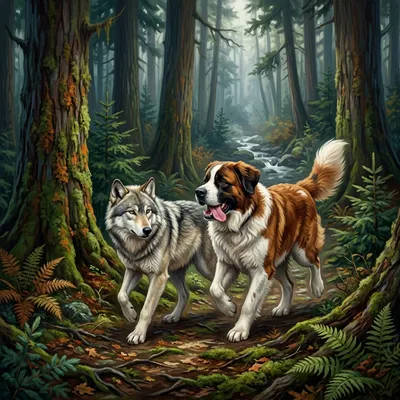
Before you read — think about:
- You may know an ending from a movie of this story. What people, animals, and wild places do you already picture — and how will you notice what is actually on THIS page?
- In 1898 large stretches of the Yukon were still unmapped, and a party found its way by river, compass, and rumor. How do you find your way in a new place now?
- What does the word wild mean to you when it is used to describe an animal?
- What do you know about the Indigenous peoples who lived in the Yukon long before the gold rush?
- What is the wildest place you have ever been? What did it feel like to be there?
Watch for these while reading:
- The country east of Dawson, and how the party travels and lives once the trail runs out.
- How much attention the story gives to the gold itself, compared with everything else around it.
- The passages about the call: what the narrator says Buck hears, and where he says it comes from.
- London's account of hunting, including the patience it takes and the size of the animals in that country.
- Which people, animals, and wild places actually appear in this chapter, compared with any movie ending you already know.
Vocabulary to know:
fabled (adjective) — famous in legends or stories; mythical; steeped (adjective) — soaked in or filled with a particular quality or atmosphere; shrouded (adjective) — covered, hidden, or wrapped in mystery or darkness; ramshackle (adjective) — badly built, falling apart, or loosely held together; clinching (verb) — settling or confirming something conclusively; testimony (noun) — a formal statement or proof offering evidence of a fact; looted (verb) — stolen from or raided during a time of chaos or absence; streamlet (noun) — a tiny stream or brook; riotously (adverb) — wildly, boisterously, or without any restraint; whipsawed (verb) — cut or sawed using a long two-person saw; uncharted (adjective) — not mapped, explored, or recorded; swarming (adjective) — moving around in large, crowded groups; melancholy (adjective) — sad, gloomy, or mournful; obliterated (adjective) — wiped out completely so that no trace remains; placer (noun) — a deposit of sand or gravel containing valuable mineral particles like gold; musing (verb) — thinking deeply or daydreaming silently; roved (verb) — wandered or scanned continuously over a broad area; vigilant (adjective) — keeping careful watch for possible dangers or difficulties; akin (adjective) — similar in character or quality; related; tangible (adjective) — able to be touched or felt; clear and real; impelled (verb) — driven, forced, or strongly urged to take action; aisles (noun) — passageways or long open paths between trees or rows; subdued (adjective) — quiet, soft, or restrained; recurrent (adjective) — occurring repeatedly or returning periodically; stalked (verb) — pursued or approached stealthily and quietly; commingled (verb) — blended or mixed together; overture (noun) — an opening move or offer intended to establish friendly relations; truce (noun) — a temporary pause or agreement to stop fighting; frenzy (noun) — a state of wild, uncontrolled excitement or activity; pivoting (verb) — turning or swiveling swiftly on a single central point; pertinacity (noun) — stubborn persistence and refusal to give up; coy (adjective) — making a pretense of shyness or modesty; belie (verb) — to give a false impression of; to contradict; lope (noun) — a long, easy, bounding stride or run; sombre (adjective) — dark, gloomy, or serious in tone; gorge (noun) — a narrow, steep-walled canyon or valley; watershed (noun) — a ridge or area of land separating waters flowing to different rivers; characterized (verb) — described or identified the special qualities of someone or something; spoil (noun) — goods, plunder, or prey taken by force or hunting; chaff (noun) — useless matter or husks easily blown away by the wind; carnivorous (adjective) — subsisting on a diet composed of meat; equilibrium (noun) — a state of perfect physical or emotional balance; sequential (adjective) — arranged in or following a logical step-by-step order; infinitesimal (adjective) — extremely small; immeasurably minute; simultaneous (adjective) — occurring or done at the exact same time; rampant (adjective) — flourishing or spreading wild and unchecked; asunder (adverb) — into separate parts or pieces; ecstasy (noun) — an overwhelming feeling of extreme joy or delight; transformation (noun) — a complete or dramatic change in form, appearance, or character; cat-footed (adjective) — moving softly, stealthily, and silently like a cat; ptarmigan (noun) — a northern grouse bird that changes color to white in winter; wary (adjective) — cautious and alert to potential danger; wantonness (noun) — careless, reckless behavior without thought or cause; quarry (noun) — an animal or target being hunted or pursued; palmated (adjective) — shaped like an open hand with spreading fingers; protruded (verb) — stuck out or extended beyond a main surface; paroxysms (noun) — sudden, violent outbursts or fits of action or emotion; simulated (adjective) — feigned, pretended, or artificial; ambuscade (noun) — a hidden position from which to launch a surprise attack; an ambush; retarding (verb) — delaying or slowing down the progress of something.
About the Author
Jack London (1876-1916) was an American author, journalist, and social activist. He lived an adventurous life, spending time as a sailor, an oyster pirate, and a prospector in the Klondike Gold Rush. His own experiences in the frozen North inspired many of his most famous works, including "The Call of the Wild" and "White Fang."
The novel is set during the Klondike Gold Rush of the late 1890s, a time when thousands of prospectors rushed to the Yukon Territory in Canada hoping to strike it rich. Because the terrain was covered in snow and ice, strong sled dogs were in incredibly high demand to transport supplies and mail, leading to many large dogs being stolen from the United States.