

About This Book
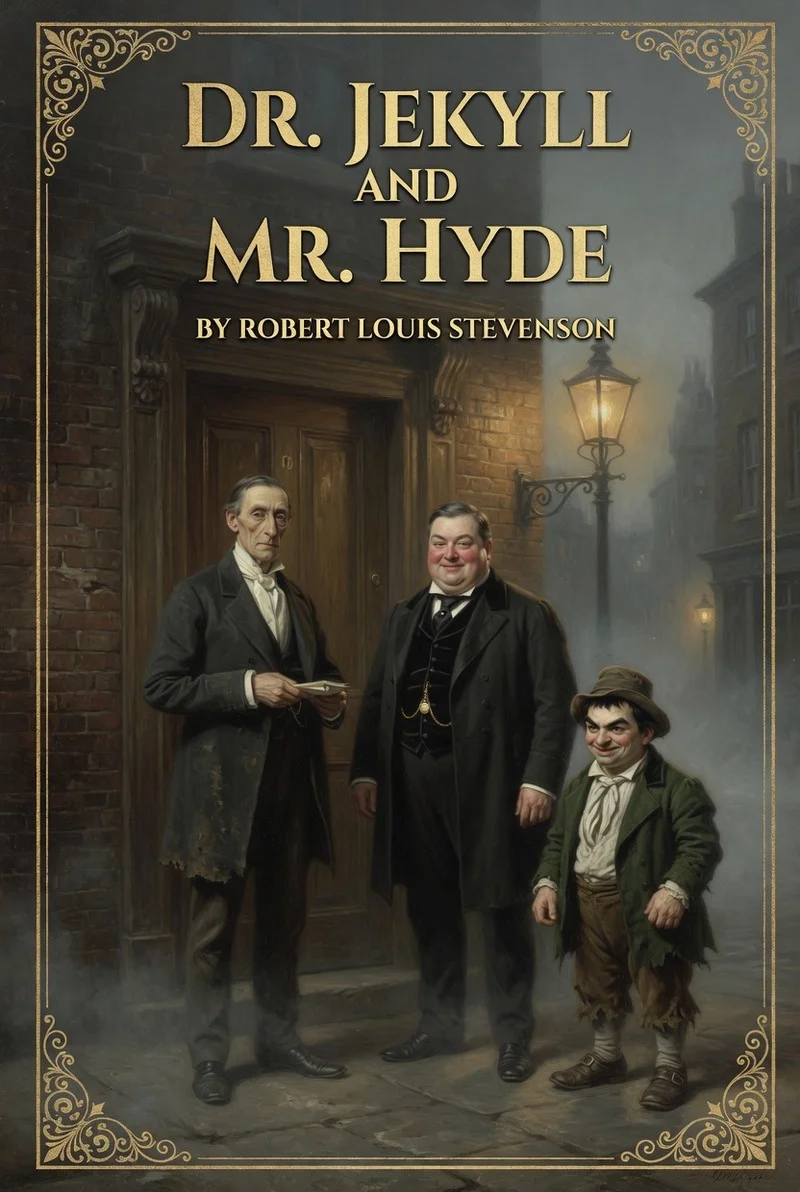
London in the 1880s runs on respectable front doors, so the one Mr. Gabriel John Utterson stops in front of on a Sunday walk is out of place: blistered, bell-less, knocker-less, set into the side of a cheerful little shopping street. Utterson is a lawyer who has made a rule of not asking questions about other people's business, and his cousin Enfield has a rule of asking even fewer. Then Enfield tells him a story about a man he once saw come out of that door at three in the morning, and Utterson goes home to a locked safe, a document he has never liked, and a name he recognises.
This is one of the shortest books on any high school reading list and one of the most quoted anywhere — "a Jekyll and Hyde personality" entered ordinary English within a few years of publication and never left, which puts you in the unusual position of opening a book you already half-know and finding out how little the version pop culture handed you resembles the original. It is also a compact working model of how literature actually operates: a tight mystery structure told through documents and witnesses, a narrator deliberately kept in the dark so the reader learns only what he learns, symbols placed exactly where they will do the most damage, and an argument about secrecy, reputation and the public self that reads very differently in an age of curated profiles than it did in 1886. Short enough to read in a sitting, dense enough to argue about for a term.
Meet the Characters

More about Mr. Gabriel John Utterson
Utterson is a London solicitor: dry in conversation, hard on himself, and unusually slow to condemn anyone else. He keeps his friendships for decades and his opinions to himself, and he has made a rule of letting other people go wrong in their own way rather than interfering. Almost everything you will learn in this book reaches you through him.

More about Dr. Henry Jekyll
Dr. Jekyll is wealthy, well born, and about as respectable as a London doctor can be — known for his charities, his scientific standing, and the excellent dinners he gives for a circle of old friends. He has known Utterson since they were young men and counts him as his lawyer as well as his friend. He is warm, hospitable, and used to being liked.

More about Mr. Edward Hyde
Mr. Hyde is a name almost nobody in London can attach to a face. He is small, abrupt, expensively but oddly dressed, and everyone who meets him comes away certain that something about him is wrong without being able to say what. Those who have seen him find that they cannot describe him afterwards.

More about Dr. Hastie Lanyon
Lanyon is a busy and prosperous physician with rooms in Cavendish Square. He was at school with both Utterson and Jekyll, and he and Jekyll went on into medicine together. He is cheerful, loud, and entirely practical about what science is for. He and Jekyll have not been close for years, and he does not mind saying why.

More about Poole
Poole has run Dr. Jekyll's household for twenty years and knows every door, key and habit in it. He is correct, discreet, and not a man given to imagination — the sort of servant who answers a question exactly and volunteers nothing. Utterson has been received by him more times than either of them could count.

More about Mr. Richard Enfield
Enfield is Utterson's cousin and his Sunday walking companion, a sociable, fashionable man who keeps late hours and knows everyone. The two have nothing obvious in common and say almost nothing to each other on their walks, which they both guard as the best hours of the week. He makes a point of never asking questions about anything that looks like trouble.

More about Sir Danvers Carew
Sir Danvers Carew is an aged Member of Parliament with white hair and an old-fashioned courtesy that people remember long after meeting him. He is widely known, widely liked, and one of the clients whose affairs pass across Utterson's desk. He has the manner of a man who has never expected unkindness from anyone.

More about Inspector Newcomen
Inspector Newcomen is the sort of Scotland Yard officer London sends when a crime touches a name the newspapers will print. He is capable, methodical, and visibly pleased when an investigation looks as though it will run in a straight line. He treats a name and an address as most of the work already done.
Pre-Reading Discussion Questions
- Is there a real difference between who you are in public and who you are in private, or is that gap simply part of being a person?
- Victorian London punished scandal severely. What reputations are people in your world most afraid of losing, and what do they do to protect them?
- Where is the line between respecting a friend's privacy and failing them by not asking?
- How much can you actually tell about a stranger in the first few seconds — and what are you reading when you decide you dislike someone on sight?
- Who holds more power in a mystery: the character who knows the secret, or the one trying to work it out? Why might a writer tell the story from the outside?
- Can knowledge itself be dangerous, or only the use people make of it?
Themes & Big Ideas to Track
- Doors, windows, locks and thresholds — notice who is shut in, who is shut out, and who is doing the shutting.
- Two entrances — one property is reached by a handsome front door on a square and by a door nobody has repaired in a generation. Watch which characters use which, and what each entrance is for.
- Reputation as currency — notice how often a character makes a decision to protect a good name rather than to find out the truth.
- The refusal to ask — watch how many of these professional gentlemen actively choose not to investigate, and what politeness costs them.
- Description that fails — pay attention to the moments when a character tries to put an impression into words and cannot, and to what the narrator does with that failure.
- Who is telling you this — the story reaches you through walks, letters, statements and second-hand accounts; notice how far you are from the events at any moment.
Chapter-by-Chapter Study Guide
Chapter 1: Story of the Door

Before you read — think about:
- A story can be told by someone at its centre or by someone standing at the edge of it. What does a reader gain when the person telling the story knows no more than the reader does?
- Victorian gentlemen made a virtue of not asking questions. Where is the line between respecting someone's privacy and failing them?
- Think of a building in a place you know that seems out of keeping with the street around it. What gives a structure like that its atmosphere?
- How much do you think you can tell about a stranger in the first few seconds? What are you actually reading — the face, the voice, the clothes, something else?
- What does a lawyer actually do all day? Where does your picture of the job come from, and how accurate do you think it is?
Watch for these while reading:
- The by-street itself: the shopfronts, the way Stevenson describes their thriving trade, and the one building that refuses to match its neighbours.
- Everything established about Utterson before any plot begins — his habits, his private pleasures, his tolerance, and the rule he lives by regarding other people's conduct.
- The amount of attention Stevenson gives the door named in the chapter title — its condition, and the way passers-by treat it.
- How the people in this chapter go about describing one another, and what happens when somebody is asked for a description.
- Enfield as a storyteller: what he volunteers, where he stops, and how often he says he would rather not go on.
Vocabulary to know:
countenance (noun) — a person's face, especially the expression on it; austere (adjective) — strict and plain, denying oneself comfort or pleasure; mortify (verb) — to deliberately deny yourself something you enjoy in order to discipline yourself; reprove (verb) — to scold or criticize someone for doing wrong; heresy (noun) — a belief that goes against what most people, especially a religion, accept as true; demeanour (noun) — the way a person behaves toward others; their manner; kinsman (noun) — a male relative; emulously (adverb) — in a way that shows eagerness to match or outdo other people; coquetry (noun) — showy prettiness meant to attract attention; thoroughfare (noun) — a street or road that people travel along; florid (adjective) — very showy and highly decorated; dingy (adjective) — dirty, dull, and gloomy-looking; sinister (adjective) — seeming evil or threatening; suggesting that something bad will happen; gable (noun) — the triangular upper part of a wall, under a sloping roof; sordid (adjective) — dirty and shameful; showing a lack of care or decency; negligence (noun) — failure to take care of something you are responsible for; ravages (noun) — the damage caused by something destructive; affirmative (noun) — an answer meaning yes; juggernaut (noun) — an unstoppable crushing force that destroys whatever is in its path — Enfield's word for how the small man moved over the child; loathing (noun) — an intense feeling of disgust and hatred; detestable (adjective) — deserving to be hated; extremely unpleasant; apothecary (noun) — an old-fashioned word for a person who prepared and sold medicines, a kind of local doctor or pharmacist; harpies (noun) — in Greek myth, cruel winged monsters; used here to describe furious women in the crowd; apocryphal (adjective) — probably false or invented, though widely repeated; forgery (noun) — a document or signature that has been faked to look genuine; proprieties (noun) — the rules of correct and respectable behaviour; capers (noun) — reckless or foolish adventures, especially ones a person later regrets; delicacy (noun) — tactful care about asking questions or raising awkward subjects; deformity (noun) — a twisted or misshapen quality in a body — here, a strong impression of wrongness that no one can point to; sullenness (noun) — a quiet, resentful bad mood; musing (noun) — the state of being lost in thought.
Chapter 2: Search for Mr. Hyde
Before you read — think about:
- What does a person's job train them to notice that other people miss? Think of an adult you know whose work has changed the way they see ordinary things.
- Lawyers are trained to read a document for what it permits as much as for what it says. How does that habit of mind differ from ordinary curiosity?
- When you hear something troubling about a friend, do you ask them directly, ask other people, or leave it alone? What decides which one you do?
- Gossip travels fast among people who know one another. How does a piece of news actually move through a group you belong to, and what changes about it as it travels?
- How does an author show you that something is preying on a character's mind, without stating it outright?
Watch for these while reading:
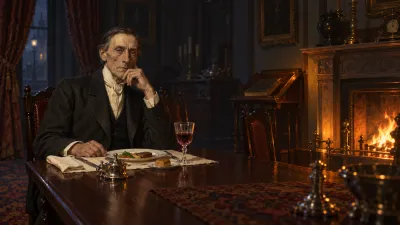
- The document Utterson keeps in his safe — how carefully Stevenson lets you see its wording, and what a lawyer notices in a client's own phrasing.
- Dr. Lanyon: his rooms, his manner, and the register he falls into when he talks about another man's work.
- What Utterson's imagination does with a name when he has almost nothing else to go on.
- How Utterson behaves once a subject has taken hold of him, set against the self-denial described in chapter one.
- The geography of this part of London — squares, lanes, front doors and back ones — and how carefully Stevenson lays it out for you.
Vocabulary to know:
holograph (adjective) — written out entirely by hand by the person whose document it is; decease (noun) — a formal, legal word for a person's death; benefactor (noun) — someone who gives another person money or help; burthen (noun) — an old spelling of burden — a duty or obligation that weighs on someone; hitherto (adverb) — up until now; indignation (noun) — anger at something that seems unfair or wrong; presentment (noun) — an image that suddenly presents itself to the mind; fiend (noun) — an evil spirit or a cruel, wicked person; obnoxious (adjective) — extremely offensive and unpleasant; citadel (noun) — a fortress; here, a place where a profession is concentrated and defended; solemn (adjective) — serious and dignified in manner; dapper (adjective) — neat, smart, and stylish in appearance; boisterous (adjective) — loud, lively, and energetic; geniality (noun) — friendly cheerfulness; balderdash (noun) — nonsense; ideas the speaker considers ridiculous; estranged (verb) — made two people who were close become distant or hostile; protégé (noun) — a younger person guided and supported by someone older and more powerful; besieged (verb) — surrounded and attacked, as an army surrounds a city; nocturnal (adjective) — happening at night; stealthily (adverb) — quietly and secretly, so as not to be noticed; labyrinths (noun) — confusing mazes of passages from which it is hard to escape; inordinate (adjective) — far greater than is reasonable or normal; bondage (noun) — the state of being controlled by another person and unable to get free; clauses (noun) — separate sections or conditions written into a legal document; concourse (noun) — a crowd of people moving through a place; prevision (noun) — a feeling that you know what is about to happen; disquietude (noun) — a state of uneasiness and worry; perplexity (noun) — complete confusion about something you cannot work out; dwarfish (adjective) — unusually small in stature; timidity (noun) — nervousness and lack of courage; troglodytic (adjective) — cave-dwelling; primitive, as if from an earlier stage of human development; fanlight (noun) — a small half-circle window above a door; fender (noun) — a low metal guard around a fireplace; iniquity (noun) — a wicked or immoral act; condoned (verb) — accepted or forgave behaviour that was actually wrong; apprehension (noun) — worried expectation that something bad is coming.
Chapter 3: Dr. Jekyll Was Quite at Ease
Before you read — think about:
- Think of a time an adult told you not to worry about something. What made you believe them, or not?
- A Victorian dinner party ran on rules — who was invited, where they sat, when the guests left. What are the unwritten rules of a gathering in your own life?
- A host at his own dinner table has a kind of authority that a guest does not. How does being on your own ground change a conversation?
- Doctors in the 1880s held a social position closer to a gentleman's than a technician's. How does the standing of a profession change what people feel able to ask about it?
- How can an author let you know that two people in a room want different things from a conversation, without saying so?
Watch for these while reading:
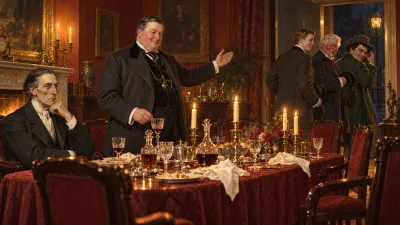
- Jekyll himself, described at length for the first time: his age, his build, his face, and the impression he makes on a room full of guests.
- How Jekyll speaks about Lanyon, set beside the way Lanyon spoke about him in the previous chapter.
- The dinner party itself: who Jekyll gathers round his table, what kind of evening he gives them, and what the guests are like.
- Utterson's side of every conversation in this chapter: what he asks outright, what he only implies, and how far he is prepared to press a friend in that friend's own house.
- The phrase in the chapter title — 'quite at ease' — and how well it describes what you actually watch happen.
Vocabulary to know:
fortnight (noun) — a period of two weeks; cronies (noun) — long-standing friends and companions; reputable (adjective) — respected and considered honest by other people; contrived (verb) — arranged something cleverly so that it would happen; unobtrusive (adjective) — not drawing attention to yourself; solitude (noun) — the state of being alone; gaiety (noun) — lively, cheerful fun; threshold (noun) — the strip of floor in a doorway; the point of entering or leaving; distasteful (adjective) — unpleasant and unwelcome; pedant (noun) — someone obsessed with narrow rules and details, unwilling to consider new ideas; blatant (adjective) — loud and obvious in an offensive way; abominable (adjective) — disgusting and morally shocking; incoherency (noun) — the state of not making clear or connected sense; irrepressible (adjective) — impossible to hold back or control; ruthlessly (adverb) — without pity or softening; trifle (noun) — a small amount; used here to mean slightly.
Chapter 4: The Carew Murder Case
Before you read — think about:
- How does a story change when it moves out of private conversation and into a public event? What does an author gain by widening the audience?
- The title of this chapter tells you a murder is coming. How does an author decide how much of a violent moment to put on the page and how much to leave to the reader, and what does each choice do to you?
- In the 1880s there were no fingerprints and no photographs of ordinary citizens on file. What could actually be used to identify a person, and how dependable was it?
- London's fog is famous. How does weather work in fiction — as scenery, as atmosphere, or as something closer to a character?
- Newspapers of this period sold enormously on sensational crime reporting. What does public appetite for a criminal case do to the case itself?
Watch for these while reading:
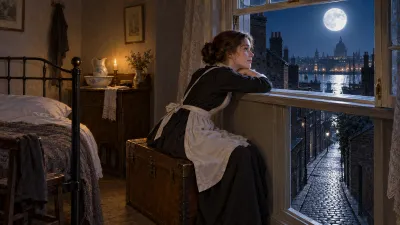
- The vantage point Stevenson chooses for the opening pages, and the mood of the person he puts there.
- Sir Danvers Carew as Stevenson presents him — his bearing, his courtesy, and how much old-fashioned sweetness the description insists on.
- Stevenson's fog. Read the London paragraphs slowly and count how many times the light over the city changes.
- How the interiors in this chapter are furnished, and whether the furniture matches the street outside the window.
- The official machinery of a city this size — the police, the printed advertisement, the newspapers — and what Stevenson shows you of each one at work.
Vocabulary to know:
ferocity (noun) — extreme violence and savagery; singular (adjective) — remarkable and out of the ordinary; accosted (verb) — went up to someone and spoke to them, often unexpectedly; brandishing (verb) — waving something about in a threatening way; insensate (adjective) — without feeling or reason; mindlessly brutal; splintered (adjective) — broken into sharp pieces; quailed (verb) — flinched or lost courage out of fear; stature (noun) — a person's height and build; pall (noun) — a dark cloth spread over a coffin; here, a heavy covering of gloom; lurid (adjective) — glowing with an unnatural, unpleasant brightness; conflagration (noun) — a large, destructive fire; haggard (adjective) — worn, thin, and exhausted-looking; blackguardly (adjective) — belonging to a scoundrel; disreputable and low; hypocrisy (noun) — pretending to have morals or feelings you do not really have; odious (adjective) — hateful and disgusting; ransacked (verb) — searched roughly and hurriedly, leaving a mess; embers (noun) — the small glowing remains of a fire; disinterred (verb) — dug up something that was buried or hidden; gratification (noun) — the pleasure of getting what you wanted; handbills (noun) — printed notices handed out or posted up in public; familiars (noun) — people who know someone well; close companions; connoisseur (noun) — an expert judge of art, food, or other fine things; fugitive (noun) — a person running away to avoid arrest; beholders (noun) — the people looking at something.
Chapter 5: Incident of the Letter
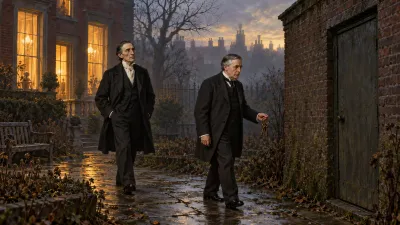
Before you read — think about:
- Buildings get repurposed. Have you been somewhere that was clearly built for something else? What traces of the old use were still visible?
- "It is a private matter." Who tends to benefit when a serious problem is agreed to be private?
- Victorian professional men worked alongside a clerk who knew all their business. What would it be like to have someone around who sees everything you do?
- How much does the room a person works in tell you about them? Describe a workspace you know and what it gives away.
- How does an author build suspense in a scene where nothing physically happens — just two people talking?
Watch for these while reading:
- How much of this chapter is spent simply moving through a building, and the condition of everything the narrator stops to notice on the way.
- Rooms built for one purpose and now used for another, and what Stevenson does with the leftovers of the first use.
- Jekyll's appearance and manner here, set against how he looked presiding over his own dinner table.
- How servants answer questions in this book — how literally, and how little they volunteer beyond the question asked.
- Who Utterson chooses to confide in, and how much of the confiding he manages without asking a direct question.
Vocabulary to know:
indifferently (adverb) — equally either way; without any distinction between two names or choices; anatomical (adjective) — having to do with the structure of the body; cupola (noun) — a small dome on a roof, often with windows to let light in; apparatus (noun) — the equipment used for scientific work; gaunt (adjective) — bare, thin, and grim-looking; baize (noun) — thick woollen cloth, often green or red, used to cover doors and tables; presses (noun) — tall cupboards with shelves, here fitted with glass fronts; cheval-glass (noun) — a full-length mirror mounted in a frame so it can tilt; grate (noun) — the metal frame that holds a fire in a fireplace; feverish (adjective) — excited and restless in an unhealthy way, as if with a fever; ruminated (verb) — thought something over slowly and carefully; qualm (noun) — a sudden feeling of sickness or doubt; circulars (noun) — printed advertisements or notices sent to many people at once; ticklish (adjective) — delicate and difficult to handle correctly; counsel (noun) — advice, especially from someone whose judgement you trust; carbuncles (noun) — deep red gemstones; elicited (verb) — drew out a reaction or response from people; autograph (noun) — a sample of someone's own handwriting; sedulously (adverb) — with careful, persistent attention; quaint (adjective) — strange and curious in an old-fashioned way.
Chapter 6: Incident of Dr. Lanyon
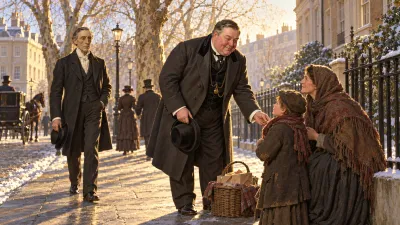
Before you read — think about:
- A news story dominates for a week and then vanishes. What decides how long the public stays interested in something?
- How does an author cover the passing of months without losing the reader? What can be summarized, and what has to be shown?
- How do your friendships actually get maintained — messages, meeting up, a shared routine? How much of a long friendship is habit, and how much is choice?
- What is the difference between keeping a secret and telling a lie? Is silence ever dishonest?
- Doctors, lawyers and clergymen in this period were bound by professional confidence, and a great deal of Victorian fiction depends on it. What are the modern equivalents, and whom do they protect?
Watch for these while reading:
- Dates. This chapter is unusually specific about the calendar, so note every one it gives you.
- How Stevenson handles the passing of weeks — what he summarises in a sentence and what he stops to show you.
- Lanyon when Utterson calls on him: his rooms, his colour, his voice, and the way he talks about himself.
- How much of this book's information travels on paper rather than in conversation.
- Phrases that echo wording you have already met earlier in the book — Stevenson repeats himself deliberately.
Vocabulary to know:
resented (verb) — felt bitter anger about something considered an injury or insult; ken (noun) — the range of what someone knows or can see; callous (adjective) — cruelly unfeeling toward the suffering of others; vile (adjective) — extremely wicked and disgusting; whereabouts (noun) — the place where someone or something is; seclusion (noun) — the state of keeping away from other people; death-warrant (noun) — an official order for a person's execution; used here for a look that says a man is doomed; tokens (noun) — outward signs of something; testify (verb) — to give evidence of something; to show that it is true; deep-seated (adjective) — firmly established far below the surface; allusion (noun) — an indirect mention of something; incurable (adjective) — impossible to heal or put right; henceforth (adverb) — from this time on; superscribed (verb) — written on the outside of an envelope or package; enclosure (noun) — something sealed inside a letter or package; prohibition (noun) — a rule forbidding something; trustee (noun) — a person legally responsible for looking after property or documents belonging to someone else; stringent (adjective) — strict and not to be bent; inscrutable (adjective) — impossible to understand or read; unvarying (adjective) — always the same, never changing.
Chapter 7: Incident at the Window

Before you read — think about:
- What separates a person who lives alone by choice from a person who is shut in?
- This is the shortest chapter in the book. What can a very brief scene do that a long one cannot?
- Scenes staged at windows — one person above, one below — are everywhere in literature. What does that arrangement give a writer that a conversation across a table would not?
- Victorian houses separated masters, servants and visitors by floor, by staircase and by door. How much does the shape of a building decide who meets whom, and where?
- Utterson keeps offering help to a man who will not take it. Where does persistence stop being loyalty and start being intrusion?
Watch for these while reading:
- The court behind the house: its size, its damp, its light, and how the time of day down there compares with the sky overhead.
- Where Stevenson places each man in the scene, and how much air he puts between them.
- The words characters reach for when they try to describe how they feel, and how far those words get them.
- The window itself, treated almost as a character: how far it is open, and what part it plays in the exchange.
- How this chapter ends beside the way chapter one ended, and how much silence Stevenson leaves in it.
Vocabulary to know:
repulsion (noun) — a strong feeling of disgust that makes you want to back away; premature (adjective) — happening earlier than it should; twilight (noun) — the dim light after sunset or before sunrise; disconsolate (adjective) — so unhappy that nothing can comfort you; mien (noun) — a person's appearance and manner, especially as a sign of their mood; drearily (adverb) — in a dull, hopeless way; circulation (noun) — the movement of blood around the body; good-naturedly (adverb) — in a friendly, easy-going way; venture (verb) — to dare to do or say something; abject (adjective) — utterly hopeless and crushed; despair (noun) — complete loss of hope; glimpse (noun) — a very brief look at something; traversed (verb) — crossed or travelled across a place; stirrings (noun) — small signs of movement or activity.
Chapter 8: The Last Night

Before you read — think about:
- Victorian households ran on live-in servants. What would it be like to work and sleep in someone else's home, and what would seem strangest about that arrangement today?
- How does an author make a familiar place feel threatening? Think of somewhere ordinary you know that changes character after dark.
- What does the last night of anything feel like — a holiday, a school year, a stay somewhere? Why do we mark endings at all?
- Loyalty to an employer, loyalty to a friend, loyalty to the law: when those pull in different directions, how should a person choose?
- A mystery makes a bargain with its reader — puzzle now, explanation later. What makes an explanation satisfying rather than a cheat?
Watch for these while reading:
- The journey to the square: the wind, the thin moon, the emptiness of the streets, and the state of Utterson's own nerves.
- How a household behaves once its ordinary routine has stopped, and where everyone puts themselves.
- What Poole is able to report precisely, and what he can only call a feeling.
- How much of what these characters believe rests on what they have heard rather than on what they have seen.
- Stevenson's attention to small domestic objects, and the effect of ordinary things inside a frightening scene.
Vocabulary to know:
ails (verb) — troubles or makes someone unwell; explicit (adjective) — stated clearly and in full, leaving nothing vague; doggedly (adverb) — stubbornly and persistently; hoarsely (adverb) — in a rough, harsh voice; greatcoat (noun) — a long, heavy overcoat; seasonable (adjective) — typical of the time of year; wrack (noun) — thin, torn clouds driven fast across the sky; diaphanous (adjective) — so thin and light that you can almost see through it; calamity (noun) — a disaster; a terrible event; anguish (noun) — severe mental suffering; huddled (verb) — crowded closely together, usually out of fear or cold; hysterical (adjective) — wildly emotional and unable to stop; whimpering (noun) — soft, frightened crying; peevishly (adverb) — in an irritable, complaining way; unseemly (adjective) — not proper or respectable; jangled (adjective) — badly shaken; with nerves on edge; resolution (noun) — firm determination to do something difficult; complainingly (adverb) — in a whining, grumbling tone; induce (verb) — to persuade or cause someone to do something; exaggerated (verb) — made something sound greater or more important than it is; splutter (noun) — a sudden messy burst, here of ink from a pen; sulkily (adverb) — in a quietly resentful, sullen way; maladies (noun) — diseases or illnesses; sufferer (noun) — a person enduring pain or illness; exorbitant (adjective) — far beyond what is reasonable; mottled (adjective) — marked with patches of different colours; pallor (noun) — unhealthy paleness; peril (noun) — serious danger; undaunted (adjective) — not discouraged by danger or difficulty; bigness (noun) — size, especially height and build; marrow (noun) — the soft tissue inside bones; used to describe a feeling deep inside the body; vengeance (noun) — punishment inflicted in return for a wrong; summons (noun) — an order to come at once; suspense (noun) — an anxious state of waiting for something to happen; malefactor (noun) — a criminal; a person who does evil; scud (noun) — low clouds driven quickly by the wind; draughts (noun) — currents of cold air moving through a space; hearkening (verb) — listening carefully; bated (adjective) — held back, especially of breath; screech (noun) — a harsh, high scream; fittings (noun) — the fixed parts attached to a door or room, such as hinges and locks; besiegers (noun) — people attacking a place they have surrounded; appalled (adjective) — shocked and horrified; commonplace (adjective) — completely ordinary; contorted (adjective) — twisted out of its normal shape; semblance (noun) — an outward appearance of something that is not really there; phial (noun) — a small glass bottle for liquid medicine; flags (noun) — flagstones — flat paving stones; awestruck (adjective) — filled with fearful wonder; involuntary (adjective) — happening without being chosen or controlled; glazed (adjective) — fitted with glass; blasphemies (noun) — words that insult or mock what is considered sacred; eccentric (adjective) — strange and unconventional; testament (noun) — a legal document setting out what happens to a person's property after death; penetration (noun) — sharpness of insight; the ability to see into something clearly; lumber (noun) — old, useless stored objects; junk.
Chapter 9: Dr. Lanyon's Narrative
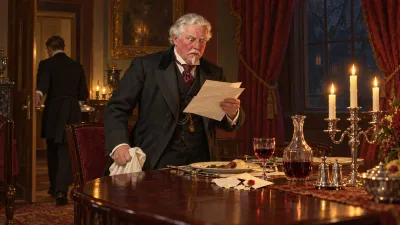
Before you read — think about:
- The narrating voice changes here for the first time in the book. What does a reader gain, and what do they give up, when a new witness takes over?
- This document was written to be read only once its author was gone. How does knowing that change the way you read it?
- What makes a first-hand account trustworthy? When you read someone's description of something you did not see, what makes you believe it?
- What did the Victorian public think science was for, and what were they afraid of? Where do you see the same hopes and fears about science today?
- A doctor's standing in this period rested on his reputation among other doctors. What communities do you belong to where reputation matters, and how is it earned or lost?
Watch for these while reading:
- Dates again. Set every date this chapter gives you against the calendar in chapter six.
- How instructions are given in this book — how precise they are, and how little they explain.
- The level of physical detail Lanyon records, and what a scientist chooses to write down.
- What Lanyon, as a doctor, notices about the people in front of him.
- How much of this narrative consists of Lanyon declining to set things down, and the reasons he gives for that.
Vocabulary to know:
registered (adjective) — sent by a special postal service that records delivery and requires a signature; formality (noun) — strict attention to official procedure; margin (noun) — extra time or room allowed in case something goes wrong; farrago (noun) — a confused mixture of nonsense; hansom (noun) — a small two-wheeled horse-drawn cab for hire; avowed (verb) — stated openly and firmly; nicety (noun) — exactness and precision in the way something is done; crystalline (adjective) — made of clear crystals; liquor (noun) — any liquid, especially one prepared for a particular use; pungent (adjective) — having a sharp, strong smell or taste; volatile (adjective) — evaporating quickly at ordinary temperatures; ether (noun) — a light, quickly evaporating liquid used in chemistry and early medicine; appended (verb) — added on at the end; whetted (verb) — sharpened; made a desire stronger; cerebral (adjective) — relating to the brain; portico (noun) — a covered porch with columns at the entrance of a building; constrained (adjective) — stiff and unnatural, as if forced; debility (noun) — physical weakness; constitution (noun) — a person's physical make-up and general health; subjective (adjective) — existing in a person's own mind rather than in the outside world; incipient (adjective) — just beginning to appear; rigour (noun) — stiffness of the body; idiosyncratic (adjective) — peculiar to one individual; acuteness (noun) — sharpness or intensity; accoutrement (noun) — an outfit or set of clothing and equipment; ludicrous (adjective) — so absurd that it ought to be funny; disparity (noun) — a great difference between two things that ought to match; misbegotten (adjective) — badly made; wrong in its very origin; revolting (adjective) — causing disgust; sombre (adjective) — dark and gloomy in mood; civilly (adverb) — politely, in a formally correct way; hysteria (noun) — a state of uncontrollable emotion or panic; minims (noun) — very small units of liquid measurement used in old pharmacies; tincture (noun) — a medicine made by dissolving a substance in liquid; effervesce (verb) — to bubble and give off gas; ebullition (noun) — a sudden bubbling or boiling up; metamorphoses (noun) — complete changes from one form into another; scrutiny (noun) — close, searching examination; parley (noun) — a discussion or negotiation; prodigy (noun) — an extraordinary and unnatural event; a marvel; enigmas (noun) — puzzling statements or mysteries; transcendental (adjective) — beyond the physical world and ordinary science; derided (verb) — mocked; treated with contempt; turpitude (noun) — extreme moral wickedness; penitence (noun) — sincere sorrow for having done wrong; incredulous (adjective) — unable to believe something.
Chapter 10: Henry Jekyll's Full Statement of the Case
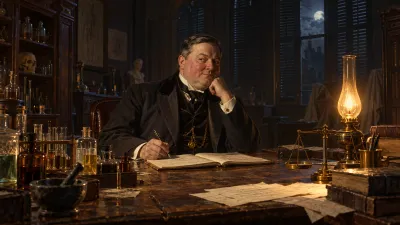
Before you read — think about:
- This chapter is one man's account of himself, written for people who will judge him. How far should a reader trust a statement composed by the person most in need of being understood?
- When someone explains themselves at length, what makes the explanation convincing rather than an excuse? Think of an apology you have been given.
- Stevenson wrote the first draft of this story in a few days after a nightmare, reportedly burned it, and rewrote it immediately. What do you make of writing that fast, and what might a second attempt fix?
- Victorian readers expected a novel to leave them with a moral. Do you expect a story to tell you what to think about its characters, and what happens when it does not?
- This is the last chapter. Before you read it, write down the one question you most want answered — then see whether the book answers it.
Watch for these while reading:
- The account Jekyll gives of his own youth: the advantages he says he started with, and what he says he had to keep out of sight.
- The practical arrangements he sets out — the house in Soho, the housekeeper, the bank account, the will, the two ways into one building.
- The pronouns in this statement: where the writer says 'I', where he says 'he', and how steadily he keeps to one or the other.
- The vocabulary he borrows from other fields — chemistry, religion, law, appetite — and which of them he leans on hardest.
- The powders themselves: where they came from, how he obtained them, and how precisely he describes their preparation.
Vocabulary to know:
endowed (verb) — naturally provided with a quality or advantage; imperious (adjective) — urgent and commanding; impossible to refuse; duplicity (noun) — double-dealing; leading a deliberately two-sided life; blazoned (verb) — displayed something openly and proudly; morbid (adjective) — unhealthy and excessive, especially about dark subjects; aspirations (noun) — ambitions; hopes of achieving something high; degradation (noun) — a lowering into shame or disgrace; inveterately (adverb) — in a deeply fixed, long-established way; restraint (noun) — self-control; holding oneself back; mystic (adjective) — concerned with spiritual mysteries beyond ordinary understanding; perennial (adjective) — lasting continually; never-ending; duality (noun) — the state of having two distinct parts or natures; polity (noun) — an organised community of members living under one system; multifarious (adjective) — having great variety; of many different kinds; incongruous (adjective) — not fitting together; out of place with one another; denizens (noun) — inhabitants of a place; primitive (adjective) — belonging to the earliest and most basic stage; dissociated (verb) — separated from one another; immateriality (noun) — the quality of not being solid or physical; transience (noun) — the state of lasting only a short time; vestment (noun) — a garment; here, the body imagined as clothing worn by the spirit; dethroned (verb) — removed from a position of power; supremacy (noun) — the state of being in complete control; scruple (noun) — a tiny unit of weight used by old chemists; also a moral hesitation; tabernacle (noun) — a sacred dwelling place; here, the body as the house of the soul; racking (adjective) — causing intense pain, as though the body were being stretched; pangs (noun) — sudden sharp pains; recklessness (noun) — wild disregard for danger or consequences; millrace (noun) — the fast channel of water that drives a mill wheel; constellations (noun) — patterns of stars in the night sky; vigilance (noun) — constant watchfulness; deposed (verb) — removed from power; robust (adjective) — strong and well developed; repugnance (noun) — strong dislike or disgust; commingled (verb) — mixed together; redemption (noun) — being saved or restored from a ruined state; dissolution (noun) — the process of coming apart or breaking up; diabolical (adjective) — devilish; extremely evil; prisonhouse (noun) — a prison; here, the mind imagined as a building full of locked cells; disposition (noun) — a person's natural character and tendencies; slumbered (verb) — slept; undignified (adjective) — lacking seriousness or respectability; doff (verb) — to take off, as one takes off a hat or coat; unscrupulous (adjective) — having no moral principles; parry (verb) — to ward off or deflect; pecuniary (adjective) — relating to money; immunities (noun) — protections from consequences that other people cannot escape; bravos (noun) — hired thugs paid to commit crimes for someone else; lendings (noun) — borrowed outer coverings; things put on and taken off; impenetrable (adjective) — impossible to see through or get past; mantle (noun) — a cloak; something worn to cover and conceal; draught (noun) — a measured drink of medicine; vicarious (adjective) — experienced through someone else rather than directly; depravity (noun) — moral corruption; wickedness; malign (adjective) — harmful and evil in nature; avidity (noun) — extreme eagerness or greed; relentless (adjective) — never softening or giving way; aghast (adjective) — struck with shock and horror; insidiously (adverb) — in a gradual, hidden, harmful way; connived (verb) — secretly allowed or cooperated with something wrong.
About the Author
Robert Louis Stevenson (1850–1894) was born in Edinburgh into a distinguished family of lighthouse engineers. He trained first as an engineer and then as a lawyer to satisfy his father, qualified for the Scottish bar, and abandoned both for writing. Chronic lung disease kept him moving for most of his adult life in search of a climate he could survive — the south of France, Switzerland, the Adirondacks, and finally Samoa — and he produced much of his best-known work, including Treasure Island and Kidnapped, while frequently confined to bed. He was a restless experimenter with form: travel writing, essays, historical romance, verse for children, and short fiction that borrowed the machinery of the cheap thriller and used it for serious ends. He died suddenly in Samoa at forty-four and is buried on a mountain above Vailima.
The book appeared in January 1886, in a Britain where middle-class respectability functioned almost as a religion and a ruined reputation could end a professional man's career permanently — the same decade that would soon produce the trials, scandals and blackmail cases that filled the popular press. It was also a moment of enormous scientific confidence and equally enormous anxiety: Darwin's work had forced educated readers to think of human beings as animals with an evolutionary past, early psychology was beginning to describe a mind at odds with itself, and the new mass-circulation newspapers had discovered that sensational crime sold. Stevenson's London — fog, gaslight, streets where great wealth and real poverty sit two doors apart — draws as much on his native Edinburgh, a city of elegant Georgian squares built directly above old slums, as on the capital itself. The novella belongs to the Gothic tradition of Frankenstein and the ghost story, but relocated from castles and mountains into a modern professional city of lawyers, doctors, clubs and servants.