

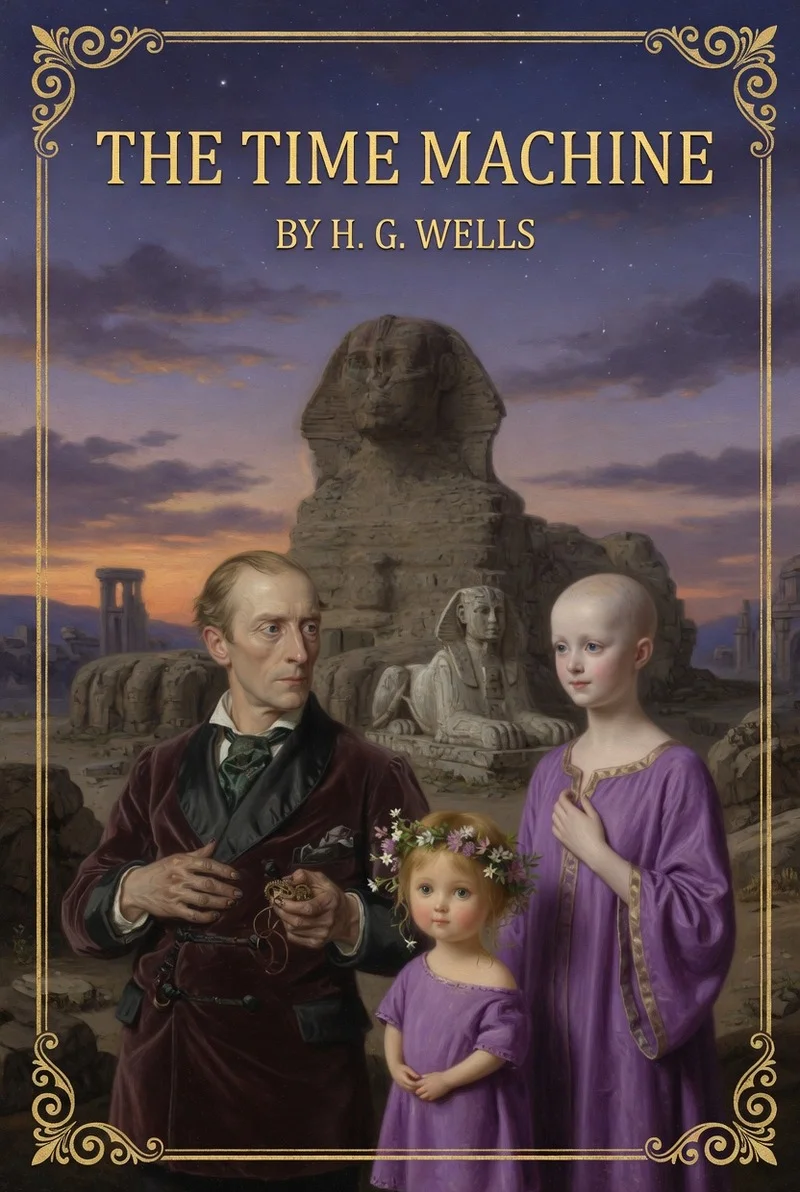
About This Book
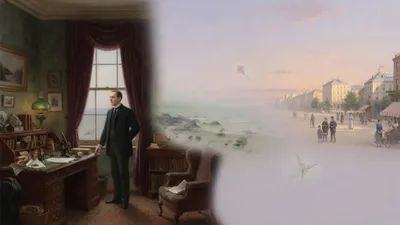
On an ordinary Thursday evening in 1890s Richmond, a group of professional men — a doctor, a psychologist, a mayor, a journalist, an argumentative fellow named Filby — settle into their host's comfortable dining room for the weekly argument. Their host, whom they call simply the Time Traveller, has an announcement: time, he says, is not a river carrying us helplessly along, but a direction, like up or north, and he believes he has found a way to steer.
The Time Machine is short enough to read in a few sittings, and it is one of the books that taught later writers how to imagine travel through time. For middle-school readers it offers a compact adventure and a set of arguments worth chewing on: what counts as proof, what a comfortable room can hide, and whether a clever story deserves to be believed. Wells writes as a man trained in science who still knows how to keep a table of listeners leaning forward.
Meet the Characters

More about The Time Traveller
The Time Traveller is a scientific inventor who entertains friends in his Richmond house with experiments and arguments. He is impatient, original, and not much interested in other people's doubts. His guests know him by what he does, not by a private name.

More about Weena
Weena is a tiny, fragile figure with a doll-like face and a wreath of flowers in her hair. She is affectionate and easily frightened. She has not yet appeared when the story opens in a Richmond dining room.

More about A Morlock
A Morlock is a small, pale creature with large shining eyes and flaxen hair on the head and back. It shrinks from bright light and moves with a stooping, scurrying gait. The dinner guests in Richmond have never heard of such a being.

More about Hillyer, the Narrator
Hillyer is one of the friends who dine at the Time Traveller's house. He is sceptical, loyal, and more willing than some of the others to listen closely. He is the guest through whose eyes we watch the evening.

More about The Medical Man
The Medical Man is one of the regular guests, practical and a little pompous. He wants proof, not poetry. He looks as if he has heard many unlikely stories in his consulting room.

More about The Psychologist
The Psychologist is another of the Thursday guests, more interested in theories of perception than in dinner. He is not easily astonished. He listens as if he is always about to explain something.

More about Filby
Filby is one of the Time Traveller's friends, famous for contradicting everyone. He is hearty, sceptical, and not at all scientific. He is there on the night of the first argument.

More about An Eloi
An Eloi is a small, graceful being with a childlike face and a simple tunic of bright, soft fabric. Several of them move together like a flock. They have not yet appeared when the story opens in Richmond.
Pre-Reading Discussion Questions
- If time really is a fourth dimension, no different from length or width, why can we move freely in three of them but not the fourth? What would have to be true for travel through time to be possible?
- When someone tells you an extraordinary story, what would it actually take to convince you? What would you demand to see?
- Do you believe human history has an overall direction? Is 'progress' a fact about the world, a story we tell ourselves, or something in between?
- Science fiction usually says more about the time it was written than about the future it describes. What fears and hopes of your own era do you expect a story written today would reveal to readers in a hundred years?
- How do you listen to an argument you cannot fully follow — do you trust it more, or less, than one you can follow? Why?
- What does a comfortable room after dinner make easy, and what does it make easy to stop noticing?
Themes & Big Ideas to Track
- How Wells uses a dinner-table argument, rather than an adventure opening, to start a scientific romance.
- The difference between an explanation that sounds scientific and one that has actually been tested.
- How the story reaches us through a guest who was not the one who travelled.
- What the narrator's labels for the guests — the Medical Man, the Psychologist, the Editor — ask you to listen for.
- How light, darkness, and ordinary household objects are described, and what work those descriptions do.
- The habit of building a theory from a little evidence, then having to live with it.
Chapter-by-Chapter Study Guide
Chapter 1: Introduction
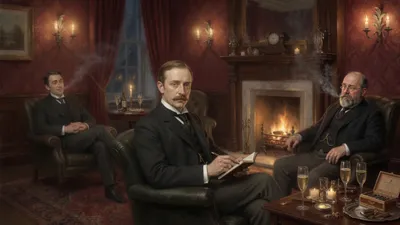
Before you read — think about:
- What are the advantages, and the drawbacks, of starting a story in a comfortable room among people who already know one another?
- When a clever speaker makes an argument you cannot fully follow, do you trust it more or less than one you can follow? Why?
- What happens to your sense of a person when you know them only by a job or a habit, not by a private name?
- How does news or an argument travel around a table of people who already know one another?
- What can the furniture and lighting of a room tell you about the people who live there?
Watch for these while reading:
- The labels Wells gives the guests — the Psychologist, the Medical Man, the Provincial Mayor, the Very Young Man — and the kind of thinking each label promises.
- How the Time Traveller manages the conversation: whom he answers seriously, whom he brushes past, and who quietly stops trying to follow.
- Filby's style of objection. Track what he actually appeals to when he pushes back.
- The comfort of the room — the fire, the wine, the incandescent lamps, the patent chairs.
- The narrator's own vocabulary for his host: 'earnestness', 'admired', 'as we thought it'. He is setting this down long afterwards.
Vocabulary to know:
recondite (adjective) — so deep or specialized that most people find it hard to understand; paradox (noun) — a statement that seems to contradict itself and yet may still be true; anachronism (noun) — something that belongs to a different time from the one it appears in; expound (verb) — to explain an idea at length and in detail; controvert (verb) — to argue against something; to dispute it; abstraction (noun) — an idea considered on its own, apart from any real object; instantaneous (adjective) — happening in no time at all; infirmity (noun) — a weakness or failing; intermittently (adverb) — with pauses in between rather than continuously; immaterial (adjective) — not made of physical matter; pensive (adjective) — quietly thoughtful, turning something over in the mind; spasmodic (adjective) — happening in sudden, brief bursts; introspective (adjective) — looking inward at one's own thoughts; transitory (adjective) — lasting only a short while; assimilation (noun) — the act of taking in an idea and absorbing it; verification (noun) — proof that something is true, obtained by testing it; humbug (noun) — nonsense or trickery meant to fool people; conjuror (noun) — a magician who performs tricks for an audience; trammels (noun) — restrictions that hold something back; fecundity (noun) — the quality of producing ideas in great abundance; incandescent (adjective) — giving off light because it is heated white-hot, as in an early electric bulb.
Chapter 2: The Machine
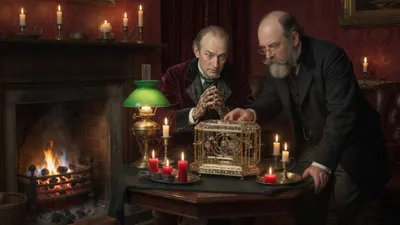
Before you read — think about:
- How does a writer make a small object on a table feel important before anyone has seen it work?
- What would a device built in a London workshop in the 1890s be made of, and what does the material of a machine tell you about the age that made it?
- If you had been at that table in 1895, with no aircraft, no film, and no computers, which part of a claim about travelling in time would you have found hardest to accept?
- When several people watch the same evening, why do their later accounts of it often disagree?
- What makes a witness useful in a demonstration, and what makes a witness useless?
Watch for these while reading:
- The seating plan. The narrator lays the room out like a diagram — note where each man sits in relation to the table and the lamp.
- The little machine itself: ivory, brass, quartz, twisted crystal. Wells's materials are half laboratory, half jewellery.
- The Psychologist's part in the demonstration, and what his profession qualifies him to judge.
- The candle on the mantel, and every other ordinary object the narrator bothers to name.
- The larger machine standing in the laboratory, and how much of it the guests are allowed to examine.
Vocabulary to know:
apparatus (noun) — a piece of equipment built for a particular purpose; askew (adjective) — crooked; not lined up straight; quack (noun) — someone who falsely claims to have special skill or knowledge; crystalline (adjective) — clear and glassy, like a crystal; octagonal (adjective) — having eight sides; sconce (noun) — a bracket fixed to a wall for holding a candle or lamp; adroitly (adverb) — with skill and cleverness; interminable (adjective) — endless, or seeming to have no end; eddy (noun) — a small swirling movement of air, water, or light; stupor (noun) — a dazed state in which a person can barely think or react; reminiscence (noun) — a trace or echo of something remembered; unhinged (adjective) — badly shaken; no longer in control of oneself; impartiality (noun) — fairness that favours no side; plausible (adjective) — seeming reasonable and believable; draughty (adjective) — full of cold currents of air; silhouette (noun) — a dark outline seen against a lighter background; incredulous (adjective) — unwilling or unable to believe; quartz (noun) — a hard, glassy mineral; mechanism (noun) — a system of moving parts that makes a machine work.
Chapter 3: The Time Traveller Returns
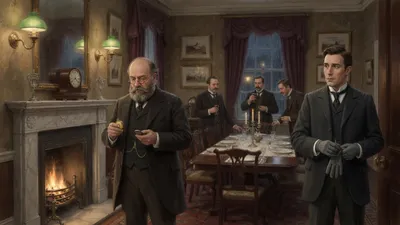
Before you read — think about:
- What is the difference between doubting a claim and refusing to think about it at all?
- The narrator is writing this down long after the evening. What difference does that distance make to the way a story gets told?
- How does the presence of people who report for a living change what gets said at a table?
- What do you pay attention to first when a conversation stops because someone has entered the room?
- Why might a novelist show you a person coming home before showing you where they have been?
Watch for these while reading:
- The narrator's aside on why clever men are distrusted — one of the sharpest paragraphs in the book.
- Every physical detail of the host's condition the narrator records: coat, hair, chin, hands, feet, walk.
- The Editor and the Journalist, and the tone they bring to the table.
- The condition their host sets before he will say anything, and what obeying it costs his listeners.
- Where the narrator places himself in all this. He watches, and he asks almost nothing.
Vocabulary to know:
scepticism (noun) — an attitude of doubt; unwillingness to accept a claim without proof; ingenuity (noun) — cleverness at inventing or contriving things; lucid (adjective) — clear and easy to follow; deportment (noun) — the way a person carries and conducts themselves; plight (noun) — a bad or dangerous condition someone is in; ghastly (adjective) — horribly pale; shocking to look at; haggard (adjective) — looking worn out and exhausted, especially from suffering; footsore (adjective) — having sore feet from walking a long way; faltering (adjective) — hesitating and unsteady; articulation (noun) — the clearness with which words are spoken; tattered (adjective) — torn and hanging in ragged pieces; wool-gathering (noun) — aimless daydreaming; letting the mind wander; eminent (adjective) — famous and highly respected in a particular field; potentiality (noun) — a possibility contained in something; what it could lead to; jocular (adjective) — joking; said in fun rather than seriously; exposition (noun) — a detailed explanation of something; caricature (noun) — an exaggerated, mocking imitation of someone or something; irreverent (adjective) — showing no respect for things other people take seriously; verbatim (adjective) — word for word, exactly as spoken; convulsively (adverb) — with a sudden, uncontrolled jerk; peptone (noun) — a substance the body produces when it digests protein.
Chapter 4: Time Travelling
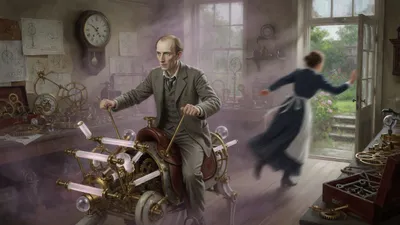
Before you read — think about:
- How do you keep track of time passing when there is no clock you can trust?
- In 1895, what did people imagine the far future would look like? Where did those pictures come from?
- What is the difference between curiosity and restlessness? Can you tell them apart in yourself?
- What does a reader lose when nobody is allowed to cross-examine the person telling the story?
- Why might a writer spend many pages on a journey rather than on a destination?
Watch for these while reading:
- The physical sensations Wells invents for the ride — the falling, the nausea, the helplessness.
- How the imagery accelerates: days flickering, the sun drawn out into a band of fire, the landscape running like water.
- Mrs. Watchett the housekeeper, and how an ordinary person looks to a man moving faster through time than she is.
- The specific hazard the traveller names about stopping, and the reasoning by which he presses on regardless.
- How freely he admits to fear. He reports his nerve the way he reports his instruments.
Vocabulary to know:
futurity (noun) — future time; the time still to come; sphinx (noun) — a huge carved figure with a human head and a lion's body, often used as a guardian statue; attenuated (adjective) — thinned out until barely substantial; interstices (noun) — the tiny gaps between the particles of a substance; temerity (noun) — reckless boldness; nerve; verdigris (noun) — the green crust that forms on old bronze or copper; palpitation (noun) — a rapid throbbing or fluttering; luminous (adjective) — glowing with a soft light; velocity (noun) — speed in a particular direction; petulance (noun) — childish bad temper over something small; rudimentary (adjective) — at a very early or undeveloped stage; elusive (adjective) — hard to catch hold of or see clearly; traverse (verb) — to travel across a space; switchback (noun) — a fairground railway that plunges up and down steep slopes; imminent (adjective) — about to happen at any second; rhododendron (noun) — a large flowering shrub with broad leaves and clusters of blossom; colossal (adjective) — enormous; pedestal (noun) — the base on which a statue stands; parapet (noun) — a low protective wall along the edge of a roof or balcony; tunic (noun) — a loose garment reaching to the knees, worn belted at the waist; buskin (noun) — a laced boot reaching to the calf; hectic (adjective) — having a hot, flushed look, as if feverish; incontinently (adverb) — at once, without any delay; solstice (noun) — the point in the year when the sun reaches its highest or lowest position in the sky.
Chapter 5: In the Golden Age

Before you read — think about:
- Is friendliness the same thing as understanding? Can you have one without the other?
- Why might a writer spend a page on faces, hair, and clothes before anyone has a real conversation?
- List three things you would count as signs that a society is advanced. Keep the list — you will want it as you read.
- 'Golden Age' is a phrase with a long history behind it. What does it usually promise, and can a chapter title be ironic?
- How should a visitor behave as a guest in a place whose rules they do not know?
Watch for these while reading:
- The precaution the traveller takes with the machine before he leaves it, and how much thought he gives it.
- The one question an inhabitant puts to him. It tells him a great deal about how these people explain the world.
- The condition of the great hall — the windows, the fabrics, the table, the worn stone.
- The meal: what is on the table, and what is not.
- The traveller's shifting estimate of these people across a single afternoon, and what that pace says about him as an observer.
Vocabulary to know:
posterity (noun) — the people who will live after us; future generations; exquisite (adjective) — delicately and perfectly beautiful; hitherto (adverb) — until now; up to this point; egotism (noun) — too much concern with one's own importance; garland (verb) — to decorate someone with a wreath or chain of flowers; grotesque (adjective) — strange and ugly in a way that looks out of place; dingy (adjective) — dull, dark and grubby-looking; edifice (noun) — a large, imposing building; portal (noun) — a large and impressive doorway; variegated (adjective) — marked with patches of several different colours; hypertrophied (adjective) — grown far larger than normal; dilapidated (adjective) — falling into ruin through neglect; frugivorous (adjective) — living on a diet of fruit; indolent (adjective) — lazy; unwilling to make an effort; interrogative (adjective) — asking a question; inextinguishable (adjective) — impossible to put out or stop; ninepins (noun) — a bowling game played with nine wooden pins; a byword for things easily knocked over; chequered (adjective) — patterned in squares of alternating colours; melodious (adjective) — pleasant and musical to hear; fretted (adjective) — decorated with carved or cut-out patterns; waxen (adjective) — smooth and pale, like wax; import (noun) — the meaning or significance of something.
Chapter 6: The Sunset of Mankind

Before you read — think about:
- A hilltop is a convenient place from which to judge a whole country. What does a view from above hide as well as show?
- What can a landscape tell you about the people who live in it? What would a stranger conclude from the buildings and open spaces of your own town?
- When is comfort a good thing, and when does it start to look like a problem? Who gets to say?
- The chapter is called 'The Sunset of Mankind.' What tone is a title like that setting, before you have read a word of the chapter?
- How do you decide which details in a new place are clues, and which are just scenery?
Watch for these while reading:
- What is missing from the landscape: no cottages, no hedges, no fields, no shops, no chimneys.
- The wells with their little domed tops, and how much attention the traveller gives them.
- The word 'Communism' when the traveller reaches for it, and how much evidence he has in hand at that point.
- The places where the traveller turns a handful of sights into a complete story of the world. Notice how much he has actually seen when he does it.
- The grindstone image near the end of the chapter — one of the book's governing metaphors.
Vocabulary to know:
communism (noun) — a system in which property is held in common and nothing is privately owned; grindstone (noun) — a rotating stone used to sharpen tools; here, a symbol for the hardship that keeps people keen; ameliorate (verb) — to make a bad situation better; subjugation (noun) — the act of bringing something completely under control; vigour (noun) — physical and mental strength and energy; languor (noun) — pleasant tiredness and lack of energy; impetus (noun) — the driving force that keeps something moving; labyrinth (noun) — a confusing maze of passages and walls; precipitous (adjective) — dangerously steep; derelict (adjective) — abandoned and left to fall apart; intimation (noun) — a first faint hint of something; visage (noun) — a person's face; precocious (adjective) — developing earlier than usual; militant (adjective) — warlike; suited to conflict; differentiation (noun) — the process of becoming distinctly different from one another; cupola (noun) — a small dome on top of a building or structure; corroded (adjective) — eaten away by rust or chemical action; griffin (noun) — a mythical beast with an eagle's head and wings and a lion's body; burnished (adjective) — polished until it shines; obelisk (noun) — a tall four-sided stone pillar that narrows to a point; horticulture (noun) — the art and science of growing garden plants; putrefaction (noun) — the process by which dead matter rots; feebleness (noun) — weakness of body or will; hindrance (noun) — something that gets in the way.
Chapter 7: A Sudden Shock
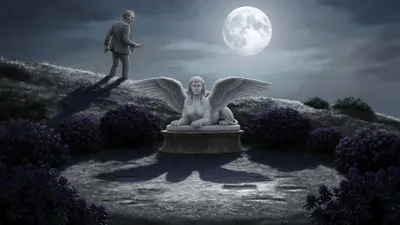
Before you read — think about:
- How does a writer change the speed of a scene without changing the clock?
- What does a writer gain by breaking a rhythm of calm observation he has carefully established?
- Is losing your temper a kind of information — about you, about the situation, or both?
- What makes a monument feel as if a person is watching you?
- What does a writer gain by letting a character fail to make himself understood?
Watch for these while reading:
- The traveller's account of his own conduct toward the little people, and the words he chooses for himself when he describes it.
- How they respond when he tries to make them attend to the bronze panels of the White Sphinx.
- The method the traveller argues himself into on the walk back up the hill.
- How Wells's sentences change once the traveller starts running. The prose keeps pace with the man.
- Marks in the turf, and any other physical traces the narrator bothers to record.
Vocabulary to know:
gibbous (adjective) — describing a moon that is more than half full but not yet whole; leprous (adjective) — having a blotched, scaly, unhealthy whiteness; complacency (noun) — smug satisfaction with how things are; stanch (verb) — to stop the flow of blood from a wound; mockery (noun) — the act of making fun of someone's suffering; malachite (noun) — a banded green mineral often used for ornamental stone; inarticulate (adjective) — not forming clear words; behove (verb) — to be necessary or proper for someone to do; stolid (adjective) — showing no emotion or reaction at all; perplexity (noun) — complete puzzlement; repugnance (noun) — intense disgust; furtively (adverb) — secretly, trying not to be noticed; vigil (noun) — a long period of staying awake to keep watch; Occidental (adjective) — belonging to the West; western in habits and outlook; monomania (noun) — obsession with one single idea; substantive (noun) — a noun; a word naming a thing; figurative (adjective) — using words to mean something other than their literal sense; tether (verb) — to tie something so that it cannot move far; inadequacy (noun) — the state of not being capable enough for a task; intervention (noun) — the act of stepping in and interfering; desertion (noun) — the state of having been abandoned and left alone; infer (verb) — to work something out from evidence rather than being told it; abstain (verb) — to deliberately hold back from doing something; counsel (noun) — advice.
Chapter 8: Explanation

Before you read — think about:
- This chapter is called 'Explanation.' Given how the last explanation stood up, how much credit should you extend to this one?
- What is the difference between describing a people and explaining them?
- How do you tell a clue you have walked past from scenery you were meant to enjoy?
- What is the difference between a theory that fits most of the facts and a theory that fits all of them?
- When a person in a story starts talking more like a lecturer than a witness, how should you listen?
Watch for these while reading:
- The wells with their domed tops, the tall towers, and the movement of air around both. All three have been in front of the traveller for chapters.
- What this world does not contain: no graveyards, no old people, no workshops, no machinery the traveller can lay a hand on.
- The traveller's vocabulary when he talks about individual little people rather than the crowd.
- The point where the traveller stops recording what he sees and starts building, and the warning he attaches to his own reasoning.
- Light and dark in this chapter. Wells is assembling a vocabulary out of them and expects you to keep hold of it.
Vocabulary to know:
Morlock (noun) — Wells's name for the pale, underground people of the far future; Eloi (noun) — Wells's name for the small, beautiful people who live above ground in the far future; Underworld (noun) — in this book, the tunnelled world beneath the surface where the second species lives; subterranean (adjective) — existing or happening below the surface of the ground; ventilation (noun) — the movement of fresh air into an enclosed space; aperture (noun) — an opening or gap; ramification (noun) — a branch of a system that spreads in many directions; utopia (noun) — an imagined perfect society; sepulture (noun) — burial of the dead; vestige (noun) — the smallest surviving trace of something; interpolate (verb) — to insert something in among existing material; apprehension (noun) — anxious dread about what may happen; pallor (noun) — unusual paleness; flaxen (adjective) — pale yellow, like straw; nocturnal (adjective) — active at night; lemur (noun) — a long-limbed, large-eyed animal that lives in trees; also an old word for a ghost; capitalist (noun) — a person who owns wealth and the means of producing it; labourer (noun) — a person who does hard physical work for wages; stratification (noun) — the arrangement of a society into fixed layers; degeneration (noun) — a gradual decline from a stronger, better earlier state; etiolated (adjective) — pale and weak from growing without light; decadent (adjective) — declining from an earlier high standard; exuberant (adjective) — growing thickly and abundantly; cicerone (noun) — a guide who explains a place to visitors; conveyance (noun) — a means of carrying people or goods; arbour (noun) — a shady garden shelter.
Chapter 9: The Morlocks

Before you read — think about:
- When does a feeling of dislike need a reason, and when is the feeling doing the work by itself?
- Victorian London ran on labour that happened underground and out of sight: sewers, tunnels, railways, mines. Why might a novelist reach for 'below' as a way of talking about class?
- How does a limited supply of light change the way a scene is told?
- What is the difference between courage and curiosity when both feel like the same impulse?
- How do you stay honest about your own fear when you are also trying to look like a scientist?
Watch for these while reading:
- The reasons the traveller gives himself for putting the climb off, and how long he lets each one stand.
- Weena at the mouth of the well, and what the traveller does about her.
- Every match. Count them — Wells is counting.
- How narrowly Wells rations what can be seen. You are given exactly as much light as the traveller has, and no more.
- The traveller's prose about the creatures below: sort the observation from the disgust.
Vocabulary to know:
carnivorous (adjective) — meat-eating; vermin (noun) — small unwanted animals regarded as pests; Overworld (noun) — in this book, the sunlit surface where the Eloi live; shirk (verb) — to avoid a duty you know you should do; clamber (verb) — to climb awkwardly using hands and feet; zoological (adjective) — relating to the scientific study of animals; porcelain (noun) — fine, hard, glossy china; piteous (adjective) — arousing pity; deeply sorrowful; impenetrable (adjective) — impossible to see into or get through; abysmal (adjective) — belonging to the deepest part of the ocean; rayless (adjective) — completely without light; spectral (adjective) — ghostly; economise (verb) — to use something sparingly to make it last; nausea (noun) — a sick, dizzy feeling; chinless (adjective) — having no chin; lidless (adjective) — having no eyelids; façade (noun) — the front face of a building; appalled (adjective) — filled with horror and dismay; loophole (noun) — a narrow slit in a wall; vista (noun) — a long view down an opening or avenue; discordantly (adverb) — in a harsh, jarring way; eke (verb) — to make something last longer by adding to it.
Chapter 10: When Night Came

Before you read — think about:
- What is the difference between explaining something and explaining it away? How would you tell which one you were doing?
- What does a person owe a companion who cannot share the danger the person has chosen?
- The chapter is called 'When Night Came.' What has darkness come to stand for in this book so far?
- What do people look at when they want to feel small in a useful way, not a crushing one?
- What does a traveller owe to people whose world he does not understand and cannot leave?
Watch for these while reading:
- The traveller's next theory, and the exact point where he lets the previous one go.
- The word 'Nemesis' when it arrives, and the argument the traveller builds around it.
- The two withered flowers, and the fact that the story briefly stops being a story.
- The listeners in the smoking-room, who surface for a page. Note which of them speaks, and what he says.
- How the traveller's language about the little people of the upper world has shifted since his first afternoon among them.
Vocabulary to know:
Nemesis (noun) — an unavoidable punishment that finally catches up with someone; sufferance (noun) — permission granted only because nobody bothers to object; hypothesis (noun) — a proposed explanation that still has to be tested; malign (adjective) — evil in nature; wishing harm; paralyse (verb) — to make someone unable to move or act; dexterous (adjective) — skilful with the hands; preternaturally (adverb) — to a degree beyond what is natural; terrestrial (adjective) — belonging to the earth; precessional (adjective) — relating to the slow wobble of the earth's axis over thousands of years; cannibal (noun) — a creature that eats others of its own kind; fatted (adjective) — fed up and kept plump, as livestock are before slaughter; watchword (noun) — a guiding slogan used to justify how people act; constellation (noun) — a named pattern of stars; scintillating (adjective) — sparkling; giving off flashes of light; unfathomable (adjective) — too deep or vast to be measured or understood; fastness (noun) — a stronghold; a place that is hard to get into; darkling (adjective) — growing dark; faun (noun) — a woodland spirit from Roman myth, half man and half goat; bole (noun) — the trunk of a tree; rill (noun) — a tiny stream; perforce (adverb) — necessarily; whether one likes it or not; persuasion (noun) — a settled belief; impede (verb) — to slow someone down or get in their way; apace (adverb) — quickly; at a fast pace.
Chapter 11: The Palace of Green Porcelain
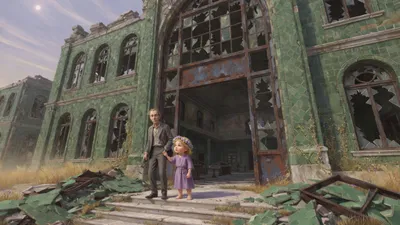
Before you read — think about:
- What materials last, and what disappears, if a building is left closed for a very long time?
- If you had to leave a building carrying only what you could hold, how would you choose?
- Why do people keep objects that no longer work? What is a broken tool still for?
- The chapter is named for a building rather than an event. What does a title like that suggest about the work Wells wants this stretch of the book to do?
- What does fire do for people that no other tool does? Try to list its uses before the traveller does.
Watch for these while reading:
- What the traveller hunts for in each gallery, and what he walks straight past. His priorities are not a tourist's.
- The state of the exhibits — what has rotted, what has rusted, what has lasted.
- Weena's behaviour inside the building, and how differently she and the traveller read the same rooms.
- Everything that goes into his pockets. Wells does not mention objects idly.
- The way he writes about wanting a weapon. Compare this man with the one who stepped off the machine a few days earlier.
Vocabulary to know:
estuary (noun) — the wide mouth of a river where it meets the sea; inscription (noun) — words carved or written on a surface; Megatherium (noun) — an extinct giant ground sloth the size of an elephant; palaeontology (noun) — the study of fossils and ancient life; fossil (noun) — the preserved remains or trace of an ancient living thing; deliquesce (verb) — to dissolve away by absorbing moisture from the air; mineralogy (noun) — the study of minerals; desiccated (adjective) — completely dried out; camphor (noun) — a waxy, strong-smelling substance that burns with a bright flame; hermetically (adverb) — sealed so completely that no air can get in; volatile (adjective) — evaporating easily at ordinary temperatures; inflammable (adjective) — easily set on fire; crowbar (noun) — a heavy iron bar used for prising things open; steatite (noun) — soapstone, a soft stone easily carved; lignite (noun) — soft brown coal; saltpetre (noun) — a mineral salt used to make gunpowder; fungi (noun) — moulds, mushrooms and similar organisms that break down dead matter; gaunt (adjective) — bare, bony and stark; oblique (adjective) — slanting; set at an angle; mace (noun) — a heavy club used as a weapon; slake (verb) — to satisfy a craving; immemorial (adjective) — reaching back further than anyone can remember; dummy (noun) — an imitation made for display rather than use; valve (noun) — one of the leaves of a large double door.
Chapter 12: In the Darkness
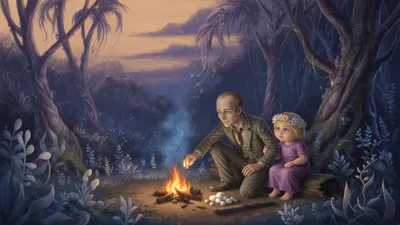
Before you read — think about:
- Fire is the oldest technology human beings have, and many cultures treat it as more than a tool — a gift, a theft, something sacred. What is it about fire that invites that kind of story?
- How does a writer make a wood at night feel different from the same wood in the morning?
- Which of your senses do you trust least, and what would it take for you to trust it more?
- The chapter is called 'In the Darkness.' What has the book trained you to expect from that word by now?
- What happens to a person's sense of fairness when they are exhausted, lost, and afraid?
Watch for these while reading:
- How he talks himself into the next step, and what he is not looking at while he does it.
- How Wells writes about fire in a world where nobody makes it any more.
- The wood itself: how Wells describes trees, undergrowth, and distance once the light has gone out of the sky.
- Camphor, matches, iron bar. Track all three through the chapter.
- The last sentence, and how much weight Wells asks one small object to carry.
Vocabulary to know:
impending (adjective) — about to happen; calamity (noun) — a disaster; insidious (adjective) — advancing gradually and secretly, with harmful effect; atrocious (adjective) — appallingly bad; smoulder (verb) — to burn slowly without flame; fermentation (noun) — the chemical breakdown of matter, which gives off heat; manoeuvre (verb) — to move something carefully into position; carbuncle (noun) — a deep red gemstone; slumbrous (adjective) — sleepy; making one drowsy; exultation (noun) — fierce triumphant joy; incessant (adjective) — never stopping; tumulus (noun) — an ancient burial mound; uncanny (adjective) — strange and unsettling; abomination (noun) — something regarded with disgust and hatred; remnant (noun) — the small part that is left over; pulsate (verb) — to throb rhythmically; ere (preposition) — before; grimly (adverb) — in a determined, joyless way; replenish (verb) — to fill something up again; grope (verb) — to feel about blindly with the hands; canopy (noun) — an overhanging cover; subside (verb) — to become less intense; to die down; writhing (adjective) — twisting and squirming; hillock (noun) — a small hill.
Chapter 13: The Trap of the White Sphinx
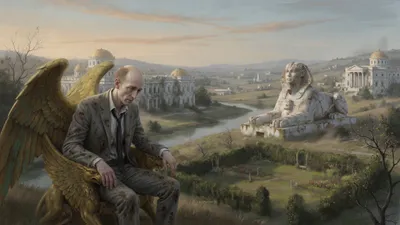
Before you read — think about:
- Can you look at a beautiful place and a dangerous place at the same time? What does that cost you?
- Wells wrote for readers who took it for granted that history moves steadily upward. What would it have cost a Victorian reader to accept that a civilisation can go backwards instead?
- Is a quiet, safe life the same thing as a good life? Who is missing from that picture?
- The chapter is called 'The Trap of the White Sphinx.' Whose trap would you expect, and how many readings does a title like that allow?
- You have followed one man's account for many chapters with no way of checking any of it. How much of your trust in a narrator comes from evidence, and how much simply from having spent time with him?
Watch for these while reading:
- How the traveller now describes the valley he admired from the hilltop, and the word he now uses for the people of the upper world.
- His last account of what became of humanity, and how carefully he hedges it this time.
- The bronze panels of the White Sphinx, and the state of everything around them.
- The White Sphinx itself, and the way Wells keeps returning to its expression.
- The point where his sentences start to run short, and what that pace does to you as a reader.
Vocabulary to know:
versatility (noun) — the ability to adapt and do many different things; compensation (noun) — something given in return to make up for a difficulty; partake (verb) — to have a share in something; permanency (noun) — the state of lasting forever without change; disjointed (adjective) — broken apart; no longer working as a connected whole; initiative (noun) — the ability to act and decide for yourself; steadfastly (adverb) — firmly and without wavering; theorise (verb) — to form explanations that have not been proved; siege (noun) — a long attack meant to force a way into a defended place; gleefully (adverb) — with delighted, triumphant joy; persistent (adjective) — continuing stubbornly despite resistance; stud (noun) — a small raised peg on a surface; refrain (verb) — to stop yourself from doing something; suppress (verb) — to hold something back or keep it down; mortal (adjective) — belonging to human beings, who are limited and must die; blot (noun) — an ugly mark that spoils something; tranquil (adjective) — calm and peaceful; meek (adjective) — yielding without any resistance.
Chapter 14: The Further Vision
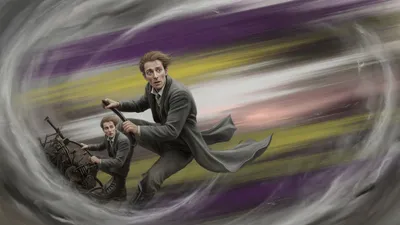
Before you read — think about:
- What is the difference between escaping and going somewhere?
- How does a writer make a landscape feel empty without saying the word empty?
- Why might a scientist keep counting and measuring even when there is nobody left to report the numbers to?
- The chapter is called 'The Further Vision.' A vision is not the same thing as a finding. Why might Wells prefer that word here?
- Adventure stories usually end with the hero coming home. What can a writer do by going further out first?
Watch for these while reading:
- Wells's method for handling enormous stretches of time: the units he counts in, and how the rhythm of the prose changes as the numbers grow.
- The colours. Track the palette of this chapter against the greens, whites, and gold of the world the traveller has just left.
- The sun, which Wells writes about here almost as though it were a character.
- The habits of a scientist that survive even out here — he is still counting, still dating, still comparing what is in front of him with what he knows.
- The frame: this is still a man talking to guests in a London smoking-room. Notice whether Wells lets you keep hold of that.
Vocabulary to know:
prodigious (adjective) — enormous; far beyond the normal; incrustation (noun) — a hard crust formed on a surface; rarefied (adjective) — thin, with less oxygen than usual; corrugated (adjective) — ridged and grooved; antenna (noun) — a long feeler on the head of an insect or crustacean; palp (noun) — a small feeler around the mouth of an insect or shellfish; apparition (noun) — a startling figure that appears suddenly; crustacean (noun) — an animal such as a crab or lobster with a hard shell and jointed legs; lichen (noun) — a flat crusty growth of fungus and alga that lives on rock; liverwort (noun) — a simple flat plant with no true stem, found in damp places; perpetual (adjective) — never-ending; livid (adjective) — of an unhealthy bluish or greyish colour; eclipse (noun) — the blocking of one body's light by another passing in front of it; transit (noun) — the passage of one body across the face of another; shoal (noun) — a shallow sandbank in the sea; weltering (adjective) — rolling and heaving; extinction (noun) — the complete dying-out of a kind of living thing; also a going-out of light; wan (adjective) — pale and sickly-looking; lurid (adjective) — glowing with a harsh, unnatural colour; sullen (adjective) — dull, dark and gloomy; desolate (adjective) — empty, bleak and lifeless; concavity (noun) — a hollow curving inward; marrow (noun) — the soft tissue inside bones; used to mean the very core of a person; sable (adjective) — black.
Chapter 15: The Time Traveller's Return
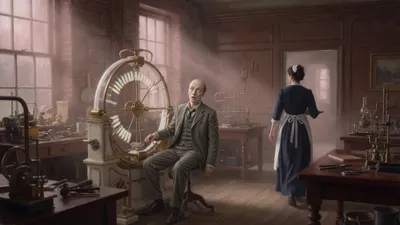
Before you read — think about:
- What makes a familiar room feel newly strange after you have been away?
- Have you ever recognised a place by a tiny ordinary detail rather than by the big landmarks? What was the detail?
- If a journey left no physical trace at all, would that make it less real? What would you accept as proof?
- The chapter is called 'The Time Traveller's Return.' What does a story usually have to do once its central figure gets home?
- This chapter is only a few pages long. What can a short chapter do that a long one cannot?
Watch for these while reading:
- What the housekeeper is doing, and why the traveller attends to it so closely.
- Where in the laboratory the machine comes to rest, and what he works out from the distance.
- The very ordinary objects he uses to fix the date.
- How short this chapter is. Wells spent pages on the outward journey; ask why the return gets so few.
- The traveller's own doubt about what he has been through, and the words he reaches for to describe it.
Vocabulary to know:
fluctuate (verb) — to rise and fall irregularly; contour (noun) — the outline or shape of a landform; slacken (verb) — to slow down; inversion (noun) — a complete reversal, as of order or direction; stagnant (adjective) — not moving or working; stalled; begrimed (adjective) — covered in dirt; timepiece (noun) — a clock or watch; foremost (adverb) — leading; going first; resume (verb) — to start again after a pause; shakily (adverb) — unsteadily, with trembling.
Chapter 16: After the Story
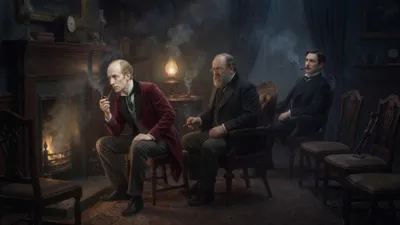
Before you read — think about:
- When a room full of people does not know what to say, who usually speaks first, and why?
- What is the difference between believing someone and believing that they believe themselves?
- How do you listen to friends when they have all seen the same evening and come away with different verdicts?
- The chapter is called 'After the Story.' What work is left for a novel once its main narrative is over?
- What is the difference between a story that is true and a story that is worth telling? Can caring about one make a listener careless about the other?
Watch for these while reading:
- How the Time Traveller reframes his own account in the first thing he says after finishing it.
- Each listener in turn, and the exact form each man's answer takes. Note who commits to nothing at all.
- The Medical Man and the flowers — the only person in the room handling evidence rather than judging a performance.
- The condition of the machine when the narrator sees it, and every mark on the metal.
- Hillyer himself. He has no stake in the argument and takes no side; watch where he puts himself in the room.
Vocabulary to know:
prophecy (noun) — a statement about what is going to happen in the future; assertion (noun) — a firm claim that something is true; speculate (verb) — to form ideas about something without firm evidence; gynaeceum (noun) — the seed-producing parts at the centre of a flower; specimen (noun) — a sample kept for study; ebony (noun) — a very hard black wood; translucent (adjective) — letting light through without being fully transparent; squat (adjective) — low and thick in shape; awry (adverb) — twisted out of the proper position; gaudy (adjective) — showy in a cheap, tasteless way; hoax (noun) — a deliberate trick meant to fool people; hilt (noun) — the handle of a sword; 'up to the hilt' means completely; truncated (adjective) — cut off before the end; phantasm (noun) — a ghostly appearance; instability (noun) — the tendency to wobble or fall over; knapsack (noun) — a bag carried on the back; skylight (noun) — a window set into a roof; sober (adjective) — serious and restrained; meddle (verb) — to interfere with something you should leave alone; fiction (noun) — an invented story; destiny (noun) — what is bound to happen to someone in the end; enhance (verb) — to improve or heighten something.
Chapter 17: Epilogue
Before you read — think about:
- The narrator has told you all along that he is reporting another man's words. At the close of a book like that, what is a narrator entitled to claim, and what must he leave open?
- What is the difference between hope and refusal to look? Can they look the same from the outside?
- Why do some endings refuse to close the question they have raised?
- An epilogue is not quite a chapter. What is an epilogue for, and what can it say that the story proper cannot?
- The narrator has spent the whole book listening and holding back judgement. What would you want him to conclude, and what do you expect from him?
Watch for these while reading:
- Where the narrator lets himself imagine his friend might be, and how many directions in time those guesses cover.
- The single point on which the narrator and the Time Traveller are said to disagree.
- The narrator's sentence about how a person ought to live if the gloomier view is the true one.
- The last object named in the book, and the exact word the narrator chooses for what it demonstrates.
- The final sentence, and which nouns Wells saves for the last position.
Vocabulary to know:
Cretaceous (adjective) — belonging to the last great age of the dinosaurs, ending about 66 million years ago; Jurassic (adjective) — belonging to the age of giant dinosaurs, around 200 to 145 million years ago; Triassic (adjective) — belonging to the earliest age of the dinosaurs, around 250 to 200 million years ago; saurian (noun) — a large ancient reptile; plesiosaurus (noun) — a long-necked swimming reptile of the age of dinosaurs; Oolitic (adjective) — belonging to a set of ancient rock layers formed from tiny rounded grains of limestone; saline (adjective) — salty; fragmentary (adjective) — made of scattered, incomplete pieces; culminating (adjective) — forming the highest point reached; cheerlessly (adverb) — gloomily; without hope; brittle (adjective) — hard and easily snapped; gratitude (noun) — thankfulness for a kindness received.
About the Author
Herbert George Wells (1866-1946) grew up poor in Bromley, England, the son of a shopkeeper and a housekeeper, and spent unhappy years apprenticed to a draper before scholarships rescued him. He studied biology in London under Thomas Henry Huxley, the fierce public defender of Darwin's theory of evolution, and that training shaped everything he wrote: Wells thought about human beings the way a biologist thinks about any species, as something shaped by its environment and capable of changing beyond recognition. He published The Time Machine in 1895, at twenty-eight, and followed it within five years with The Island of Doctor Moreau, The Invisible Man, and The War of the Worlds. He went on to write history, journalism, and political argument for another fifty years, campaigning for education, human rights, and world cooperation, but it is these early 'scientific romances' that made him one of the founders of science fiction.
Wells wrote at the end of Victorian Britain, when the empire was at its height and many people were confident that history moved in one direction: upward. Two ideas were unsettling that confidence. The first was Darwin's theory of evolution, which said that species adapt to their circumstances without any guarantee that the changes are improvements. The second was the new physics of thermodynamics, which predicted that the sun itself must eventually burn down and the universe run out of usable energy. At the same time, industrial Britain was visibly divided: enormous wealth above ground, and beneath the streets of London an expanding world of tunnels, sewers, underground railways, and workers whose labour kept the city running out of sight.